We are no strangers to disease coryza or what is familiarly known as “snot". Disease coryza still get into the top 10 ranking of diseases that attack chickens, both in chickens layer or broiler over the past 3 years. This shows that overcoming coryza not easy to do.
Why case coryza still stubborn and hard to control? What about your own experience? Is that so?
Current Cases of Coryza Now
Diseases caused by bacteria Avibacterium paragalinarum (Av. Paragalinarum) this predilection location is primarily in the infraorbital sinus. Bacteria Av. paragallinarum causes coryza it is divided into several serovars. Based on the method page, dibagi menjadi serovar A, B, dan C. While the method kume membagi lebih detail lagi menjadi A1, A2, A3, A4, B1, C1, C2, C3 dan C4. Diantara serovar tersebut, tidak ada proteksi silang antar serovar A, B, C namun terdapat proteksi silang yang baik diantara serotipe pada serovar A (A1, A2, A3, A4) dan proteksi silang variatif diantara serotipe pada serovar C (C1, C2, C3, C4).
Teams Research and Development Medion has done mapping bacterial causes coryza in Indonesia. Based on the isolate data collected by Medion, currently the bacteria Av. paragallinarum found in Indonesia, it belongs to serotypes A1, C1 and C4. Especially the dominant serotype C4 is found and has been widely spread in several regions in Indonesia such as Bandung, Banjarmasin, Jambi, Kendal, Samarinda, Semarang, and Sukabumi.
Based on data collected by the team Technical Education and Consultation (TEC) Medion, a case in chickens broiler, the disease ranked 6th in the period from January to June 2021. As for the occurrence of cases coryza on chicken layer it ranks 1st in the sense that its occurrence is worth being wary of.
When viewed from the data in Graph 1 is known that the case coryza the trend increases in the rainy season and the transition of weather (transition). Especially on farm layer, October 2020 experienced an increase until the turn of 2021 entered the third month to be the highest peak in case incidence. So farmers need to be aware of the increase in cases coryza in wet seasons or transitions that cause chickens to experience stress so that the condition of chickens decreases. The humid conditions of the cage environment also favor bacteria coryza growing quite rapidly. Case occurrence coryza triggered predisposing factors, such as interference from the home environment, nutritional problems, vaccination treatment as well as various diseases that cause immunosuppressive.
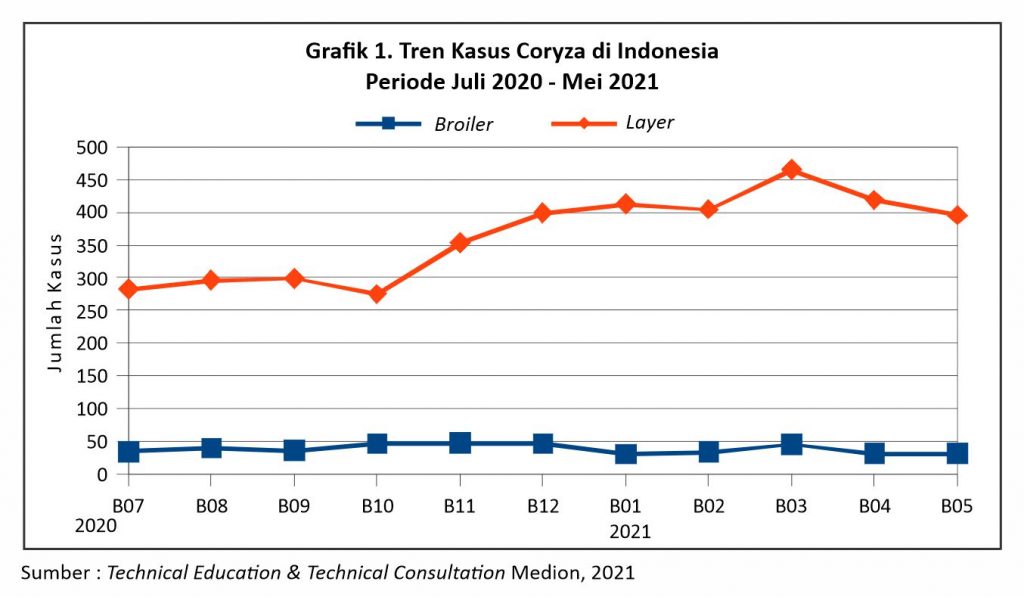
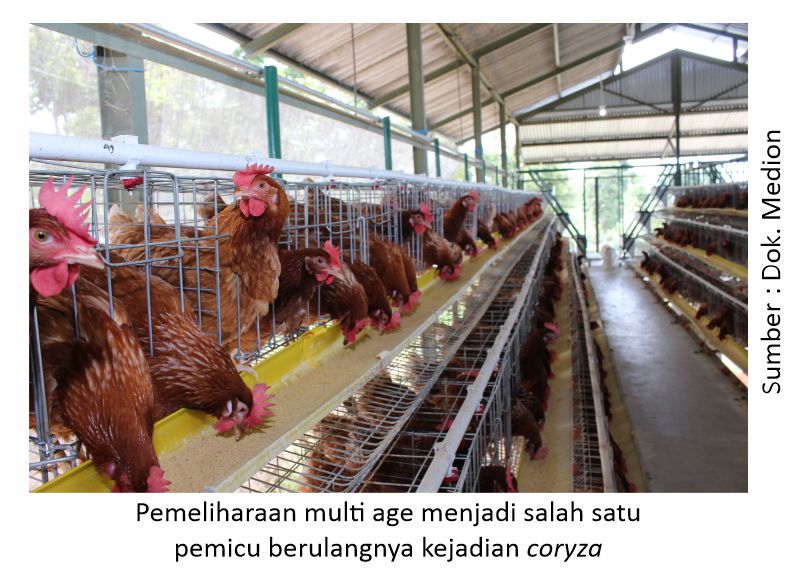
Poultry layer or broiler both are susceptible to attack, but in 2021 the number of reported cases in chickens layer higher than chicken broiler. This is because the life span of chickens layer longer so that the risk of exposure to the disease is higher and aggravated by ventilation problems and poor environment. Predisposing factors that can provoke and aggravate respiratory diseases such as coryza among other things, poor air quality, lack of ventilation and poor air circulation result in reduced intake of o₂ needed by chickens. Erratic weather conditions will cause the chicken to be stressed so that the condition and endurance of the chicken's body to decrease. When the condition of the chicken's body decreases, the disease will more easily enter and attack the chicken's body including coryza. Therefore, chicken layer requires protection with a long duration of immunity. Occurrence of infection coryza it can be recurrent and always appear throughout the year, therefore coryza threatens almost at any age chickens broiler and layer. Especially with chicken layer widely implement maintenance system multi age farming (many ages), where if there are chickens that have recovered from the attack coryza will act as carrier (carriers) and can infect other healthy chickens that are in one population or one cage with chickens carrier the.
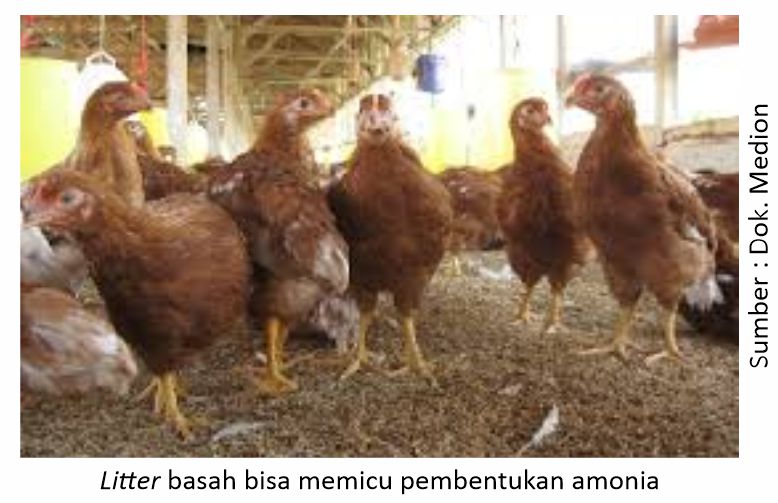
Factor litter/ wet husks result in increased humidity conditions in the cage and high ammonia levels can be inhaled by chickens. This results in epithelial cells (mucosa) in the upper respiratory tract experiencing irritation. These cells are an early defense mechanism because they are able to produce mucus (mucus) and consist of cilia to repel incoming infectious agents. Irritation that is not handled properly will create bacteria coryza managed to enter and stick in the sinuses of the nose, then cause even more severe infection.
Routes Of Transmission Coryza Noteworthy
Coryza attacking chickens through feed media, drinking water, and air contaminated with exudate / chicken nasal discharge containing bacteria Av. paragallinarum, or direct contact with the first chicken attacked coryza. The exudate that comes out of the nose is the medium of transmission coryza which is very effective between chickens, especially for cages with drinking places paralon. Often found in the field, cases coryza it becomes repetitive and persistent, even more so if there is no selection. Other factors high chance of cases coryza especially in the rainy season because in addition to bacteria E. Coli infection commonly transmitted by water, bacteria coryza it can also spread quickly through abundant water media in the rainy season.
Bacteria Av. Paragalinarum enter through the mouth or nose, then it will enter and multiply in the nasal sinuses (sinus infraorbitalis) with an incubation period of 1-3 days followed by the rapid appearance of clinical symptoms. Outbreak coryza lasts for 4-12 weeks (in chickens layer) or 6-14 days (in chickens broiler) depends on the type of serovar, the number of bacteria in the body of the chicken or the environment of the cage, and the presence or absence of secondary infection.
As we know the occurrence of cases coryza this will cause some disadvantages as follows :
- Morbidity / mortality in the case of coryza can reach 20-50%
- Death / mortality rate up to 5-20%
- On chicken broiler will inhibit growth making it difficult to achieve standard body weight
- FCR increases and feed costs swell
- On chicken layer there is a decrease in egg production by 10-40%
- An increase in the number of chickens
- Health insurance (broiler 44% from layer 10%)
Key points of control Coryza So that the case does not repeat itself
1. Proper treatment technique
One of the important things to consider in the treatment of coryza is a Drug Administration technique. Treatment will be optimal if the drug is able to reach the target organ or site of the disease. So the selection of drugs need to consider the severity of clinical symptoms shown. Mild cases with chicken conditions can still drink then the administration of drugs can be done through drinking water using the right antibiotics. The effect of stress caused was lower. You should choose antibiotics that have good absorption in the digestive tract so that they can be distributed to the target organ, namely the infraorbital sinus, optimally. The cause is related to the nasal sinuses, which have relatively few blood vessels. If the treatment technique coryza less precise, the levels of drugs that reach this location to be reduced and the work of the drug will be less than optimal. Antibiotics that can be used are fluoroquinolon, tetracycline or penicillin. Examples of products are Erydoxcy, Tinolin, or Neo Meditril.
In addition to the use of antibiotics, treatment coryza can use Fithera which is a Medion herbal product. This product is derived and herbal extracts so it is safe to use and has good effectiveness in killing bacteria Avibacterium paragallinarum causes coryza.
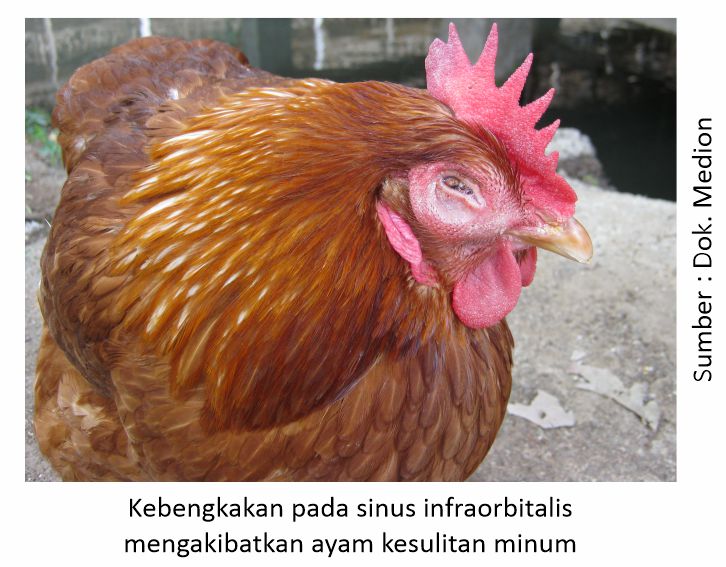
While chickens who experience more severe symptoms such as swelling in the area of the sinus infraorbitalis (part of the face), causing his eyes to close and no longer able to drink. If the condition is so, give the drug by injection from the group aminoglycosides, tetracycline or fluoroquinolon. Examples such as Vet Strep, Gentamin or Tinolin Injection. In the correct treatment principles do as well rolling antibiotics to prevent resistance.
2. Control ammonia
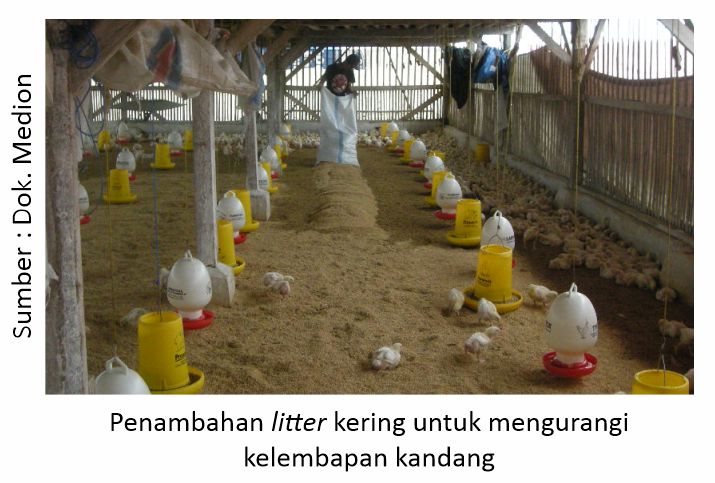
If litter or the husk is already slightly wet, it can be immediately replaced or added litter new one on it. This prevents the risk of upper respiratory tract irritation due to high humidity and ammonia levels. Support with gifts Ammotrol which works to bind ammonia into a form that does not evaporate so that the smell of ammonia is reduced. Ammotrol it can also make the feces produced by chickens become drier.
3. Selection and isolation of sick chickens
There are variations in severity but there is no selection and separation so that uneven treatment effects arise (there are chickens that have recovered, but there are also chickens that only “seem” to recover or have not recovered completely). When conditions are not optimal, chickens that “seem” cured will relapse. This is where the importance of selection and isolation is carried out. In addition, isolation needs to be done to avoid bacterial transmission coryza which can quickly spread through water media, for example through a paralon line. The first thing we have to do is selection on the chickens were found to appear lethargic, sleepy, looks no appetite, began the presence of respiratory disorders (gasping, melting nose), chicken face began to fall asleep, and began not to produce. Then separate into different isolation cages to be given handling.
4. Tightens biosecurity
- Implement biosecurity model 3 zones (clean, transition, dirty) to limit traffic to prevent the spread of disease.
- Disinfect drinking water and spray cages regularly to lower infection rates and duration of infection (source: Bragg, “Limitation of the spread and impact of infectious coryza through the use of a continuous disinfection programme”). When there is an outbreak disinfection is carried out daily to kill the agents of the disease. For example, the use of disinfectants ammonium quartener (Such as) Medisep and Zaldes.
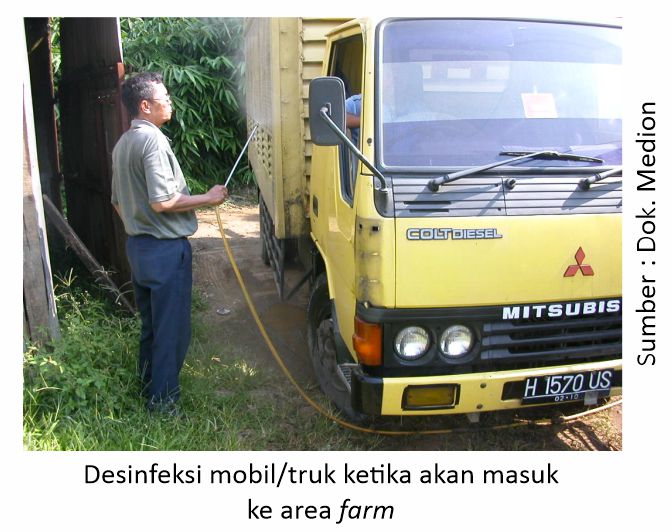
- Disinfect vehicles and people entering and leaving the cage to prevent contact with disease seeds entering the cage.
5. Critical Points Of Management
Re-evaluate the critical point of Landscape Management and maintenance procedures that we apply.
- The optimal cage empty process is carried out at least 14 days after the cage is clean to break the chain of previous diseases.
- When the cage is empty, thorough cleaning should be done to every part of the cage. Between the cage, and the bottom of the stage cage should also not be separated from the cleaning. After all the equipment is removed, the cage is cleaned with detergent and brushed, then sprayed with high-pressure water.
- During chick in, do quality DOC selection. So it is expected that it will have a high ability to live and be more resistant to changes in the surrounding environment.
- Time management brooding period, and litter must be good
- Provide clean air in the cage by adjusting the curtain opening and closing (phase starter and grower or, in the case of a well-maintained, well-maintained shed. Adequate ventilation, good air circulation, very influential on the adequacy of o₂ gas in the cage.
- If possible can apply the use of cages closed house. The use of closed enclosures or closed house being a solution for farmers to maximize the ability of chicken production by helping to optimize the ideal cage environmental conditions include aspects of ventilation, temperature and humidity.
- If it is possible not to keep chickens with multiple age systems in one location (one age one site). But when farm the age of consent (multiage), it is necessary to pay attention to some things such as organizing the passage of cage traffic from young chickens to old chickens, placing DOC/pullet at a distance from the cage layer production, and minimize stress conditions in chickens, especially during the process of moving cages.
6. Support with supplementation
Give multivitamins regularly, for example Fortevit, Vita Stress, Imustim to maintain optimal chicken stamina, overcome stress, prevent disease due to vitamin deficiency and accelerate growth and productivity.
7. Vaccination Coryza
Along with the occurrence of cases coryza recurring throughout the year, this disease is also one that is difficult to treat. Aware of the difficulty of treatment in this case, prevention with vaccination is very important. Vaccination is able to reduce the frequency of cases and the incidence will not be too severe, compared to if the chickens are not vaccinated coryza.
Recommended vaccination programs can provide a combination of vaccines Medivac Coryza T Chito with the Medivac Coryza T Suspension or Medivac Coryza T so as to provide optimal protection.
The vaccination Program can be adapted to local farm conditions and isolates of invading bacteria. The determination of the vaccination schedule can also be determined based on the case history of the attack in the previous maintenance, which is no later than 3-4 weeks before the age of the attack coryza.
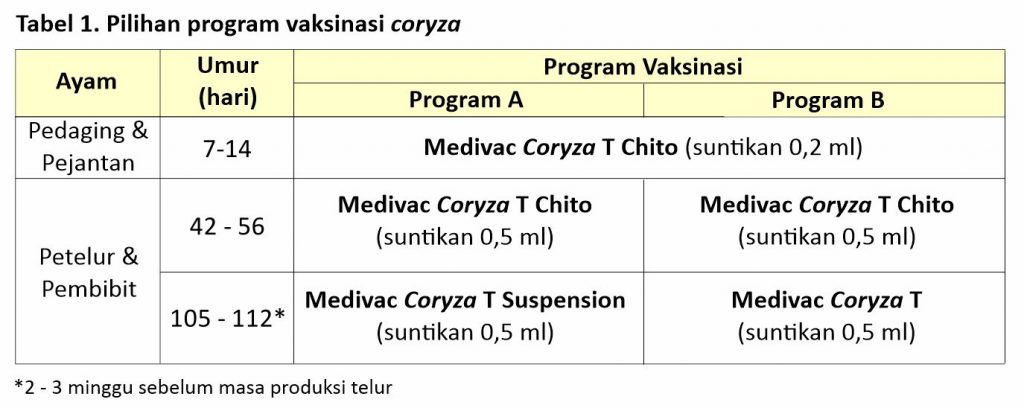
Things to consider in the application or administration of vaccinations coryza (especially emulsion vaccines) include:
- Process thawing, that is, gradually raise the temperature from the storage temperature so that it corresponds to the ambient temperature. Because the vaccine is still cold when injected will aggravate the reaction post injection.
- Indonesia has a tropical climate, so to do thawing it can be enough to remove the inactivated vaccine from the refrigerator and then left for a while at room temperature until the dew on the walls of the vaccine bottle disappears before being injected into chickens. How to speed up thawing the vaccine can be shaken and held by hand until the vaccine is not dewy.
- The injection site in adult chickens can be through the chest intramuscularly, thigh intramuscularly, or neck subcutaneously.
- The equipment is sterile, the needle used must be suitable for use (must not be blunt/bent/broken) and the syringe is replaced every 500 chickens.
- Avoid vaccination in hot temperature conditions such as during the day because it will cause heat stroke this causes the chicken to become stressed. It is recommended to do it in the morning or evening.
Chitosan Innovation As Adjuvant on vaccines Coryza
Inactivated vaccines such as vaccines coryza contains microorganisms that have been killed, but are still immunogenic or able to bully the formation of antibodies. Inactivated vaccines are formulated with adjuvant, a compound added to a vaccine that serves to enhance the action of the vaccine with a depo effect. The depo effect means absorption little by little into the blood circulation. Once in the body, the inactivated vaccine does not need to replicate or multiply but directly bullies lymphoid tissue to form antibodies.
Currently required adjuvant which is able to provide cellular and humoral immunity that will work synergistically when combined with vaccines so as to produce optimal Protectivity and safer against reactions post injection. Types adjuvant examples such as saponins, mineral oils, aluminum hydroxide, aluminum phosphate, chitosan, etc.
Chitosan, one of the options adjuvant new. This is because chitosan has several ideal properties as a carrier polymer, such as biodegradable (easy to decompose), non-toxic, biocompatible (does not cause rejection reaction), easy to dissolve in water and the price is competitive.
Chitosan has been widely used as a carrier for the delivery of anticancer drugs, genes, and vaccines. In addition, chitosan has been used in the pharmaceutical industry of drugs such as for coated tablets, capsules, gels and so on.
Chitosan is able to provide cellular and humoral immunity that works synergistically when combined with vaccines so that it provides optimal Protectivity and does not cause reactions post injection. The mechanism of action is to make the vaccine quickly recognized so that there is activation of T cells that produce cellular and humoral immunity in chickens.
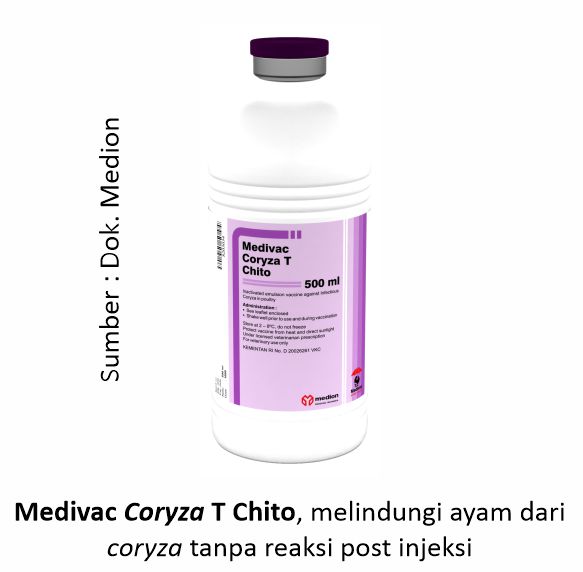
Medivac Coryza T Chito is a Medion inactivated vaccine containing bacteria Avibacterium paragallinarum strain W, Spross and Modesto and has been incorporated into adjuvant chitosan to enhance and prolong the vaccine's working power.
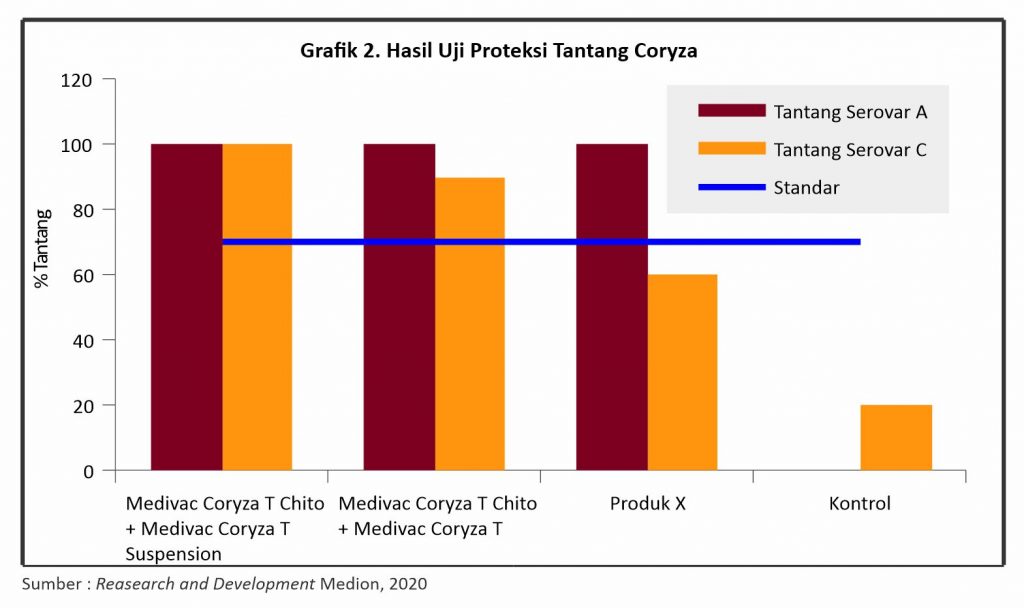
The results of the challenge test on SPF chickens are shown in graph 2. Vaccination Program coryza by combining Medivac Coryza T Chito with the Medivac Coryza T Suspension or Medivac Coryza T able to provide optimal protection. During the period trial also showed no reaction post injection caused by Medivac Coryza T Chito.
Given the losses caused by coryza good on the farm layer or broilerlet's get the vaccine in coryza in the chicken health program can be an alternative to increase the success of handling cases of disease and will certainly save costs incurred for handling such cases. May be useful.