Korep or ringworm is still much discussed among chicken hobbyists, especially during the rainy season like today. Korep is a fungal infectious disease of the skin that is quite a concern because it can affect the performance of chickens. The most common types of fungi found in fungal infections of the skin are Microsporum gallinae. It can also be caused by Microsporum gypseum, Trichophyton megnini, Trichophyton simii, Epidermophyton sp.
Korep Disease Problems
The appearance of clinical symptoms of korep disease will appear white crusty sores on the skin that is not hairy. It can also extend to parts of the skin that are not hairless and around the base of the hair follicle. In severe cases chickens can feel itchy and even lose feathers with hyperkeratosis or thickened skin conditions. The most common cases found in fighting chickens are fungal infections of the comb and face. If not treated immediately, the fungus that causes korep very quickly spread to other areas of the skin and can cause hair loss. The skin around the area of hair loss will appear dry, scaly and thickened. Hair loss generally occurs on the top of the head. But it can also extend to the neck and wings. Where feathers have a very important role in chicken performance.
Some hobbyists complain that if a chicken gets a fungal infection, it can be transmitted to other chickens. Hobbyists also complain that if chickens are infected with fungi, they will easily relapse or become infected again. Please note that fungal infections can be transmitted between chickens through direct or indirect contact such as through equipment. It is important to note that equipment and cages can act as a transmission medium. If the chicken is affected by a fungal infection, the treatment carried out must be completed. These two things are what must be watched out for so that fungal diseases do not easily recur. In the treatment of this disease, in addition to complete treatment, it is also important to decontaminate or suppress fungal contamination in the environment.
Korep Disease Treatment
Handling that needs to be done so that fungal infections do not recur or recur, among others:
- Separating sick chickens into isolation cages or separate cages so as not to play the role of a source of infection.
- Clean the comb, face, scalp and other parts infected with fungus slowly then dry.
- Separate maintenance and care equipment including sponges for cleaning or bathing. Equipment contaminated with mold can act as a medium for disease transmission.
- Provide treatment to completion with antifungal drugs. Apply Mycoraid on the infected part of the fungus, 2-3 times a day until recovery. Treatment is continued after the infection has healed to prevent the fungus from reappearing. Treatment requires patience and patience so that corep can heal quickly and optimally. Treatment of this korep disease must be done thoroughly so that it does not easily recur.
- Provide supplements to increase endurance so that the healing process faster. For example, by giving Solvit.
- Wash maintenance equipment (feed and drinking places) and care (sponges) regularly and dip or soak with disinfectants Antisep or Neo Antisep then dry it.
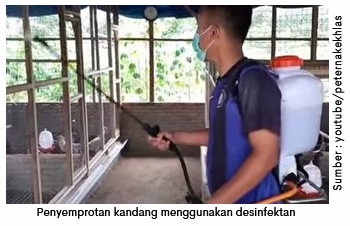
- Daily cleaning of the cage and disinfection of the entire cage to get rid of mold with Antisep or Neo Antisep.
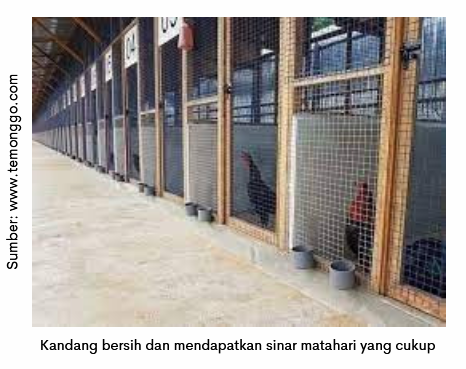
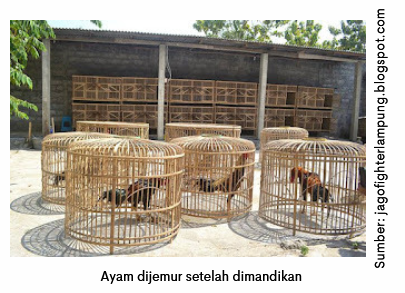
- Ensure good Cage air circulation and get enough sunlight so that the cage is not damp. Especially during the rainy season like today. High rainfall will certainly have an impact on the humidity of the cage air is increasing. A humid environment is an ideal condition for mold growth.
- If the chicken is healthy again, the chicken is routinely bathed and then dried every day. There is also the possibility of chickens contracting the disease while competing so that after competing chickens need to be washed or cleaned.
- Immediately provide treatment to the wound when the chicken finished competing or sparring.
- Always pay attention to the health condition of the chicken, so that if the chicken is sick or early symptoms appear immediately can be known. Thus handling or treatment can be done as soon as possible so that the chicken recovers faster.