It is widely known that the liver is an important organ that plays a role in bile secretion, detoxification, red blood cell formation, metabolism, and vitamin absorption. The liver has a detoxification function, namely by converting toxic compounds or toxins from metabolism and originating from outside the body into substances that are physiologically inactive.
At the end of 2017, some poultry farmers were shocked by the discovery of cases of infection caused by Fowl Adenovirus (FAdV) and cause a lot of losses. This Virus causes disease Inclusion Body Hepatitis (IBH) spread. The disadvantages that breeders often experience are as follows:
- The mortality rate (death) of chickens can reach 10-30% where the Daily incidence reaches >1% suddenly. While the pain rate (morbidity) is relatively high at 1-10%.
- Direct damage to the liver due to immunosuppression
- The weight standard is not reached until the swelling feed conversion ratio In the case of chicken broiler.
- On chicken layer it can also inhibit growth and egg production.
- Can attack at different ages of chickens
- Subclinical (breeder) vertical virus transmission
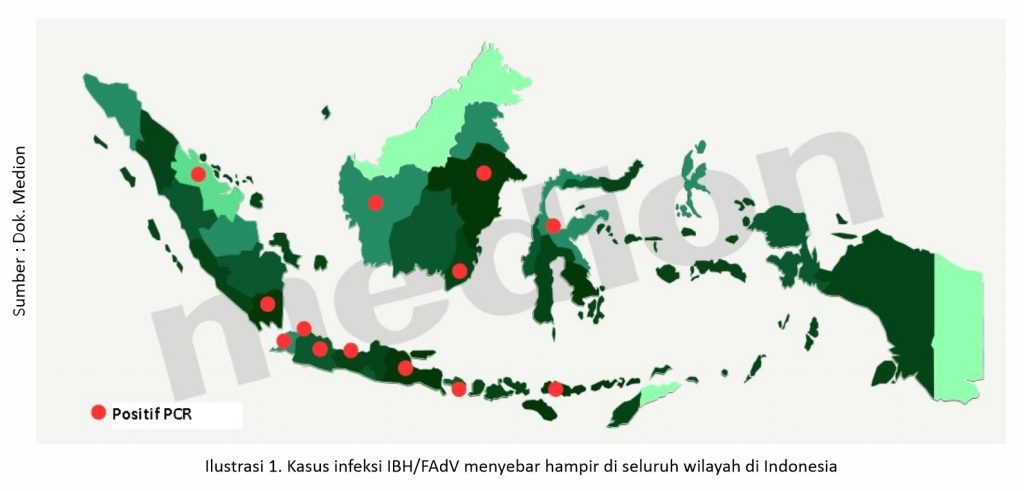
Based on the results of monitoring the case analysis report conducted by the team Technical Education and Consultation Medion (2021), IBH disease is included in the top 5 cases of viral diseases in broiler in the period January-June 2021. Cases increased in March and decreased in June. While on layer farm, IBH cases are very rare, but still included in the top 10 ranking of viral diseases in the last 3 years so you still need to watch out.
Inclusion Body Hepatitis
Inclusion Body Hepatitis or also called Hepatitis Hydropericardium chicken pox is a viral disease that is acute in young chickens. This disease was first found to attack chickens in 1963 in the United States marked the presence of hepatitis followed by the discovery of intranuclear inclusion bodies in chicken liver cells. But the agent of the disease could not be identified so the disease is called a disease Inclusion Body Hepatitis. In the early 1970s IBH disease was also found in Canada and has spread sporadically to several farms in China, Thailand and Indonesia.
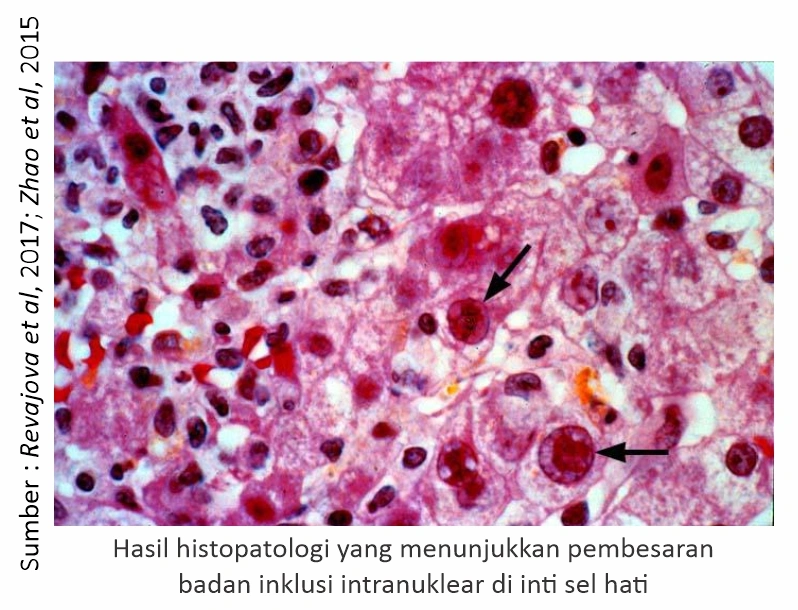
Disease of Inclusion Body Hepatitis (IBH) due to Avian Adenovirus Group I in the family Adenoviridae and genus Aviadenovirus. There are several species of Adenovirus species that have been found in the field are a, B, C, D, and E. Isolates that have been successfully identified by Medion together with Gadjah Mada University and Udayana (2020), are included in FAdV Group I, species D and E, serotypes 11 and 8b. The Virus has been detected in chickens, turkeys, geese and ducks.
Adenovirus it is a virus that does not amplify so that it is more stable and can last a long time in the environment. The Virus is resistant to a wide pH range between 3-9, and certain chemicals such as Ether and Chloroform. However, the virus is very sensitive to disinfectants containing Iodine or Formaldehyde.
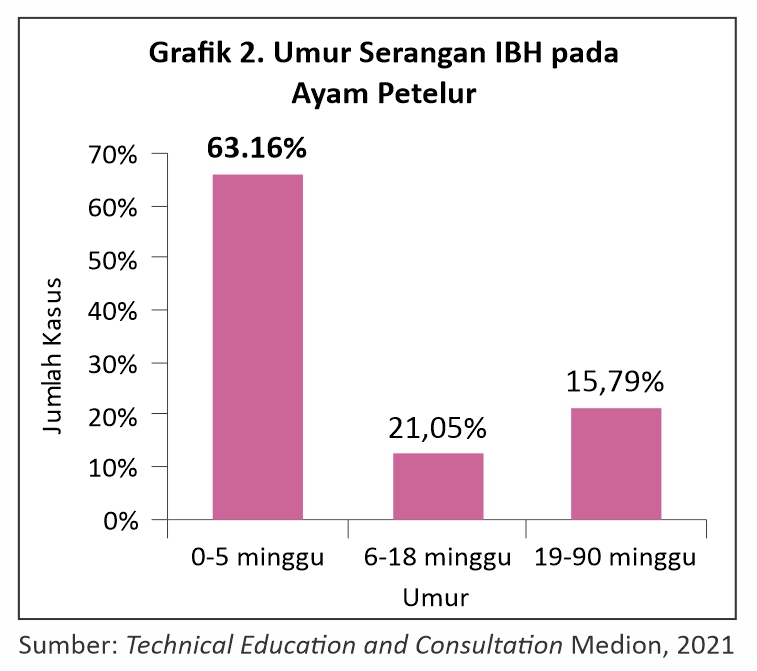
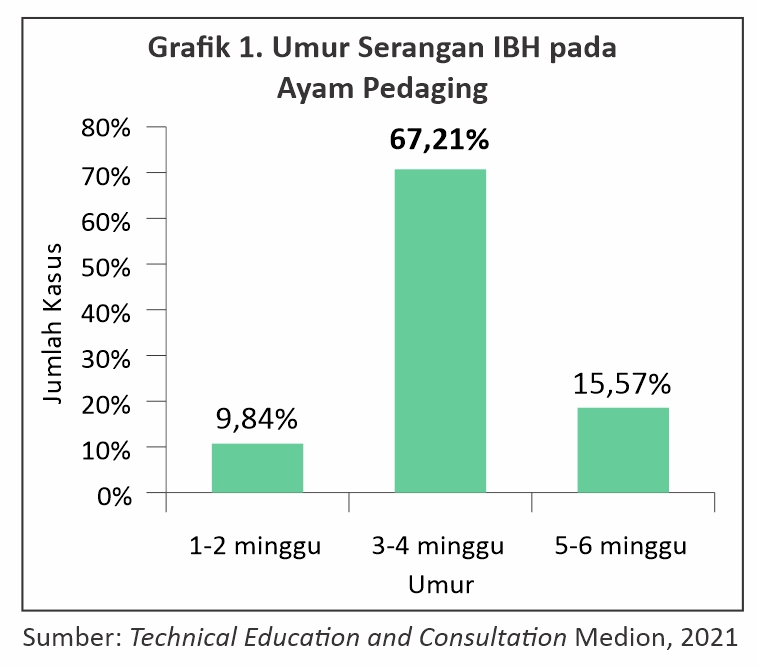
IBH disease is widely reported to spread, especially on chicken farms broiler at the age of 3-4 weeks. Chicken layer and breeder it can also be attacked. IBH infection in chickens breeder those of a subclinical nature deserve special attention in view of their detrimental effects in particular on the vertical transmission of the virus (from mother to Chick).
Spread Of Infection Inclusion Body Hepatitis
Generally IBH infection can be transmitted both vertically and horizontally. Vertical infection occurs trans-ovarial the hatching egg (hatching egg) that do not contain antibodies from the parent. Meanwhile, horizontal transmission occurs directly or indirectly. Direct transmission can be transmitted through infected chicken feces to sensitized chickens. One infected chicken can spread the virus through feces for less than a few weeks and the infection will spread slowly from one flock to another.
Indirect transmission can occur through cages, leftover rations and drinking water, cage equipment, egg tray, delivery cars or employees of cages contaminated with the virus. IBH transmission will occur more quickly in cages with high density and management litter which is bad.
Adenovirus attacking chickens and multiply in the nucleus of liver cells (hepatocytes), then cause intranuclear inclusions (Crystal bodies) that expand, so that cell formation and detoxification are disrupted. The possibility of IBH can also be triggered from immunosuppression factors such as Gumboro infection or increased mycotoxins in feed that cause decreased immunity. Supported also by uncomfortable environmental conditions to create stressful conditions in chickens (the environment is not clean, the cage is too dense, extreme weather conditions, and the challenges of many disease agents) then outbreak IBH may occur.
Clinical symptoms and anatomical pathology of IBH infection
The incubation period in natural cases is very short, only about 1-2 days. Cases of IBH in the field tend to be acute by showing certain clinical symptoms for several hours and then dying.
Based on the summary of the delivery of samples that have been made confirmation of the diagnosis by PCR test shows that the clinical symptoms of IBH in chickens are characterized by symptoms of high mortality, weakness, decreased appetite, look pale and depressed, sometimes watery white feces, and feathers are dull and disheveled. The rate of mortility or sudden death that occurs due to this disease can reach a range of 2-40%, while the morbidity rate is still low.

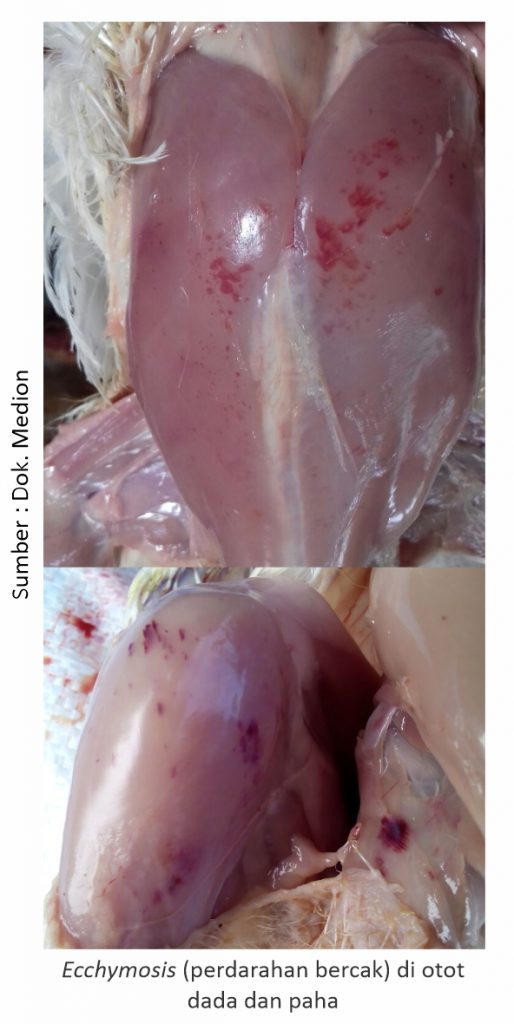
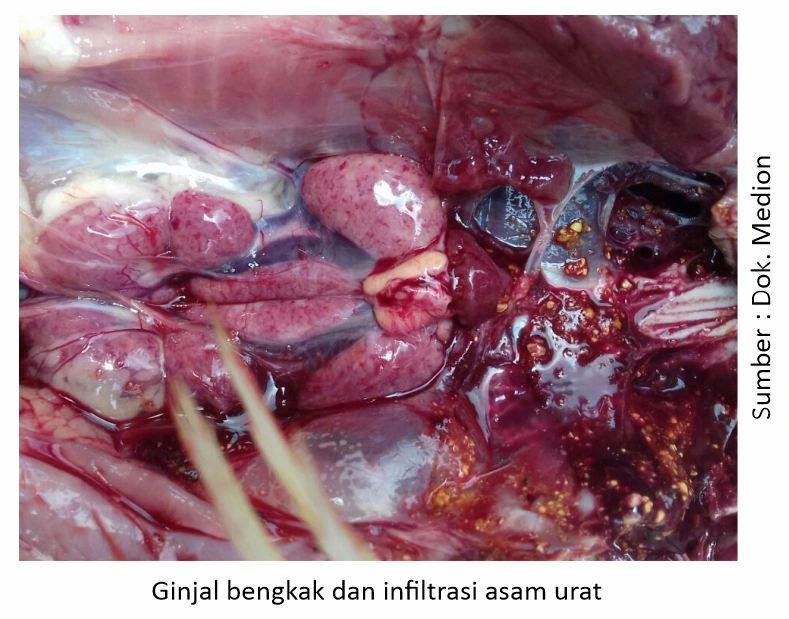
When the chicken is dissected can be seen liver swelling yellowish stripes sometimes pale, brittle and sometimes found bleeding spots (haemoragi). The kidneys appear pale and swollen. In the muscles of the chest and thighs sometimes there is also a spotting hemorrhage.
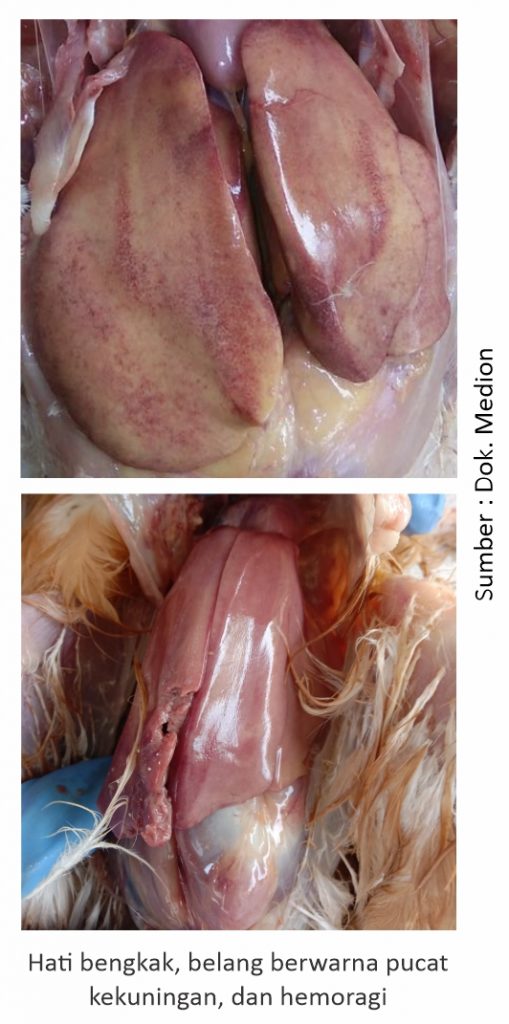
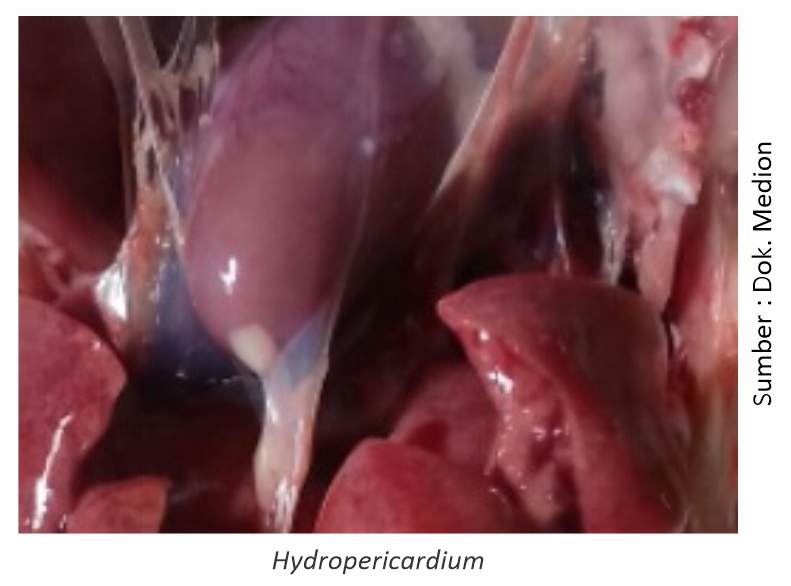
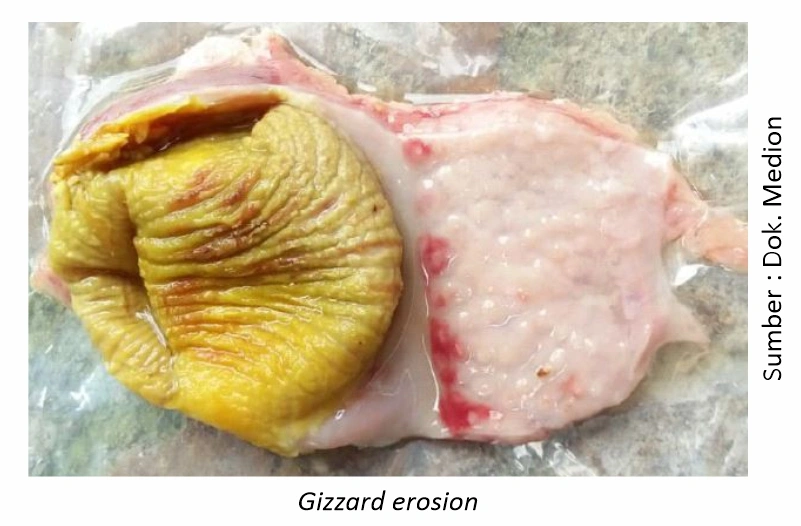
Also found atrophic changes (reduction) experienced bursa Fabrisius, the spleen and thymus which are important organs in the immune system cause chickens to be more susceptible to disease. In the case of a heart attack, there is a risk of fluid retention in the pericardial sac (hydropericard) and found that gizzard erosion.
Differential diagnosis and confirmation of IBH diagnosis
We can't take IBH disease lightly at this time. There are several other diseases that are almost similar in clinical symptoms and anatomical pathological changes in IBH. Some of these diseases are Gumboro, Chicken Anemia Virus (CAV), and Mycotoxicosis. For example, clinical symptoms such as anemia (pallor) and atrophy (reduction) of the thymus are also commonly found in CAV infections. Symptoms of IBH infection which is also often confused with Gumboro are muscle bleeding in the thigh and chest area, kidney swelling and atrophy bursa Fabrisius. Meanwhile, IBH and Mycotoxicosis both have anatomical pathological changes in the form of experiencing gizzard erosion.
To help confirm the diagnosis and determine the status of infection from IBH, laboratory tests can be done. Laboratory tests that can be done is the test Polymerase Chain Reaction (PCR) and sequencing. It can be used in the laboratory (MediLab) by sending samples of organs that have been frozen.

Treatment of IBH
There is no cure yet Inclusion Body Hepatitis. If the outbreak has attacked then what can be done is to reduce the death rate by treating existing symptoms, including :
- Assign hepatoprotectors such as Heprofit to treat liver damage conditions. Heprofit made from herbal extracts that are safe to use for long-term use and can be mixed with drugs or vitamins.
- Provide vitamins and immunostimulants to restore health and increase the resistance of the chicken body by using Vita Stress and Imustim.
- To reduce the swelling of the kidneys can provide Gumbonal.
- If there are complications with bacterial diseases give antibiotics according to the diagnosis of the disease. Meanwhile, if IBH is complicated by coccidiosis, antiprotozoal drugs such as Toltradex. Herbal support Fithera it can also be given to treat bacterial and protozoal infections that are complicated by IBH.
- In case of complications with cases of mycotoxicosis, assign toxin (Freetox/Freetox-G) to bind fungal toxins in feed.
- Pressing the challenge of disease seeds in the cage by spraying the cage using disinfectants regularly 1 time a week.
- Reduce the challenge of disease seeds in the cage by spraying the cage using disinfectants Antisep and Formades (for the environment around the cage).
IBH prevention with vaccination and management Biosecurity the good
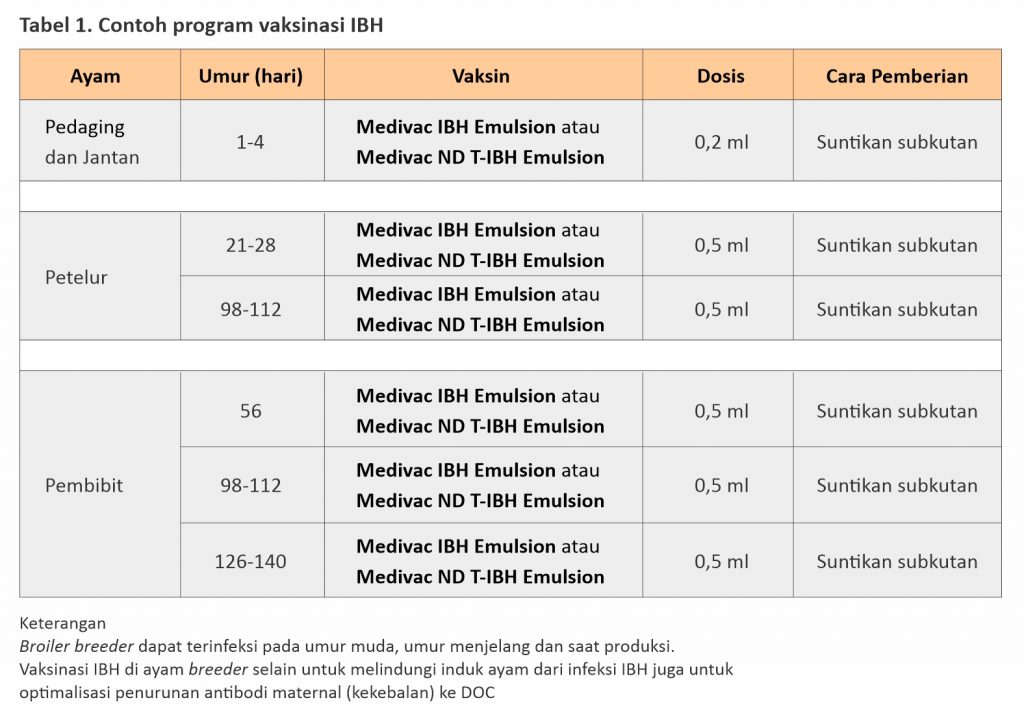
Vaccination can prevent losses caused by this disease, do the vaccination program according to local farm conditions. IBH vaccination in chickens broiler can be done age 1-4 days while the chicken layer time pullet performed at the age of 21-28 days. If necessary, it can be repeated again about 2 weeks before the production period or the age of 98-112 days. To breeder farm (breeder) can be given at the age of 56 days, then at 2 weeks before the production period or age 98-112 days, until repeated age 126-140 days.
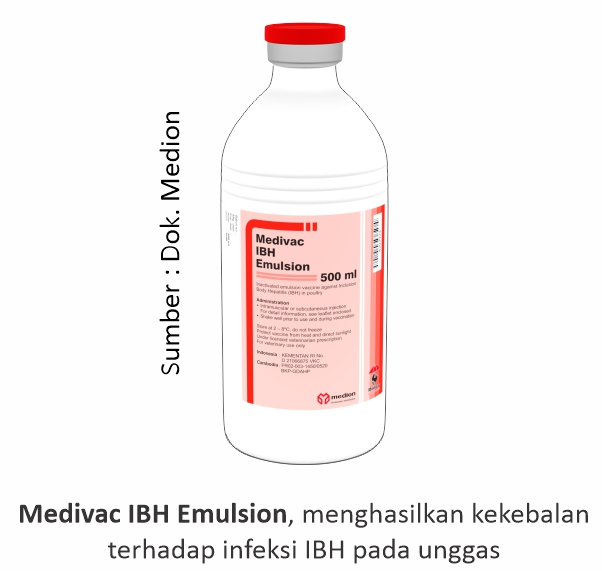
Medion produces vaccines to prevent IBH diseases that are homologous to the virus in the field, namely vaccines Medivac IBH Emulsion. Medivac IBH Emulsion is a Medion inactivated vaccine that contains the virus Fowl Adenovirus (FAdV) serotypes 8b and 11 adjuvant mineral oil to improve and prolong the action of the vaccine. The absence of cross-protection between FadV virus serotypes makes it possible for chickens to be infected with more than one type of serotype. So it is important to provide protection against infection Fowl Adenovirus starting from the parents with vaccines containing the latest field isolates, namely serotypes 8b and 11.
In addition to vaccination, controls that can be done to prevent IBH include :
- Strict selection of weak chickens, depression, wattle and pale Combs as well as anemia and isolation as soon as possible.
- Minimize stress factors that can aggravate the condition of chickens. Multivitamins such as Vita Stress or Strong n Fit which can help increase stamina.
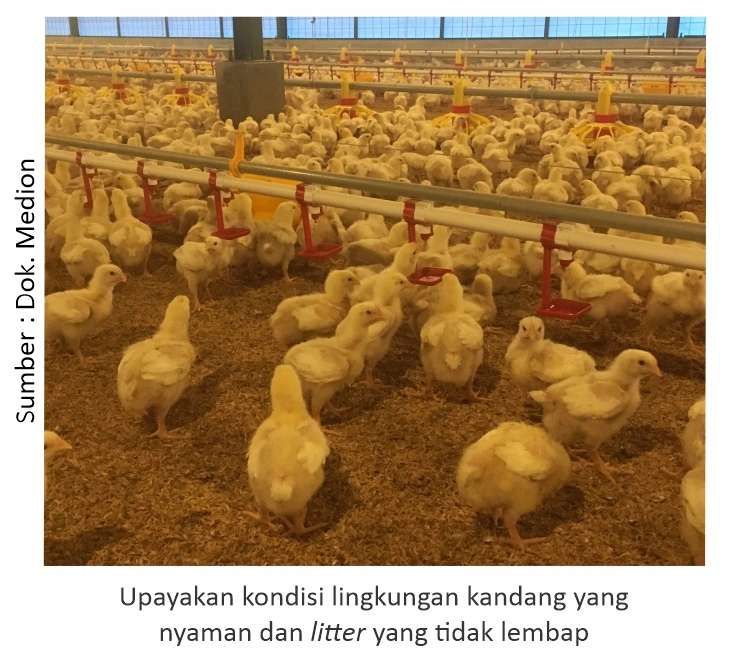
- Try to keep the farm well managed in order to create a comfortable atmosphere for chickens. The chicken in the cage is not too dense, the cage air circulation is good and the replacement litter routinely.
- Implementation biosecurity strictly to suppress the spread of disease seeds around chickens. Implement biosecurity model 3 zones (clean, transition, dirty) to limit traffic to prevent the spread of disease.
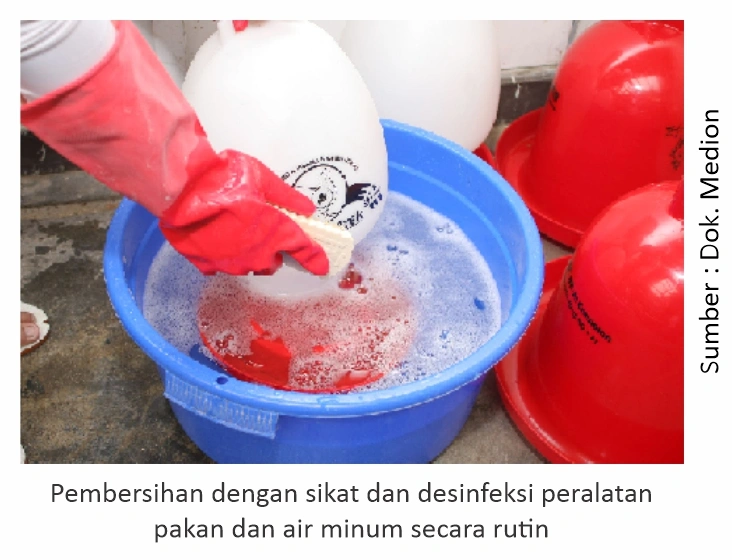
Tighten disinfection of both cages, equipment, vehicles/trucks and incoming personnel. Perform routine disinfection with disinfectants containing Iodine such as Antisep (for non-iron cages) or Neo Antisep. Provide a footbed dip tub filled with disinfectant, and get used to cage control from young chickens to old chickens. Perform disinfection of drinking water using Desinsep to reduce disease transmission through drinking water.
Inclusion Body Hepatitis being one of our main concerns in an effort to prevent disease and maintain stable chicken performance. Hopefully this article can add insight and our vigilance against IBH disease attacks today. Greetings.