
Chicken carcass or meat is one source of animal protein that has high nutrition, especially essential amino acids are complete. Chicken meat is a relatively cheap meat on the market compared to other meats such as beef, Buffalo and goat. So the level of consumption of white meat in the community is quite a lot ranging from the upper to lower levels.
Chicken meat also has other advantages, namely soft meat fibers, easy to chew and has a distinctive taste that is favored by many people. However, chicken meat will be perishable food when we are in control. It needs wise and careful handling in order to obtain nutritional benefits in consuming chicken meat for the human body and avoid the threat of infection. To that end, we try to review this discussion to add insight to readers related to post-harvest chicken management broiler.
Get to know the chicken carcass and its nutritional content
Chicken carcass is a piece of chicken body without blood, feathers, head, neck, legs, abdominal fat and internal organs. In principle, chicken carcasses consist of meat and bones with the percentage of meat ranging from 50-70% of carcass weight or 40% of live weight.
In general, the standard division of commercial chicken carcass pieces consist of five main parts, namely the chest, wings, back, upper thighs and lower thighs. Each of these parts consists of two pieces or a pair, so that the total pieces into 10 parts. The chest is the main component of the poultry carcass and is heavier than the thighs, back and wings. The muscle development of meat and carcass weight is influenced by the sex of the chicken, age and body weight when harvested, strains chickens, the type of feed given, as well as maintenance management applied. In addition, there is also a process deboning which is a further step in the process of processing chicken meat by separating the meat from the bones for the manufacture of nuggets, sausages or chicken meatballs.
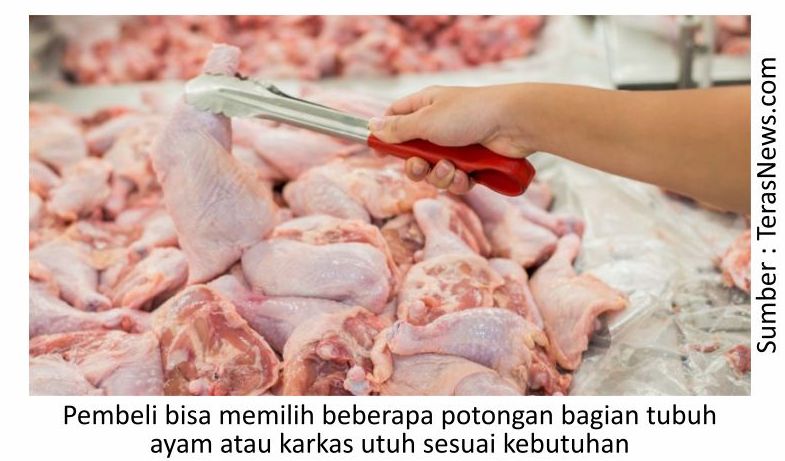
Chicken meat contains about 73.38% water, 20.81-22.08% protein, and 2.98% fat (Soeparno, 2011). In addition, chicken meat also contains carbohydrates, minerals and pigments. The levels of each of these components will vary depending on the type or breed of chicken, age, sex of the chicken, type of feed and how to maintain it. These components provide various benefits when consumed by humans such as:
- High protein source. Chicken meat contains 18-22% high-quality protein due to its structure that is easily digested, easily absorbed, and contains complete essential amino acids (Muchtadi and Sugiyono, 1992). Especially in chicken breast contains more protein than chicken thighs so it is beneficial for immunity, helps the formation of blood cells, and build muscle mass. Lysine and methionine in chicken meat plays a role for the repair, formation and maintenance of tissue. Amino acids in chicken meat can also help maintain heart health, help prevent stress and depression and improve memory. Carnosine and anserine in chicken meat is proven to act as an antidote to free radicals that can damage brain cells (Konagal et al., 2013).
- Rich in vitamins. Vitamins in chicken meat are various such as vitamin A which serves to maintain eye health and vitamin B12 which plays a role in helping the work of the human nervous system. The thighs and breasts of the chicken become the part that contains vitamin B12 the best. Chicken meat is also high in B vitamins3 dan B6 necessary in the metabolism of fats, carbohydrates and proteins in the body. Vitamin D is also contained in chicken meat to help calcium absorption and strengthen bones.
- Source of minerals and selenium. The mineral content in chicken meat consists of iron and phosphorus which serves to help the formation of hemoglobin to prevent anemia, maintain healthy brain, bones and teeth and can facilitate the body's metabolic system. Selenium plays a role in thyroid hormone metabolism and boosts immunity.
Choosing The Right Quality Chicken Meat
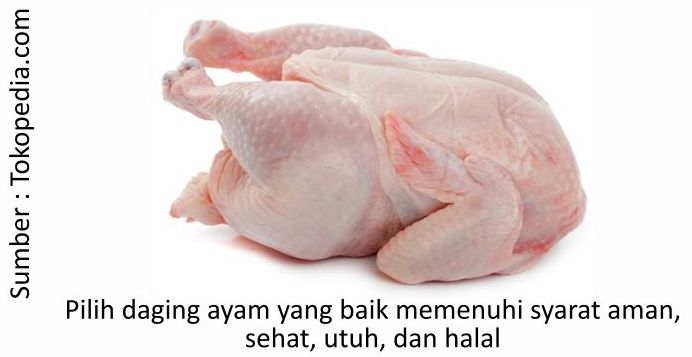
Quality is one of the determining factors in choosing a product. Nutritional content, texture, appearance and taste are some indicators of the quality of chicken carcass products and preparations. In detail, the quality of chicken meat can be identified also from the color, fat content and water binding capacity.
In order to obtain a good and high-quality fresh chicken carcass or meat, some things need to be considered as follows:
- The color of the meat and skin is reddish white and bright. Meat that has been at room temperature for too long will be yellow or dark green.
- The color of the fat under the skin is yellowish white and evenly distributed. Make sure the skin is not transparent or striped, looks shiny and clean.
- There are no signs of bruising or blue-black meat.
- Make sure the surface of the chicken skin is not too dry but not too slimy.
- If the chicken breast meat is pressed, it will feel springy and tender. Meat from young chickens will return to its original shape (springy) because it has good water binding capacity.
- Good quality chicken meat has fine fibers and when sliced there is still blood coming out.
- The aroma of chicken should be fresh. Avoid chicken meat with a pungent rotten smell or even the smell of chemicals.
- The Shape of the carcass is better if no defects are found and has an intact body conformation (appearance).
Wisely Handle Chicken Meat
After choosing and buying a carcass or chicken meat with good quality, it should be processed immediately or can be stored in the right place such as a refrigerator. Chicken meat that is exposed to room temperature for more than 4 hours will easily damage such as changes in appearance (texture and color of meat), changes in taste, causing mucus, and causing a smell that is not fresh.
The best way to store chicken meat for a longer shelf life but still maintain its quality is to store at a low temperature below 40°C (Poultry Indonesia, 2017). Low temperatures can make meat more durable because disease agent bacteria become inactive.
If buying frozen chicken carcasses or meat in packages, make sure the packaging is still strong, safe, and will not leak during the storage period. Freezing Chicken Meat aims to inhibit microbial growth so that it has a safe limit for human health and can extend the shelf life of chicken meat that can reach 6-9 months (Ministry of Agriculture, 2010). Keep in mind, the freezing temperature can be qualified at least at a minimum temperature of -18°C (Poultry Indonesia, 2017).
Here we describe how to wisely handle and process the right chicken meat so that the quality is maintained as well as safe from the threat of disease seeds :
- For chicken meat stored frozen, first in first out system can maintain the quality of chicken meat. It should be noted that frozen chicken meat has different characteristics from fresh chicken meat. Even though it has been stored frozen properly, if the processing is not correct, it will still result in a decrease in meat quality or even contamination with disease-causing microorganisms.
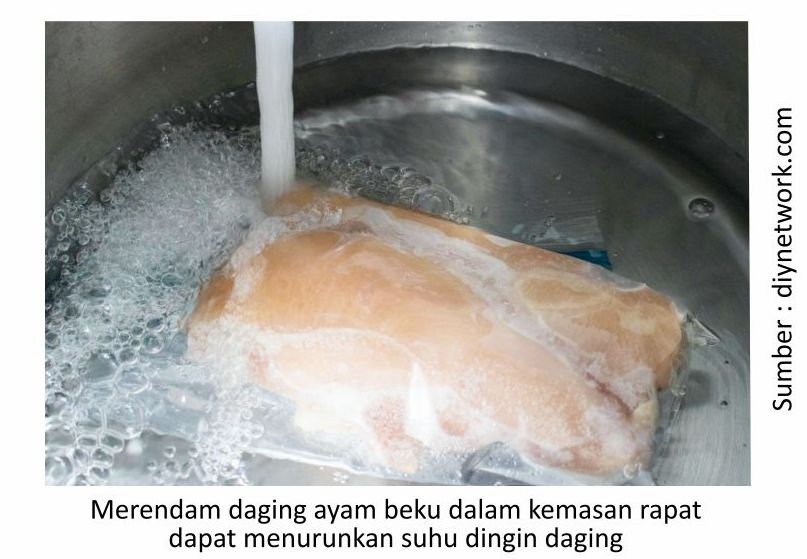
- A good thawing technique for frozen chicken meat is to lower the chicken meat from the freezer to the chiller before cooking. You can also do this by immersing the frozen meat in water while the meat is still tightly packed in plastic. If the water looks cloudy, the water can be changed at least once every 30 minutes until the chicken meat is no longer frozen. If melted using a microwave, the time needed will be faster.
- Avoid washing the chicken before cooking because the water will splash everywhere, triggering the risk of more bacterial contamination. On the other hand, the bacteria will also spread to kitchen utensils and cutlery in the washing area.
- Always keep kitchen utensils and refrigerators clean. Routinely sanitize the refrigerator where raw chicken is stored. Routinely clean cutting boards and utensils used to cut raw chicken. Try to use different cutting boards, knives and napkins for raw and ready-to-eat foods.
- Personal sanitation is done by getting used to always washing hands with clean water and soap before and after handling raw chicken meat.
The best way to make sure the bacteria is Dead is to always cook chicken until cooked and make sure that the temperature when cooking has reached at least 75°C.
Chicken meat is rich in nutrients for Human daily consumption will be very beneficial if handled and processed appropriately. Careful handling of chicken meat and not carelessly will prevent us from contamination of disease seeds, provide delicious taste and help maintain a healthy body.
May be useful.