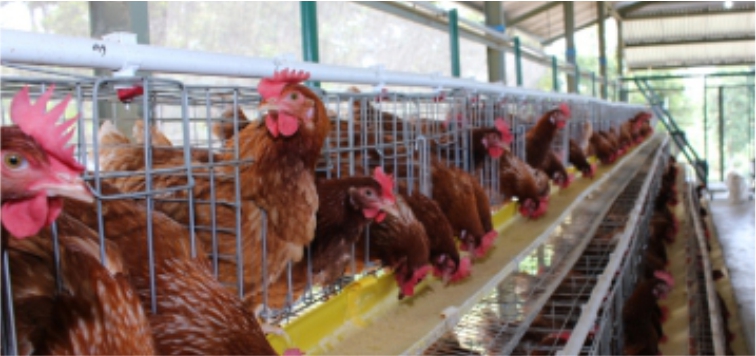
Modern laying hens are created from genetic engineering with the potential to produce eggs in large quantities, last a long time (persistence of good egg production) and have good ration efficiency. The adequacy of nutrition in chickens has a great effect on the productivity of chickens and is closely related to the functioning of the digestive tract. The digestive tract that functions optimally is able to utilize rations through the process of digestion and absorption of nutrients that lead to maximum livestock productivity.
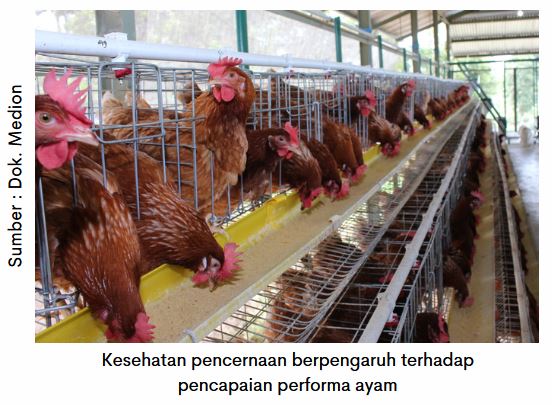
Chicken Digestive Tract
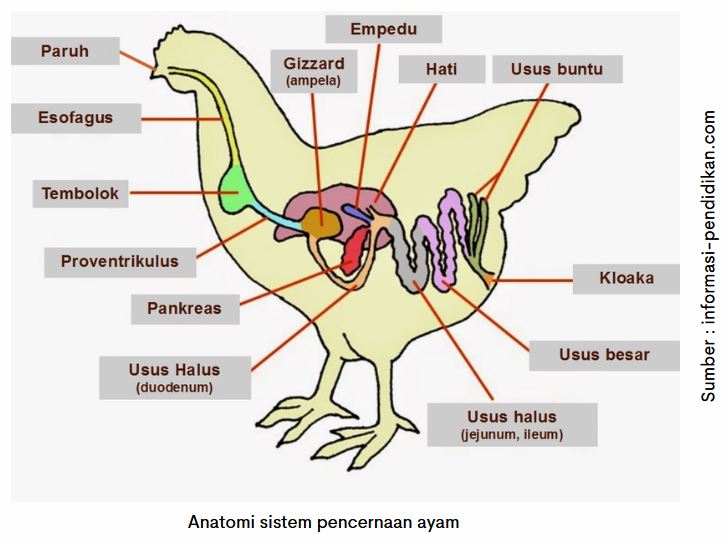
The digestive tract of chickens is one of the vital organs where the conditions in the digestive tract will affect chicken productivity. The digestive tract system starts from the beak, esophagus, cache (crop), proventriculus, Gizzard (gizzard), small intestine, appendix, colon, and cloaca. Other vital organs that are accessory organs in the digestive system are the liver, bile and pancreas. Along the channel is inhabited naturally by microflora such as bacteria, protozoa or fungi.
The intestine is an organ that plays a fundamental role in the absorption of nutrients. The intestinal tract becomes the most populated part of several types of bacteria. Changes in intestinal physiology in laying hens cause greater economic losses than changes in other systems. This is because the intestine is a key organ in productive performance, and any damage to the intestine will negatively affect egg production. Therefore, the physiology of the intestine must be in good condition to optimize nutrient utilization.
Some of the criteria for a healthy poultry digestive tract are long intestinal villi and the integrity of the digestive tract. Intestinal villi are finger-like formations in all parts of the intestine that function to absorb food juices (nutrients) that extend from the bottom of the intestine towards the lumen (cavity) of the intestine where food is digested and absorbed from there. In principle, the longer and wider villi will expand the area of nutrient absorption in the intestine so that the absorption of nutrients is more optimal. Adequate gut health and physiology guarantee optimal nutrient absorption, which increases productivity as well as internal and external egg quality.
Factors affecting the quality of the digestive organs
Many factors affect digestive health and performance in poultry including:
- Primary immune system disorders in digestion
Intestinal health is one of the keys to the maximum productivity potential of chickens. Not only plays a role in the process of digestion and absorption of nutrients, but also an important factor of the immune system of chickens. The digestive tract needs to be considered healthy in maintaining the network working system gut-associated lymphoid tissue or GALT. The digestive tract along the small intestine and large intestine contains lymphoid tissue scattered within the epithelium, lamina propria, or in the form of plates peyer’s patches and caeca tonsil. GALT is part of the lymphoid tissue that serves as a site for mucosal immune response to produce antibodies and receive mucosal immune response stimulation (Marsetyawan, 1993). Lymphoid tissue produces antibodies (IgA), which accumulate in the blood. Damage to the intestinal mucosa will result in the release of plasma and red blood cells so that the levels of IgA, as a defense in the surface layer of the intestine also decreased. Damage to the intestinal mucosal tissue will cause the process of digestion and absorption of nutrients is not optimal. As a result, nutritional deficiencies occur until the formation of antibodies is disrupted and more susceptible to infection with other diseases.
- Quality of feed and drinking water
Imbalance of nutrients and non-compliance with the quality of the ration can affect the process of reception in the digestive tract so that it can damage certain organs. The gastrointestinal tract is particularly sensitive to high levels of coarse fiber and anti-nutrients (phytic acid, non-starch polysaccharides (NSPs)). Too high a protein content leads to excess uric acid levels followed by ammonia production. Lack of vitamin A intake can also interfere with digestion in the chicken's body due to a decrease in the work of the esophagus, gizzards and kidneys. In addition, bacterial contamination of the ration and/or drinking water can spread into the chicken's body and cause the chicken to develop gastrointestinal diseases.
- Presence of fungi and mycotoxin levels
Mushrooms in the ration can reduce nutrients so that the absorption of nutrients by chickens is not optimal. Moreover, if the presence of mycotoxins produced from fungi that will irritate gizzard- gizzards on chicken.
- Balance of intestinal microflora
In a balanced condition, the microflora that is in the intestine will give an advantage to the host/host. However, if the balance is disturbed, it will affect the morphology of the digestive tract. The emergence of digestive bacterial infections up to damage the immune system of chickens. Normal bacteria are in the digestive tract of chickens such as C. perfringens (the cause of NE disease) can also infect when the condition of the chicken decreases and is supported by uncomfortable environmental conditions. A high concentration of bacteria in the intestine is excreted in the feces and can also infect other chickens. The bacteria can cause inflammation and destruction of the intestinal lining. In addition, bacteria will also produce toxins that can interfere with the process of absorption of nutrients and lead to increased intestinal peristalsis so that diarrhea symptoms occur.
- Stress in chickens
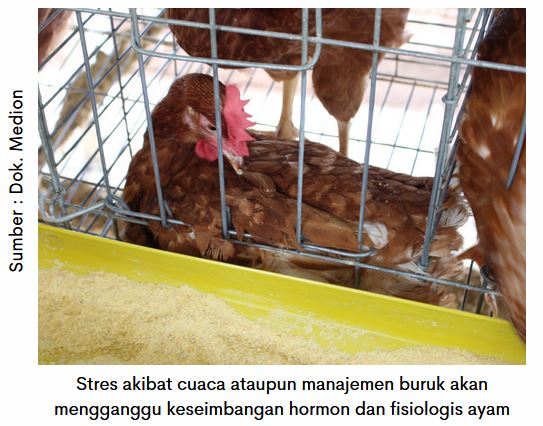
Stress in chickens is a normal physiological reaction to the situation and the treatment felt by chickens. For example, an overcrowded cage, too high a temperature, or a sudden change in ration. In stressful conditions there will be an increase in the production of corticosteroid hormones that can inhibit the immune organs in producing antibodies. This will trigger immunosuppressive effects that have an impact on chickens susceptible to diseases including gastrointestinal diseases. Laying hens during the peak of egg production usually experience stress and decreased appetite to meet the needs in terms of protein and calcium. This stress can cause an imbalance in the intestinal microflora, which, of course, leads to Easy entry digestive disorders.
- Poor cage sanitation
Seeing the weather conditions that often change drastically at this time, the condition of the chicken's body tends to decrease and the body's defenses become not optimal. The rainy season that still occurs in a volatile manner also indirectly affect the spread of the seeds of digestive tract diseases. Litter a damp and wet environment is an ideal medium for the growth of disease-causing microorganisms.
- Digestive infections
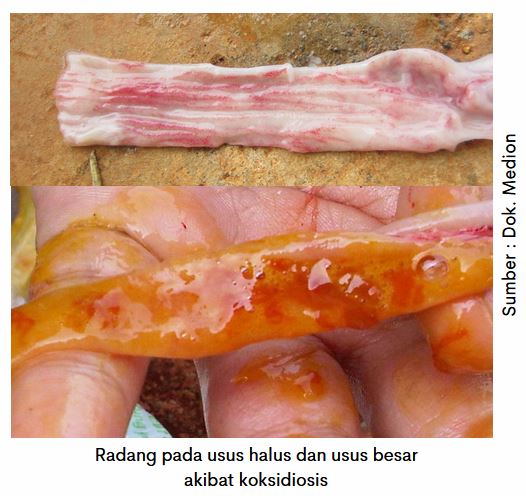
Livestock that experience digestive disorders such as bacterial infections can cause the digestive tract to not work properly. The challenge of disease in the field is very high can damage and affect the length of the intestinal villi during infection so that the absorption of nutrients will also be disrupted. Diseases of the gastrointestinal tract can be caused by several factors, namely infectious and non-infectious. Infectious factors can be caused by bacteria, viruses and parasites. While non-infectious factors can be caused by toxins. Frequent gastrointestinal infections such as colibacillosis, salmonellosis, coccidiosis, and Necrotic Enteritis it is often found in chickens.
The linkage of digestion with egg production
Digestive health and productivity of laying hens are closely related. Because the absorption of these nutrients will affect the egg production process. It is important to know that optimal digestive conditions in laying hens will absorb nutrients efficiently so that from the ration will be a quality egg. Some disorders or problems that occur in laying hens if nutrient absorption is not optimal include :
- Kerabang quality decline
Intestinal damage will also allow deficiencies in the absorption of minerals, especially calcium. Initially, the chicken will use calcium stored in the bones, but gradually the resulting egg shells are thin and there is an increase in the percentage of broken eggs. Sometimes also observed unfermented eggs.
Deterioration of the interior quality of eggs
The adequacy of nutrients contained in the ration greatly affects the quality of the interior/in the egg. Lack of nutrients will cause problems in the color pigmentation of the yolk, the nutritional value of eggs decreased to the deterioration of the value Haugh Unit. Like one of them, the weight of egg yolk can be influenced by the nutritional intake of crude fat protein.
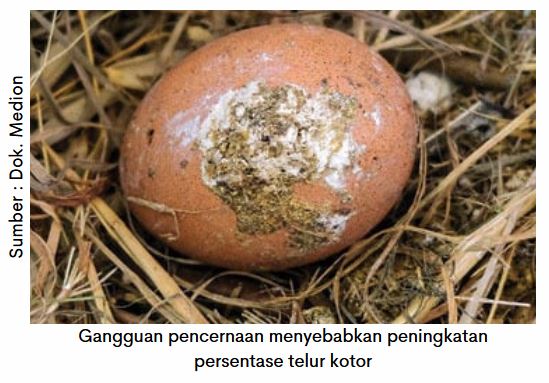
- Increased percentage of gross eggs
The indirect risk of indigestion in chickens will lead to stool consistency problems. This problem will increase the percentage of dirty eggs that negatively affect the results of sales in consumers.
- Percentage decrease in the number of eggs and egg size
The overall impact of digestive disorders can qualitatively reduce the percentage of egg production. This is because chickens are not optimal in absorbing enough nutrients and minerals to cover the needs of egg production (both for metabolic processes and for forming eggs). Until the end it can lead to significant economic losses.
Control management and Digestive Health
In maintaining the balance and composition of the intestinal microflora, the things we need to consider include:
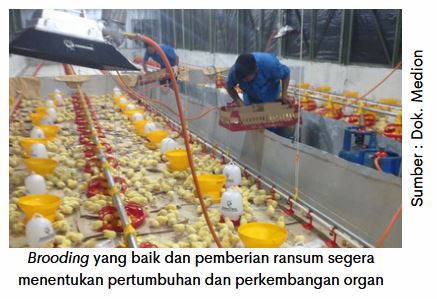
- Good initial maintenance management
Time brooding period, this is the beginning of the development and growth of chickens. Whether or not the performance of chickens in the next phase is determined from how maintenance in the future brooding period,. One of them is the development of digestive organs, which will later affect the metabolic process and absorption of ration nutrients.
- Reducing the population of seed diseases around chickens
Fulfill the management of cage rest for at least 2 weeks calculated after the cage is clean and disinfected. It aims to break the life cycle of seedlings since the beginning of maintenance. Then, disinfect the empty cage with Sporades or Formades. Routinely during maintenance, re-spray the cage and all equipment using Medisep.
- Administration of organic acids
Acidifier or organic acids play an important role enough to help lower the pH of the digestive tract and keep the pH of the upper digestive tract below 6. Indirectly, the pH can suppress the colonization of entero-pathogenic germs, such as E. Coli infection, Salmonella, Pseudomonas and Clostridium, as well as helping to increase the population of microflora of a beneficial nature in the gastrointestinal tract. Asortin it is an organic acid to maintain the pH of the digestive tract and kill pathogenic bacteria so that the balance of microbes in the digestive tract is maintained and nutrient absorption becomes optimal.
- Improvement of ration management
Give rations as needed and make sure the quality meets the standards. To overcome the lack of Ca, it can be added grit (in the ration). It is also necessary to add vitamin supplements and amino acids such as Egg Stimulant or Aminovit to maintain the achievement of maximum egg production.
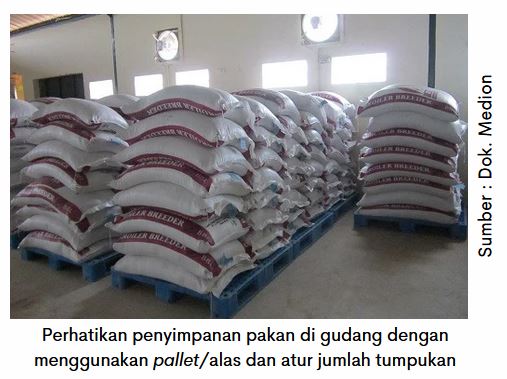
Do not give rations that have clumped or contain mold to chickens. If you need to add mold inhibitor like Fungitox to inhibit the growth of fungi. And no less important when humid conditions, especially during the rainy season, you should use toxin (Freetox) to bind mycotoxins in feed. The size of the particles also affects the development of the intestine. Ration in the form mash can increase ration consumption, nutrient digestibility, digestive organ development and optimize intestinal health. Also note the condition of the storage of rations both from temperature and humidity, and make sure it is safe from mice or other insects. Make a gradual change of ration to minimize stress.
- Administration of feed additive
Feed additive phytase enzymes such as Betterzym it can be given to break the bond between phytate and phosphorus thereby increasing the absorption and digestibility of phosphorus minerals in the chicken's body. Betterzym it can also help improve eggshell quality and production performance.
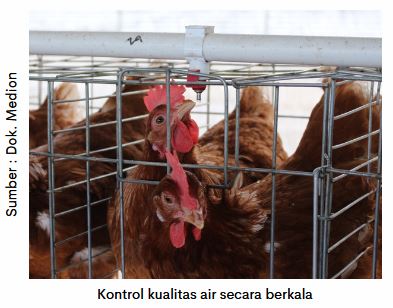
- Maintain drinking water quality
Drinking water quality benchmarks include physical (clear, colorless and odorless), chemical (pH neutral and not hard) and biological (free from contamination E. Coli infection, Salmonella sp. etc). Check the quality of farm drinking water regularly, especially during the change of season, in laboratories such as MediLab to determine the presence or absence of bacterial contamination coliform or E. Coli infection in drinking water.
- Avoid stress factors
Minimize stress factors in chickens such as high density levels, rough vaccination treatment, hot weather or noise. It is necessary to find the root cause of the uncomfortable chicken for the next anticipated. If necessary, the chicken is fasted to eat 1-2 hours during hot weather during the day to reduce the heat released by its body. To increase endurance and cope with stress can give such multivitamins Vita Stress. In addition to increasing the body's resistance, it is also necessary to give herbal immunostimulants such as Imustim to improve the work of the immune system of chickens. With the administration of immunostimulants such as Imustim at the beginning of maintenance can also optimize the role of GALT in the gastrointestinal tract in forming immunity.
- Severe litter and feces well
Clean the stool regularly and handle litter as soon as possible in order to be able to control and minimize pathogenic microorganisms. Perform flip-flops litter from Day 3 to prevent litter wet. If found litter the one that clumps a little, immediately sort it out and take it out. However, if found litter wet or lumpy in large quantities, cover with litter new. Help with giving Ammotrol to control ammonia and odor levels in the breeding area and improve the permeability of the gastrointestinal tract.
In Case Of Digestive Tract Disorders
If there has been a digestive infection disorder, do the right handling and treatment.
- Perform selection and isolation on infected chickens based on the severity of the disease to minimize disease transmission.
- Give antibiotics to treat digestive infections due to bacteria (Colibacillosis, NE, Salmonellosis) for example by Neo Meditril or Tinolin. While in infections caused by protozoa (coccidiosis) can provide antiprotozoa such as Amprosid. Amprosid work effectively disrupt the stages of the asexual process of protozoa Eimeria, so it can not develop in the digestive tract of chickens and eventually die.
- Perform stool cleaning/litter that looks mixed with blood and replace litter already wet / damp. Open the curtains wide or install a fan if the cage temperature is too high. Improve maintenance management by performing regular weight control, setting lighting programs and creating comfortable conditions.
- In sick conditions, the appetite and body condition of the chicken will decrease. Give multivitamins such as Fortevit or Vita Stress after the treatment is completed to restore the stamina of the body and increase the appetite of chickens.
- Perform drinking water sanitation if the water source is polluted E. Coli infection as well as other pathogenic bacteria. Do not forget also to always maintain the cleanliness of drinking places from fecal contamination and litter.
- Disinfection of the cage using Medisep or Zaldes to reduce the population of seedlings of the disease.
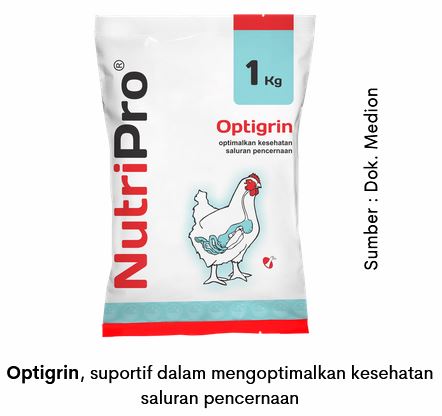
- Provide supportive therapy to help optimize digestive tract health. Optigrin it's natural growth promotor with the content of phytobiotics that are able to maintain the balance of intestinal microflora, improve performance,increase the body's resistance to chicken and reduce mortality from disease.
The digestive tract is indeed the home of various bacteria that help livestock to digest feed but also for pathogenic bacteria that cause various diseases. So always condition the balance of the chicken's digestive tract to support the health and achievement of chicken productivity. Greetings.