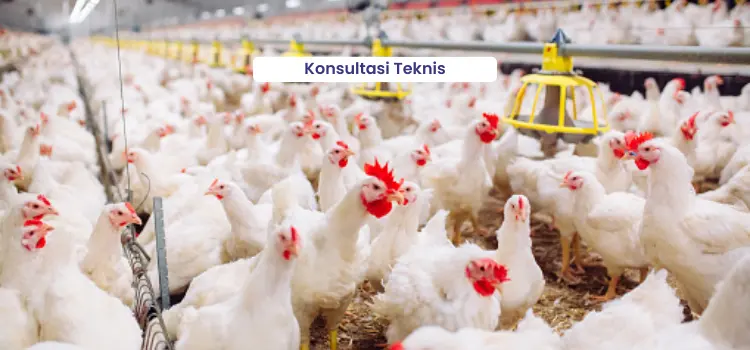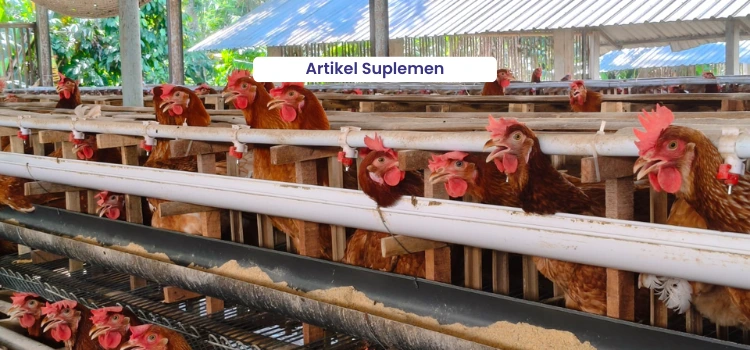
The raising of chickens, both broilers, males, layers and breeders is carried out in large populations, thousands and even millions of heads. Parameters that can be one of the determinants of the success of the maintenance is the chicken has a good uniformity, ranging from strain, age, weight and development of reproductive organs to health status (antibody titer levels, vaccination programs and biosecurity). The role of selection and culling it becomes very important to maintain uniformity.
Selection and Culling That's Important!!!
Selection and culling being one part of chicken rearing management is very important to be applied and implemented properly. The correct application will keep the chicken in a uniform condition so that the peak production and growth speed can be achieved properly.
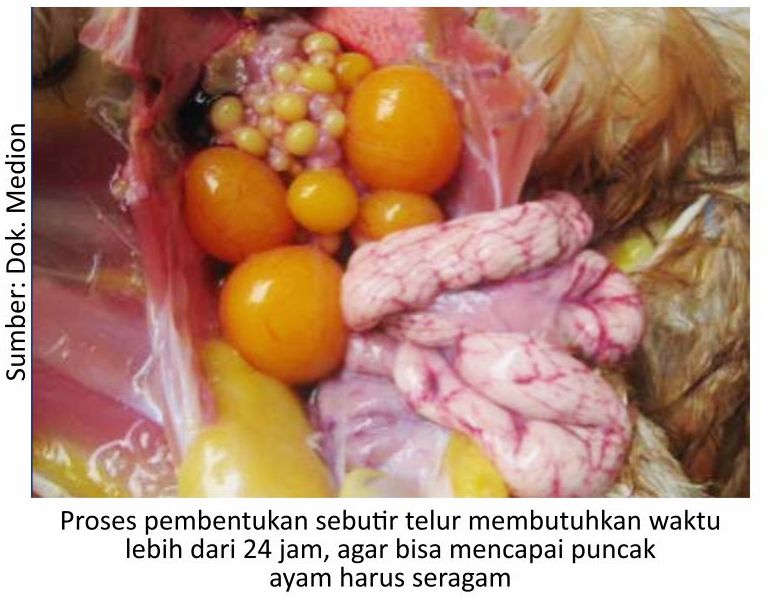
One of the cases commonly seen and often found when we are careless not to do the selection and culling well is egg production can not reach the peak. Why is this happening? A perfectly processed egg takes approximately 24 hours or in other words 1 chicken is only able to produce 1 egg. When we expect the peak production is reached, for example 96% that means 96% (960 head of 1,000 head) of the total chicken population must lay eggs on the same day. That means the chickens must be in unison, must be uniform, together in the same day to produce eggs. And here the key is uniformity. This will also be achieved if we menerepkan selection management and culling in discipline.
Current Parameters Selection
What parameters need to be considered when making a selection?
- Strain
Strains of chickens are so many, both broilers and layers. In one cage should be sought to use only one strain of the same. It is quite easy to apply for modern breeders with a large population. But this is usually a constraint on smallholder farms with limited capital and access to a good supply of DOC.
We can get information related to chicken strains from breeding companies. It would be very better if this strain was obtained also from one aged breeding chicken. Differences in strains will trigger differences in growth power (growth speed) to health status (antibody titer and vaccination response.
- Weight loss
The achievement of body weight will reflect the condition of the internal organs, both digestive, respiratory and reproductive organs. Weight should be controlled from the time of DOC to harvest or reject. In addition to weight that needs to be considered is also the posture of the chicken. The difference in body weight when DOC will largely determine the speed of growth. Make sure the DOC's weight is according to the standard, which is at least 33 grams for laying hens and 37 grams for broilers (SNI).
Body weight is said to be fresh if the difference in body weight is + 10%. With a uniform weight, it is expected that the ability of chickens to eat and drink can be uniform.
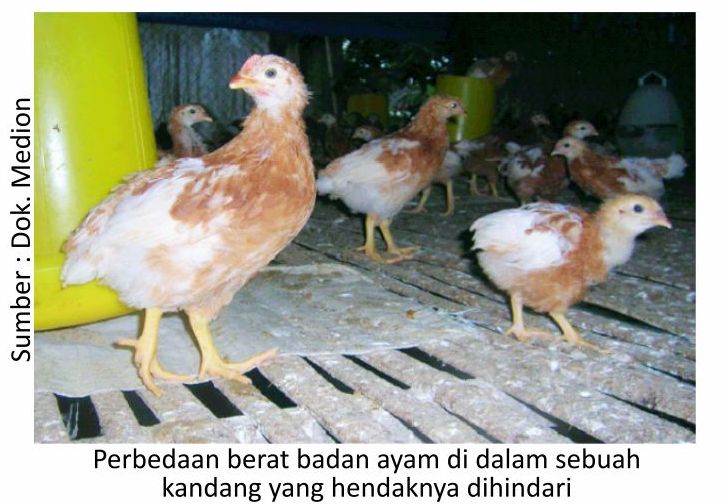
The condition of chickens with non-uniform body weight, there is a noticeable difference in body weight will cause chickens with large body weight (exceeding the standard) will dominate while chickens with small body weight will be increasingly excluded and left behind. Special laying hens and breeders, the achievement of this chicken weight must be in accordance with the standards should not be too fat or too thin. This will greatly affect the ability of egg production, namely the achievement of peak production and persistence (long time to survive at peak production).
- Framework
The skeleton is a very important part of the body for chickens. In addition to functioning to support the chicken's body, the skeleton is also very important in the process of forming strong eggshells. This skeletal growth takes place rapidly when DOC until the age of 8-12 weeks.
Currently, the problems that are found in the field are cases of paralysis in broilers when they want to be harvested and during peak production periods in laying hens. And once identified one of the sources of the problem is the growth of the skeleton or bones that are not optimal.
The good condition of the bones or skeleton of the chicken's body will be reflected in the chicken's well-built posture, good leg length and width of the OS pubis (good collarbone).
Bone growth does not always align or go hand in hand with weight gain. When laying hens over the age of 12 years, the weight condition does not always reflect the condition of the skeleton or bones are good. It could be that the weight of the chicken is appropriate or more standard but the condition of the skeleton is small. Have we ever seen a chicken with a small and short posture but body weight according to the standard? Yes, this can be found in grower chickens (14-16 weeks old) where the body weight is appropriate or even more than the standard but the posture is small. This happens because in the body of the chicken has formed fat while the skeleton is small. It is in these chickens that we will often find cases of prolapse or paralysis.
- Sexual maturity
Sexual maturity of chickens will be seen from the condition of Combs, Wattles and os pubis (collarbone). And these conditions of sexual maturity will largely determine the beginning of egg production, the achievement of the peak of its production and persistence.
This sexual maturity will be largely determined by the current growth of the starter, the quality of the feed given and the lighting program. When the grower does not occasionally increase the length of lighting time because it will stimulate the occurrence of early genital maturity, where chickens will lay eggs earlier with a smaller weight and size of eggs. And if this happens then the chicken will be difficult to reach the peak of production and the size of the eggs will tend to be below the standard.
- Health Status (disease and antibody titer)
Health Status is a very important parameter when we make a selection. Immediately separate or culling chickens with a sickly condition. This can be seen from the activity of chicken movement, body weight and clinical symptoms.
Health programs, ranging from vaccination programs, treatment and biosecurity strive to be uniform in a farm location. The implementation schedule is the same, except when a case occurs.
Antibody titer checks also need to be done regularly, especially after vaccination. This is to ensure the chicken has a protective and uniform antibody titer. Often the attack of the disease begins from a weak chicken, with a subpar weight with a low antibody titer. Medion as a leading veterinary drug company has provided Medilab (Medion Laboratory) spread across branch offices in animal husbandry centers in Indonesia. Medilab will help detect antibody titer levels quickly.
Implementation of selection and Culling
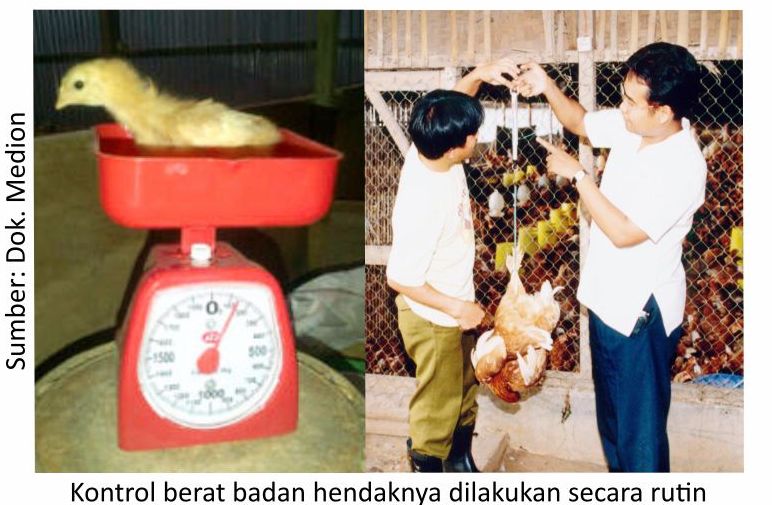
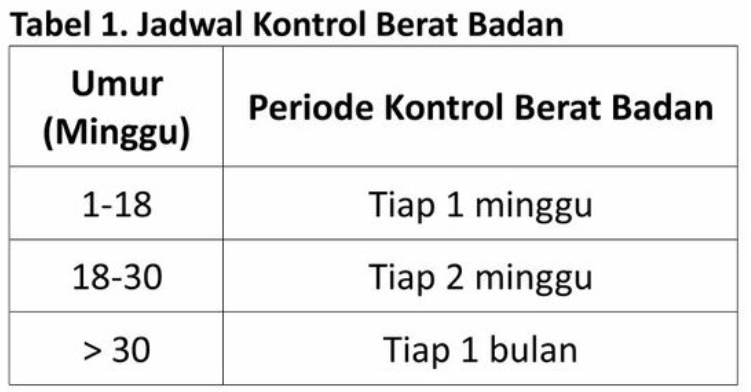
Selection and culling should be started when DOC and continued every period of time, can be done per week or per month depending on the condition of the chicken. Table 1 shows the time period for the implementation of weight control in laying hens, which can be a general guideline.
Immediately take handling measures when getting chickens with inappropriate body weight, ranging from separation in separate cages to the provision of supplements, such as Mix Plus and Top Mix. If necessary, do culling or reject the chickens with very far behind weight, sick or whose egg production is not optimal (only lay eggs below 50% for 2-4 weeks).
Selection and culling can also be done when the data recording shows the level feed conversion ratio (FCR) far exceeds the standard. This is where the importance of farmers have a record of maintenance (recording). From this recording the farmer will be able to have data on the amount of feed spent, the number and weight of eggs produced, the number of chicken deaths.
Selection and culling is one part of the management of chicken rearing. Its application will greatly support the achievement of optimal production. This needs to be done since chicks in, when moving cages and during peak production. Starting from the uniformity of the strain, the condition of achieving weight, skeleton and health status of chickens. The expectation is optimal chicken performance so that more and more farmers ' profits.
Greetings success always.