Mr Adhy Masriadi
Email : adhymnagement791@gmail.com
Please inform the disease, causes and treatment of chickens whose eyes are swollen and like pus?
Answer:
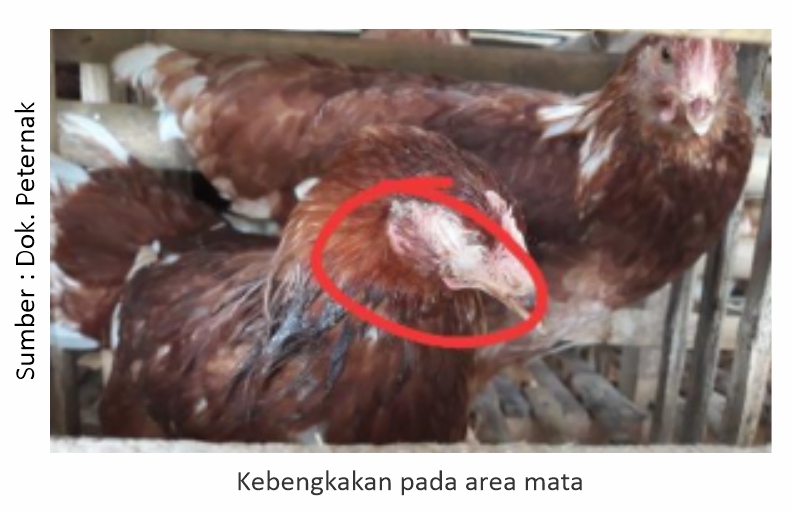
Thank you for the submitted question. Judging by the symptoms mentioned and the documentation submitted, the disease leads to Korisa/snot complications with colibacillosis. At first, the chicken is affected by snot, which causes symptoms of melting in the runny yellow nasal cavity, gradually turning into a thick, purulent with a characteristic odor (foul/fishy smell), and the eye area becomes swollen and the eyes are closed. Then followed by a secondary infection Escherichia coli so that over time the eyes become blurry, closed even in the eyes there is perkejuan/pus. To support the diagnosis, it is necessary to carry out further examinations and necropsy (chicken surgery) to see changes in the anatomy of other organs.
The cause of korisa/snot is bacteria Avibacterium paragallinarum. These bacteria have a predilection (place of preference) in the sinuses/nasal cavity. The sinuses have few blood vessels that cause the drug to reach the location only a little so that the korisa is difficult to eradicate completely. Chickens that have been attacked can become carrier or carrier, so that if the chicken's health status decreases, the disease can re-infect korisa.
This resulted in repeated korisa events and difficult to eradicate. While the cause colibacillosis are bacteria E. Bra. Bacteria E. Bra it is a Gram-negative enteric bacterium and is a normal flora in the digestive tract of chickens, but it can cause illness if the population increases. Colibacillosis disease can be transmitted through contamination of chicken drinking water, litter, air, and feces. In addition, colibacillosis can also be transmitted vertically from mother to Chick.
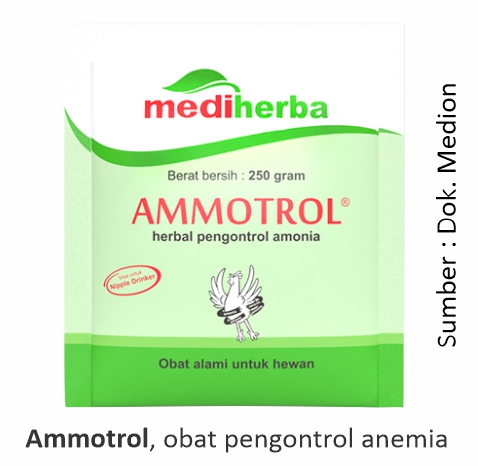
Realizing the difficulty of treating Coryza, the alternative to controlling it is prevention with vaccination. Maintenance management should also be evaluated. It is necessary to apply an all in all out maintenance system or avoid multi-age maintenance to prevent transmission from old chickens and young chickens. Control ammonia levels in the cage because it can be one of the predisposing factors or trigger the occurrence of chorizo disease. To reduce ammonia levels, can use herbal products Ammotrol.
If the chicken is already exposed to korisa and followed by infection colibacillosis some of the things that can be done are:
- Isolate sick chickens to prevent transmission to other chickens.
- Treatment with antibiotics. In mild to moderate infectious conditions, the administration of drugs can be orally (drinking water or chewed). The selection of antibiotics given orally is preferred by the group that has better absorption in the gastrointestinal tract. This is because the bacteria like the location in the sinuses of the nose of which there are few blood vessels. For example, with Amoxitin or Neo Meditril.
- In conditions with high severity, the face is swollen to close the eyes, treatment via drinking water is not effective because the appetite and drinking chicken down. So the administration of the drug is highly recommended by injection or injection. Drugs to choose from include Medoxy-L, Vet Strep or Gentamin or Kanamin.
- Vitamins and electrolytes, such as Fortevit or Vita Stress to maintain the stamina of the chicken body remains optimal.
- Give Imustim herbal immunostimulants to boost the immune system. In addition, it can also be given other herbal products such as Fithera which is a liquid natural remedy that has antibacterial and anticoxidizing abilities.
- It is also necessary to implement strict biosecurity, by spraying the cage every day during an outbreak using Antisep or Neo Antisep. Also regularly sanitize and disinfect cage equipment (rations, drinking places), cages and their surroundings. And drinking water sanitation with Desinsep to prevent transmission of bacterial diseases through water.