The respiratory tract of chickens is the most vulnerable part to infection. Various diseases that we know one of them is Infectious Coryza. This disease is familiar to the ears of farmers considering its occurrence is still often repeated.
Like the incidence of respiratory diseases in general, this disease is strongly influenced by the quality of the air inhaled by chickens. Conditions such as ammonia levels and high humidity, ventilation and air circulation are not good, are some of the things that can trigger irritation of the respiratory tract, so diseases such as coryza it will be easy to infect.
This disease causes chicken productivity to be not optimal. The high economic impact is due to the increase in the number of diafkir chickens, a decrease in egg production, Weight Loss, growth retardation, increased medical costs. The mortality rate from this disease is low, but the morbidity can reach 20-50%. Transmission can be through direct or indirect contact. While chickens that recover from this disease can be carrier or carrier and become the next source of the disease. Therefore, prevention and proper treatment is needed to minimize the incidence of cases coryza repeated.
Know The Causes Coryza
Disease of coryza caused by Avibacterium paragallinarum which are Gram gram (-) bacteria and are facultative anaerobes (can live well, with or without oxygen). Predilection (place of growth) of these bacteria is the sinus infraorbitalis poor blood vessels so it is sometimes difficult to reach when done pegobatan using antibiotics. Transmission of the disease is horizontal, occurring through direct contact, aerosols or through ingestion of contaminated feed and water, with an incubation period of about 1-3 days.
Avibacterium paragallinarum identified consists of 3 bacterial serovars, namely serovar a, B and C. All three exist in Indonesia. Serovars A and C are known to have existed for a long time, while serovar B was discovered only in 1991. Of the three serovars, serovar C is known to be more pathogenic than others.
From research and mapping conducted part Reseach and Development Medion since 2009-2014, it has been reported that in Indonesia 1 other serovar has been found that is different from serovar a, B and C, which is then known as serovar non ABC (serovar M).
Case Update Coryza
Based on data collected by the team Technical Education and Consultation (Tec) Medion, case incidence coryza on chicken layer during 2019, it ranked first even from the previous two years, experiencing a significant increase. As for the case with chickens broiler, this disease is never absent from the top 5, which means that its occurrence is still repeated every year and we should be aware of it. In addition, almost all year round there are cases of infection coryza, both on broiler or layer. This event occurs more in layer compared to broiler.
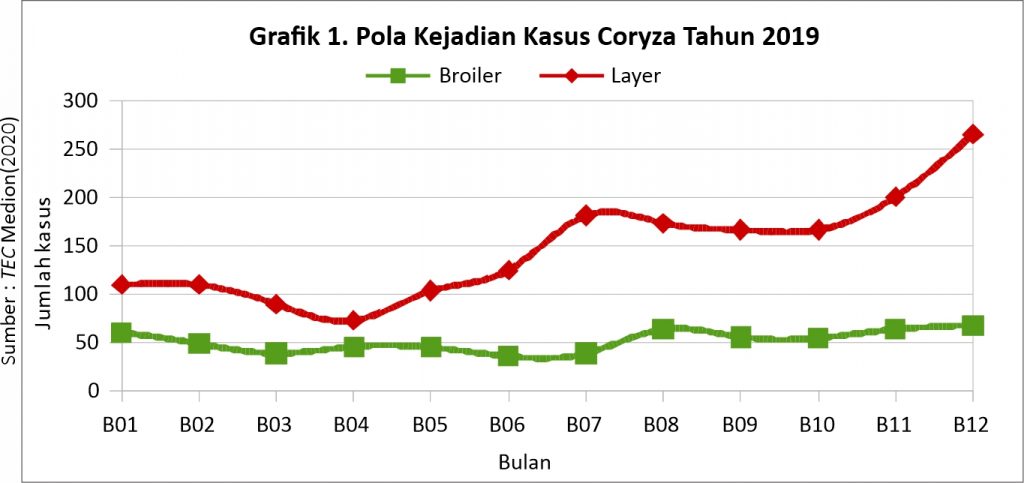
Looking at Graph 1, the incidence of cases coryza it can be seen to follow a pattern that results in the emergence of predisposing factors for the occurrence of this disease, such as during the change of season or the presence of various factors that cause stress, such as weather, home environment, nutrition, vaccination treatment and various diseases that cause immunosuppressive. This disease often appears at the same time at the time of the change of Season, supported by maintenance management and poor health.
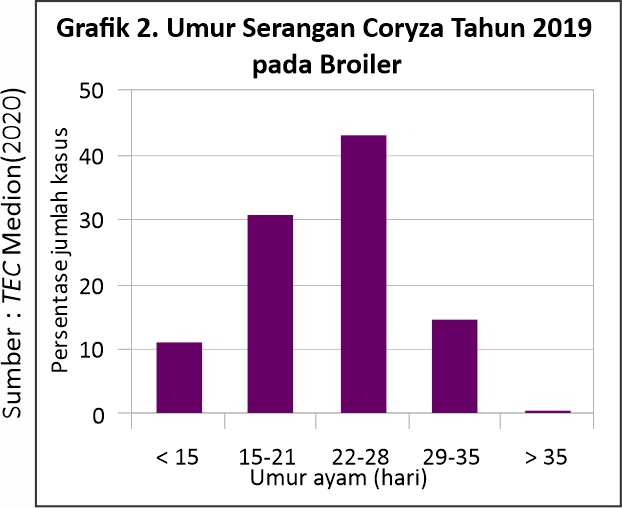
Looking deeper again based on graph 2, on the chicken broiler case occurrence coryza most at the age of 22-28 days. As we know along with the increasing age and weight of chickens, we need to pay attention to ammonia levels are increasing, the higher the density, causing the respiratory tract becomes vulnerable to infection.
While the case coryza on chicken layer most occur at age >18-35 weeks. Good cock layer or broiler both are susceptible to attack, but in 2019 the number of reported cases in chickens layer higher than chicken broiler. This is because the life span of chickens layer longer so it will get a higher environmental stress. Nevertheless coryza remains a threat almost at any age of chickens.
Clinical symptoms and Anatomical Pathology
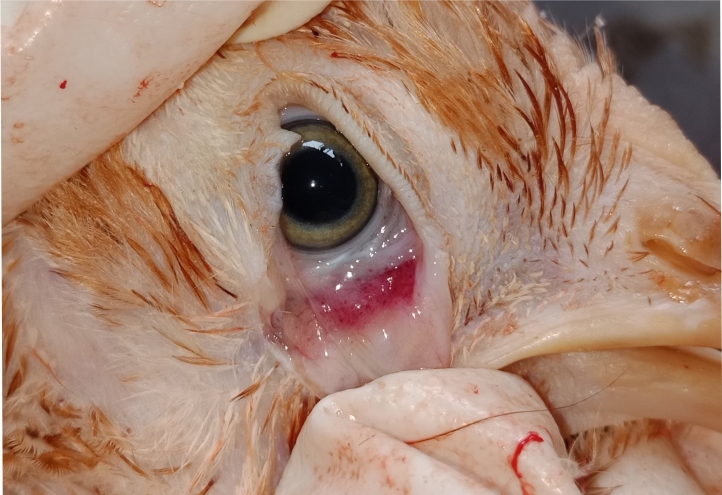
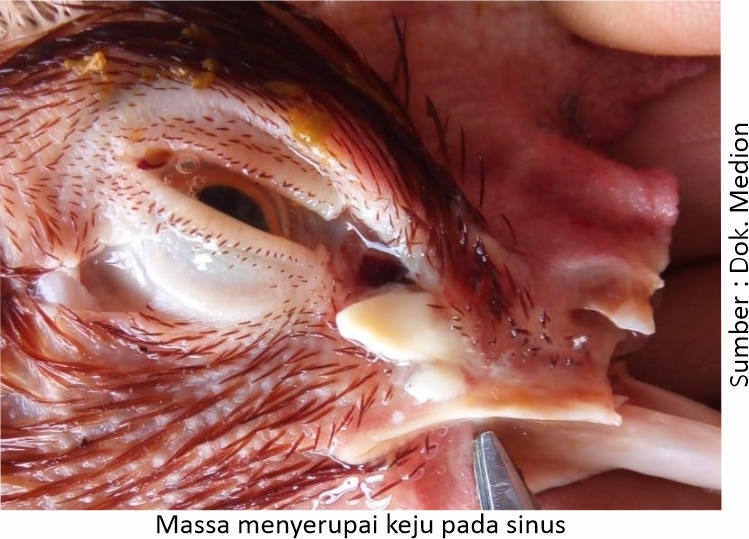
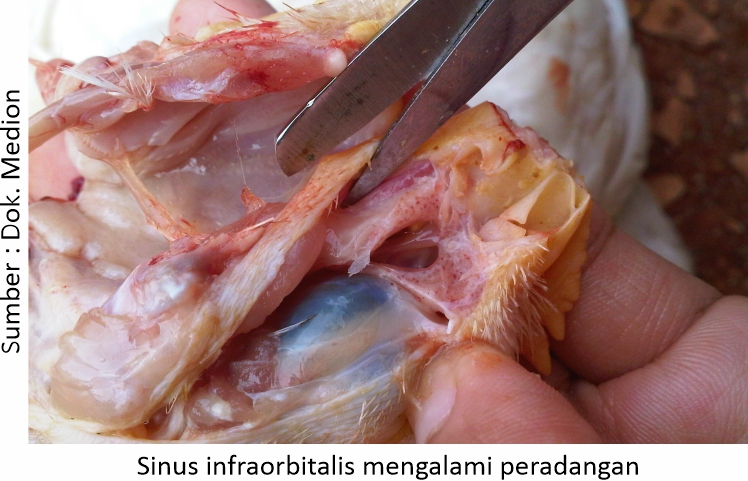
Infected chickens coryza the symptoms are usually mild to moderate (anorexia), a decrease in production that ranges from 10-40% in chickens layer. This disease affects the upper respiratory system precisely in the infraorbital sinus. A change that characterizes it when observed from the outside is the accumulation of exudate or mucus with a characteristic (fishy) odor. This mucus is initially liquid and then thickens causing difficulty breathing and snoring sounds. In chronic cases, there is swelling in the infraorbital sinus area (under the eye) which, if cut, will be found to resemble cheese in it, the eyelids experience conjunctivitis (inflammation), tears come out until the eyes are closed.
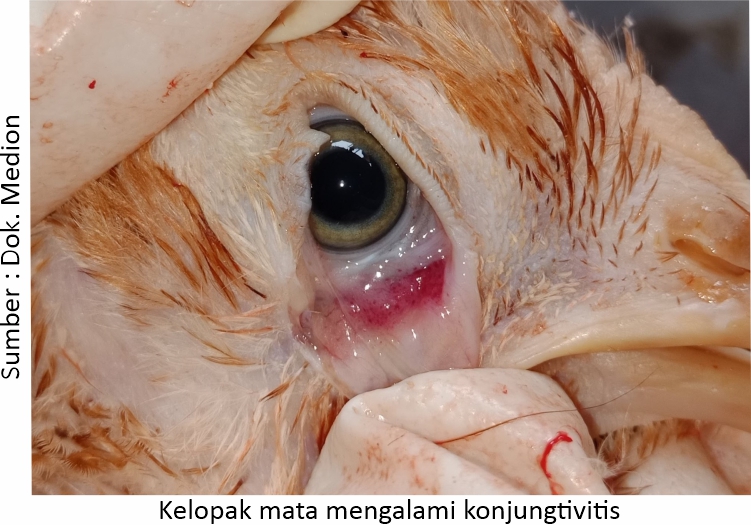
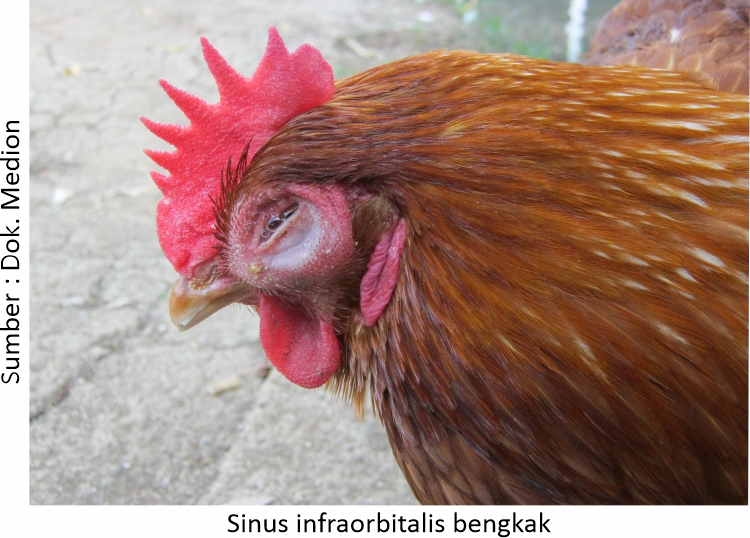
Anatomical pathology changes when chicken surgery is done, among others, is the presence of cheese-like period in the sinus infraorbitalis, inflammation of the sinuses, laryng and trachea.
Why Case Coryza keep repeating?
Infection coryza it is unique when compared to other respiratory diseases. Its occurrence can be repeated and always appear throughout the year. One of the factors that cause this is that chickens recover from infection coryza will be carrier (carrier). If the health status of these chickens decreases, the disease coryza can re-infect.
Unsuitable temperature and humidity are also one of the factors that have an impact on breathing disorders. A comfortable temperature for adult chickens is 25-28°C with a humidity of 60-70%. At low temperature conditions in the rainy season, the humidity of the environment increases so that bacteria coryza growing quite rapidly.
High ammonia levels in the cage also have a negative impact because it can cause irritation to the respiratory tract of chickens, causing other diseases to easily infect. Another factor is the contamination of water, feed, cages, and equipment by dilution of the patient's chicken nose fluid coryza which is very potential to be a source of transmission. So, it's not just bacteria E. Coli infection commonly transmitted by water, but also bacterial causes coryza.
It is no less important to note is the risk of antibiotic resistance that causes cases to be incomplete and repeated in the next period. In addition, the maintenance system multi-age who does not apply management all in all out also facilitate the spread and occurrence of cases coryza it's in the field. So to overcome this need to improve management as a whole.
The Importance Of Vaccination Coryza?
Along with the occurrence of cases coryza recurring throughout the year, this disease is also one that is difficult to treat. As we know that the favorite place of bacteria Avibacterium paragallinarum include sinus infraorbitalis. While in these parts there are only a few blood vessels, so that the drug can reach sinus infraorbitalis just a little.
Aware of the difficulty of treatment in this case, prevention with vaccination is very important. Vaccination is able to reduce the frequency of cases and the incidence will not be too severe, compared to if the chickens are not vaccinated coryza. Do vaccinations using Medivac Coryza B/Medivac coryza T Suspension on chicken layer age 6-8 weeks and repeated at age 16-18 weeks. If the farm is very prone to occur coryza, then repeat vaccination can be carried out 5-6 weeks after the first vaccination. While the chicken broiler/ the male is carried out at the age of 4 days with Medivac ND-Coryza or at the age of 1-2 weeks by using Medivac Coryza B/Medivac Coryza T Suspension.
Prevention and treatment Coryza
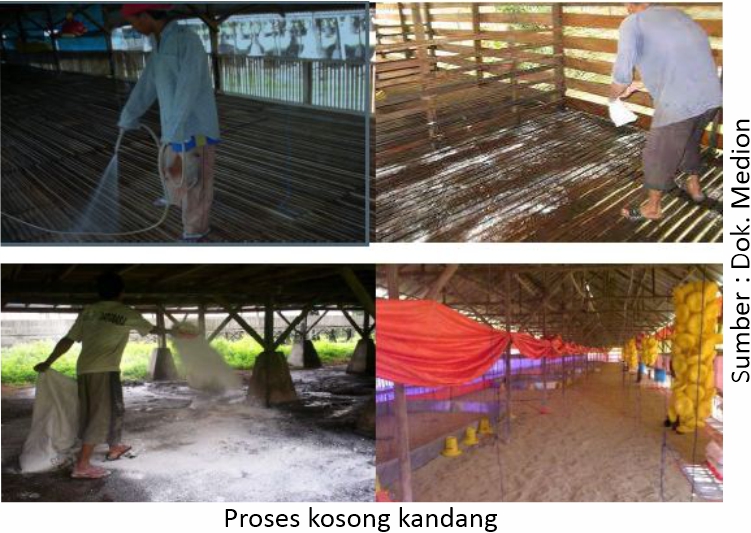
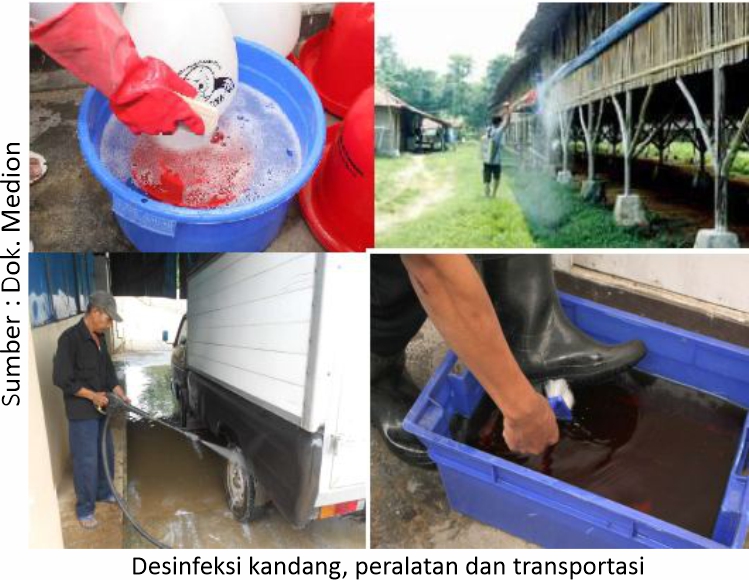
Although the vaccine has been Coryza, possible cases of re-emergence are still being found. Control of this disease requires a combination of maintenance management and biosecurity which should also be increased. To minimize the occurrence of recurrent cases need early prevention. Starting from an empty cage, the optimal is at least 2 weeks after the cage is cleaned and disinfected. Use effective disinfectants to get rid of bacteria Avibacterium paragallinarum like Antisep, Neo Antisep(iodine) and Medisep, Zaldes (ammonium quartener).
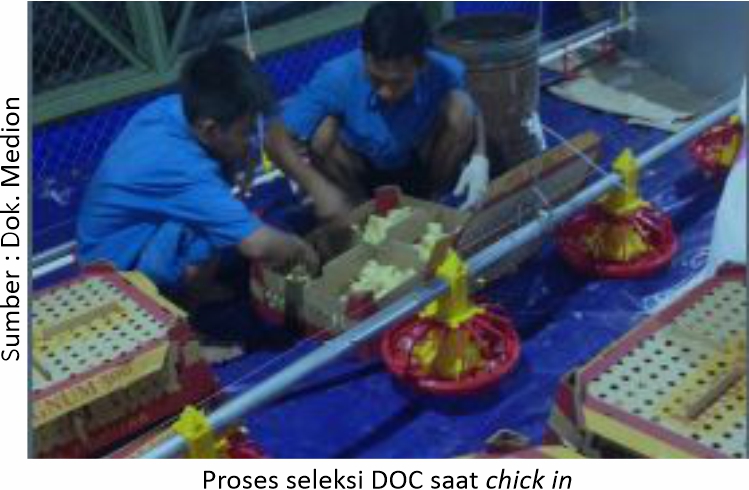
When the DOC came to do the selection and give multivitamins. Separate doc is weak and there is a disease direction. This DOC is at high risk of becoming the cause of problems in the cage.
Apply management all in all out to minimize the occurrence of transmission from old chickens to young chickens. Watch Management brooding period,, the heating temperature should be appropriate, the place for eating and drinking is adequately distributed. Nutrients in the feed must also be ensured in accordance with the needs of chickens to support chicken immunity to be optimal.
A factor very closely related to cases that attack the respiratory tract is air quality. Adequate ventilation, good air circulation, very influential on the adequacy of Gas O2 in the cage.
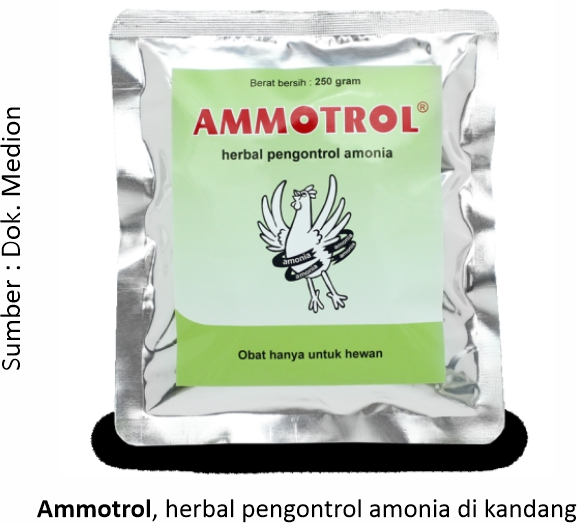
If litter already a little wet, it can be immediately replaced or added litter new one on it. This prevents the risk of upper respiratory tract irritation due to high humidity and ammonia levels. If necessary can use Ammotrol which works to bind ammonia formed from protein metabolic waste into a non-volatile and non-toxic form so that the ammonia odor is reduced. Ammotrol it can also make the feces produced by chickens become drier.
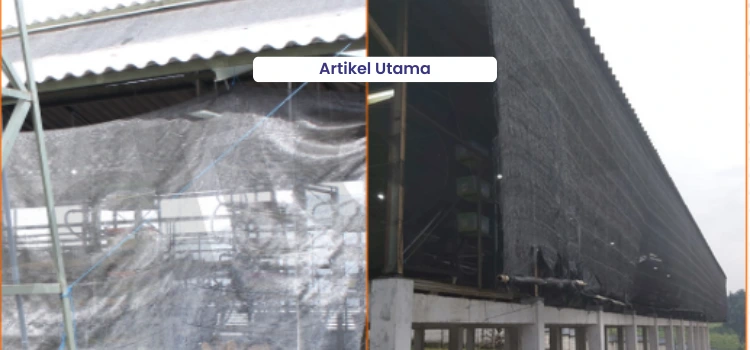
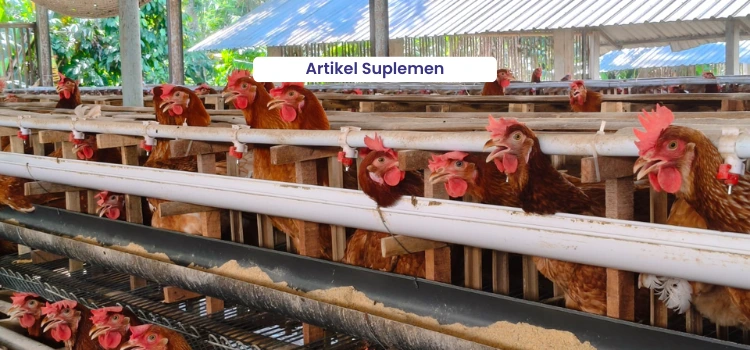
Strive to provide clean air in the cage by adjusting the curtain opening and closing well and adjusting the density of the chicken. Disinfect the cage and clean the feed and drinking area regularly. In cages that still use drinking places from open paralon, mucus that comes out of the nose or mouth of infected chickens coryza potential as an infectious medium that needs to be considered, therefore disinfect drinking water using Desinsep.
In addition to the above-mentioned factors, theStrong n Fit, Vita Strong, Vita Stress or Fortevit) to improve the condition of the chicken's body so that it is not easy to stress. Chickens are animals that are prone to stress. Activities such as beak trimming, moving cages, vaccinations, changing feed as well as heat and noise conditions can cause stress in chickens. When stressed, the immune system in chickens will decrease.
If the chicken is already sick, the first thing we have to do is selection on sick chickens. Separate into different isolation cages because these chickens can be the main transmitters to other healthy chickens. A frequent case in the field is the reappearance coryza after the chicken is cured. One of the causes of this is the non-separation of sick chickens. Indeed, this separation aims to provide more appropriate and equitable treatment. Current cases coryza re-attack could arise due to uneven treatment effects (there are chickens that have been cured, but there are also chickens that only “look” cured or not completely cured). So when conditions are not optimal, the chicken that” looks " cured will relapse.
Principles of treatment in the case of coryza is based on the severity of the clinical symptoms shown. We can group them into mild, moderate and severe cases. Mild to moderate cases we can provide treatment through drinking water using the right antibiotics. Avibacterium paragallinarum causes coryza it is a Gram-negative ( - ) bacterium that can be killed using various types of antibiotics. However, the antibiotic chosen should be one that has good absorption in the digestive tract so that it can be distributed to the target organ, namely sinusinfraorbitalis optimally. Antibiotics that can be used are fluoroquinolon, tetracycline or penicillin. Examples of products are Erydoxcy, Proxan-S, or Neo Meditril.
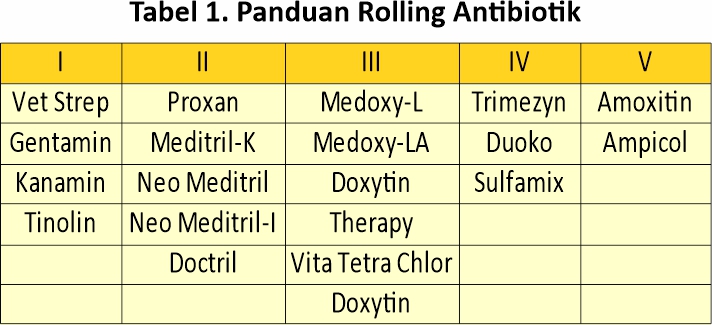
In chickens that experience more severe symptoms such as swelling in the infraorbital sinus area, causing their eyes to close and are no longer able to reach the drinking place. If the condition of the chicken is so, in addition to treatment through drinking water, give the drug by injection from the group aminoglycosides, tetracycline or fluoroquinolon. Examples of products Vet Strep, Gentamin or Kanamin. In the correct treatment principles do as well rolling antibiotics to prevent resistance. We can see some options for this type of antibiotic in the following table:
In addition to the use of antibiotics mentioned above, prevention and treatment efforts coryza can use Fithera which is a Medion herbal product. This product is derived and herbal extracts so it is safe to use and has good effectiveness in killing bacteria Avibacterium paragallinarum causes coryza.
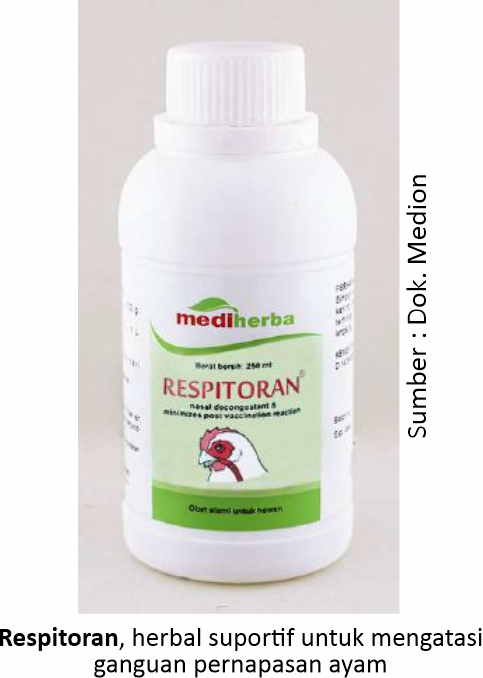
Take multivitamins, such as Vitamin B Complex Injection or Fortevit to help restore stamina, repair nasal sinus membranes that are inflamed, and stimulate the appetite of chickens. When chickens are attacked coryza, appetite decreases, causing impaired productivity. In addition to the above-mentioned products supportive herbs can also be given to accelerate healing due to infection coryza, examples of herbs that can be used are Respitoran. This herb is able to shed mucus accumulated as a result of infection coryza and minimize the inflammatory reaction so that the condition of the chicken will soon recover.
Advice for revaccination can be given in conditions that are not yet too severe in chickens layer. This is intended to make the formation of antibody titers more optimal. Also evaluate the vaccination program at the next maintenance so that cases coryza not repeated. Determination of the vaccine schedule by pulling back 3 weeks earlier is calculated from the age of the infected chicken.
In addition to the treatment and revaccination advice provided, the improvement of the management system plays an important role. Pay attention to handling dead chicken carcasses, immediately burn and bury chicken carcasses so they do not become infectious media. When the cage is infected, try not to handle other cages to minimize transmission. Tighten disinfection of both cages, equipment, drinking water, and incoming personnel. Adapt the cage structure to environmental conditions. Re-check the smooth circulation of air and setting open and close the curtains more routinely done. If litter wet and damp can be replaced or added litter the new dry.
Disease of coryza it is a respiratory disease that still appears frequently in the field. Handling of course will not be complete with just medication alone. Consistent improvement of the rearing management system is very important especially in providing good air quality for chickens, the implementation of biosecurityy, as well as the implementation of a vaccination program on schedule is expected to prevent the disease from re-infecting the farm. May be useful. Greetings.