Animal health is the main key to increasing livestock productivity. Livestock whose health is maintained can be seen from the optimal physical condition and production. Examination or monitoring of the condition of cows needs to be done regularly to determine the health status of animals. This is important because health problems in cows can occur at any time. Especially in susceptible cows, such as cows prepartus (before birth), post partus (after birth) and newborn calves. Preferably, the examination of the condition of these cows is carried out daily in a general and thorough manner in all populations. So that if there are cows that experience health problems can be more quickly known and treatment can be done quickly.
The results of the examination of the condition of cows can be of various kinds, such as abnormalities or symptoms of a disease. Common symptoms that can be seen when cows are affected by the disease are weakness, diarrhea, decreased appetite, and followed by a decrease in productivity. Of these symptoms, the most common sign seen by breeders is decreased appetite.
Decreased appetite in cows can indicate the beginning of the occurrence of a disease and can also cause the health condition of the livestock to decrease so that other diseases are easier to enter. This makes farmers need to understand the causes of cattle decreased appetite and how to prevent and overcome it.
The causes of decreased appetite in cows can be of various kinds, such as :
- Stress
Stressful cow conditions will interfere with the pH of the rumen so that it can cause a decrease in appetite.
- Infectious diseases
Infection due to bacteria, viruses, or parasites will cause a weak cow condition and followed by decreased appetite.
- Metabolic disorders
Metabolic disorders such as acidosis and ketosis will also have an impact on loss of appetite in cows.
- Poor quality of feed.
The quality of the feed can also affect the appetite of the cow. Feed that is not fresh or rotten can reduce the appetite of cows and can even trigger the occurrence of a disease.
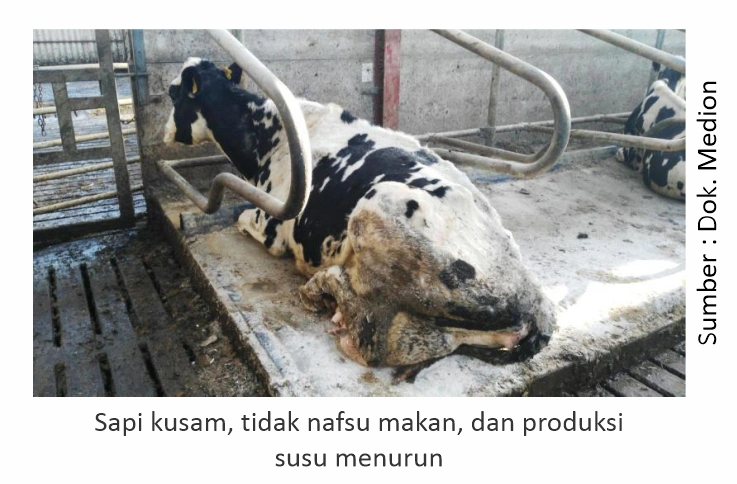
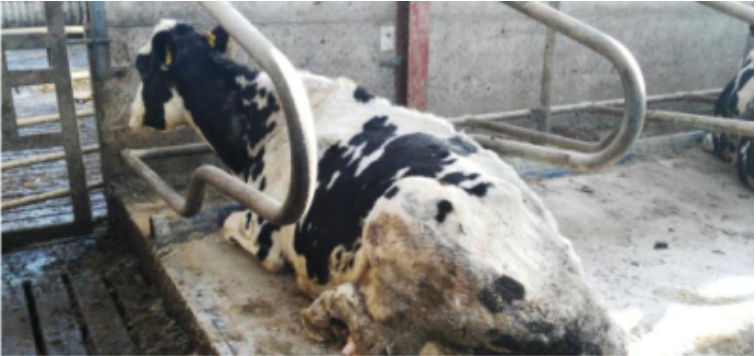
Proper diagnosis is necessary if the cow shows symptoms in the form of decreased appetite. Diagnosis of a disease or health disorder can be done by first knowing the anamnesis and signals from animals that show symptoms. The Anamnesis can be found out through information from the breeder or corral keeper. The information sought can be medical history, feeding history, and other information.
One of the commonly concluded diagnoses of decreased appetite in cattle is the presence of digestive disorders in the form of simple indigestion. Simple indigestion is a disorder of the digestive tract of cattle originating from the rumen or reticulum. Simple indigestion is caused by sudden changes in the quality and quantity of feed or feed with high fiber, carbohydrate and protein content. The most noticeable symptoms are a decrease in appetite, a decrease in milk production in lactating cows, a decrease or loss of rumen motility, weak gastric tone, sometimes accompanied by constipation, but no visible symptoms of systemic diseases. Temperature and pulse and breath frequency are within normal range.
Faktor pakan sangat mempengaruhi tingkat terjadinya indigesti sederhana ini. Contoh faktor yang meningkatkan resiko kejadian indigesti sederhana adalah memakan konsentrat atau biji-bijian berlebih, pakan dengan kandungan serat yang tinggi, perubahan pemberian pakan secara mendadak, kurang minum, maupun kondisi stres misalnya pasca pengangkutan. Pada populasi yang banyak, kejadian indigesti sederhana ini mudah didiagnosa dengan ditandai penurunan nafsu makan secara mendadak pada kebanyakan sapi setelah adanya perubahan pemberian pakan. Adanya hipomotilitas atau atoni rumen juga dapat dijadikan tanda terjadinya indigesti sederhana. Peneguhan diagnosa yang dapat dilakukan adalah dengan mengkoleksi dan memeriksa cairan rumen, dimana akan terdapat perubahan pH rumen (<6 atau >7) dan penurunan total mikroba rumen.
The occurrence of this simple indigestion can actually be prevented by good feeding management. A gradual change in feeding is the best way as prevention. Cows will adapt to changes in feed so that appetite will not be disturbed and productivity is maintained. Here is an example of adaptation to concentrate feeding in beef cattle.
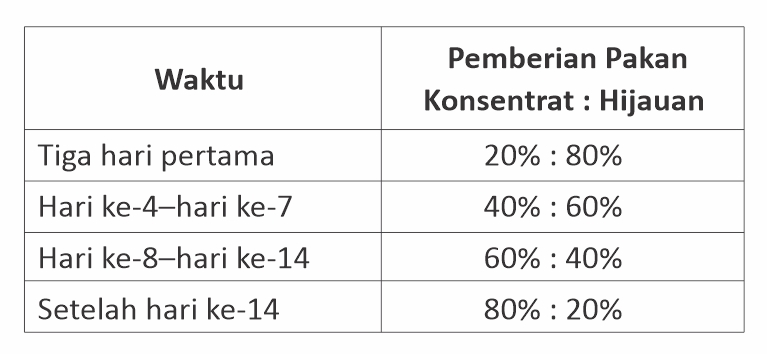
Treatment of cases of simple indigestion in cattle is carried out with the aim of restoring the environmental conditions of the rumen back to normal. The condition of the rumen that has returned to normal is characterized by the presence of rumen motility and a sufficient number of rumen microbes. Some handling that can be done is to provide good quality feed with high palatability and stop feeding silage or high fiber. Supplementation can also be given to improve and overcome digestive disorders. Supplements that can be given for example are Digesfit.
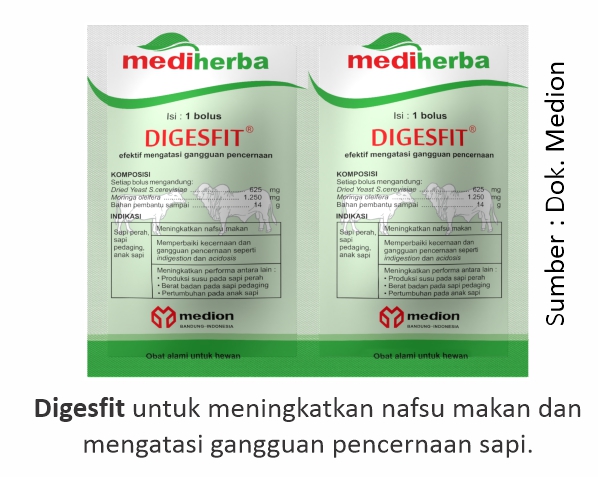
Digesfit it is an herbal supplement that can increase appetite, overcome digestive disorders in the rumen of cattle and improve livestock performance without producing chemical residues. Based on the test results, it was proved that Digesfit effectively copes with digestive disorders, which are characterized by an increase in the appetite of livestock.
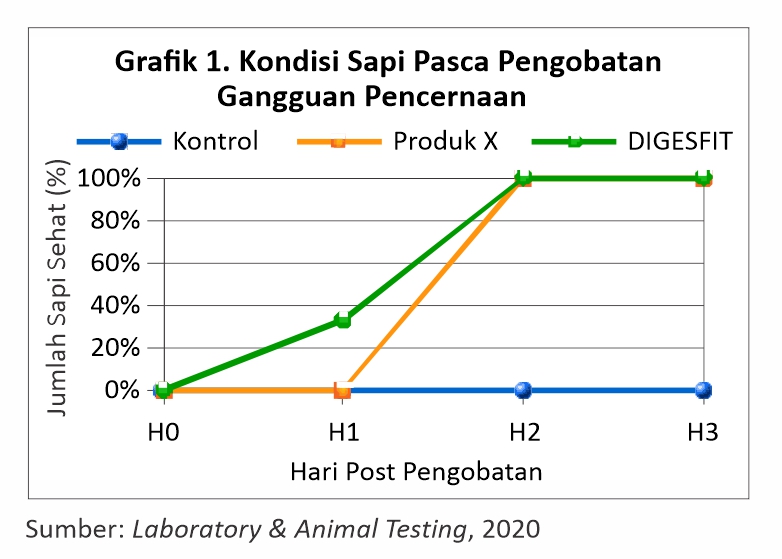
The content in Digesfit can increase the formation of microbiota both in digestion and maintaining rumen pH and improving fiber digestibility. As well as a source of protein, vitamins, and minerals that can help overcome digestive disorders and improve performance.