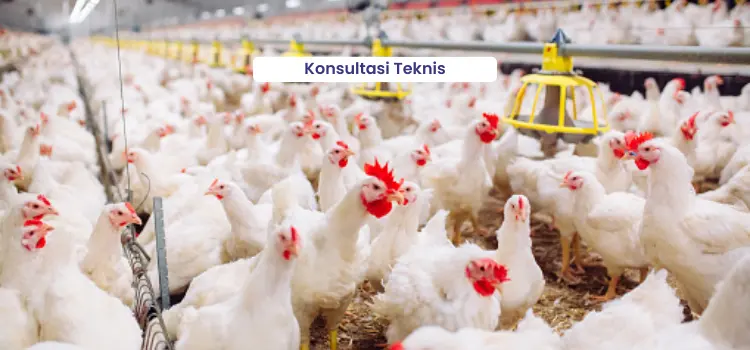
On the practice of keeping chickens broiler, dwarfism becomes a very important problem. Field complaints often arise about this case, characterized by a body weight that is less than the standard with a low level of uniformity. Maintenance time broiler it is relatively short, about 4-5 weeks the chicken can be harvested. However, this smallness problem is often a scourge for farmers.
The impact that arises from smallness can cause economic losses in connection with impaired growth and achievement of low harvest weights, increased conversion of rations, as well as an increase in the number of rejected chickens.
Syndrome of dwarfismslow growth syndrome) or so-called runting stunting syndrome (RSS) is one of the syndromes experienced by a group of chickens (especially chickens broiler) characterized by impaired growth at the age of about 21 days. Research results Hidayat (2014), states that this syndrome is divided into several categories :
- 5-10% of the population, belonging to the category of mild
- > 10-30% of the population belongs to the category of bad
- > 30% of the population falls into the category of major disasters
The incidence of this dwarfism in the field is often divided into 2 categories of cases, namely : if within 5 weeks the weight of the chicken is less than 200 grams each tail, then it is categorized as a case “runting”. But if the lack of weight is between 200 g – 1 kg, then it is categorized as a case “stunting”. From the existing case reports, the number of stunting cases reaches 50% (on average 5-50%), while runting cases range around 3-5%.
Factors Causing Dwarfism
This case of dwarfism is due to several factors :
Non-infectious factors
Non-infectious factors are factors derived from matters related to the management and quality of DOC, the following explanation :
- Quality DOC
DOC quality is influenced by breeding and hatchery (hatching). This problem is usually caused by genetic parents, small hatching eggs (from young parents or aged Reovirus low, and a positive parent of Salmonella sp.
- Management factors
Management factors that affect the growth of chickens is the period brooding period,. At this time is often referred to as a critical period because there is rapid growth in which there is division (hyperplasia) and enlargement (hypertrophy) of chicken body cells. Organ development that occurs includes the immune, digestive, respiratory and thermoregulatory systems.
Willingness current ration chick in and achieved feed intake affect the size and length of the intestine, body temperature regulation chicks and density levels will be very influential. DOC handling that is less than optimal in this period will affect the growth of chicken weight in the next period.
- Ration
The growth of chickens is greatly influenced by the adequacy and nutritional content of the ration. The thing that is sometimes missed from monitoring is the presence of fungi in the ration. The quality of the ration may decrease due to the presence of fungi and mycotoxins. Mushrooms in the ration can reduce the nutrition of the ration so that the absorption of nutrients is not optimal.
In addition, fungi will also produce secondary metabolites, namely mycotoxins, which will irritate the digestive tract so that nutrient absorption is disrupted. The length of storage of the ration will also affect the nutrient content. Vitamins in the finished ration will decrease with the storage period.
In addition to the quality of the ration, the quantity/adequacy of ration intake and drinking also affect the growth of chickens. Lack of ration and drinking water will lead to competition between chickens. The impact is that the amount of ration that enters the chicken's body is less so that the growth of body weight is not uniform.
- Stress factors
The achievement of body weight will not reach the standard if the chicken is under stress. Under stressful conditions the chicken will produce adrenocorticotropic hormone (ACTH) in excessive amounts, so that it will inhibit the body's metabolic processes and decrease the absorption of nutrients ration. In this case, the chicken will still eat a lot but not followed by an optimal increase in body weight.
Infectious factors
Several infectious agents are also suspected of playing an important role in this case of dwarfism, including: Reovirus, Entero-like virus, and Picornavirus. While the bacterial agents involved in these cases are generally those that infect the gastrointestinal tract, such as E. Coli infection (colibacillosis) or Clostridium perfringens (Necrotic Enteritis).
The diversity and complexity of the causative agents of this dwarfism syndrome causes difficulties in making a definitive diagnosis, coupled with clinical symptoms that are aggravated by external factors such as stress due to brooding period, less than optimal.
Reovirus (the disease is often called helicopter disease) will infect villi-villi epithelial cells of the small intestine that can cause indigestion and absorption of nutrients so that the target body weight is not achieved. Helicopter disease dominant found in chickens broiler, although data are also found in both laying hens and breeders.
The visible symptom of this disease is a non-uniform growth that can be observed since the chickens are 4-6 days old. This growth disorder is certainly caused by a decrease in the absorption of nutrients and the process of digestion of food. The lower part of the body is covered with a layer of fat (slow growth). Body weight can only reach 40% below the standard.
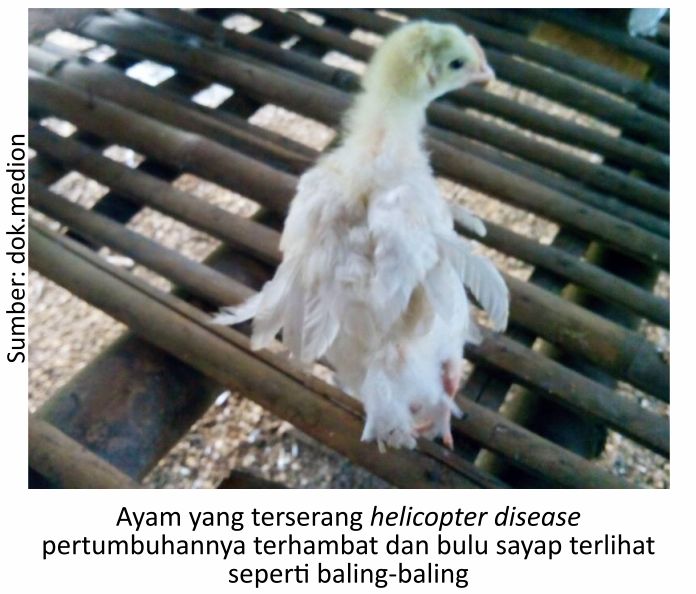
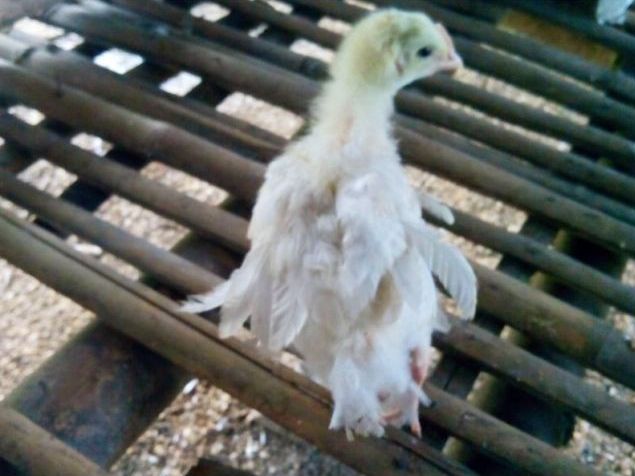
Other specific signs that are often encountered are abnormal feather growth in the primary wing feathers. Irregular feather growth also occurs, causing the feathers appear to stand like a propeller so often referred to as helicopter disease.
Clinically, the stomach of a sick chicken will expand and Harden. This condition will usually appear in chickens aged about 3-4 weeks, due to the presence of undigested rations. Pathological changes that occur when necropsy is performed include enlargement of the proventriculus, which is accompanied by tissue death, bleeding and mild intestinal inflammation.
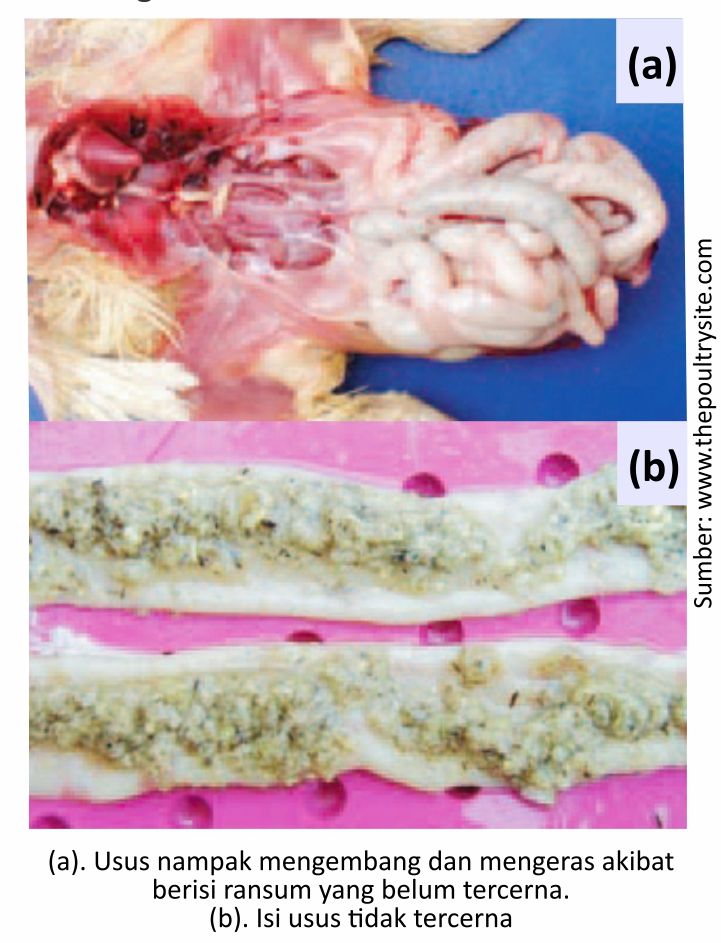
In some cases, chickens that experience dwarfism will find a small and flabby ventricle. In addition, an undeveloped intestine (such as rubber) was found. Meat in infected chickens Reovirus sometimes shows a change in color to a paler one.
How Do I Anticipate Smallness?
If RSS is already attacking farms broiler then the loss cannot be avoided. The difficulty of pursuing a standard body weight is the main factor in the economic losses incurred by farmers. In addition to being caused by non-infectious factors, dwarfism can be caused by viral infections that cannot be treated and are easily transmitted. Therefore, it is necessary to take anticipatory measures, among others, in the following ways :
1. Choosing a quality DOC
DOC quality selection is important. Quality DOC will be directly proportional to the harvest obtained. The characteristics of quality DOC include: Good uniformity (> 80%), DOC Weight between 37-42 grams, active, Bright Eyes, free from navel infection, clean cloaca, not dry feet, and no physical disabilities.
2. Implement management brooding period, with optimal
Management brooding period, should be done optimally because in the early phase of maintenance (age 0-2 weeks) is a critical period of growth broiler. The results of this initial rearing will later affect the development of the chicken's body in the next rearing phase.
Things to consider during the phase brooding period, that is, the moment before chick in, saat chick in and after chick in. Before chick in it must be ensured that the heater is on, chick guard has been installed, lights, curtains, rations and drinking water are available.
When DOC arrived DOC immediately stocked up, then given 2-5% sugar water as a substitute for energy after the trip. Rations and drinking water are immediately given in small quantities but the frequency is frequent. Availability of rations and achievement feed intake will greatly affect the size and length of the intestine.
Two hours after chick in it is necessary to check the DOC, including checking the cache and foot condition. At least 75% of the DOC samples examined, the cache was full, supple and soft, and the feet were warm. This condition indicates a comfortable cage conditions (heating, litterair, and nutrients.
3. Administration of vitamins, immunostimulants and cleaning program
Vitamins (for example Vita Stress, Fortevit, or Neobroand immunocompromised (Imustim) aims to maintain the endurance of the chicken. While cleaning program antibiotics (Doctril, Neo Meditril, or Amoxitin) aims to prevent infection with bacterial diseases.
4. Conducting practice biosecurity strictly
Practice biosecurity among others, by controlling vehicle traffic and livestock facilities that go out/enter the cage. Arrangements for visits by operators and cage managers are also important, for example visits are made from healthy chickens and then to sick chickens. Sanitation and disinfection of cage equipment also needs to be done, for example, using Medisep, Neo Antisep or Zaldes.
So, what if the chicken is already experiencing dwarfism ? Here are some things you can do :
- Perform grouping chickens into 3 groups of body weight, namely :
- Normal chicken group, 80-100% of the standard
- Chicken groups > 40% of the standard need special treatment and groups.
- Kelompok dengan bobot < 40% dari standar dilakukan afkir.
- Administration of premixes containing multivitamins, amino acids and minerals
- Antibiotics to prevent infection (Amoxitin, Colimezyn)
- Multivitamins (Fortevit, Neobro) or immunostimulants (Imustim)
- Regularly sanitize and disinfect equipment and cages.
Greetings.