Parasitic disease attack is one of the threats that must be faced by farmers. Parasitic diseases rarely cause high mortality, but still cause considerable economic losses. A parasite is an organism whose life is attached to its host. Parasites that live inside the host's body are called endoparasites, while hosts that live outside the host's body are called ectoparasites.
The presence of parasites in livestock can certainly cause harm. For example, diseases arise due to endoparasite or ectoparasite infestation. ectoparasites can also act as vectors or carriers of disease seeds, causing livestock anxiety due to itching, causing injuries to livestock, irritation and deterioration in skin quality, decreased appetite to decreased livestock productivity, and disturbing workers and the community around the farm. High and low parasite population around the cage is strongly influenced by the level of cleanliness and sanitation of the cage environment.
Ectoparasites that often attack ruminants include ticks Rhipicephalus microplus, mites Chorioptes bovis, Psoroptes ovis, as well as lice Haematopinus tuberculatus. While the most immersed endoparasites are worms.
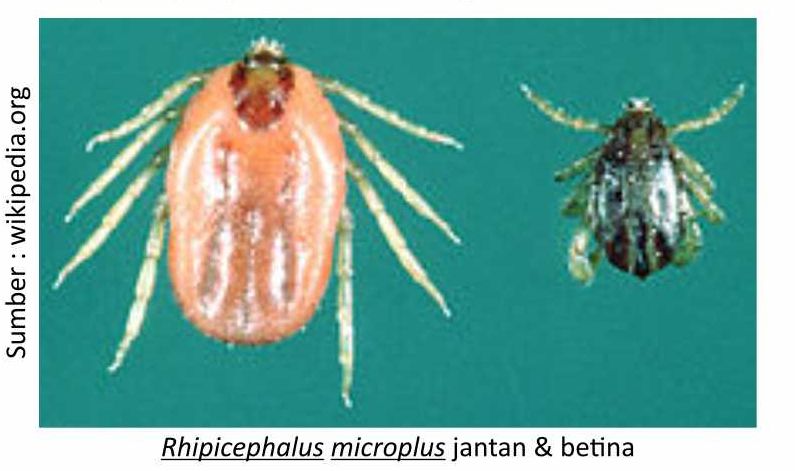
Ticks Rhipicephalus microplus suck the blood of cattle thus causing and damage to the skin. The tick can cause anemia and acts as a vector of diseases of babesiosis, ricketsiosis and anaplasmosis.
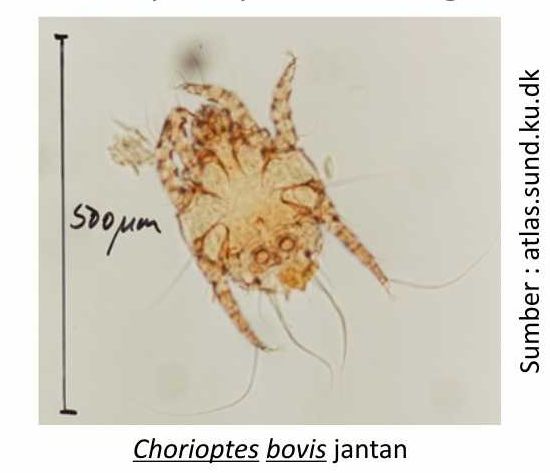
Common mites that attack ruminants are Chorioptes bovis in cows and Psoroptes ovis on the goat. The mite will dig under the skin, create tunnels and form nodules. The toxins released can cause irritation and itching in livestock. The disease is called scabies.
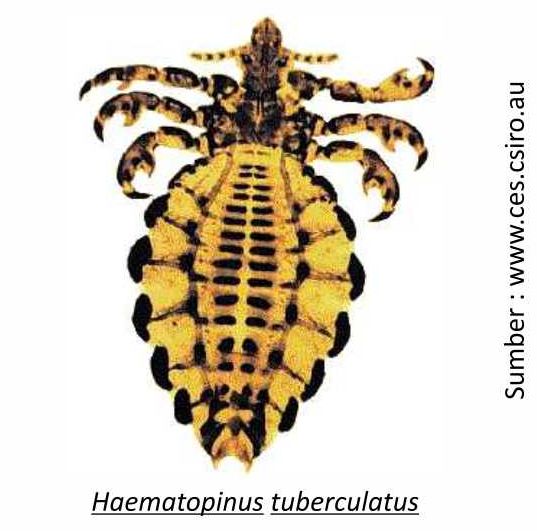
The most common ticks found in farm animals are Haematopinus tuberculatus. H. tuberculatus is an ectoparasite with the highest prevalence found in ruminants in Bogor City (Kristin, 2014) & in Padang Panjang (Irsya, 2017). Such lice infestations can cause skin irritation, alopecia or hair loss and anemia.
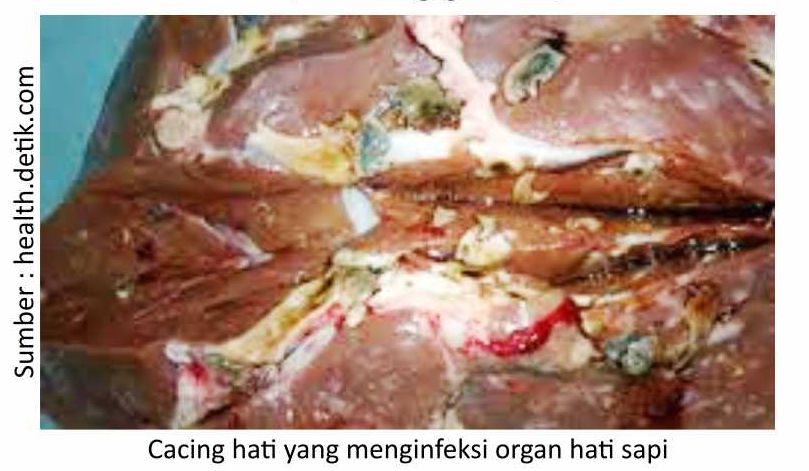
The parasites in the body that most infect farm animals are worms. The sequence of types of worms that infect many ruminants are gilig worms, leafworms and tapeworms. Indonesia's tropical weather conditions with high humidity are very conducive to gilig worms developing, for example Toxocara vitulorum. This type of leafworm is also commonly found and harms farmers because it can reduce productivity, reduce the weight of livestock weaning, and inhibit the growth rate. This disease is often called Fasciolasis caused by Fasciola gigantica.
To overcome the case of parasites in livestock can be done by breaking the life cycle of parasites so as to reduce the population or suppress the development of these parasites. Maintaining the cleanliness of livestock, cages and the environment is the main control as a preventive measure before treatment. Cage management control is very necessary by paying attention to cage sanitation and environmental cleanliness. For example, not allowing livestock manure to accumulate, cleaning up leftover feed and drinking regularly, keeping the cage dry or not muddy and ensuring air circulation runs smoothly. In addition, wild plants and shrubs around the cage are also routinely cleaned.
Livestock should not be grazed too early and rotate or rotate the shepherd's cage to break the life cycle of worms and ectoparasites, especially ticks. This means that cattle are not constantly grazed in the same place. Giving fresh forage grass is highly discouraged in intensively reared livestock. The grass should be mowed first before being given to cows to avoid the ingestion of worm larvae attached to the grass.
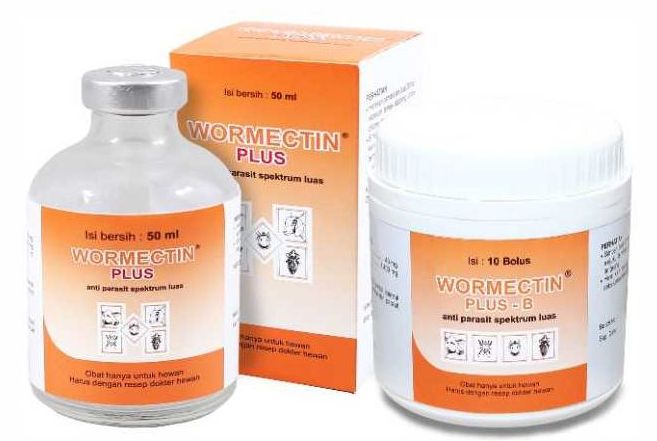
If cattle are already infected with endoparasites and ectoparasites, the administration of broad-spectrum anti-parasitic drugs for endoparasites including liver worms as well as ectoparasites can be given such as Wormzol Plus or Wormectin Plus-B. Conducting regular health checks and regular deworming programs can help overcome worms. The deworming Program needs to be repeated periodically every 2-3 months in order to completely get rid of the worms and break the life cycle of the parasites.
For ectoparasites in addition to treating livestock, handling of the cage area and the environment also needs to be done. Such as spraying the cage area with anti-ectoparasites on the cage floor, sidelines and walls of the cage. For example, with Kututox-S or Delatrin.