Bapak Rahadi
Pekanbaru
I am a chicken farmer layer. I would like to ask, How do I deal with the smell of ammonia caused in the cage layer especially in the battery enclosure? Even though the feces immediately fell to the bottom, the smell of ammonia was still smelled. Please explain.
Answer:
Dear. Mr. Rahadi, thank you for the question. The smell of ammonia is a problem that is quite detrimental to chickens. High ammonia levels in cages can cause a decrease in production or even increase mortality from respiratory diseases that arise afterwards. To overcome the smell of ammonia, you must first find out the cause of the high ammonia in the cage. Some of the things that cause the high smell of ammonia in the cage are as follows:
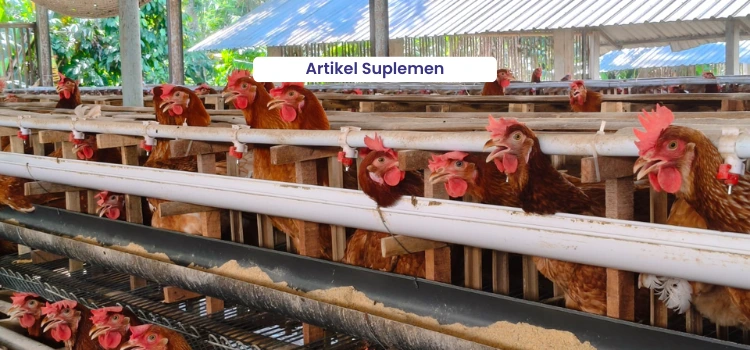
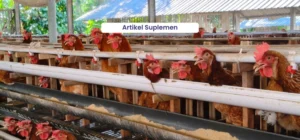
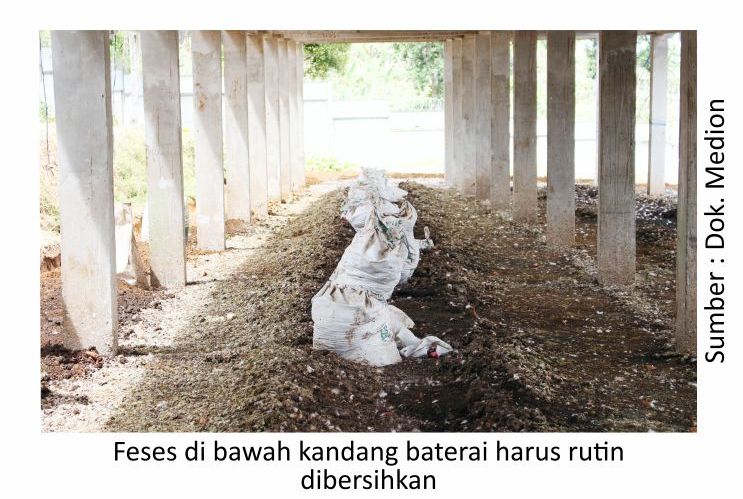
- Cage construction and ventilation. The distance between the cages is at least 7 m or one cage width to facilitate the circulation of air entering the cage. Battery cage type will reduce ammonia odor 50% than postal cage. This is because the dirt in the battery enclosure will directly fall down so that it will reduce the smell of ammonia directly. But what needs to be considered from this battery cage is the height of the cage. The cage should be 1.25 – 1.5 meters high. Basically the concept of handling dirt under the cage on the battery cage there are two kinds. First, feces are taken periodically. Secondly, chicken droppings are allowed to accumulate under the cage until the end of the Keeping period (one cycle). For the maintenance of laying hens in battery or stage cages, the farmer should periodically clean the manure. In addition, if the battery enclosure is made wide with more than one path (such as the battery enclosure arranged “W” model instead of “V”), then the bottom of the battery enclosure should be made high.
- Feed. Feed with a high content of protein or salt will cause chicken feces to become wet. Salt levels that are too high in the ration will disrupt the electrolyte balance in the body so that chicken feces become wet. High salt levels will also trigger chickens to consume more water, causing chickens to experience diarrhea. This is the case with too high protein levels. This happens because the remaining undigested protein will be converted into uric acid which will be high in concentration in the kidneys so that it will trigger chickens to drink more. As a result, chicken droppings become wet and watery. Wet stools will tend to cause a higher ammonia odor. In addition, a sudden change of feed will usually cause chicken feces problems.
- Stress. The battery cage is too dense will cause the chicken to feel hot (heat stress), so that the chickens will drink more than eat. This will cause the resulting feces to become wet. This wet stool will invite flies to come. The presence of flies will aggravate the conditions in the cage. This is because the flies in the feces will excrete saliva which is then smoked again. Entry and exit process saliva this is what will cause ammonia to get higher.
- Soil absorbency. Poor soil absorption and poor drainage system will make the feces not dry quickly. This can cause odors.
- Infectious diseases. The presence of Infectious Diseases in chickens layer it can cause more wet and smelly stools.
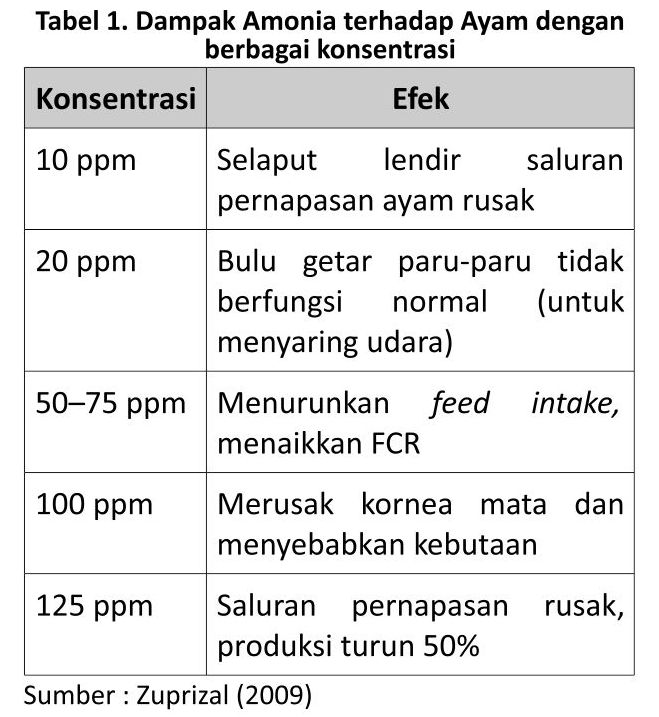
The impact of ammonia odor in the cage will cause different effects depending on the high and low ammonia. The effect of such ammonia can be seen in the table. 1 following:
To overcome the impact of odors caused by ammonia, can be done in several ways as follows:
- Repair cage construction
- Prevent occurrence wet dropping (wet stool) or diarrhea due to ammonia will quickly form if the condition of the stool is wet and damp.
- Maintain the balance of amino acids in the feed in accordance with the needs of chickens in the period and reduce the protein level in the feed. In addition, it is possible to check the salt content in the feed at MediLab (Medion laboratory) to prevent excessive salt levels.
- Pay attention to air circulation by checking the temperature and humidity periodically. Can be added blower or fan in the dry season.
- To combat the presence of flies aggravating the smell of ammonia can be added Larvatox at a dose of 100 g per 1 ton of ration. Awarding Larvatox it can make the stool drier.
- The addition of materials that can bind water in the feces so that the feces in the cage will be drier, such as the addition of zeolite or lime 1-3%. In addition, to lower ammonia levels can be added certain materials that can bind ammonia. One of the products that can bind ammonia is Ammotrol. Products Ammotrol it is a herbal product that is safe to use every day for a long time to bind ammonia without causing side effects and residues. Awarding Ammotrol also relatively easy, simply sprayed into feces or dissolved in drinking water, and can be given together/mixed with vitamins or antibiotics.