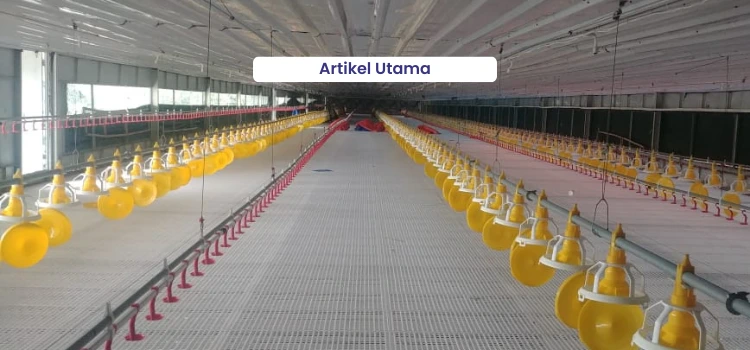
Poultry disease projections are always an interesting topic to discuss ahead of the turn of the year. Given the pattern of development of poultry diseases in the field is very fast, we should look back at what diseases have occurred over the past year. That way we can develop a health management strategy in the coming year. All parties must agree that the prevention and treatment of poultry diseases is one of the keys to success in running a farming business, because healthy chickens will provide optimal productivity and better profits for farmers. Starting in 2026, health evaluation becomes mandatory so that we as farmers can increase awareness of the risk of chicken diseases that can threaten the farm.
Poultry Disease Analysis in 2025
Poultry disease attacks throughout 2025 are dominated by respiratory and infectious diseases that cause a decrease in egg production. Diseases that often cause the impact of decreased production is quite high is ND, AI and IB. In broilers and laying hens, bacterial diseases rank in the top 5, dominated by respiratory diseases such as CRD, complex CRD, Colibacillosis, Coryza and Fowl Cholera. Where the predisposition to this disease is due to mismanagement such as poor air ventilation, cages that are too dense, high ammonia levels, extreme weather fluctuations that have an impact on temperature and humidity are not as needed, the application of brooding period, poor, poor sanitation, and so on.
Sedangkan penyakit viral didominasi oleh Gumboro, ND, AI, IB, IBH, dan Infectious Laryngotracheitis (ILT). Trends in cases of disease attacks on broilers and layers occur in the rainy season and during the transition/wet dry. Cases of the disease then decreased in number in July, and gradually increased again from September to November. Weather conditions still affect the pattern of disease attacks. Damp conditions in the wet rainy and dry seasons trigger the seeds of the disease to multiply rapidly and spread to other regions, increasing the number of disease attacks.
Seperti pada data yang telah dirangkum oleh tim Technical Education & Consultation (TEC) Medion pada Grafik 1, 2 dan 3. The incidence of disease throughout 2025 is dominated by diseases caused by bacteria, viruses, then parasites. The development of the disease over the past year has undergone almost the same pattern as last year's predictions.
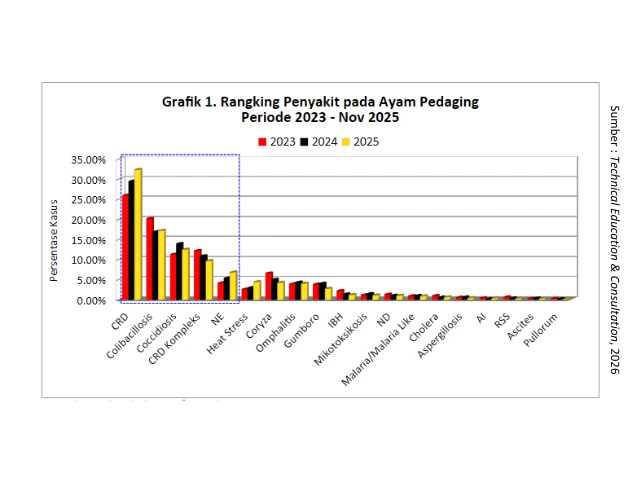
Cases Of Broiler/Broiler Disease
Bacterial diseases dominate the top 5 rankings and CRD, Colibacillosis and NE have increased from the previous year. This bacterial disease is dominated by diseases that occur in the respiratory and digestive systems. Coccidiosis disease is still quite common and is likely to increase until the end of the year. The incidence of heat stress in the field increased due to the impact of the dry season this year. The peak of the dry season evenly occurs in August and only subsides in October 2025. Local infectious forms of Colibacillosis such as omphalitis (inflammation of the navel) are still common encountered because there is still residual yolk in the navel that is not completely absorbed. This can happen due to poor DOC acceptance management and lack of management implementation brooding period, exactly. Diseases caused by viruses, namely inclusion body hepatitis (IBH) the incidence rate is still quite high ranked 2nd after Gumboro in broilers since the last 3 years.
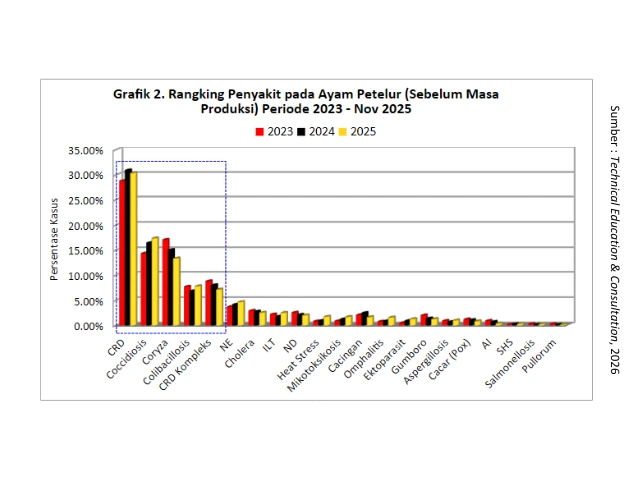
Cases Of Pre-Production Laying Hen Disease
Persentase peningkatan kasus Koksidiosis, Colibacillosis, NE, ILT, Mikotoksikosis, Omphalitis, heat stress until ectoparasites until November 2025 are higher than in the previous year. The incidence of heat stress in the field increased, especially in laying hens due to the impact of the long dry season this year is even greater than when laying hens production period. The increase in mycotoxicosis in preproduction chickens should be considered and wary of fungi and mycotoxins in feed raw materials (self mixing). This means that it indicates poor feed storage management so that mold growth cannot be controlled. In laying hens, cases of attacks by ectoparasites (ticks) began to be reported much more. Meanwhile, ILT cases for laying hens are predicted to continue to increase until early 2026.
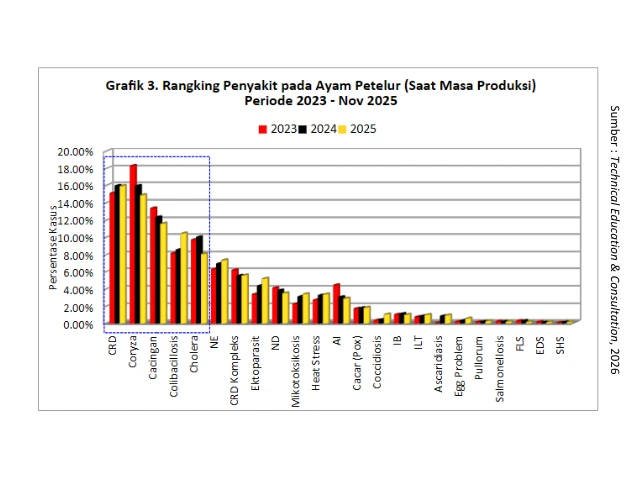
Cases Of Diseases Of Laying Hens Production Period
Persentase peningkatan kasus Colibacillosis, NE, ILT, koksidiosis, mikotoksikosis, heat stress, and ectoparasites until November 2025 were higher than in the previous 2 years. It can be predicted that cases will still increase, especially entering the rainy season at the turn of the year. Fowl Cholera in pre-production laying hens entered the top 10 and in the production phase was ranked in the top 5. Some viral diseases that attack during the production period are ND, AI, and IB. Based on observations in the field, the three diseases are relatively difficult to distinguish, especially if the changes that occur in chickens are only slight. The disease affects the reproductive organs of chickens and can cause a decrease in egg production by up to 80%. While the quality has decreased, such as the condition of the eggs are asymmetrical, small, and egg shells are thin, rough with a pale color. Coryza still ranks in the top 5. High cases of coryza during production can cause a decrease feed intake which has an impact on egg production. However, if the condition of the chicken has recovered and feed intake back on target, the recovery of egg production can be faster when compared to diseases that directly attack the reproductive organs.
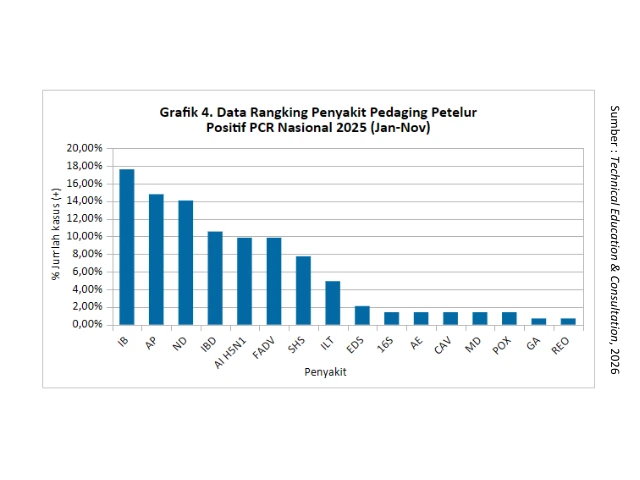
From the picture of graphs 1, 2, and 3, it can be seen that the 1st rank of the disease is the observed CRD in clinical symptoms and anatomical pathology. If traced again, other respiratory diseases that at first glance are similar to CRD, namely Infectious Bronchitis or Coryza. Tracking is done by looking at the response to antibiotic treatment and treatment, serological testing and confirmation of laboratory diagnostics. Confirmation of one's diagnosis can be supported by a PCR test. During the Year January – November 2025, Medion received PCR tests for several diagnoses of viral and bacterial cases (Chart 4). The number of cases of IB, AI H5N1, Coryza, ND and IBD were found to be in the top 5 positive diseases in the field.
Update ND dan AI
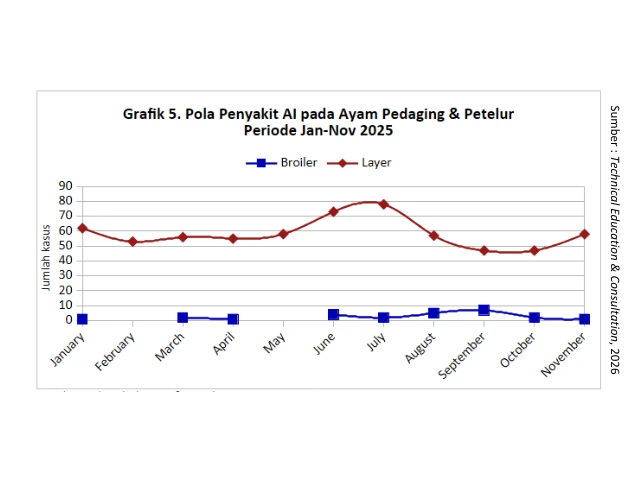
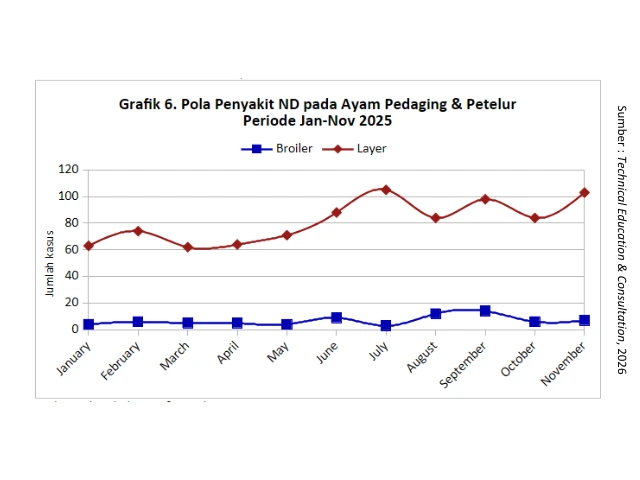
If viewed from January to November 2025, the trend of AI cases in laying hens and broilers the trend tends to be high in the middle of the year where the transition/transition season begins to decline in August and slowly increases until the end of the year (graphs 5 and 6) which are entered in the rainy season. AI cases in Indonesia consist of the type of High pathogenic Avian Influenza (HPAI) H5N1 which is malignant and causes high mortality and Low Pathogenic Avian Influenza (LPAI) H9N2 which significantly affects the decrease in egg production. AI H5N1 circulating in Indonesia currently consists of 2 different clades, namely 2.3.2.1 c and 2.3.4.4 b, which appear in 2022. As per Medion surveillance data, AI H5N1 clade 2.3.2.1 c is currently the most dominant found. While AI H9N2 circulating in Indonesia found only one clade, namely h9.4.2.5. This disease should always alert. Due to changes or mutations in the AI virus, both mutations in the HA and NA proteins can have an impact on the risk of vaccination failure. Cases of AI are dominated by single attacks and the rest are cases of AI that combine (co-infection) with other disease agents. Cases of co-infection with AI are highest along with bacterial and viral diseases. The remaining cases of AI co-infection with parasitic diseases and fungal diseases. And can also combine with non-infectious diseases such as mycotoxicosis and heat stress.
When viewed from January to November 2025, the trend of ND cases in broilers tends to be evenly distributed (graph 5). While in ND laying hens trend tends to be high in transition transition season (graph 6). Virus ND yang dominan bersirkulasi di Indonesia saat ini adalah Virus ND Genotipe 7 (velogenic) dimana virus tersebut terpisah jauh dengan virus ND lama Genotipe 2 (La Sota). Based on the findings of the Medion team to date, the dominance of circulating nd viruses is ND GVIIi/A and GVIIh with a distribution in almost all regions of Indonesia.
Beware of IB cases
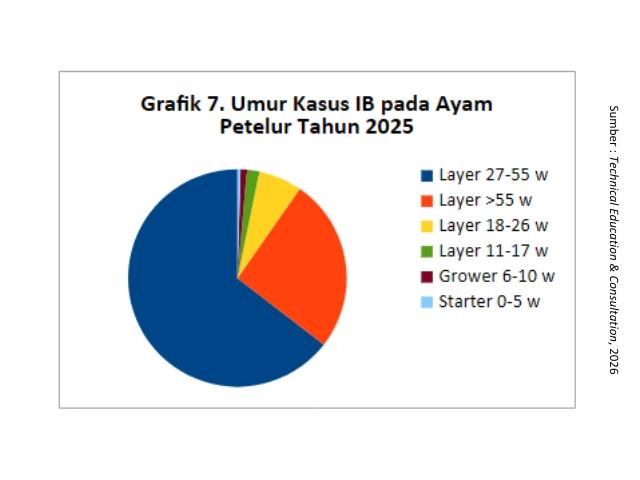
IB variant cases that have entered Indonesia are QX-like strains. IB virus mapping conducted by Medion Molecular Biology Research & Development (2015-2025), shows that the dominant IB virus infecting in Indonesia is M41-like and IB variants that are characterized by Molecular Biology in one group with QX strain, that is, it can be called QX-like. All ages of chickens are sensitive to IB attacks. Young chickens that have successfully recovered from IB, their growth and production become inhibited. The reproductive apparatus and ducts can be severely damaged so that the laying hens cannot produce eggs. In adult laying hens, snoring sounds will be heard when breathing and a decrease in egg production of 10-50%. Judging from graph 3, IB cases are quite high in the production period of laying hens. From Medion field workers, it is also reported that the age of IB attacks on laying hens in 2025 is quite a lot outbreak occurs at 22-55 weeks of age (Chart 7).
The form of IB disease that attacks the reproductive system in laying hens is characterized by a decrease in production accompanied by a decrease in egg quality such as pale shellfish, thin shellfish, rough shellfish, no shellfish, small eggs, and asymmetric egg shapes. If the egg is broken, then we can find a decrease in the internal quality of the egg such as albumin (egg white) is thinner and there is no clear boundary between thick albumin with liquid albumin.
Colibacillosis and coccidiosis increase significantly
It can be seen from graphs 1, 2, 3, the number of cases of Colibacillosis, especially in laying hen farms, increased very significantly compared to 2023 and 2024. The highest cases occurred in June and November 2025 in broilers while in laying hens occurred in June and September 2025. Colibacillosis disease caused by bacteria Escherichia coli. These bacteria are resistant in the environment for 20-30 days. Cases of Colibacillosis in chickens are generally caused by strain avian pathogenic E. bra (APEC) or pathogenic strains. So far, APEC is dominated by three serotypes, namely serotypes O₁, O₂, and O₇₈. The bacteria is able to spread through the blood circulation so that it can cause damage to various organs of the chicken. Examples of frequent cases caused by APEC bacteria are embryo death and the occurrence of omphalitis in chicks. APEC bacteria are also easily mutated into entero pathogenic E. bra (EPEC), which become pathogenic bacteria in the gastrointestinal tract. It also mutates into enterotoxigenic E. bra (ETEC), which produce toxins and then damage the intestinal mucosa.
Colibacillosis can be transmitted vertically through the reproductive tract of the hen, that is, through the ovaries or oviducts that are infected and transmit to the DOC. Meanwhile, horizontal transmission, one of which can be through contact with contaminated cage materials/equipment. Please note that many outbreak Colibacillosis occurs due to poor sanitation and cleanliness of the cage due to E bacteria.coli is very easy to contaminate the environment of the cage.
The balance of microflora in the digestive tract is basically dynamic depending on the condition of the gastrointestinal tract. When there is a disturbance, there will be malabsorption and imbalance in the condition of the digestive tract. Malabsorption that occurs can cause overgrowth of the population of pathogenic microflora (causing infection), disrupting the balance in the digestive tract. Changes in the number and diversity of microflora that occur in the gastrointestinal tract are commonly called dysbacteriosis. The impact of dysbacteriosis is a decrease in nutrient absorption, weight loss and increased FCR. If the occurrence of dysbacteriosis is severe enough to cause wet litter. The incidence of dysbacteriosis can be caused due to stress factors, feed changes, poor biosecurity, mycotoxins, infectious diseases and unfavorable environmental conditions (too hot, overcrowding). This can increase the growth of opportunistic pathogenic bacteria such as Clostridium sp. and E. Col.
Cases of coccidiosis will also begin to spread highly in broiler and laying hens throughout 2025, especially in production-period laying hens. This disease is usually susceptible to attack young age, ie age 0-4 weeks in broilers and age Necrotic Enteritis (NE) it is easy to infect chickens and harm farmers. This is related to immunosuppression (usually preceded by coccidiosis where cases are also many or the presence of mycotoxins) and low sanitation/disinfection.
ILT disease begins to increase in some areas
Seeing the development of the disease until November 2025, especially in laying hens, which increased compared to 2024. ILT disease is widely reported in several regions (South Sulawesi, South Sumatra, West Sumatra, and East Java) which are densely populated with laying hen farms. Diseases caused by viruses Gallid herpesvirus type 1 (GaHV-1) this still causes many problems, especially in the upper respiratory system in birds, in accordance with the name of the disease, namely Laryngotracheitis which means that it is an inflammation mainly of the laryngeal organs and trachea. ILT diseases cause losses mainly due to increased morbidity (50-70%), usually moderate mortality (10-20%), daily weight loss, reduced egg production and costs incurred for vaccination, biosecurity measures and treatment to fight secondary infection by other avian diseases. High mortality can occur when ILT is complicated by other diseases such as worms, coryza, colibacillosis, and CRD.
In the world of poultry, ILT that infects farms will pose a latent danger. This is because the herpes virus that causes ILT is very resistant in the environment and flocks of cages with a positive history of ILT cases, the chickens in them will act as carriers (carrier) virus to reject. So it is not uncommon for ILT problems to continue to recur, especially on farms that implement multiage systems (varying age groups) and farm environments with dense populations. Stress conditions and high ammonia levels in cages can also trigger ILT cases in the field.
Ectoparasites Are Increasingly Disturbing Chickens
If the lice have attacked, usually the egg production of chickens will drop and this is the biggest loss impact of the manifestation of lice. Both lice, mites, ticks, and fleas, infestations of all four are very detrimental to farmers if they attack chickens. In general, of all the ectoparasites mentioned above, lice are the most common type that attacks chickens, especially commercial laying hens. Its habitat, which is mostly spent in the body of chickens, causes fleas to be classified as parasites that greatly interfere with the activities of chickens. The presence of these fleas will cause the chicken to be uncomfortable. In addition to decreased production, other effects due to ectoparasite attacks are slow weight growth and anemia. From several studies it is also reported that ectoparasites are considered quite dangerous because they can play a role as disease vectors. For example, in the case of smallpox, the mite can be a vector of smallpox (fowl pox), kolera, salmonellosis dan ND (Newcastle disease). the most appropriate way to control it is to maintain the cleanliness and health of the environment so that it cannot be used as a breeding ground, a place to feed or shelter and hide ectoparasites. Meanwhile, when the ectoparasite population has reached the level of disturbing, harming or even endangering chickens and people living in the vicinity, it is necessary to follow up using pesticides carefully and according to the rules of use.
Mycotoxicosis Still Recurs
Looking at the development of the disease during 2025, we see that the number of cases of mycotoxicosis, especially in laying hen farms, increased very significantly compared to 2023 and 2024. The highest cases occurred in January 2025 which entered the rainy season. It all starts with mold contamination. The growth of mushrooms on the ration will take some of the nutrients contained in it so that the intake of nutrients for chickens is insufficient. Not to mention, with mycotoxins (fungal toxins) produced that are very difficult to eliminate and can cause immunosuppression and even death. It doesn't just happen during the rainy season. During the dry season, this case can be found, especially as it is currently categorized as wet drought (dry season that is still accompanied by rain).
In addition to being able to reduce chicken productivity, mycotoxins are also known to have a major influence on the decline of the immune system (body defense) or immunosuppressive. Immunosuppressive caused by mycotoxins is chronic, but if the concentration is high, it will be acute. Further impact of this immunosuppressive effect is the increased mortality of chickens, chickens easily attacked by other diseases, as well as increasing the colonization of pathogenic bacteria in the digestive tract of chickens. Mycotoxicosis can trigger the occurrence of various diseases, such as Gumboro (IBD), malabsorption syndrome dan fatty liver syndrome.
From reports in the field it turns out that today is not only the laying hen farmers who do self mixing (mixing their own feed) who should be wary of mycotoxicosis, broiler farmers who usually use finished feed need to be careful. The reason is because it turns out that a lot of finished feed due to being stored in “makeshift” conditions can be an ideal medium for fungi to grow and produce toxins so that cases of mycotoxicosis arise.
Poultry disease projections in 2026
- In general, the types of diseases that will appear in 2026 are relatively the same as the disease attacks in previous years. Until the end of 2025, AI cases are still volatile and most likely the number will increase until the beginning of this year. This is related to the peak of the rainy season which will still occur until January 2026. During the rainy season and transition, farmers need to be more careful against immunosuppressed diseases such as Gumboro, ND, and AI. This requires us to evaluate the type of vaccine used (whether there is a change or not), proper management of vaccine administration and strict implementation of biosecurity. In laying hens, in addition to AI, beware of IB cases. The determination of the vaccination schedule and the exact application of vaccinations need to be observed. The development of the IB virus will begin to be monitored seriously by Medion.
- Immunosuppression cases also need to be watched out because in 2026 there is an increase in cases of immunosuppression-causing diseases such as mycotoxicosis and coccidiosis. It is necessary to consider the use of immunostimulants (Imustim) to help improve the immunity of poultry. Humid environmental conditions make the quality of feed raw materials fluctuate, fungi are more likely to grow and produce mycotoxins. Consider the use toxin since the beginning of maintenance.
- Swollen Head Syndrome, the number of cases of the disease began to increase although the disease ranks are still low when compared with other diseases. The conditions that increase the incidence of this disease are the same as other respiratory diseases, namely poor maintenance management, poor air circulation in the cage and high levels of ammonia in the cage. The incidence of this disease can also increase due to vaccination programs on farms that have not been comprehensive. What's more, often this disease is confused with Infectious Coryza with the same initial symptoms and even the same swelling on the face.
- It is necessary to be aware of the return of ILT disease, especially in laying hens. It is predicted that it can occur throughout the year so it is necessary to pay attention to the vaccination program again.
- The existence of an imbalance of microbes, especially bacteria in the intestine called Dysbacteriosis or Dysbiosis also needs to be watched out for. Dysbacteriosis is a condition of reduced microbial diversity, which is characterized by the loss of beneficial microbes and the increase of opportunistic microbes (can become pathogenic when environmental conditions are favorable). Dysbacteriosis is closely related to infectious diseases such as Necrotic Enteritis (NE), Colibasillosis, coccidiosis, and non-infectious diseases such as Mycotoxicosis. Signs of dysbacteriosis in poultry may include changes in stool consistency, such as diarrhea or increased moisture content, accompanied by a putrid odor. Birds affected by dysbiosis may also show reduced appetite for Feed, poor growth, and be prone to disease. This disturbance in the balance of the intestinal microbiota can lead to impaired absorption of nutrients, impaired immune function, and changes in metabolic processes.
Records for 2026
In an effort to face the challenges of the disease need to pay attention to the following important things as a step of anticipation :
1. The importance of proper vaccination and biosecurity
Vaccinate appropriately (the accuracy of determining the vaccination schedule, vaccine quality, appropriate vaccination management and the condition of the chicken when vaccinated) to provide immunity to disease challenges. Vaccination programs can use examples of guidelines Medion has compiled for ND, AI, Gumboro, IB, IBH, ILT, Pox (smallpox), Coryza, SHS and cholera using vaccines Medivac. The accuracy of determining the vaccination schedule, vaccine quality, appropriate vaccination management, chicken conditions when vaccinated, vaccinator competence, and calibration of vaccination equipment also need to be considered in order to provide optimal immunity to disease challenges. The selection of the right vaccine and the application of appropriate vaccination conditions in each farm are also key points for successful protection from disease attacks.
2. Monitoring antibody titer needs to be done regularly
Especially for laying hens and breeders to determine the success of vaccination and monitor antibody titers during the production period. From the routine examination of the antibody titer will be drawn baseline titer (base titer)for the farm. Especially to control viral diseases (examples such as ND and AI), some farmers can routinely monitor antibody titers through serology and PCR tests to help confirm the diagnosis. If there is a difference in the size of the screen, then this is a warning (early warning system) will condition the chicken. After that, antibody titer monitoring needs to be done regularly, especially for layer and breeder chickens to determine the success of vaccination and monitor antibody titer during production. Not infrequently to help confirm the diagnosis, followed by PCR test and sequencing so it will be known the possibility of changes in virus strains.
3. Some important biosecurity applications include :
* Strict implementation of biosecurity model 3 zones (clean, transition, dirty)
* The importance of isolation or separation of livestock in preventing the spread of disease. Sick/dead chickens are immediately removed and separated so as not to become a source of disease transmission for other healthy chickens.
* Limit contact between commercial poultry and free-range chickens, waterfowl or wild animals.
* Regularly perform sanitation and disinfection in the environment outside and inside the cage (Neo Antisep/Antisep)
* The rest period of the cage in which the cage must be completely empty should not be less than 14 days.
* We should also control regularly (2 weeks or 1 month) to conduct a biosecurity audit by filling out a checklist form.
Water in the pot (Desinsep). Check drinking water quality regularly. The drinking water provided is sourced from clean water, always fresh and safe. It is necessary to regularly control and check drinking water sources at least during the change of season.
* Dirt / feces is an ideal medium that can carry bacterial viruses and parasites, it is necessary to clean feces regularly and avoid accumulating and damp feces. Remove the remaining stool mixed with blood and add litter only if the husk is already very damp. If necessary, add lime to the newly added husk.
* Use ammonia binders such as Ammotrol to reduce the concentration of ammonia gas in the cage.
4. Need adjustments and modifications to the management and health programs include the following:
* Damp conditions in the transition and wet dry trigger the seeds of the disease quickly develop and spread to other areas. These erratic weather changes can cause stress so that chickens are more susceptible to disease. Moreover, on farms with an open-air cage system that is highly dependent on external conditions, farmers must adjust to the environment so that chickens remain in comfortable conditions and avoid disease. When dry conditions, the increasingly hot environment by not following good maintenance management can cause chickens to experience heat stress and attacked by disease.
* Re-evaluate the smoothness of ventilation and regulation of cage density. Remove any remaining feces mixed with blood (contaminated oocysts) and add a new litter if the husk is very damp. If necessary, add lime to the newly added husk. Give ammonia control materials to chickens, namely Ammotrol.
* To prevent the presence of mosquitoes, open puddles can be prevented by closing water reservoirs, buckets and so on. Eradicate flies, mosquitoes, and other insects can use the product Larvatox, Flytox and Delatrin.
• Pay more attention to DOC seedling quality and management brooding period,. Give Grow Chicks when the start of maintenance to accelerate the absorption of egg yolk and help the development of organs DOC. Avoid chickens from immunosuppressive conditions such as stress, mycotoxins and other infectious diseases as a preventive measure to enter the virus easily.
* The application of closed house system cages will be more effective because it can help minimize the influence of environmental conditions that are currently very volatile and trigger the spread of disease. The main principle of a closed house is to provide comfortable conditions for livestock by removing heat from the cage generated from the chicken's body, lowering the temperature of the incoming air (if necessary), regulating the humidity accordingly and removing gases that adversely affect it, such as carbon dioxide (CO2) and ammonia (Nh₂). And all these processes can be set automatically. Thus minimizing the influence of environmental conditions that are currently very volatile and trigger the onset of disease.
5. One of the factors that inhibit the digestion and absorption of nutrients is the presence of antinutrients in the feed. Improvement of quality and feed quality in terms of selection of raw materials to the quality of mixing. The feed given must be according to the needs of the livestock to get good chicken performance.
6. Routine evaluation of the quality and quantity of feed (feed given must be in accordance with the amount and content of nutrients) according to the needs of livestock to get good chicken performance. If possible, do a feed quality test in the laboratory to make sure the feed nutrients meet the needs of chickens.
7. Organize the management of its administration according to the phases, the temperature conditions of the environment and if there are changes in nutrition in order to ensure feed intake remain achieved and stable. Make a gradual change of ration to minimize stress.
8. Ration storage areas need to maintain temperature and humidity conditions, and avoid pests such as mice and other insects. Ration replacement is also carried out gradually to minimize stress in chickens. Do it monitor against the consumption of rations and doing periodic flipping rations to increase appetite.
9. Added mold inhibitor Fungitox to inhibit the growth of fungi. And no less important when humid conditions, especially during the rainy season, you should use toxin binders Freetox G to bind mycotoxins in feed. In addition, also provide premix supplementation such as Mix Plus to optimize productivity.
10. Efforts to overcome anti-nutritional factors can be done through the addition of enzymes into the feed. Multienzyme combinations such as Prozyme provide a synergistic effect in improving the utilization of feed nutrients so that it is more optimal.
11. To improve the quality of life of the body, it is recommended to take a dietary supplement (Vita Stress/Fortevit) regularly so that chickens are not susceptible to disease. Take a multivitamin (Vita Stress/Fortevit/Imustim/Reduvir) regularly so that chickens are not susceptible to disease. In addition, vitamin C (C-Fresh) can reduce the impact of stress on chickens. Supportive therapy (Kumavit, Heprofit) is needed in these conditions to protect the liver from damage and maintain chicken immunity so that chickens are always healthy and optimal productivity.
12. To maintain the health of the gastrointestinal tract remains optimal, it can be given Optigrin to maintain the stability of microflora in the intestine. In addition to herbal products, there are other products such as Asortin made from organic acids to help improve performance and maintain the digestive health of chickens. Then there's Entrozyme containing lysozyme as a growth promoter to improve the condition of the gastrointestinal tract and improve poultry performance. Assign herbal hepatoprotectors to improve liver function using Heprofit.
13. As for medical measures in cases of bacterial diseases, the administration of antibiotics is still used as a treatment to treat the disease. Where treatment should also be promoted rationally which includes indications, applications, doses and appropriate duration of use. Many farmers are already aware of the importance of administering antibiotics wisely according to the recommendations and the application of rolling or rotation of antibiotics to prevent resistance. The selection of drugs can be based on testing the sensitivity of bacteria to certain classes of antibiotics. To find out if a particular bacterium is resistant to an antibiotic active substance, we can perform an antibiotic sensitivity test or antimicrobial-susceptibility testing (ast). Medion accepts bacteriological testing services such as antibiotic sensitivity tests in the determination of the appropriate antibiotic for treatment.
14. Provide appropriate and complete anthelmintic with a broad spectrum of action such as Levamid. The repetition can be adjusted according to the life cycle of the worm and the conditions of the cage. Gilik worms have a life cycle of 1-2 months, while tapeworms are about 1 month. So that deworming can be repeated 1-2 months later.
15. Recording (recording) on the farm is important to be able to monitor health status of poultry.
Evaluation of poultry health and management is one of the foundations to determine the direction and strategy of poultry in the future. Let's move together, strengthening biosecurity and chicken health management for a more resilient and sustainable farm. Success is always for Indonesian poultry farms.