E-mail: lacocobustfitnasa@gmail.com
I want a consultation for digestive problems of chickens aged 30 weeks. Why does the stool / feces still have remnants of corn and mixed with red mucus? What drugs are suitable in addition to the sulfa group?
Answer:
Thank you for the submitted question. Based on the symptoms you have mentioned, the possibility of leading to the disease Necrotic Enteritic (NE) and coccidiosis. However, it is necessary to examine and collect information through necropsy (chicken surgery) and observation of anatomical changes in organs to determine the right diagnosis.
NE disease is caused by toxins released by bacteria Clostridium perfringens Types A and C. Chickens affected by this disease indicate the presence of diarrhea and litter the wet one. Chickens were also seen pecking slimy feces on the cloaca which is often called “Sticky Pings“. In addition, it also looks chicken clustered, sleepy, and tangled feathers. Due to damage to the mucous ducts, so often found undigested feces such as the remains of corn.
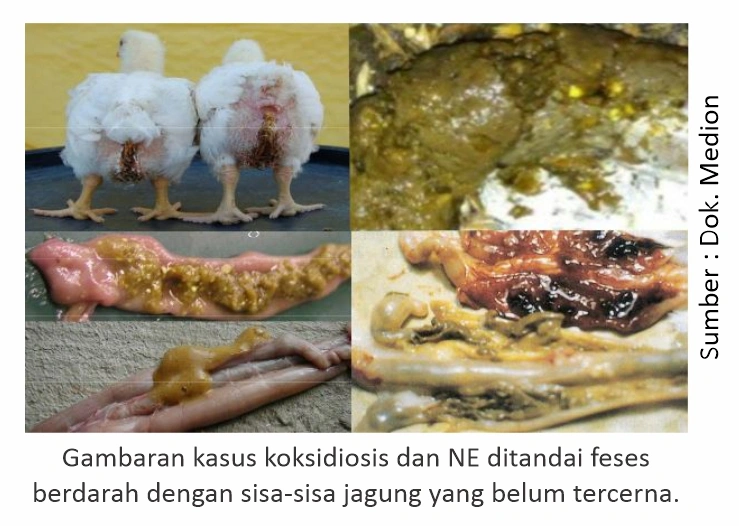
Anatomical changes in NE cases include the intestines appear to bubble with gas, have a characteristic odor, and the intestinal wall tears easily or becomes brittle. When the case is severe, the intestinal mucosa looks rough like the surface of a towel or often called “Turkish Towel”
Next is coccidiosis disease caused by protozoa Eimeria sp. Clinical symptoms and anatomical changes that appear vary depending on the age of the affected chicken. At first the chicken will appear sleepy, wings drooping down, feathers rough (not shiny), low appetite, anemia. For infections due to Eimeria tennela, chickens will have bloody poop. While in infection Eimeria maxima a thick reddish stool will be found and mixed with blood spots.
Chicken surgery results indicate infection Eimeria tennela namely, the cecum is enlarged, the thickened walls are red and there are blood clots. As for Eimeria others cause changes in the thickening of the intestinal wall accompanied by inflammation of the cataracts (purulent) to hemorrhagic (bloody) and there are white dots on the intestine. When a combined case of NE and coccidiosis will be seen bleeding along the small intestine accompanied by gas.
Actions taken when infected with NE and coccidiosis include:
- Immediately separate infected chickens
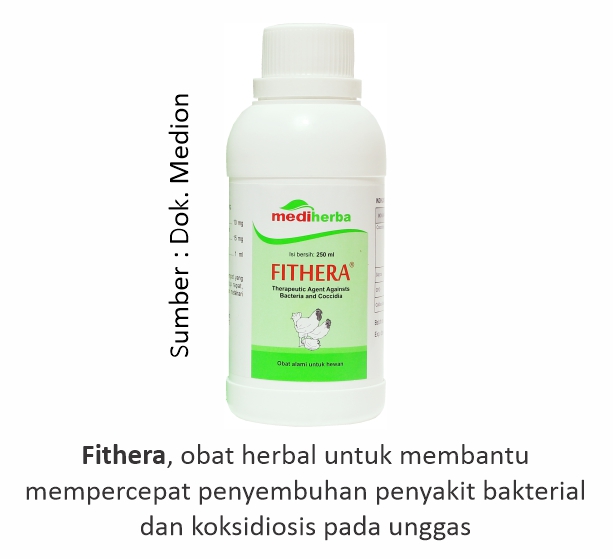
- In the case of NE and coccidiosis can be treated with Fithera or Therapy. Fithera is an herb with a mechanism of action as an antibacterial (damaging bacterial cell membranes) and anticoxidiosis (forming barrier in the intestinal villi so that the sporozoites cannot enter the intestinal wall and will be excreted with the feces). Dosage Fithera for the treatment of bacteria is 0.4 ml per kg bw, while for coccidiosis is 0.2 ml per kg bw.
- Provide supportive therapy with multivitamins containing vitamins A and K (Strong n Fit, Fortevit, Vita Stress) after treatment is completed. In general, in addition to containing vitamins A and K, multivitamins also contain B vitamins that should not be given bersaaman with treatment in cases of coccidiosis. Therefore, the administration of vitamins can only be given after treatment is complete.
- After vitamin administration, it can be given products containing amino acids such as Aminovit to help regenerate new cells in the intestinal mucosa.
Prevention of NE and coccidiosis cases include :
- Avoid exposure to stress (high density, high ammonia, poor air circulation, etc.).
- Regularly sanitize and disinfect the cage. In the preparation period, should be done Liming to to eradicate ookista Eimeria sp. Liming is necessary because oocyst it will not die just by disinfecting.
- Keeping conditions litter always dry, because litter damp and wet is a comfortable condition for Eimeria sp.
- Make Feed changes gradually so that the digestibility of the ration does not decrease suddenly and microorganisms in the gastrointestinal tract can adapt.