Dede Irwansyah
Email : dedeirwansyah44@gmail.com
If the target weight of the chicken on one flock in the first week is not reached or below the standard, will it affect later on egg production during the production period? What things can be fixed?
Answer:
Thank you for the submitted question. If the target body weight of the first week is not reached or below the standard and no corrective action is taken, of course, it can affect performance flock during the production period. Chickens with low body weight and not uniform, then the egg production time will be very diverse and peak production is difficult to achieve.
Phase maintenance targets starter laying hens (0-5 weeks) are body weight according to the standard with uniformity >85%. Uniform here means that at least 85% of chickens in one population have a standard body weight. The body weight is said to be standard if it is in the range of ③ 10% of the standard set by each breeding company strains. For example, the target body weight of laying hens aged one week (strain It's Brown) is 65.5 grams. Then the body weight into the standard category if it is in the range of ±10% of 65.5 grams, ie a minimum of 58.95 grams and a maximum of 72.05 grams.
Therefore, immediately make improvements to catch up on weight loss flock the way :
1. Pay attention to comfort when brooding period,
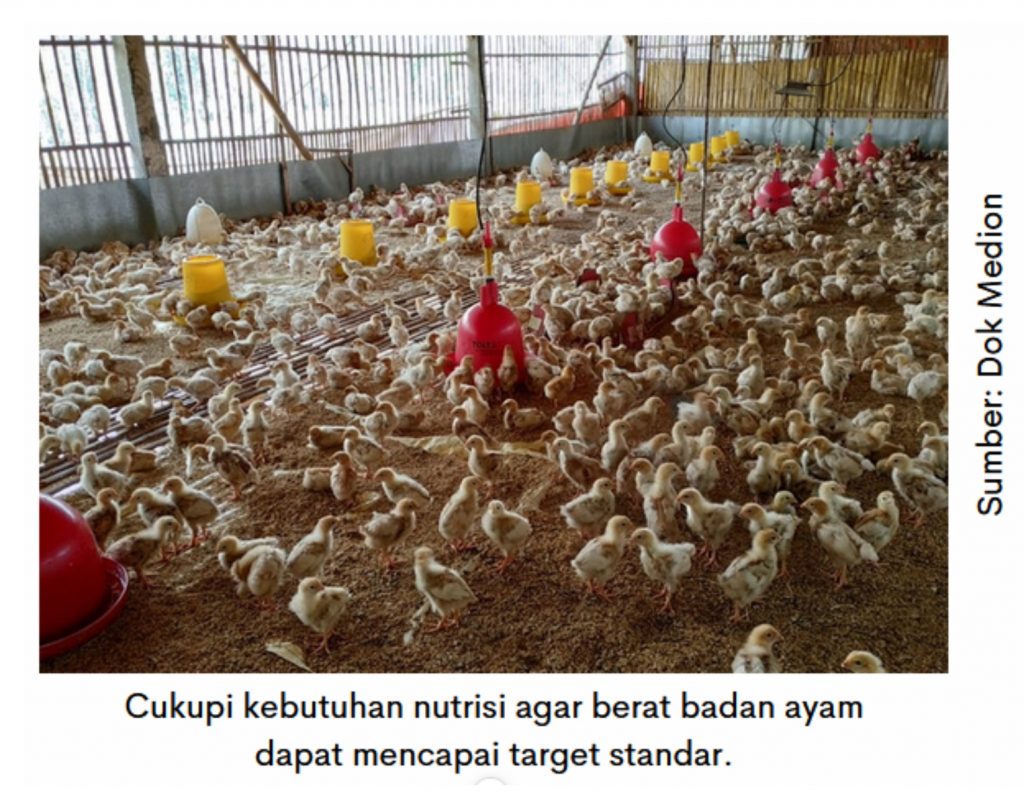
On time brooding period,, chickens experience very rapid growth and include all organs that play a role in chicken productivity. Attention and intensive handling can not be missed at this time. Meet all the needs of the future brooding period, starting from the aspect chick guard, heater, litter as well as the availability of rations and drinking water. Also note the smooth air circulation and good air quality and sufficient lighting to help chickens in accessing the ration and drinking places. In addition, consider the need for temperature (30-33ºc) both the air temperature in the cage and the litter temperature and also the humidity in the cage (55-60%). It aims to create a comfortable atmosphere in the cage and achieve successful maintenance in the future brooding period,.
2. Adequate nutrition and drinking water needs
Weight loss can be anticipated by providing quality rations. In addition, make sure the consumption of the ration reaches the target. The importance of achieving ration consumption, especially during the critical phase in the first 5 weeks of chicken life, has a great effect on growth. If necessary can be added premix in a ration such as Top Mix or Mix Plus. The content of multivitamins, minerals and amino acids in the product can optimize the growth of chicks, so that the weight can reach the standard target. In addition, provide quality drinking water and always available. The quality and availability of drinking water is very influential on the consumption of rations.
3. Maintain gastrointestinal health
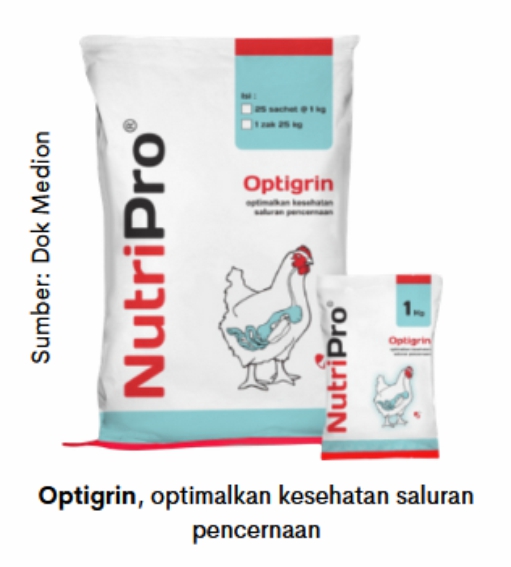
Digestion is one of the important organs in supporting the performance of the chicken's body, both from growth and productivity. A healthy digestive tract condition is needed to be able to digest the nutrients present in the ration. If the chicken's digestive tract is impaired, this will be a risk to the health and performance of the chicken's body. Because in the gastrointestinal tract, especially the intestine, there is a microflora in which the balance of the microflora population is very important to maintain the normal functioning of the intestine. Intestinal health depends on the balance between the condition of the chicken, intestinal microflora, intestinal environment and feed components. If there are disorders, then the process of digestion and absorption of nutrients will not be optimal. To maintain the health of the gastrointestinal tract remains optimal, it can be given acidifier Asortin or Optigrin to maintain the stability of microflora in the intestine.
4. Application biosecurity the tight
Biosecurity it is the front line of defense in preventing a disease. Application biosecurity the main consists of 3 things, namely isolation, traffic control and sanitation or disinfection. This of course must be applied strictly so that the challenges of disease seedlings can be minimized. So that the chicken remains healthy, can grow and develop properly, so that production performance can later be more optimal.