Bapak Umar
Solo-Central Java
What are the symptoms of PPR disease in goats that are currently being discussed? And what treatment can be done if you suspect this disease?
Answer:
Thank you Mr. Umar for the question. Peste Des Petits Ruminants (PPR) is a viral disease that affects small ruminants goats and sheep with a morbidity rate of 90-100% and a mortality rate of 50-100%. The incubation period of PPR disease is 3-6 days. PPR is not transmitted to humans or is not zoonotic.
The cause of PPR is a virus genus Capripoxvirus, family Paramyxoviridae. Virus tersebut termasuk virus beramplop, inaktif pada suhu 60 °C selama 10 menit serta inaktif pada pH <4.0 atau >11.0. Penularan utama penyakit PPR terjadi melalui aerosol dan kontak langsung dengan ternak terinfeksi. Penularan penyakit juga dapat terjadi secara tidak langsung melalui peralatan kandang, pakan, air minum maupun kendaraan yang terkontaminasi virus. Virus keluar dari ternak terinfeksi melalui cairan hidung, saliva dan eksresi misalnya feses.
PPR-infected goats or sheep may show the following symptoms:
- Fever up to 41°C
- Appetite drops
- Cough, difficulty breathing
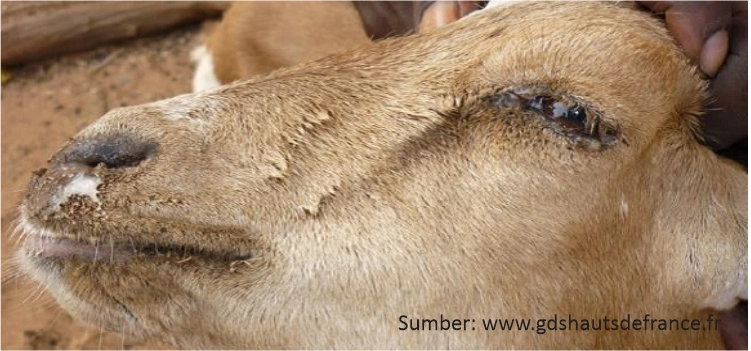
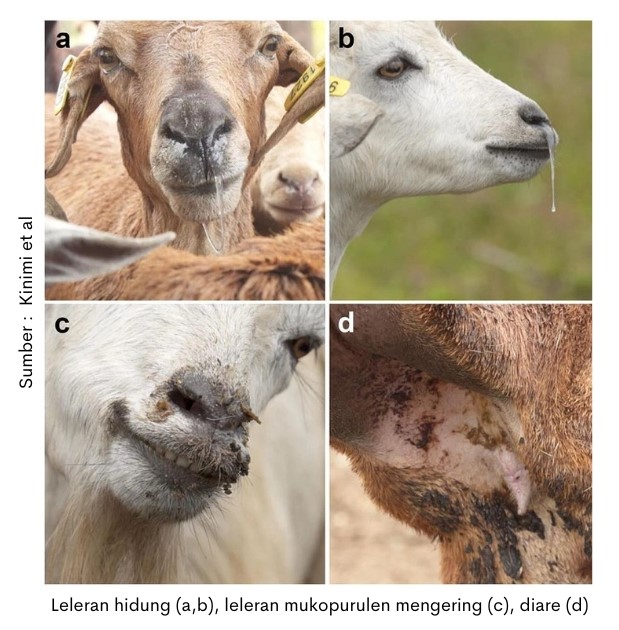
- Melting nose and eyes
- Inflammation of the eye (conjunctivitis)
- Inflammation and sores of the mouth area
- Dry/ cracked mouth and nose Area
- Lack of fluids (dehydration)
- Diarrhea
On post mortem examination (livestock after slaughter or death), PPR is characterized by the presence of hemorrhages (inflammation), ulcers (wounds) and necrosis (tissue death) in the intestine, congestion (blood retention) in the colon and rectum. Bronchopenumonia (inflammation of the bronchi and lungs), ptekie (inflammatory spots) of the nose, larynx and trachea are also found. In the spleen and liver can occur congestion and enlargement.
Efforts to prevent the entry of PPR Director General of Animal Husbandry and Animal Health has made a circular (SE) number 24093/PW.020/F/ 03 / 2023 dated March 24, 2023 on increased vigilance against PPR. In addition, the efforts that can be done as a breeder, among others:
- Avoid entering livestock from areas of suspected outbreak
- 14-day quarantine for newly arrived livestock
- Increase the body's ability to absorb nutrients (Vita B Pleks Bolus Extra Flavor)
- Clean the cage every day
- Equipment and equipment (Formades, Sporades)
If you suspect these symptoms appear in livestock, treatment can be done:
- Isolation of symptomatic cattle
- Wipe eyes and nose with a clean cloth
- Mouth and nose (Antisep)
- Increase body weight (Vita B Pleks Bolus Extra Flavor)
- Contact the animal health officer for further examination and treatment according to the condition of the livestock:
- Anti-inflammatory and anti-inflammatory (Medipiron Injection)
- Vitamin therapy (Injekvit B-Plex, ADE-Plex Inj)
- Treatment with antibiotics (Medoxy-LA, Neo Meditrile-10 LA)
- Officers can also direct laboratory tests for confirmation of diagnosis.
- Dead cattle burned or buried
- Equipment and equipment (Medisep, Sporades)
- Report to the local animal husbandry and health office