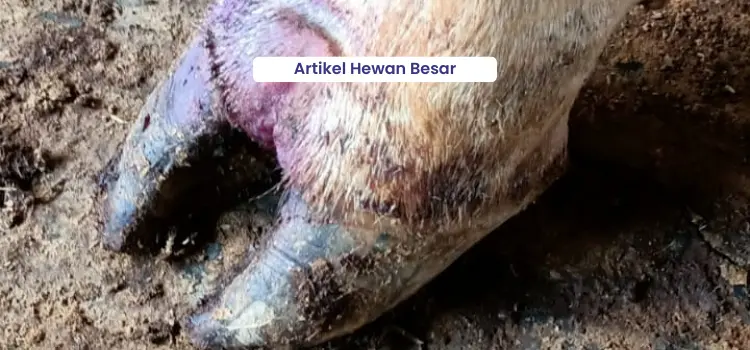
Foot and Mouth Disease (FMD) is a highly contagious viral infection that affects cattle, buffalo, goats, and sheep, and has long been a major concern for livestock farmers. The clinical signs include fever, loss of appetite, excessive salivation (hypersalivation), and the formation of blisters on the mouth (tongue, gums, and palate) as well as on the hooves. Meanwhile, Lumpy Skin Disease (LSD) primarily affects cattle and buffalo. The clinical signs are characterized by distinct skin lesions in the form of nodules or lumps measuring 1–7 cm in diameter, accompanied by fever and swollen lymph nodes.Select 2 more words to run Humanizer.
Impact of FMD and LSD
The impacts of FMD and LSD include decreased body weight and milk production, reduced meat and skin quality, secondary infections, reproductive disorders, and even death. These conditions lead to significant economic losses and require substantial recovery costs. Therefore, proper and timely management is essential to minimize their impact and restore livestock productivity.
Cattle infected with FMD and LSD often lose their appetite, leading to reduced nutrient intake and malnutrition. As a result, their production and reproductive performance decline, a condition known as an indirect mechanism or indirect effect.Cattle experiencing decreased reproductive performance may show the following changes:
- Irregular estrus or heat cycles
- Disruption of ovarian function (ranging from hypofunction to ovarian atrophy)
- Failure of conception or fertilization
- Occurrence of abortion or miscarriage (at various stages of pregnancy)
- Retained placenta and endometritis
- Prolonged calving interval or extended birth interval
Reproductive disorders can interfere with the estrus cycle in livestock, affecting the target breeding schedule and, in many cases, making conception more difficult. Other impacts of FMD and LSD on reproductive performance include:
- Ovarian Hypofunction
The ovaries become small, measuring about 1.5–3 cm, with a smooth surface and no visible follicles or corpus luteum. The main causes are low nutrient intake or disease infection. Clinically, affected livestock show no signs of estrus (anestrus) and have a low body condition score (BCS < 2). To confirm the diagnosis, rectal and ultrasound examinations should be performed. - Retained Placenta
Failure to expel the entire placenta within 24 hours after calving. The causes include nutritional deficiencies, lack of exercise/physical activity, non-ideal body condition score (either too thin or too fat), and complications during delivery. Clinical signs include the placenta hanging from and not being expelled through the vulva, with the vulvar surface appearing swollen and reddish. - Endometritis
Inflammation of the endometrium (the inner lining of the uterus) caused by infection. This condition may result from birthing complications such as abortion, dystocia, or retained placenta, as well as contamination from a deceased calf. Clinical signs include the discharge of cloudy white or yellow mucus from the vagina, enlargement of the uterus, and thickening of the uterine wall.Select 38 more words to run Humanizer.
Management of FMD and LSD
Reproductive disorders in livestock require further treatment to restore optimal performance, including the following measures:
- Examine the reproductive system of each cow individually, then address the specific reproductive disorder according to the diagnosed condition.
- Fulfill the nutritional needs of cattle with quality feed (forage and concentrate) and improve BCS (Body Condition Score).
Pemberian pakan bernutrisi akan meningkatkan daya tahan tubuh untuk proses penyembuhan dan memperbaiki BCS.- Berikan pakan berkualitas sesuai kebutuhan (hijauan dan konsentrat)
- Hijauan segar : 10% berat badan
- Konsentrat : 1-2% berat badan
- Pakan yang diberikan dapat berupa:
- Hijauan pakan ternak berkualitas yang dicacah dan silase. Contoh: rumput gajah, odot, indigofera, gamal, lamtoro.
- Pakan olahan dalam bentuk tepung/ pellet
- Konsentrat : dedak, onggok, gaplek, pollard
- Berikan suplemen mineral, vitamin dan asam amino dalam pakan (Mix Plus Cattle Pro)
- Air minum yang bersih dan segar selalu tersedia
- Berikan pakan berkualitas sesuai kebutuhan (hijauan dan konsentrat)
- Provide mineral and multivitamin supplements
- Provide multivitamin supplements to enhance immunity and stimulate appetite (ADE-plex Inj, Vitesel-Inj). These supplements contain vitamin E and selenium, which function as antioxidants and play important roles in several biological processes, including improving the reproductive system (fertility) and strengthening the immune system.
- Add mineral supplements to the feed (Mineral Feed Supplement S) such as Se, Zn, Cu, Ca, Mn, and P. Minerals are very important in activating enzymes that play a role in the cellular function of the reproductive system.
- Maximize nutrient absorption by treating worm infestation
- Treat worm infestations using (Wormzol-B / Wormzol Suspension).
- Maintain digestive tract health and rumen microbe balance (Digesfit).
- When there is a change in feed, do it gradually.
- Protect from disease-causing agents
- Perform vaccination (6 months after the animal is healthy).
- Minimize disease agents in the environment (three-zone biosecurity).
- Clean and disinfect the environment & stable equipment (Desinsep, Formades, Sporades).
- Strict biosecurity implementation
- Vehicle biosecurity: vehicles are disinfected and pass through a dipping bath (Sporades, Formades, Medisep).
- Personnel biosecurity: employees are required to spray disinfectant (Desinsep), change clothes and boots upon entering the stable.
- Guest biosecurity: limit guests; guests must change clothes, wear boots, and spray disinfectant.
- Goods biosecurity: goods must be disinfected.
- Biosekuriti kandang: kandang, lingkungan, peralatan rutin didesinfeksi (Sporades, Desinsep)
- Biosekuriti ternak: karantina ternak baru minimal 14 hari, jika ada gejala isolasi lakukan penanganan
- Considerations for hormone administration (Gonadotropin-releasing hormone, Prostaglandin F2-alpha, Luteinizing hormone)
Can cattle reproductive performance recover after FMD and LSD? Reproductive recovery after Foot-and-Mouth Disease (FMD) takes time. Once reproductive disorders are properly managed, and with good maintenance and health management, gradual recovery can occur, allowing the cow to conceive again. When the reproductive system is examined and any disorders are treated, nutritional requirements are met, body condition score (BCS) returns to an ideal range (2.5–3.5), hormonal mechanisms function properly, and the estrus cycle returns to normal — reproductive performance can be restored to its optimal level.