Poultry disease projection is always a routine topic of interest towards the turn of the year. Given the pattern of rapid development of poultry diseases in the field, it would be nice to look back at the journey over the past year and evaluate improvements. All parties must agree that the handling of poultry diseases is one of the keys to success in running the cultivation, because healthy chickens will produce optimal productivity and better profits for farmers.
Overview of diseases in 2017
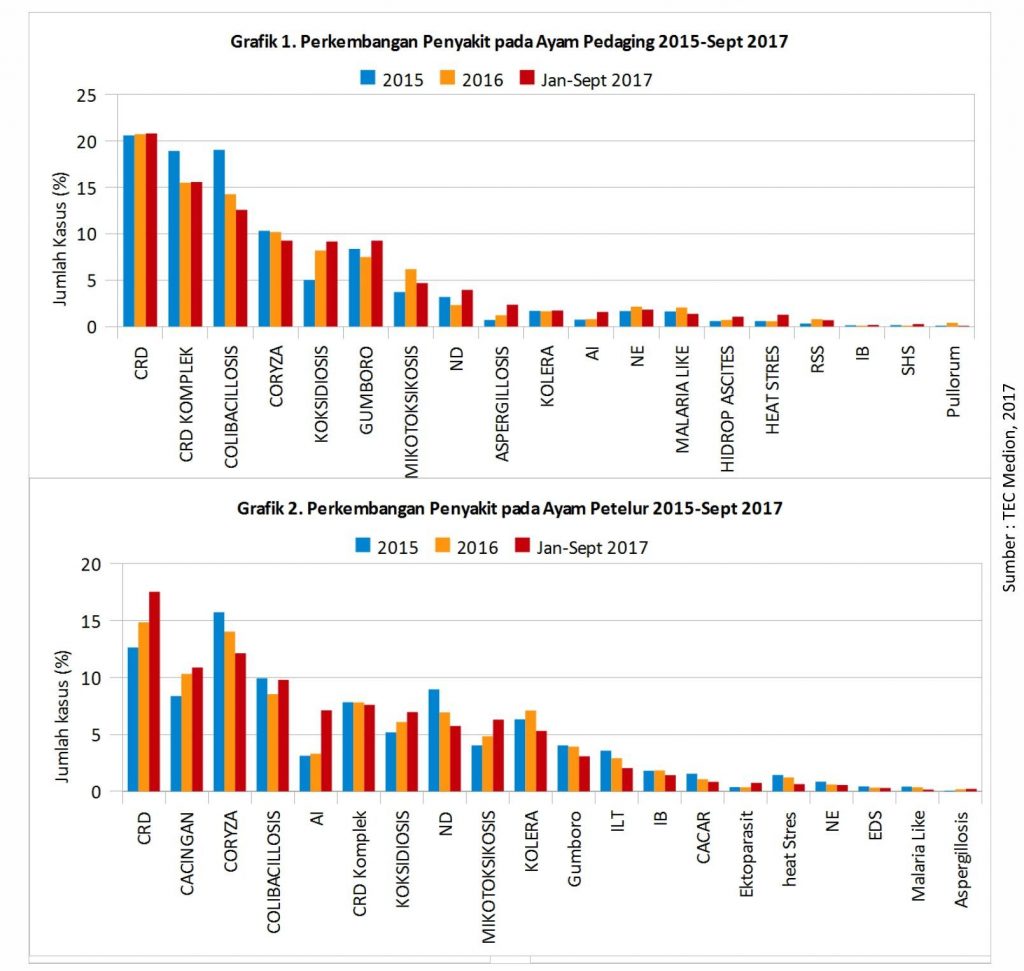
General conditions of diseases that affect broilers and laying hens in Indonesia each year have been summarized by the team Technical Education & Consultation (TEC) Medion on graphs 1 and 2. From both graphs, it can be seen that the disease attacks on farms are still dominated by old diseases. Bacterial diseases and still dominated by CRD, Coryza, Colibacillosis, and complex CRD. While Gumboro, and ND are still the prima donna of viral diseases.
Seen from Graph 1 in broilers, cases of coccidiosis, CRD, Gumboro, ND, AI, aspergillosis, and heat stress until September 2017, there was an increase in cases. Even cases of aspergillosis rose very significantly in incidence compared to 2015 and 2016. Meanwhile, in laying hens, cases of diseases that have an upward trend are CRD, worms, AI, coccidiosis and mycotoxicosis (Chart 2). Until the end of 2017, it is also predicted that cases of CRD and mycotoxicosis will be much higher in number than in 2015 and 2016.
The most important thing from the monitoring of our field workers until September 2017, the case of decreased egg production that attacked laying hens was mainly due to AI and IB infections. It certainly should be done. “warning” for farmers in 2018.
Take a look at the latest AI
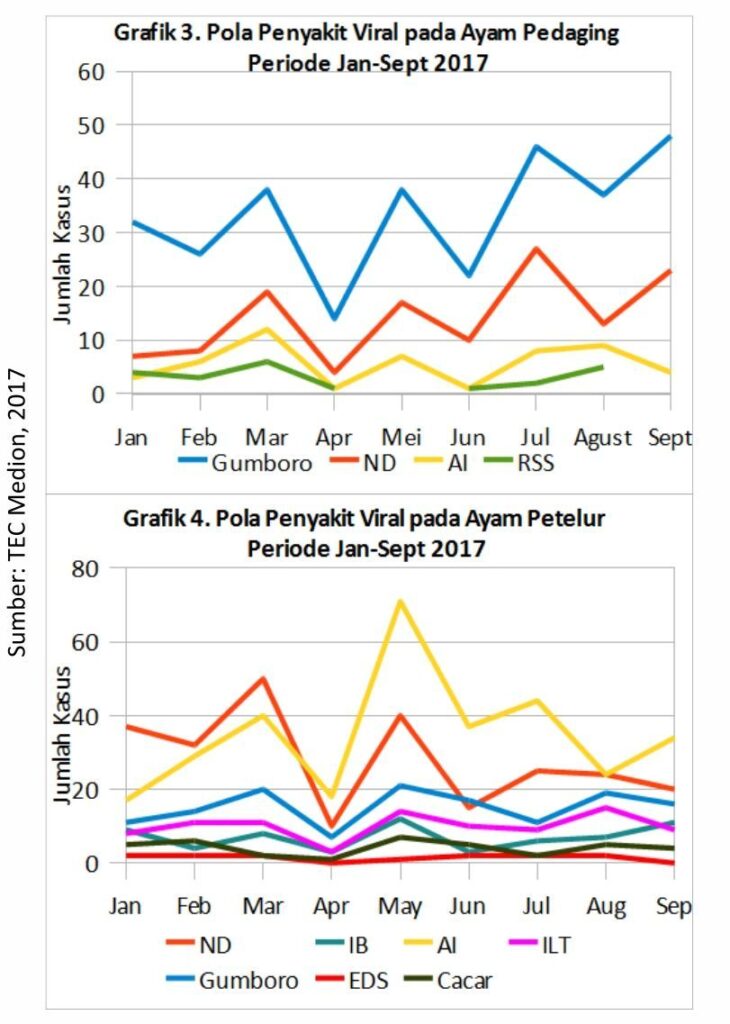
When viewed from January to September 2017, the trend of AI cases in broilers tends to be evenly distributed (graph 3). While in laying hens the trend tends to be high at the beginning of the year and increased sharply in the middle of 2017 (graph 4). The Data is based on not only the H5N1 AI virus that spread, but quite a lot of new variations of the type H9N2 AI virus that is grouped into LPAI (Low Pathogenically Avian Influenza) that attack poultry. About the detection and identification of this AI virus, a public media also mentioned, the H9N2 subtype virus was detected from the results surveillance in addition to the above-mentioned methods, there are also methods used in the field of Molecular Biology and Molecular Biology in the field of Molecular Biology in the field of Molecular Biology and Molecular Biology in the field of Molecular Biology in the field of Molecular Biology (Polymerase Chain Reaction) and DNA sequencing (Trobos, 2017).
AI viruses can change in several ways. In addition to mutations, also by carrying out genetic modifications, the mixing of different genetic material, called by reassorment. Although there have been no reports of drastic deaths in laying hens, the new AI virus has an impact on declining egg production.
In addition to the rainy season, when the transition was AI must watch out. The change of weather in the transition season can have a stressful impact on chickens. As a result, the chicken's immune system decreases so that disease seeds can easily attack, including AI, ND viruses and so on
Nd case in broilers
In addition to AI, viral diseases that also need to be watched out for are ND. Seen from January to September 2017, the trend of ND cases decreased at the beginning of the dry season and increased again when entering the rainy season. ND cases have increased significantly compared to 2015 and 2016, particularly in broilers (Graph 1). The occurrence of ND disease is very likely to occur together, especially in farms that are less than optimal in the application of biosecurity and the presence of immunosuppressive factors such as mycotoxins. When ND attacks, most likely in broilers there is inflammation of the mucosa / apex of the proventriculus. Efforts to improve maintenance management and disease prevention measures also need to be done by farmers in order to prevent outbreak and the production is more stable.
Gumboro Cycle Stop
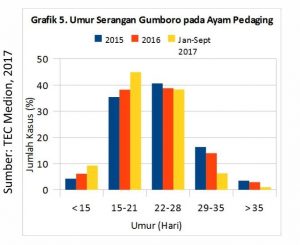
Judging from graph 3, Gumboro cases are quite high in broiler farms since the beginning of the year. The number of cases then decreased in March but increased again in May until it increased dramatically in August. From Graph 5. it can be seen that the age of Gumboro attacks on broilers in 2017 mostly occurred at the age of 15-21 days (graph 5). While in laying hens, Gumboro incidence appears evenly throughout the year that occurs at the age of 22-28 weeks (graph 4).
Why is the Gumboro case still recurring? Onset outbreak Gumboro in the field is influenced by many factors including: 1) Challenge or Gumboro virus challenge in the environment around the high Cage; 2) Management brooding period, not optimal; 3) sanitation and biosecurity of the cage is not optimal; 4) the rest period of the cage is too short; 5) Gumboro vaccination schedule is not appropriate; and 6) Gumboro vaccination application is not appropriate. Therefore, in the future Gumboro case is still one of the diseases that need to watch out for breeders.
Variant IB cases
Currently IB attack is not only classified as a classic strain but also found IB variant. The ability of the IB virus to mutate causes many variants that are spread in various countries. For example, some IB variants that have entered Indonesia such as QX strains originating from China or 4/91 from England. Some IB virus variants that have been found in Indonesia include I-37 and I-126 isolated by Darminto (1992), and I-14 found by Indriani and Darminto (2000).
Classic IB virus infection usually attacks the respiratory tract of chickens which is characterized by symptoms of snoring, sneezing and cekrek (mild cough) because basically IB is included in the type of respiratory disease. The reproductive organs are also damaged so that the quality of the eggs goes down.
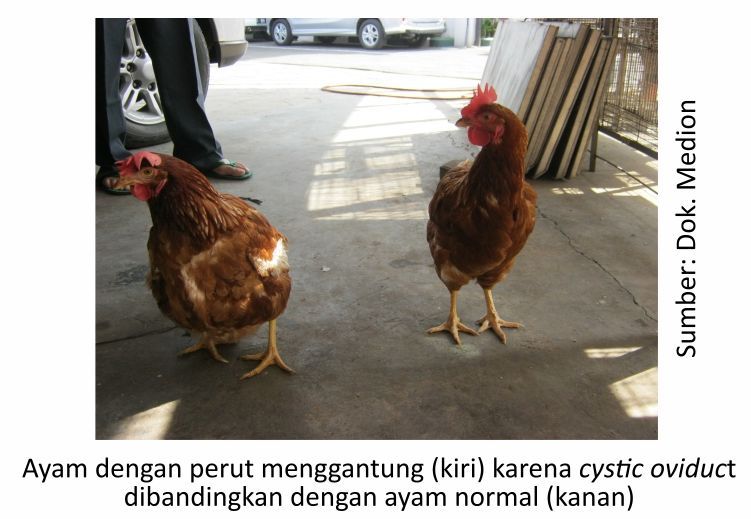
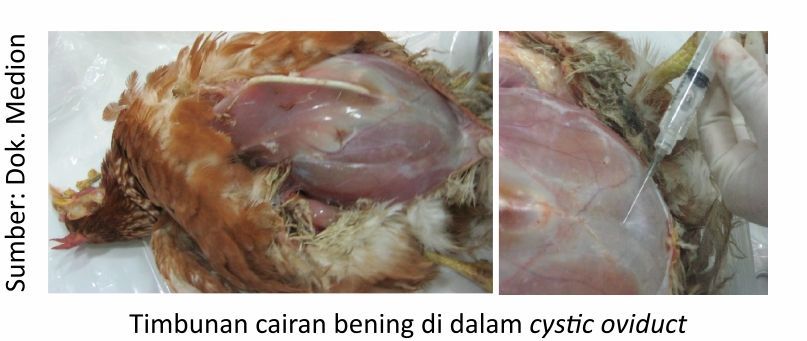
In its development, in the case of IB disease caused by QX Strain showed changes in anatomical pathology during carcass surgery in the form of dilation of oviduct filled with clear fluid (oviduct cystic). This can be clinically known if the incident has been going on for a long time (chronic) with symptoms of chicken stomachs appear enlarged and walk with a penguin-like look up. Other changes can be seen from the proventriculus that has inflammation and lesions in the kidneys (renal damage). The decrease in egg production varies from 2 to 40%. The resulting eggs are often pale and thin, and the shape is asymmetrical. Changes in the inside of the egg looks watery egg whites and blood spot on the yolk.
Coryza in the rainy season
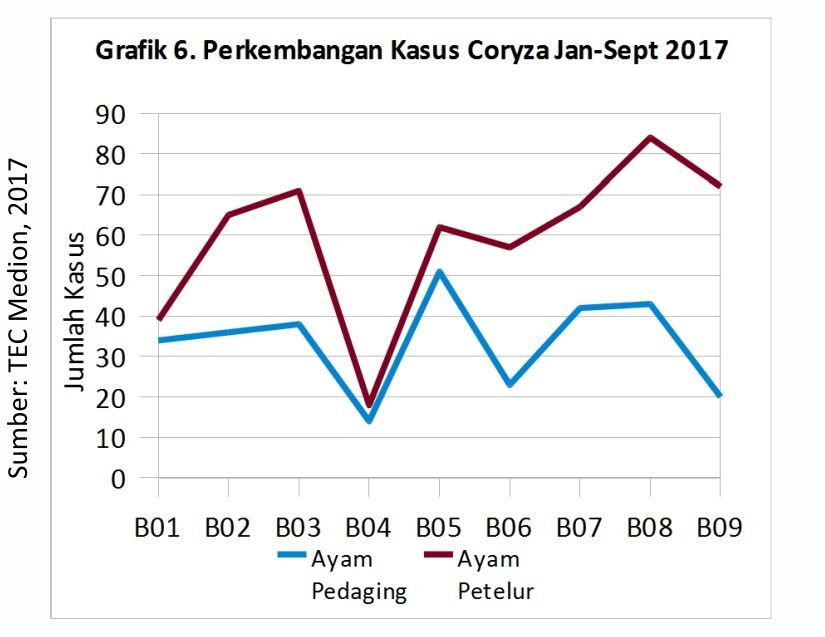
The Medion TEC team Data show that coryza in 2017, it ranked second in the findings of diseases in laying hens similar to the previous year. While in broilers, this disease has never come out of the top four. Both are equally susceptible to attack, but in 2017 the number of reported cases in laying hens was higher than in broilers. This is because the life span of laying hens is longer so it will get a higher environmental stress.
Look at the trends that occur, the case coryza experienced a surge in January and the highest in April, where the month has entered the transition season (Chart 6). The change of weather in the transition season can be stressful for chickens. As a result, the chicken's immune system decreases so that disease seeds can easily attack, including bacteria Avibacterium paragallinarum (causes coryza).
At low temperature conditions in the wet months, the enclosure environment is moist so that bacteria coryza growing quite rapidly. Other conditions, for example, when ammonia gas in the cage is difficult to remove so it is easy to irritate the respiratory tract of chickens and open the opportunity for other diseases to infect and reduce the immunity of chickens.
When attacked, the disease is difficult to cure, moreover, chickens have never been vaccinated. Chickens that successfully recovered will act as carrier (disease carrier coryza) in the next maintenance age. Be aware of the difficulty of treatment coryza, then alternative actions can be taken to control coryza is prevention by vaccination.
CRD cases in the field
Looking at the development of the disease during 2017, especially in laying hens, we will see that the percentage of CRD incidence increased significantly compared to 2015 and 2016, and the highest occurred in May which entered the transition season.
We already know that CRD is immunosuppressive or able to suppress the immune system of chickens. In the field, the occurrence of pure CRD is rare and generally accompanied by complications with other diseases especially E. Coli infection, so called complex CRD.
CRD attacks are closely related to the respiratory system of chickens. The respiratory tract of chickens is naturally equipped with mechanical defenses. The surface is lined with mucosa and there are Cilia (vibrating hairs) and mucus that serves to filter incoming air.
However, the function of the mucosa and cilia can be disrupted when the environmental conditions of the chicken coop are unfavorable, especially if the ammonia level in the cage is high enough. The presence of ammonia gas with high levels will damage the membrane of the upper respiratory tract (mucosa and Cilia), so that the seeds of diseases such as bacteria Mycoplasma gallisepticum (MG) can freely enter together with the air flow that has been previously contaminated and attach to the respiratory tract mucosa and damage its cells. The presence of these bacteria will trigger inflammation and blood flow in the area becomes increased. Bacteria will join the bloodstream and go to the air sac, where the air sac is a suitable place (predilection) for M. gallisepticum live and multiply.
Mycotoxicosis lurks laying hens
This case of mycotoxicosis that began to spread occurred again on farms, especially laying hens throughout 2017. Mycotoxins, a real threat that cannot be underestimated. Mushrooms develop easily at any time on feed raw materials, even in the rainy season as it is today. Humid conditions, making the growth of fungi increases. If this is not anticipated with good ration storage management techniques, mold will grow and mycotoxins will be produced. The fungus itself is easily visible, but the mycotoxins / toxins are invisible to the eye. If it is constantly consumed, then even treatment is difficult to achieve.
Not just breeders self mixing (mixing their own rations) who must be vigilant, broiler farmers who usually use rations so need to follow carefully. The reason is because it turns out that there are also many finished rations that as a result of being stored in “potluck” conditions can be an ideal medium for mushrooms to grow and produce toxins. Mycotoxicosis attacks are also immunosuppressive (lower immunity), so they can cause vaccination failure and chickens are susceptible to other infectious diseases.
Coccidiosis spreads again
It is a parasitic disease (Eimeria sp.) whose number of cases is highest among other parasitic diseases. This disease is susceptible to attack young chickens, which are 2-4 weeks old in broilers and
When coccidia enters the chicken's body, these parasites will move towards the intestines and carry out their life cycle, resulting in wounds, bleeding and damage to the intestinal tissue. This ultimately has an impact on the process of digestion and absorption of nutrients that are not optimal. Losses caused by coccidiosis are in the form of a significant decline in production (stunted growth and non-uniform body weight), death, and impaired immune formation so that chickens are susceptible to infection with other diseases (immunosuppressive).
Therapy against chickens that have been attacked by coccidiosis is by giving antikoksidia. The purpose of using this anti-oxidant is to obtain optimal livestock performance by balancing microflora and fending off infectious agents in maximizing the main functions of the intestine and digestive tract. When the Prohibition of the use of antibiotics and antikoksidia as antibiotic growth promotor (AGP), then farmers have started to switch to using herbal Alternative Medicine as an alternative to AGP antibiotics.
Notes for 2018
From all the data that has been summarized, it is estimated that chicken diseases in 2018 will not be much different from 2017. The argument that underlies these predictions is that the conditions of the season are still unstable. During the rainy season and transition, farmers need to be more careful against immunosuppressed diseases such as Gumboro, mycotoxicosis, ND, AI and CRD, coccidiosis, and coryza.
Looking at the development of the disease during January-September 2017, and after being compared with cases of the disease in 2015 and 2016, it can be concluded that:
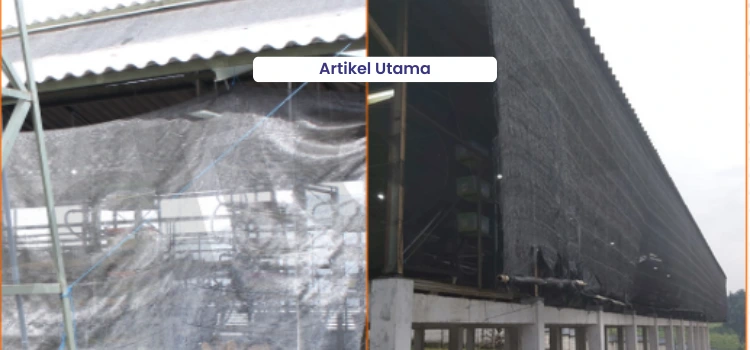
- Diseases related to maintenance management such as CRD, coryza, and coccidiosis still shows its dominance and this is a classic problem. We need to re-evaluate the landscape management and maintenance practices that we apply. Uncertain weather conditions, sometimes even extreme, coupled with the age of the location of the farm that is “old” demands better management. Application of closed enclosures (closed house) began to be in great demand because it has various advantages, including being able to minimize the effects of weather changes so that the temperature and humidity are more comfortable for chickens, being able to optimize land use (higher density, able to reach 30 kg/m2). And no less important is that the administration of drugs should be done more wisely, namely according to the rules of use listed on the drug packaging. Every 3-4 periods of treatment do rolling drugs to prevent resistance.
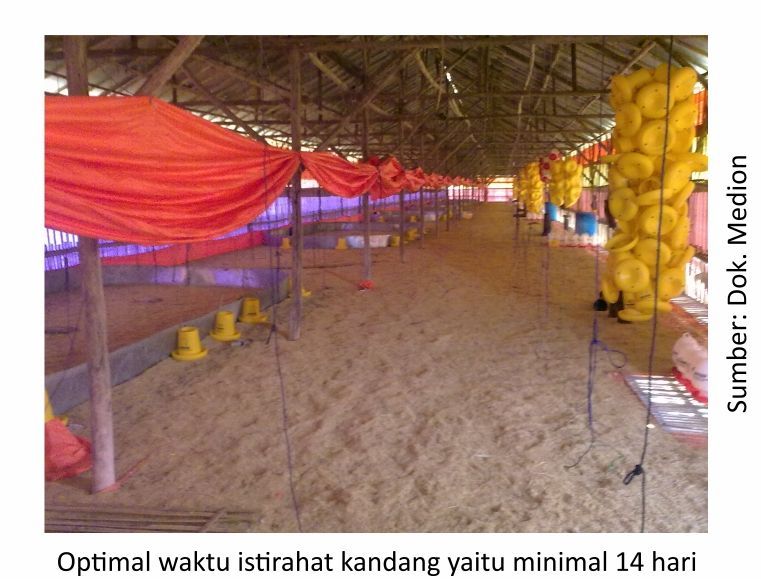
- Breeders should be increasingly wary of Gumboro. The best way to prevent Gumboro is a combination of optimal management and vaccination. Therefore, some measures that can be applied so that Gumboro no longer eyeing the farm include: 1) optimizing the period brooding, especially cage preparation; 2) Improve cage sanitation and cage rest time of at least 14 days; 3) evaluate the Gumboro vaccination program; and 4) control stress in chickens. In determining the age of the first Gumboro vaccination more precisely, farmers can test maternal antibody levels in the laboratory by taking blood samples (serum, red) from a group of unvaccinated chicks between the ages of 1-4 days.
- Because the ND and AI cases in 2017 are quite interesting compared to previous years, farmers need to be vigilant, especially for AI where the new H9N2 type virus is spreading and harming farmers. In this regard, Medion will continue to focus on monitoring the development of the AI virus. In addition, considering that in December some regions have entered the rainy season, it is not impossible that the incidence of ND and AI will increase in number. The selection of the right vaccine and the application of appropriate vaccination conditions in each farm are the key points for successful protection from ND and AI attacks. Not forgetting the application biosecurity tight.
- Severe coryza it will be much more optimal and complete if it is accompanied by vaccination. In fact, vaccination coryza will provide immunity in the chicken body so that when coryza attack, the healing rate of chickens that have been vaccinated will be faster than chickens that are not vaccinated. In addition, the frequency of occurrence of cases can be suppressed and the attacks are less severe. Therefore, combining vaccination measures with the implementation of good maintenance procedures, as well as strict biosecurity applications are the main keys to preventing cases coryza.
- Start increasing cases of mycotoxicosis need to be anticipated by being aware of the growth of fungi, especially in the feed and drinking areas. If you need to add mold inhibitor (propionic acid) to inhibit fungal growth. And no less important when humid conditions, especially during the rainy season, you should use toxin to binds mycotoxins in feed. In addition, give multivitamin supplements and premix to optimize productivity and increase the endurance of chickens. Examples toxin Medion production is Freetox. While pmultivitamins and supplements premix what can be given is Fortevit and Mix Plus.
- For IB viruses that have diverse genetic variations (mutations), there is a need for special attention in the aspect of prevention, especially in terms of vaccination. In the vaccination program, the variant strain IB vaccine must be combined with the classic strain IB vaccine because the level of cross-virus protection is very low. The administration of the Active variant IB vaccine should be administered separately with the active classic strain IB vaccine and on different days. The minimum recommended distance for vaccine administration is 7-11 days. Concomitant administration of the vaccine is feared to cause a reaction post over-vaccination. Prevent chickens from immunosuppressive diseases and stress as a preventive measure to easily enter the virus also needs to be considered supported also by disinfection and biosecurity which needs to be done precisely and strictly considering that the IB virus is easily killed by various types of disinfectants.
- After knowing the danger of oocysts, then the first thing that needs to be done to control coccidiosis is to reduce the number of oocysts and prevent oocysts from sporulating. The trick is to give special treatment to the floor of the postal cage.
When the cage is empty, sprinkle the floor with chalk or caustic soda before covering with husks. During the rearing period, the breeder can also give Lime / caustic soda on the surface of moist and wet husks, before adding new husks. Another way is to flush the floor with hot water after cleaning the cage. Lime and caustic soda are substances of a hot nature. While oocysts cannot withstand temperatures > 55°C. Oocysts can also die if they are in conditions of extreme cold (freezing temperatures) and extreme drought.
- In the case of CRD, M. gallisepticum it has no cell wall. Therefore, the type of antibiotic chosen must have a way of inhibiting the formation of folic acid and proteins that will directly damage the bacterial nucleus M. Gallisepticum. In addition, do flip-flops litter regularly once every 3-4 days. If litter wet and lumpy in a small amount, immediately take out and replace with a new one. Reduce ammonia levels in cages by spraying Ammotrol on feces. It can also be dissolved in drinking water as much as 0.5-1 grams per 2 liters of drinking water.
- The difficulty of determining the analysis of diseases such as AI, ND or IB that can reduce egg production, is one of the obstacles faced by many farmers in the field. Use of serological tests (e.g. HI test and ELISA), molecular biology test (PCR and sequencing), as well as tests for feed quality and mycotoxin levels can be performed as a means of confirming the diagnosis of the disease. Serological tests are also useful for monitor antibody titers such as AI. Medion presents MediLab (Medion Laboratory) in several major cities in Indonesia, so farmers are expected to be helped by the services of this laboratory test.
At the end of 2017 and 2018, the trend of poultry diseases that tend to be the same from year to year seems to be repeated again next year. Evaluation of livestock business needs to be done in order to determine the strategy that needs to be taken in the future. Success has always been Indonesian poultry farming.