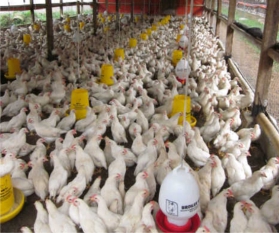
The preparation of a controlled chicken health program will make it easier for farmers to maintain health and produce optimal maintenance. This includes the maintenance of chickens. It is necessary to draw up a vaccination program based on the history of the incidence of diseases that attack to what drugs and vitamins can be given to male chickens.
Maintenance Of Stud Chickens
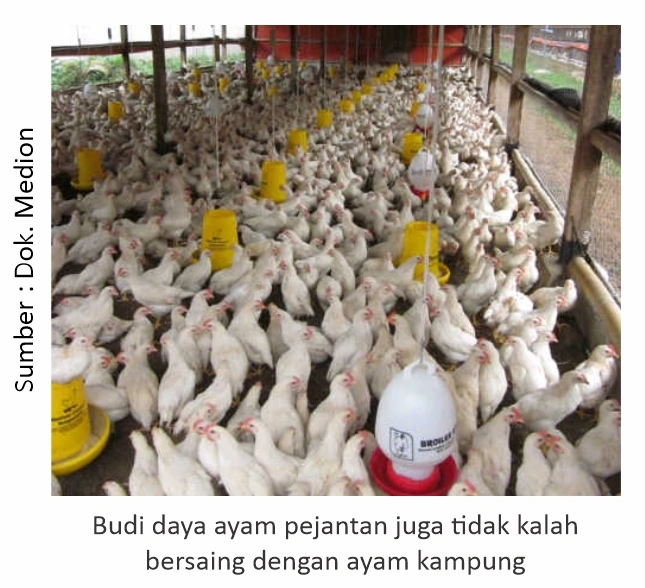
Stud chicken is the result of sorting from the selection of prospective laying hens so that they are used as broilers. The same characteristics as free-range chickens with a Keeping age of 56-70 days are ready for harvest.
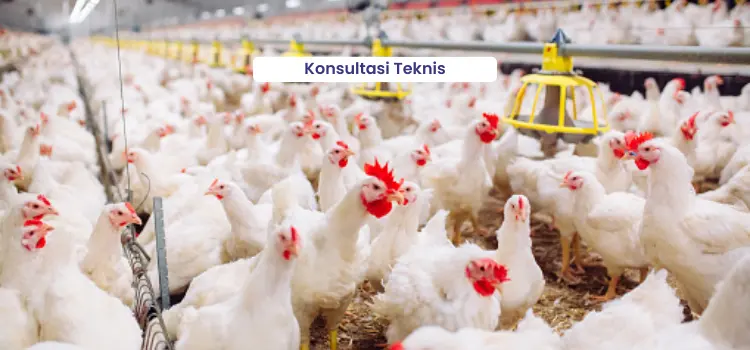
Male chickens are more resistant to the influence of environmental changes. But the possibility of chickens becoming infected with the disease still exists. Male chickens, especially in intensive rearing with a large enough population, still have to get antibodies to avoid disease. When chickens are not vaccinated and the disease turns out to be, the treatment given will be more difficult. So that the preparation and implementation of this health program aims to prevent disease, improve health and accelerate recovery if livestock is attacked by disease.
A sample table of the general guidelines for the stud chicken health program can be downloaded on the Medion website. Vaccination and medication programs are not standard, but can vary in one farm with the farm the others. This can be adjusted to the history of disease and conditions in the field.
The importance of vaccinations for male chickens
Vaccination aims to bully the immune system in the body to produce antibodies so that the immune system of male chickens is more optimal. Some things that need to be considered in vaccination are vaccination programs adapted to local conditions, the right time and technique for administering vaccines, uniform vaccine doses, and given to healthy chickens.
Vaccines commonly given to male chickens are nd, Gumboro, AI, IB, and korisa vaccines. But that does not mean other vaccines do not need to be given, such as ILT or fowl pox. During the maintenance period, the ND vaccine can be given 2-3 times, namely the first vaccination at 4 days of age using the active vaccine Medivac ND Hitchner B1/Medivac ND Clone 45 through eye/nose drops at the same time with inactivated nd vaccine using Medivac ND G7-IB Emulsion. Repeated at 36 days of age using the vaccine Medivac ND La Sota/Medivac ND Clone 45. The vaccine can be given 2 times at the age of 4 days using a combination vaccine inactivated ND (Medivac ND-AI10 years of age (Medivac AI). Meanwhile, Gumboro vaccine can be given 2 times with the first vaccine at the age of 7 or 14 days using Medivac Gumboro A or Medivac Gumboro B. Then the repetition can be done at the age of 22 days.
If the area is prone to coral disease, coral vaccination can be given at the age of 7-14 days using Medivac Coryza B, Medivac Coryza T, or Medivac Coryza T Suspension. While in areas prone to smallpox (pox) can be vaccinated against pox in male chickens using Medivac Pox when the chickens are 15 days old.
Supplementation and medication
Maintaining health can also be supported by giving supplements to chickens. Supplementation aims to reduce stress, increase stamina and body power of chickens, and maintain optimal productivity. Its type of supplement consists of vitamins, minerals, amino acids and immunostimulants.
In the first week of preservation, use Gingertol especially when chick in can help restore DOC's energy lost during the trip so that it can be refreshed and performance remains optimal.
Farmers can provide supportive therapy or supplements to maintain stamina or help the growth of chickens by providing vitamins such as Vita Stress (before and after vaccination or in hot weather) and Imustim (immunostimulants). Imustim it can also be given before and after vaccination as an immunostimulant that can accelerate the increase in antibody titers resulting from vaccination. Awarding Imustim aims to increase immunity through an increase in compounds that play a role in fighting foreign substances that attack the chicken's body.
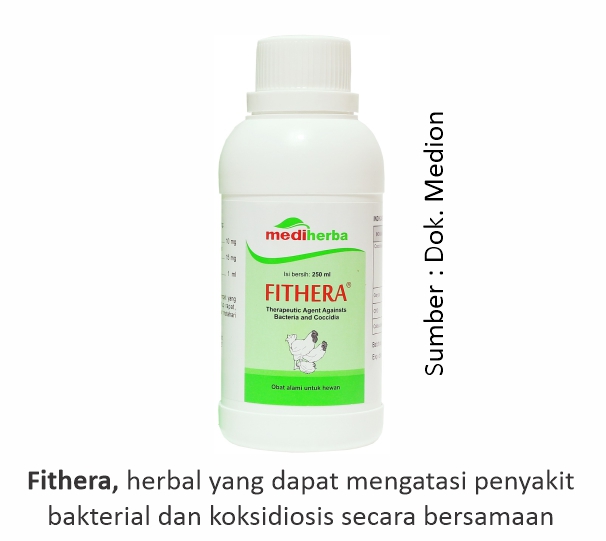
In maintaining the digestive health of chickens against bacterial infections give the right herbal supplements. Awarding Fithera can help prevent and cure bacterial infections (CRD, Korisa and Colibacillosis) and coccidiosis in poultry. If there have been cases of infection, take appropriate treatment based on diagnosis, drug selection, and dosage and rules of use. To cope with bacterial diseases, can give Therapy, Neo Meditril, or Amoxitin (select one), and do rolling a maximum of antibiotics every 3 periods of treatment. Chickens affected by coccidiosis can also be treated by administering anti-oxidant drugs. Products that can be used are Coxy with the 3-2-3 method, namely 3 days of medication, 2 days of drinking water without medication and 3 days of medication. Or Toltradex which is given for 2 consecutive days at a dose of 0.14 ml per kg of body weight is given through drinking water.
The third week until harvest, giving Neobro/Kumavit/Fasbro to help accelerate the growth of chickens and prevent stress in chickens. Should also be given Ammotrol because the amount of feces produced at that age is more so that the ammonia produced will increase.
For the selection of worm medicine is said to be appropriate if it has a spectrum of action in accordance with the type of worm that attacks (gilik worm or tapeworm). However, if the chicken is attacked by earthworms as well as tapeworms, the male chicken can be given the product Levamid/Vermixon start at the age of 1 month and repeat every 1-2 months.
Maintain the health of the male chicken to the maximum
Some other efforts that are no less important to maintain the health of male chickens and help maximize productivity include:
1. Create comfortable conditions for chickens
Comfortable conditions must be felt by chickens starting from the moment DOC arrives at the cage. The sanitation and disinfection of the cage has been carried out and the recommended empty cage time before DOC enters is 14 days from the moment the cage is clean.
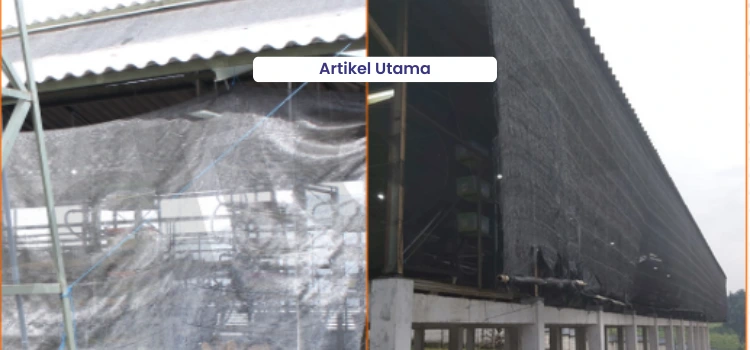
The existence of ventilation is absolutely necessary to get optimal air circulation so as to prevent disease seeds from mixing with clean air that enters the cage. Strive for the ideal temperature for male chickens is about 29-34°C for the period brooding period, and 25-21°C for adult chickens (Cobb500 Broiler Management Guide, 2018).
Replace litter wet and damp with litter dry ones to reduce ammonia. Also adjust the density of the cage to ensure all male chickens get the same opportunity to get rations, drinking water, movement space and oxygen so that growth and productivity are uniform
2. Provide rations and drinking water as needed and quality
Adequate nutrition can prevent male chickens from experiencing deficiencies that cause impaired growth and decreased chicken endurance. The principle of feeding first in first out as well as the regulation of humidity in cages and storage sheds are able to suppress the growth of fungi. Storage of feed needs to be provided with a board base with a height of about 5-10 cm.
The water consumed should not have color, taste and smell. Water should also be free of dissolved particles (not cloudy). For a good drinking water temperature for chickens is 20-24°C.
3. Minimize the seeds of disease in the environment
Separate the sick male chickens so that the seeds of the disease do not hit other chickens. Dead chickens should be buried or burned so that the virus does not spread.
Minimal effort is to sanitize and disinfect cages and equipment. When empty cage can use Formades after the cage is washed. Feed and drinking places should be washed and disinfected regularly with Medisep. Do it anyway flushing to clean moss or biofilm which is attached to the water pipe. Job descriptions: responsible to ensure the quality of the product and the quality of the product. responsible to ensure the quality of the product. responsible to ensure the quality of the product. responsible to ensure the quality of the product. responsible to ensure the quality of the product Medisep/Antisep/Neo Antisep and drinking water sanitation with Desinsep. At the time of vaccination through drinking water, it can be added Medimilk or Netrabil to help improve the quality of drinking water so that the potential of the vaccine virus in bluffing antibody formation becomes optimal.
May be useful.