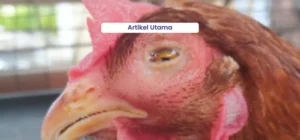
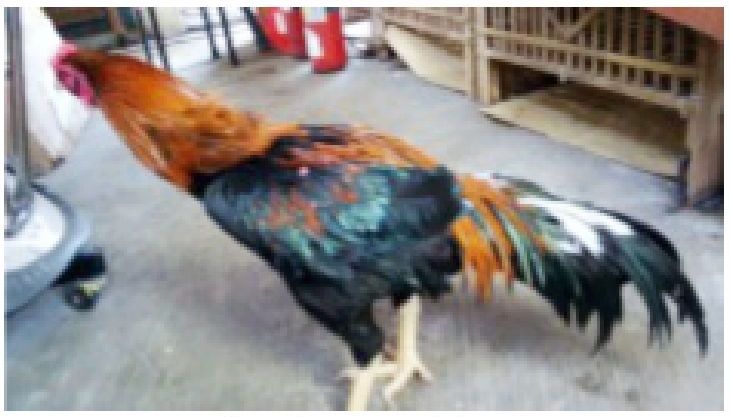
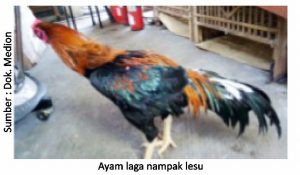
A fighting chicken is a rooster that is kept for competition. Like layer chickens and broiler chickens, fighting chickens are also at risk of worms. The trigger factor for worms in fighting chickens is maintenance that pays little attention to cleanliness. Worm infection in the digestive tract can cause damage to the lining of the intestine (intestinal villi epithelium) and the death of intestinal mucosal tissue so that it will interfere with the absorption of feed nutrients. Worms in fighting chickens at the beginning of an attack rarely show characteristic symptoms. In severe cases of worms, chickens will appear less excited, lethargic and weak, decreased appetite, decreased body weight, chickens appear pale or decreased levels of red, diarrhea, even to a decrease in energy and performance when competing.
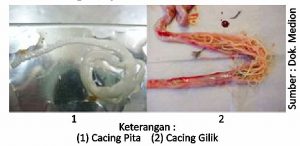
Worms in fighting chickens can occur at any age, ranging from young to adult age. The most frequent causes of worms in chickens are earthworms (nematodes) and tapeworms (Cestodes). Gilded worms are round and long. Gilik worm species that are often found are Ascaridia sp., Heterakis gallinarum and Capillaria sp. The life cycle of worms starts from eggs then becomes larvae and adult worms. Gilic worms during their life do not need an intermediate host. Transmission can occur through rations, drinking water, equipment or other materials contaminated with feces. Unlike the gilic worm, the tapeworm is ribbon-like and segmented. In infecting chickens, the worm requires intermediaries such as house flies, ants and
Beetle. Tapeworm eggs are eaten by intermediate hosts, then hatch in the digestive tract and remain in it until the intermediate host is eaten by chickens. After the intermediate host is inedible, the worm larvae will attach themselves to the intestinal wall of the chicken. Then the young segments of the worm are gradually formed, and the worm develops into an adult.
Precautions that can be done hobbyist chicken fight among others:
1. Deworming Program
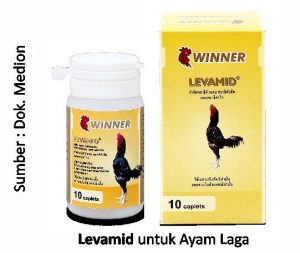
Worms are rare that cause sudden death, but that does not mean they can be ignored. Cases of worms often occur without showing symptoms and are difficult to detect early. Because in mild cases the chicken still looks healthy. For this, it is necessary to control by deworming. Deworming can be given to fighting chickens from the age of 1 month, for example at the age of 35 days and then repeated 2 months later, namely the age of 95 days. After the age of chickens over 4 months, deworming needs to be given regularly every 2 months. Medion worm medicinal products to eradicate tapeworms and worms gilik in chicken laga is Levamid (Winner Levamid). Early detection of cases of worms can also be done with regular stool examination in MediLab (Medion Laboratory). This can also be taken into consideration for subsequent deworming.
2. Cage & environment sanitation
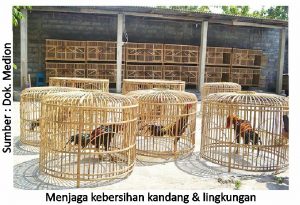
Cases of worms can be transmitted from one chicken to another chicken through chicken droppings that contaminate the area of the cage, feed, drinking and other equipment. For this reason, sanitation and disinfection activities of cages and environments need to be routinely carried out. Perform a thorough cleaning of the cage then spray with a disinfectant such as Medisep or Zaldes. Also pay attention to mowing the grass and bushes around the cage regularly. Try not to keep the cage conditions wet and damp, as these conditions increase the high chances of worm infestation. This condition will be better if the cage is exposed to sunlight.
3. Intermediate host control
In the control of cases of worms, another important thing to consider is to control intermediate hosts such as flies, ants and beetles. Fly control can be done by administering fly drugs such as Flytox, Larvatox and Delatrin. If this intermediate host can be controlled well, then the case of worms will be better controlled and the next repetition period of deworming can be given over a longer period. In addition, care should also be taken to prevent things that can invite many flies, such as leftover food that is scattered, clogged water drains, and dirt that is rarely cleaned.
4. Nutritious feeding
Giving nutritious feed every day and vitamins to maintain the fitness of the chicken is important to do so that the stamina and performance of the chicken is maintained.