Cows, goats, sheep are examples of ruminant farm animals or often referred to as ruminants. The digestive system of cattle is quite complex because it has four stomachs with the largest stomach called the rumen. Indigestion in the stomach that often occurs in cattle is bloating or often referred to as bloat. Bloating disease is still a concern for farmers because it is very dangerous if it is not known from the beginning and not immediately handled properly. The losses incurred by farmers are not kidding, ranging from falling sales prices and even to rapid death. Livestock can die in a short time between 1-2 hours after experiencing bloating.
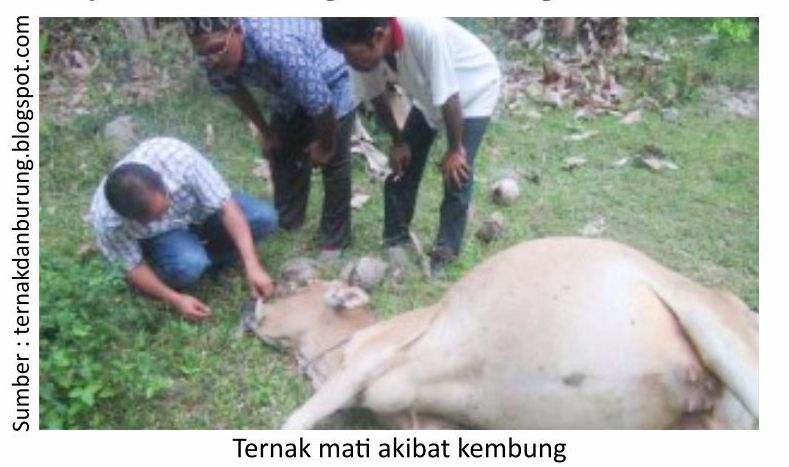
Bloating in cattle
In the rumen there are microorganisms that help cattle to digest feed. In the process of digesting the feed will formed gases in the rumen are carbon dioxide and methane. Naturally, the gas will be released by the cattle themselves by burping or gas discharge through the anus or fart. Bloating in cattle can occur if the amount of gas in the stomach increases and gas is trapped in the stomach. Gas deposits in the stomach can be separated from other stomach contents or trapped between the stomach contents in the form of small bubbles. This occurrence of bloating is usually acute.
Bloating can be caused by two things, namely due to gas blockage or due to the formation of foam. Gas obstruction occurs due to the obstruction of a foreign body in the outlet of gases from the stomach. Therefore, it is important to pay attention to every feed given to livestock. While bloating due to the formation of foam occurs due to the influence of feed. For example, giving excessive forage, forage that is still wet, forage too young or feeding unbalanced forage and concentrate by giving too much concentrate. In addition to these causes, there are several other supporting factors that can trigger bloated livestock such as livestock that are left to roam, cold air containing water, rain, and inappropriate cage conditions.
Supervision of livestock does require accuracy, sometimes negligent farmers do not realize if the cattle bloated. Cattle experiencing bloating may show symptoms such as:
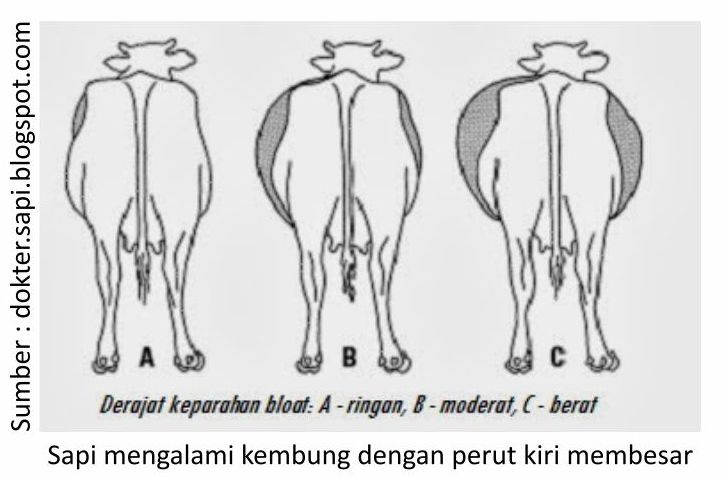
- The left abdomen is enlarged or bulging if patted will sound like a drum
- Decreased appetite does not even want to eat
- Cattle restless and restless
- Back stooping and stomping
- Increased breath frequency or difficulty breathing. You can also see cattle breathing with their mouths
- Cattle appear to stick their necks forward to release gas
- The heart rate weakens, the mucous membranes of the mouth and around the eyes appear bluish, which indicates a lack of oxygen
- Cattle fall and hard to get up
Preventing bloating in livestock
Preventive measures that can be taken so that livestock do not experience bloating include:
- Livestock should be stabled to make it easier to control. If the livestock should be tied and immediately put in a cage if it is cloudy, rain, wind or bad weather to avoid freezing livestock.
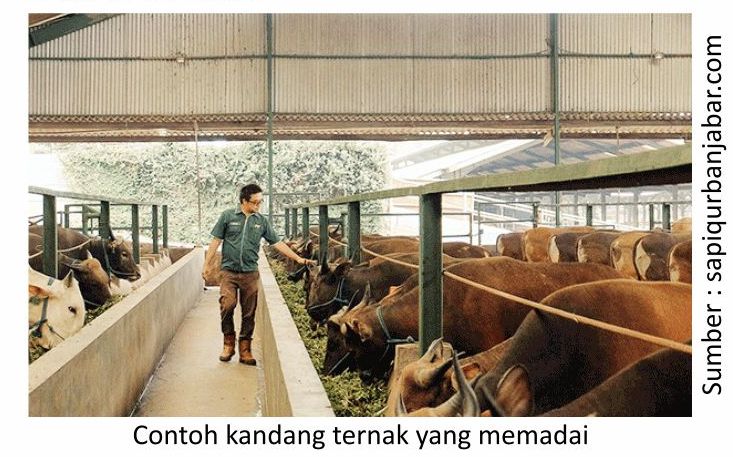
- Cage construction is adequate. The cage should be tightly walled so that the livestock does not get cold at night and the roof does not leak. The cage is kept in dry and not damp conditions.
- Provide feed in accordance with the proportion especially for foodstuffs that are easily fermented so that methane gas is formed in the stomach of livestock such as legume leaves. Avoid foliar feeding of legumes 100% without mixing with other forages or grasses.
- Avoid giving excessive forage. Forage can be given little by little but with frequent frequency.
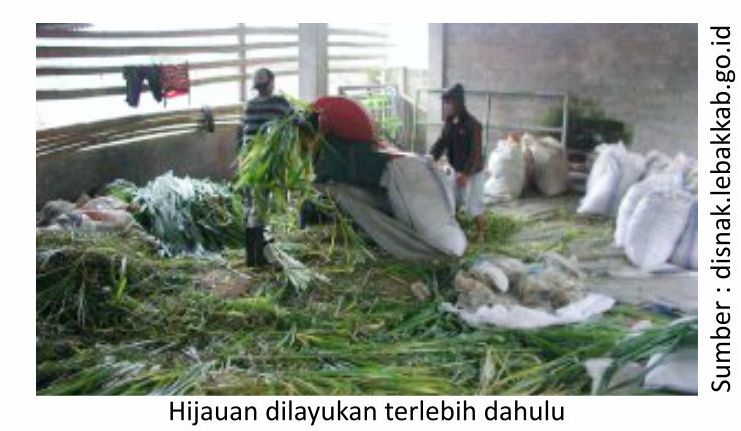
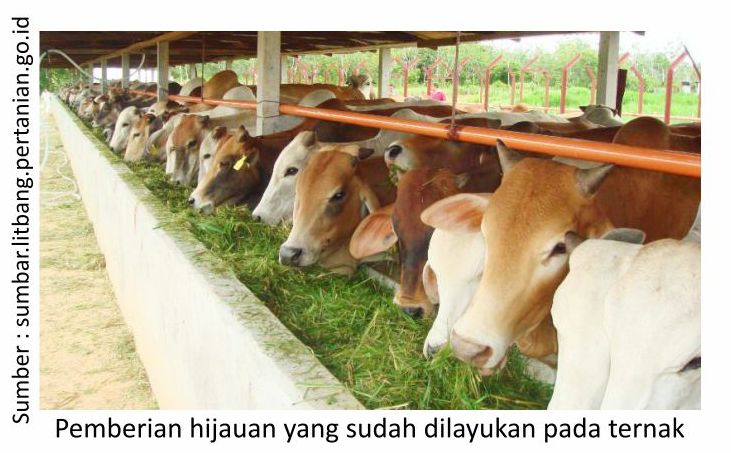
- Lay out in advance the forage that will be given to the livestock. Avoid giving forage that is still wet or fresh. Fresh forage is favored by cattle, with conditions that hungry cattle will eat forage. Therefore, it is necessary to do the technique melayukan hijaun first.
- Forage can be given in rough form. Do not cut the forage too small, the coarser the forage pieces will be the slower the rumen microbes digest, reducing the risk of bloating.
- Avoid grazing livestock too early because the grass is still wet and dewy. The incidence of bloating will increase at the beginning of the rainy season. Because forage at the beginning of the rainy season is in the stage of growing rapidly and high nutrition. Farmers also need to be careful with this condition because the high protein content can also trigger bloating. This can be prevented by giving dry grass first before grazing at the beginning of the rainy season. Livestock will reduce the intake of fresh grass so that the rumen is more adaptable.
- Feed given in good condition. Do not give spoiled or even moldy feed.
- Don't let the cattle get too hungry. Feeding is carried out according to a predetermined time.
Handling Bloated Cattle
If the livestock shows symptoms of bloating, it is necessary to treat it immediately with caution as follows:
- The livestock is placed in a warm cage
- Cattle are tried to remain in a standing or mobile position. You can also put the front legs of the cow in a higher position.
- It is better to keep the mouth open so that the cattle can breathe more easily and remove gas from the stomach.
- For a while fresh forage digantu with dry forage can help in cases of mild bloating.
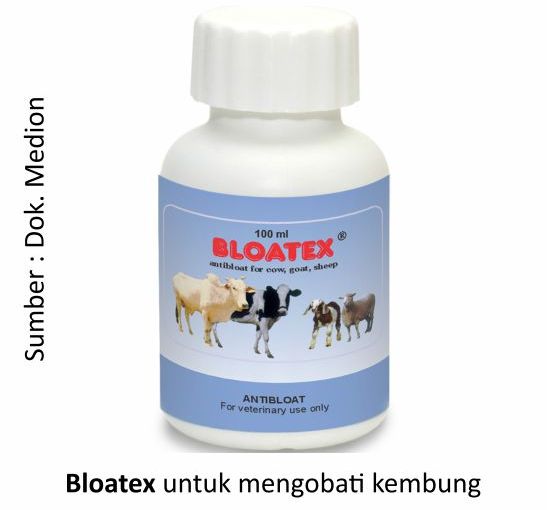
- Give bloating medications such as Bloatex which serves to remove excess gas. The drug will work by lowering the surface tension so that the gas bubbles will break down into small bubbles so that they can be removed from the digestive tract.
- If the bloating is not severe, the cattle can also be taken to a large yard to make light movements or walks to stimulate belching. After that, dry feed can be given to stimulate the chewing process that will help reduce bloating.
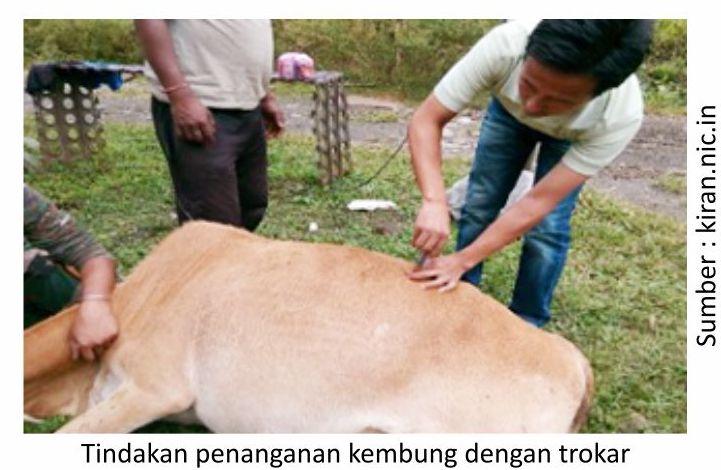
- If the bloating is severe enough, gas removal can be done using a trocar, but it needs to be done by a trained person. The Gas is removed by heating cannula on the left abdomen of cattle, directly on the rumen.
- Can also be done by using action stomach tube whose function is to remove excess gas due to severe bloating. Tools stomach tube will be inserted through the mouth.
The incidence of bloating in cattle cannot be underestimated because it can be fatal. Preventive measures need to be taken to prevent these events so that livestock health is maintained and livestock productivity is also increased.