As well as closing the end of 2019, we need to evaluate the performance and development of livestock businesses in the past year to determine targets in the coming year. In running a livestock business, of course there are targets that can be achieved, but there are also those that cannot be achieved. If it has not been successful to be achieved, Of course we need to study further about the causes and solutions that must be done so that it can be anticipated in the next period.
What about the disease situation during the period of 2019? The following are the results of the evaluation and summary from the Medion Technical Education and Consultation team which is expected to be useful for farmers to prepare anticipatory and preventive measures in 2020.
Overview of diseases in 2019
The development of the disease over the past year has undergone almost the same pattern as last year's predictions. Changes in extreme weather and even variations in wind and sea surface temperatures in the tropical eastern Pacific Ocean that are irregular and blow regularly will have a bad impact on the management of chicken rearing. May also be some of the factors that cause diseases that attack in 2019. Some things to note about the change of season :
- Many chickens are stressed and even immunosuppressed due to fluctuations in temperature, humidity and wind speed.
- The development of the causative agent of the disease is caused by waterlogging and high temperature and humidity.
- Difficulty setting up the management system due to unpredictable situations such as when determining the temperature brooding period,, time dilation or unscrew the curtains.
- Difficulty meeting energy needs for metabolic processes when temperature conditions are not optimal.
In addition, it is known that the impact of the long dry season that has passed is also for the poultry sector, of course, not kidding. The stress of high temperatures during the day can cause stress experienced by livestock, especially poultry.
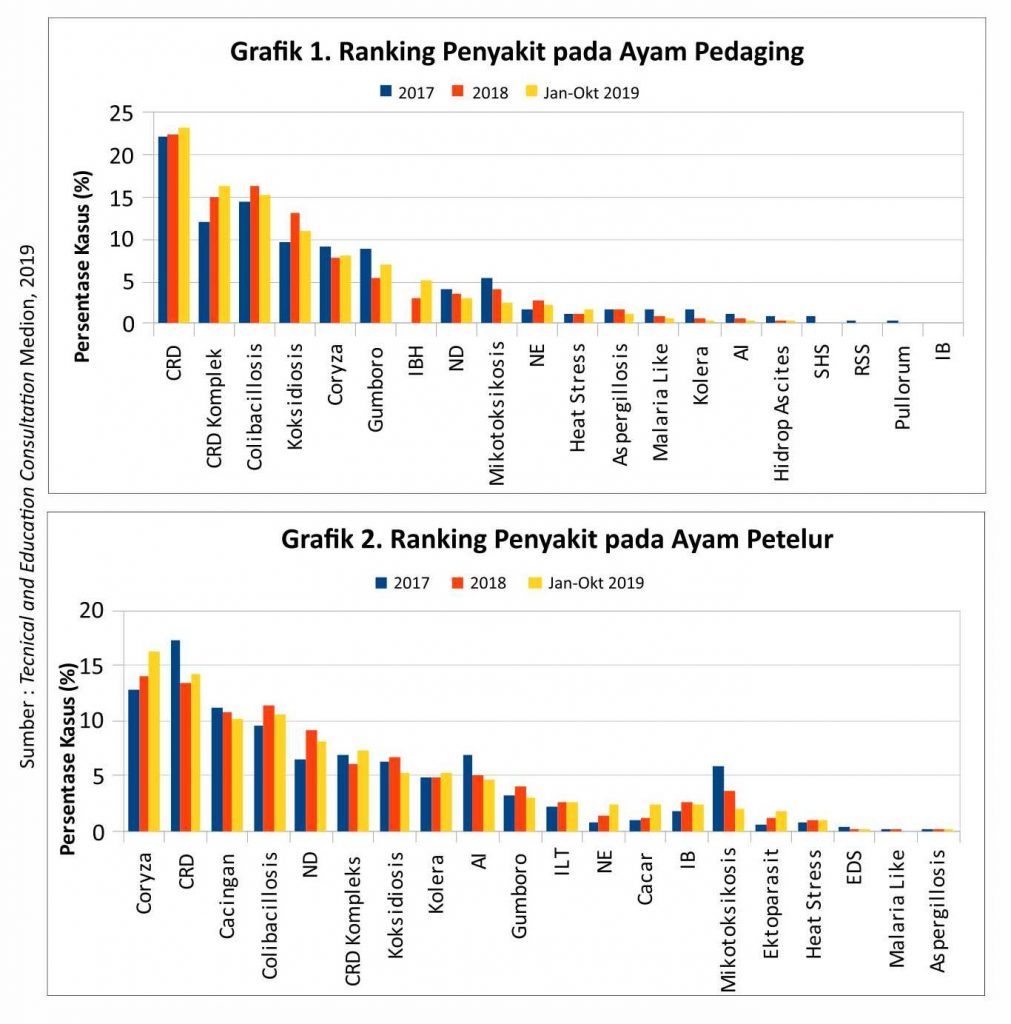
The general conditions of diseases that attack broilers and laying hens in Indonesia each year have been summarized by the Medion Technical Education and Consultation team in graphs 1 and 2. From both graphs it can be seen that disease attacks on farms are still dominated by old diseases. Bacterial diseases are still dominated by CRD, coryza, colibacillosis, and complex CRD. While Gumboro, ND, IBH and AI are still the prima donna of viral diseases.
Seen from Graph 1 in broilers, cases of CRD, CRD complex, coryza, Gumboro, IBH and heat stress until September 2019, there was an increase in cases. Even cases of CRD, complex CRD and heat stress very significant rise in incidence compared to 2018 and 2017. While in laying hens, cases of diseases that have an upward trend are coryza disease, CRD, CRD complex, smallpox, NE, cholera and ectoparasites (graph 2). Until the end of 2019, it is also predicted that especially cases of coryza, complex CRD, cholera and smallpox and NE will be much higher in number than in 2018 and 2017.
Cases of mycotoxicosis in broilers and layers broke out in 2017 and 2018, in 2019 it decreased. However Inclusion Body Hepatitis (IBH) which in 2017 did not appear, in 2019 there was a significant increase in attacks on broilers. The same is the case with cases of smallpox in laying hens, being the disease quite widely found in 2019 (in 2017 and 2018 the percentage was low).
Also seen in graphs 1 and 2, some of the diseases that rank in the top 7 are almost all diseases that affect breathing and digestion. In general, the increase in cases of respiratory and digestive diseases can be related to the increasingly uncomfortable environmental conditions of the cage so that the seeds of the disease are easier to develop and infect the respiratory and digestive tract of chickens. Uncomfortable housing conditions also cause stress and are immunosuppressive.
Moreover, CRD, coryza and colibacillosis are diseases related to poor management. By still dominating this disease indicates that maintenance management still needs to get more serious attention. Coryza existence is closely related to maintenance patterns that have not applied the system one age farming optimally so that the disease repeatedly infects chickens (chickens infected with coryza are carrier (carrier of the disease) that transmit to other chickens.
Recent cases of AI in the field
Avian Influenza (AI) is a viral disease that affects the respiratory, digestive, reproductive and nervous systems in various species of poultry. AI viruses vary in their ability to spread disease to other chickens as well as in the surrounding environment.
The number of deaths caused by the disease is high, the number of deaths caused by the disease is high, the number of deaths caused by the disease is high, and the number of deaths caused by the disease is low, and the number of deaths caused by the disease is high (stamping out) and increased costs for sanitation and disinfection of enclosure areas, water and farm equipment.
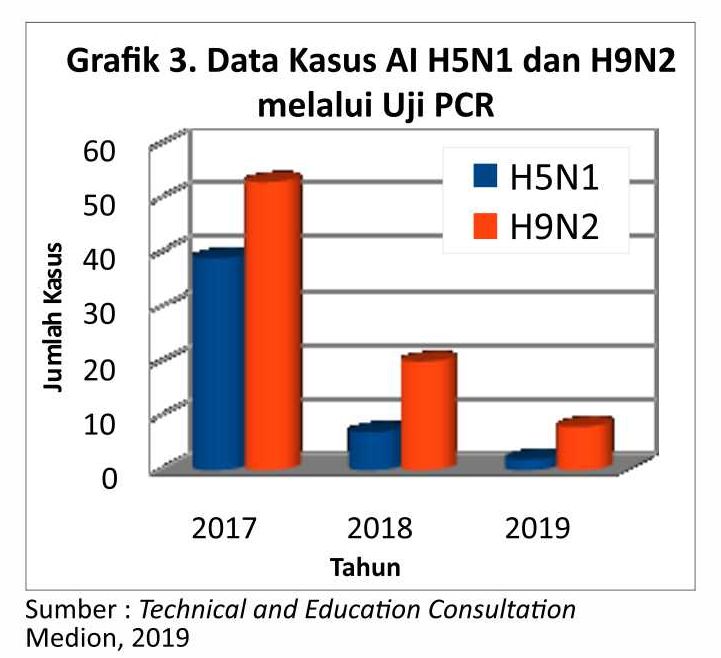
Virus influenza it is an RNA virus that is segmented and has an envelope (enveloped virus), as well as belonging to the family Orthomyxoviridae. AI Virus circulating in Indonesia subtype H5N1 which there are 2 clade specifically optimal clade 2.1.3 and 2.3.2. AI disease in poultry caused by AI H5N1 virus clade 2.1.3 has been going on in Indonesia for more than 10 years. After it appeared clade new 2.3.2. As already known, there are also new findings of cases Low Pathogenicity Avian Influenza (LPAI) subtype H9N2 in Indonesia. Until now, the disease is still widespread and has been identified as positive for H9N2 in several regions in Indonesia such as Java, Sumatra, Kalimantan, Sulawesi and Bali. The Virus, which is quite widely discussed, makes productivity drop drastically, which is very difficult to return to normal production figures. The incidence of H9N2 can be increased if there are other factors such as the occurrence of CRD disease (Mycoplasma gallisepticum) and Mycoplasma synoviae, status unfavorable antibody titer IB and ND diseases, as well as due to the presence of colibacillosis disease.
From the data collected by the team Technical Sales Representative Medion which is spread throughout Indonesia, the sample data collected shows that until 2019 the incidence of LPAI cases was more dominant than HPAI. But in 2018 to 2019 there was a decrease compared to 2017.
The age of the attack also varies. In broilers, the predominance of AI attacks occurs at the age of over 2 weeks until harvest. While the age of attack on laying hens, from 2016 to 2019 the dominance of AI attacks occurred in chickens that have produced above 18 weeks. However, vigilance against AI infection in the age before production also needs to be increased, because at the age of about 6-14 weeks is also the age prone to AI attacks.
Existence of ND disease
Based on data collected from 2017 to the present, ND disease belongs to the top three viral diseases and can affect all ages of chickens. The pattern of attacks of ND cases is evenly distributed throughout the year during the rainy season and even during the transition season. Uncertain weather conditions cause the condition of the chicken's body to be easily stressed, triggering the emergence of the ND case. The humid conditions of the cage environment also affect ND cases because the ND virus is quite stable and easy to develop.
From the field nd virus monitoring data that tested positive on PCR test has been identified including velogenic group (malignant) and classified into genotype VII (G7) especially 7H and 7A (7I). Data collected by the team Research and Development Medion from 2017 to 2019, the number of G7A viruses found was almost as many as G7H viruses, namely 42% of G7A viruses and 58% of G7H viruses. It can be concluded that the most dominant nd virus circulating in Indonesia is genotype VII and there are 2 subgenotypes, namely G7H and G7A. Nd G7 Virus has been found in several large islands in Indonesia, namely Sumatra, Java, Kalimantan, Bali, Sulawesi to Papua. This is what farmers need to continue to watch out for because as we know the incidence of ND cases will cause many losses such as high mortality up to 80-100% and a decrease in egg production up to 60%.
Gumboro development in Indonesia
If you look at Graph 1, of some viral diseases that attack broilers such as Gumboro, Newcastle Disease (ND), Avian Influenza (AI), IBH and Runting Stunting Syndrom (RSS) or dwarfism, Gumboro occupies the first position. This certainly makes Gumboro can not be underestimated. While the case in laying hens existence of Gumboro case also need to be aware of because it is classified as a troubling disease. From Graph 2. it can be seen that Gumboro ranks third after ND and AI in laying hens.
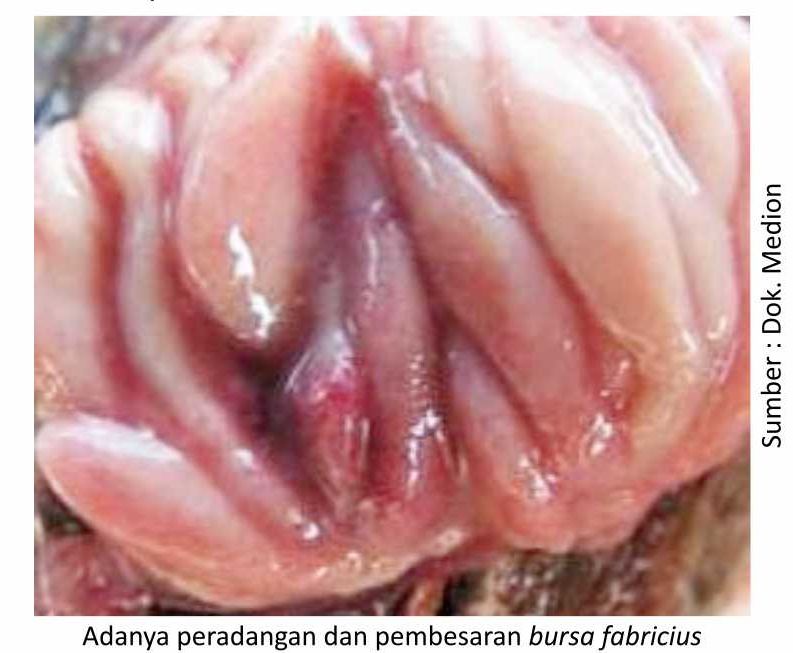
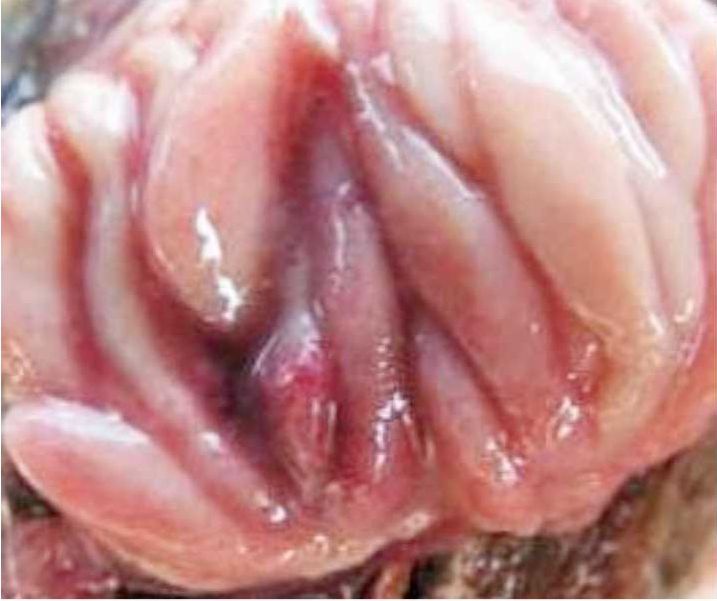
For its own form of attack, Gumboro disease in the field generally shows clinical symptoms and typical anatomical pathological changes, namely enlargement and inflammation of the Bursa Fabrisius, then followed by a gradual reduction in the organ.
If we look at the virus side, the team Research and Development (R&D) Medion has collected and observed strains of Gumboro virus in the field. These isolates were then studied or analyzed by means of RNA extraction, polymerase chain reaction (PCR) dan DNA sequencing. 90% of field isolates studied were found strains very virulent infectious bursal disease (vvIBD) is a malignant Gumboro virus that causes outbreak high and show clinical symptoms.
IBH disease secretly lurks
IBH disease is a viral disease caused by Avian Adenovirus Group I Species Fowl Adenovirus D and E so that it can also be called an infectious disease Fowl Adenovirus (FAdV). IBH disease is an infectious disease in chickens, which is characterized by anemia and hepatitis accompanied by inclusion bodies in the nuclei of liver cells. Starting in early 2018, poultry farmers have been shocked by cases of diseases that lead to IBH such as the data in Graph 1. Among some farmers are known to experience many losses such as an average mortality of 2% to 40%, the weight standard is not reached until the swelling of the FCR. In laying hens, it can also inhibit growth and egg production.
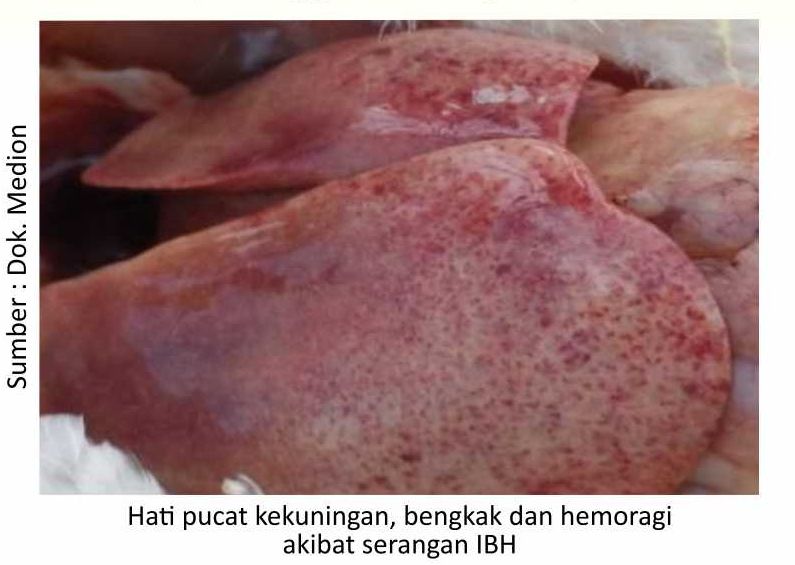
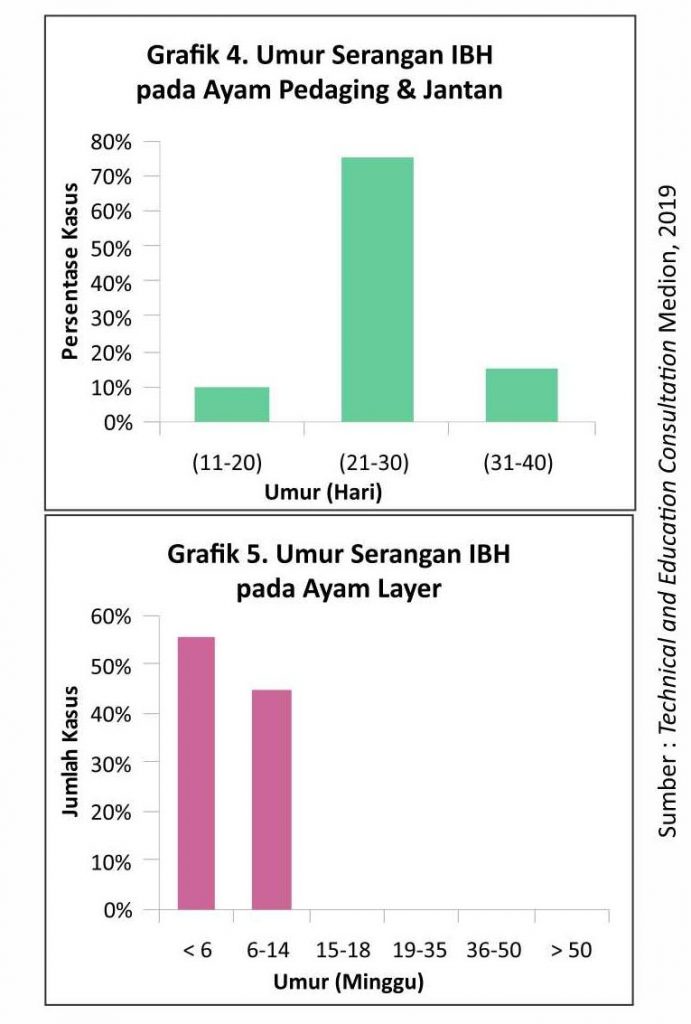
This disease usually appears at the age of 2-13 weeks, especially more dominant in broilers aged > 3 weeks. While the dominant laying hens attack at the age of
In Indonesia, this disease has been found in various areas that are densely populated with chicken farms, especially broilers. Possible outbreak of IBH cases at this time due to Adenovirus it often attacks chickens that are immunosuppressed and susceptible to disease coupled with extreme weather changes and uncomfortable housing conditions. The results of data analysis collected from the Medion Research and Development team, show from 2017 to the present, this disease has spread in several regions in Indonesia such as Banten, West Java, Central Java, East Java, South Kalimantan and East Kalimantan identified positive FadV-E. While FadV-D was identified in East Kalimantan, South Kalimantan and Bali. Mortality caused by FAdV infection is from a small percentage to soon increase, causing significant economic losses due to weight standards that are not reached until the swelling of FCR in broilers. In laying hens, it can also inhibit growth and egg production.
Frequent recurrent Coryza
Coryza or snot disease must have been familiar to breeders and colds were characteristic of it. When viewed from Graph 1 in broilers, coryza cases until September 2019 were still lower than the previous year. But in the field, cases of coryza in laying hens are being reported by farmers.
Erratic weather conditions will cause the chicken to be stressed so that the condition and endurance of the chicken's body to decrease. When the condition of the chicken's body decreases, the disease will more easily enter and attack the chicken's body, including coryza. High ammonia levels are also a triggering factor. This high ammonia level cannot be removed from the cage due to high humidity during the wet season, irritating the respiratory tract of chickens. Irritation that is not handled properly will make the coryza bacteria successfully enter and stick to the nasal sinuses, then cause even more severe infections. Another factor is the high chance of coryza cases, especially in the rainy season because in addition to bacteria E. Bra commonly transmitted through water, coryza bacteria can also quickly spread through abundant water media in the rainy season.
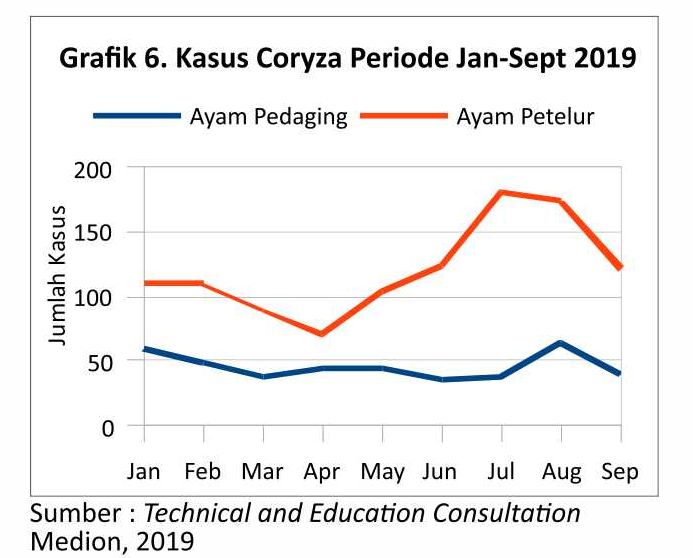
When viewed from the Medion Technical Education and Consultation (TEC) team data in Graph 6, it is known that coryza cases increase during the rainy season and weather transition (transition). In March the trend decreases compared to January and February, then increases again in April-May and increases significantly until the peak in July in laying hens. So that farmers need to be aware of the increase in cases of coryza when entering the wet season or transition that causes chickens to experience stress so that the condition of chickens decreases. The humid conditions of the cage environment also support the coryza bacteria to grow quite rapidly.
Revamping for 2020
Strategic steps to be taken within the livestock environment to prevent uncertain climate-related diseases:
- Need to re-evaluate the landscape management and maintenance procedures applied. Especially on the smooth ventilation, cage density regulation, and management litter. Uncertain weather conditions, sometimes even changing extremes, coupled with declining air quality demand better management. What's more, today's commercial chickens have the characteristics of being susceptible to disease.
- Tighten biosecurity to prevent the spread of disease.
- Application of biosecurity model 3 zones (clean, transition, dirty) to secure the farm from being attacked by various poultry germs
- Limiting poultry traffic from contaminated areas
- In the case of farm animals (Neo Antisep/Antisep)
- Feces / feces is an ideal medium that can carry the AI virus, it is necessary to clean feces regularly and avoid accumulating and damp feces
- Limit contact between commercial poultry and free-range chickens, waterfowl or wild animals
- Water in a pot of boiling water (Desinsep)
- Conducting appropriate vaccinations (accuracy of determining the vaccination schedule, vaccine quality, appropriate vaccination management and the condition of chickens when vaccinated) to provide immunity to disease challenges.
- Monitoring antibody titer needs to be done regularly, especially for laying hens and breeders to determine the success of vaccination and monitor antibody titer during production. From a routine examination of the antibody titer will be depicted baseline titer (basic titer) for the farm. If there is a difference in the size of the screen, then this is a warning (early warning system) will condition the chicken.
- The use of a multivitamin for weight loss (Vita Stress/Fortevit/Imustim) regularly so that chickens are not susceptible to disease.
- Increasing public awareness is by counseling the community to be concerned with Disease Control and implementing healthy living behaviors.
- Could consider for the application of enclosure system closed house. The main principle of closed house is to provide comfortable conditions for livestock by removing heat from the cage generated from the body of chickens, lowering the temperature of the incoming air (if necessary), regulating the humidity accordingly and removing gases that adversely affect it, such as carbon dioxide (CO₂) and ammonia (Nh₂). And all these processes can be set automatically. Thus minimizing the influence of environmental conditions that are currently very volatile and trigger the onset of disease.
- Start trying to include AGP alternative products in routine health programs so that disease prevention and treatment are more optimal. This AGP alternative must be efficacious and safe to replace the AGP function or at least be supportive in maintaining chicken health. One of them is the provision of phytobiotics in the form of herbal products that have begun to be widely practiced among poultry farming. Examples Fithera as antibacterial and antiprotozoal, Imustim to help boost immunity, Kumavit to increase appetite, Heprofit as a supplement to protect chicken liver from damage (hepatoprotector), Asortin to maintain the pH of the gastrointestinal tract and kill pathogenic bacteria in the gastrointestinal tract, and Optigrin herbal products mix feed to help optimize the health of the digestive tract.
- The use of alternative materials to replace AGP will be more effective if followed by good poultry management and the implementation of appropriate biosecurity.
- Improvement of feed quality (feed given must be in accordance with the amount and content of nutrients) according to the needs of livestock to get good chicken performance.
- Maintain the quality of drinking water given to livestock. The drinking water provided is sourced from clean and safe water and needs to be controlled and checked regularly at least during the change of season.
- Recording (recording) on farms it is important to be able to monitor health status of poultry.
Our current achievements should be a motivation for us to always be better. Let's take a moment to evaluate the results of our farms, then set a strategy to face the coming year. Success is always Indonesian breeders. Greetings.