Preparing Pullet for Optimal productivity
Pullet is chicken layer preserved ages 0-16 weeks. Based on nutritional needs, pullet divided into two namely starter (0-5 weeks) and grower (6-16 weeks). Formation Program pullet a good one should start from DOC until just before the start of production. Quality pullet a good one that is ready for production is characterized by the characteristics of having a body weight according to standards and uniformity pullet that's good.
Weight loss pullet also, it must have reached ± 1500 g (minimum 1350 g and maximum 1650 g). Physical changes are noticeable, especially in the appearance of Combs and wattles that appear larger, thicker and red, and the body is increasingly filled with thick, shiny fur.
Shank (shins) and the beak is also yellow. Frame size or the size of the skeleton should be proportional and have only a small amount of body fat. Normal or not frame size can also be known from the length shank. At the age of 19 weeks, chickens layer it usually has a long shank 10.4 cm and the size will remain the same until the chicken is old. Another sign, the pubic bone (rear hip bone) is getting wider, at least 3 finger widths wide.
The later achievement of peak egg production is influenced by various factors. In addition to genetic factors, there are 3 other important factors that contribute, namely nutrition, maintenance management and the environment. Here is the formula if the four factors are interconnected :
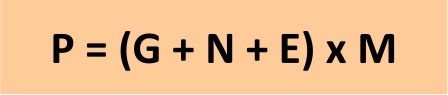
Description :
P: potential / productivity of chickens
G: genetics
N: nutrition
E : environment/ environment
M: Management
If interpreted, management factors have a very large share because it multiplies the value of genetic, nutritional and environmental factors. Management actions undertaken include :
1. Provide rations and drinking water containing sufficient nutrients
In giving rations to chickens layer, there are 3 things to note, namely :
- Provide rations with nutrients that match the needs of chickens in each period of their maintenance, especially the content of protein, amino acids, energy, fatty acids, calcium, phosphorus and vitamin D.
- The amount of ration is adjusted to the needs and needs to be controlled regularly. Rations are provided in fresh condition by arranging the ration period and often turning over. This action will stimulate the chickens to consume rations and reduce the amount of wasted rations. Also, do not use leftover rations. For the starter period chickens give rations 4-9x a day ad libitum (always available), because in that period the growth is very fast and the efficiency of the ration is very high. In the period grower and finisher the frequency of rations to be 2-3x a day. Rations are given on a standard basis breeder in order to facilitate control and avoid wastage of rations. Ration should also be carried out when the ambient temperature is comfortable for chickens.
- The replacement of the ration is based on the achievement of body weight. If the weight of chickens at the age of 5 weeks has not reached the standard, then the ration is given starter can be extended. Make a gradual alternation of rations by comparing the old ration with the new one in a row 75%:25%, 50%:50%, 25%:75% and lastly is 100% new ration.
Also make sure the adequacy of drinking water is met both quality and quantity.
2. Routine body weight control
Body weight control (chicken weighing layer done regularly so that the performance or growth of chickens can be monitored properly. Some things to note are as follows :
- The number of samples weighed is 50-100 heads / cage and can be increased by 5% if kept in a battery cage.
- Weighing on chickens aged 0-2 weeks is done per group, while for chickens aged >3 weeks is done per individual
- Use automatic scales for small chickens (starter) and hanging scales (shelter) with a dividing scale of no more than 50 grams for chickens grower or already big ones.
- At the age of 0-18 weeks weight control is carried out once every week, the age of 18 weeks to peak production is carried out every 2 weeks and after the peak of chicken production is weighed every month.
- The weighing time is carried out at a fixed time, for example on Friday morning with empty cache conditions so that the bias due to different times and the weight of the consumed rations can be minimized.
- After the test is completed (uniformity) by comparing the chicken body weight according to the standard (+10%) with the total number of chickens weighed. The uniformity value should not be less than 80%.
3. Provide sufficient lighting
The lighting Program aims to stimulate appetite, growth and development of reproductive organs. On time starter (0-6 weeks), the intensity of lighting takes the longest time, especially when brooding period, (21-24 hours) with an intensity of 20-40 lux. The goal is for the chicken to recognize the place of ration and be stimulated to eat.
Time grower (7-18 weeks), lighting is given in a short time (12 hours/only from sunlight) with an intensity of 5-10 lux. The goal is to control the development of the reproductive organs and achieve optimal body weight when starting production. If at this time given excessive light will cause chickens to lay eggs early or chicken weight exceeds the standard (increase the risk of prolapse).
4. Create a comfortable home environment (comfort zone)
Condition the cage with a good circulation system, choose a cage roof that is able to reduce heat or use a monitor roof system. If hot weather occurs, the provision of artificial rain or the addition of blower can be done. The distance between the cages is at least 1 time of the thickness of the cage (the width of the cage should not be more than 7 meters). Adjust the density of the cage.
5. Pencegahan penyakit viral (misal ND, AI, IB dan EDS)
Prevention of this disease can be done in 3 ways, namely the implementation of strict biosecurity, good maintenance management and proper vaccination. Before vaccination, chickens were in good health and were not under stress. This is because the health condition of the chicken will affect the ability of antibody titer formation.
When Pullet Transferred to a production Cage?
In order for the chickens that will start producing to have a time range to adapt and not experience stress, it is best to move the cage at least 2 weeks before the chickens produce. There are several breeders layer the one that did move to the battery enclosure was faster at 42 days (6 weeks).
The reason, so that chickens have a longer adaptation time and better achievement of body weight, because competition between chickens in eating and drinking is smaller. However, the time to move the cage can also be done when the chicken is 12-14 weeks old.
At the age of 12 weeks the chicken has reached the final dimensions of the formation of the skeleton of the body (frame size). So at this age is also done weighing weight pullet (grading). Moving the cage in the final phase grower should be done more carefully so that stress can be suppressed and chickens can more quickly adapt to new housing conditions so that feed and water intake can be achieved according to the standard.
Chicken transplant layer the enlargement cage (future cage starter until grower) to the production cage (battery cage) should be done Night, morning or evening, when the environmental conditions are not hot. The goal is to avoid additional stress due to hot air in addition to the impact of physical contact during removal.
And also must be completed within 1 day. If the handling of moving cages is done late and inappropriately, the stress experienced by chickens is higher and results in feed intake (consumption) and weight is difficult to reach the standard until the time of laying eggs and peak production will retreat.
Proper handling of moving cages
The steps to handle moving cages include:
- Before moving the cage, make sure the facilities used such as chicken baskets, cars and other equipment have been cleaned and disinfected. The battery enclosure must also have been cleaned, disinfected and rested for at least 2 weeks.
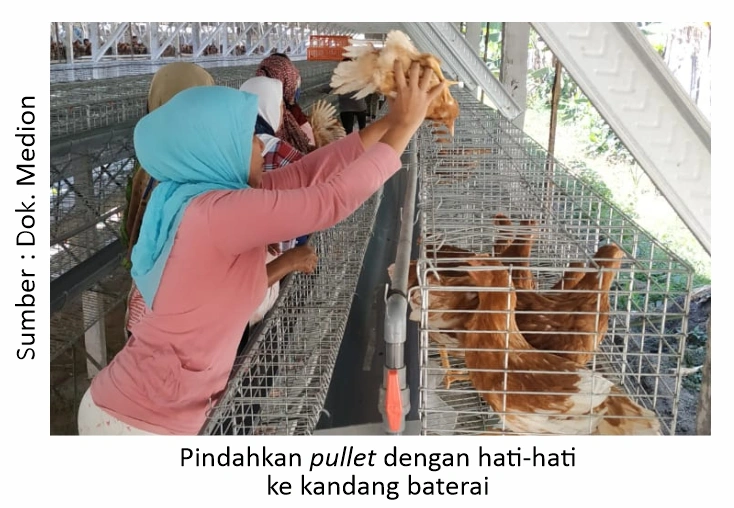
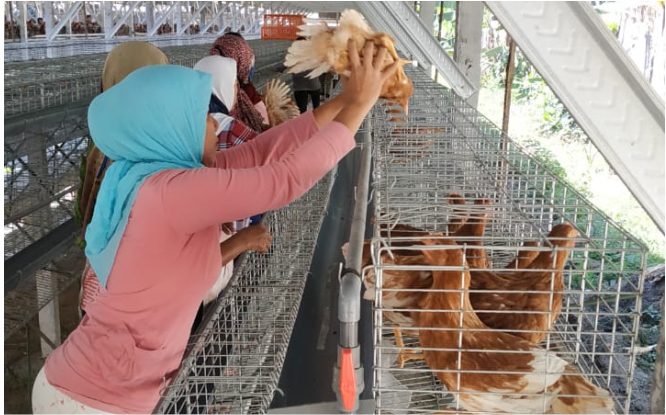
- Carry out the capture of chickens carefully and not coarsely.
- Use a means of transporting quality chicken, sturdy, safe and comfortable, such as Medion Chicken Basket made with ergonomic design so it is easy to transport.
- Make sure the air circulation in the chicken basket stack is smooth. Set the number or capacity of chickens included in the chicken basket. Try not to be too dense. Medion Chicken Basket it can be used to hold 15-20 chickens (depending on the size of the chicken).
- When moving cages, chickens should not be given rations (fasted, red) so that the digestive tract is empty but still given drinking water. Otherwise, the process of digestion and absorption of nutrients will continue and produce heat that will aggravate stress levels.
- Provide vitamins and electrolytes, such as Vita Stress before and after moving the cage to help increase the stamina of the chicken's body and reduce the effects of stress caused.
Furthermore, after the chicken is placed in a new cage, some things that need to be done include:
- Make sure the chicken can immediately access drinking water easily.
- To speed up the adaptation of chickens in a new cage, provide lighting for 22-24 hours on the first day to make it easier for chickens to find a drinking position and a place to ration. Do a gradual reduction in light.
- Monitor the condition of the chickens on a regular basis, including the level of ration consumption, temperature and humidity of the cage, weight gain per week until the peak of production, as well as the achievement hen day (HD). Its purpose is to evaluate the degree of adaptation of chickens to new housing conditions.