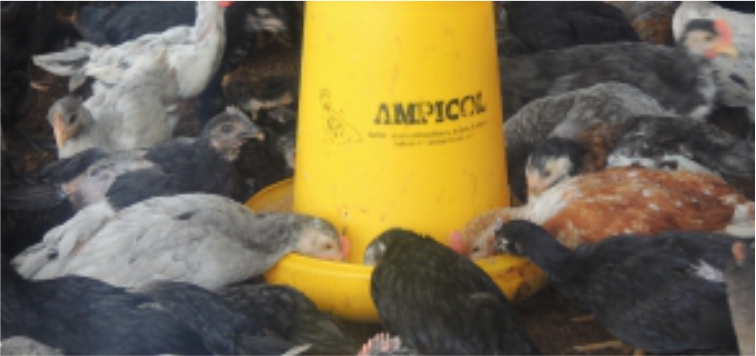
Demand for free-range chicken meat is large enough to provide lucrative business opportunities in the cultivation of free-range chicken. Feeding management plays an important role in the growth of free-range chickens. However, feeding for free-range chickens is not as complicated or complex as broiler feed as well as laying hens. The maintenance of free-range chickens is traditionally as a sideline, the feed given comes from the rest of the household waste and usually the chickens are left to feed themselves. However, this is different from intensive maintenance for commercial purposes that prioritize efficiency. Feed needs to be considered quality and quantity to achieve production targets.
Nutritional Standards Of Free-Range Chickens
The nutritional needs of free-range chickens must be met to maintenance Life, Production and reproduction. The preparation of efficient and precise rations is formulated in accordance with the standards of livestock needs based on macro-and micronutrient needs.
In the present era nutritionist formulate feed with an approach to the needs of micronutrients that can be digested by livestock.
The growth and productivity of free-range chickens is different from chickens in general. This distinguishes the standard nutritional needs of free-range chicken and quality output and the resulting meat. Some research results explain that the nutritional needs of free-range chickens are lower than broilers and layers.
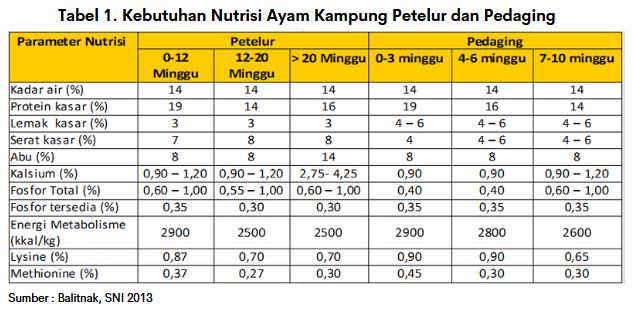
Fulfillment of nutritional needs must be considered both in quality and quantity. The quality of food (nutrition) both macronutrients and micronutrients are balanced in supporting the productivity of free-range chickens. The standard nutritional needs of free-range chickens are listed in Table 1.
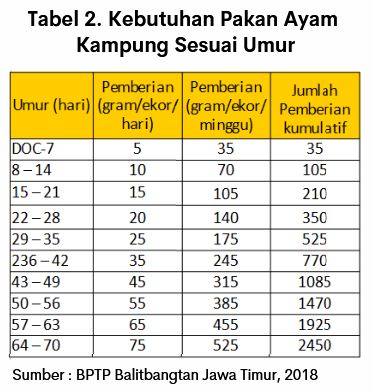
In addition, the need for quantity is the amount of feed that must be given to meet the needs of free-range chickens. Usually for giving is divided based on the age of free-range chickens.
The increasing age of the number of feedings in free-range chickens is increasing in accordance with the needs of chickens in achieving productivity. The feed requirements for free-range chickens by age are listed in Table 2.
Feed ingredients in chicken ration
The use of raw materials in the preparation of free-range chicken feed is classified first as a source of energy, protein, fiber, minerals and vitamins. Examples of raw materials energy sources that can be used include corn, bran, wheat, pollard, sorghum, barleyflour, oil, and groats.
Raw materials for protein sources that can be used include soybean meal, Meat Bone Meal (MBM), fish meal, coconut cake, Corn Gluten Meal (CGM) and Distillers Dried Grain with Soluble (DDGS). Mineral source raw materials that can be used are stone flour/grit, shellfish flour, bone meal, DCP/MCP, and salt.
Selection of raw materials can use alternative raw materials as an effort to reduce production costs. Examples of alternative raw materials that can be used include reject bread, crushed instant noodles, reject vermicelli, conch flour, snail flour and so forth.
However, what needs to be considered is the limiting factor in the use of alternative raw materials.
The preparation of a balanced feed will result in high digestibility in the body of livestock. However, it cannot be denied that there are variations in the quality of raw materials and fungal contamination such as aflatoxin in the field, can indirectly reduce the digestibility of rations. This will have a direct impact on the performance of free-range chickens and certainly harm farmers.
The addition of premixes is familiar among farmers. Premix serves to complement the needs of micro nutrients (minerals, vitamins and amino acids) needed by livestock so as to increase productivity. In addition, additives in feed have also begun to be used among farmers, as a preventive measure to reduce performance due to low feed quality or down in the field.
The use of additives such as enzymes can improve the digestibility and utilization of nutrients. Examples of enzymes that can be added in the ration are Prozyme. Prozyme it is a multi-purpose feed.
Multienzyme content in Prozyme consists of amylase, protease, xylanase, phitase. In addition, in Prozyme there is also an additional mineral MnSO₄ and ZnO which serves as a cofactor (accelerating the work of enzymes) so that the work of enzymes is more optimal.
Actual conditions in the field, many chicken farmers who use feed manufacturers or commercial broilers and layers. The manufacturer's feed is mixed with energy source feed ingredients such as corn, bran in a certain ratio. The feed ingredients used in preparing the ration of free-range chickens are not as different as in broilers and layers, which need to be taken into account different standards of nutritional needs. Some of the requirements for the selection of good raw materials include:
- Nutrient content according to standard
- Continuous availability
- Relatively cheap price
- Low antinutrient content
- Has high palatability
- Not contaminated with fungal toxins or counterfeiting.
After determining the raw materials to be formulated. It is also worth paying attention to the restrictions on the use of raw materials in the ration. Limits on the use of raw materials are guidelines related to the characteristics of the weaknesses or advantages of each raw material, such as the content of antinutrients, so understanding the limits of use is important to note.
The Formulation Of Chicken
Quality and economical feed is a dream for farmers. Things that need to be considered in preparing feed formulations include raw materials, nutritional requirements standards, and formulation techniques. The use of raw materials must be ensured that their nutritional content complies with the standards.Farmers can test in advance the raw materials to be used in the formulation in the laboratory MediLab. The selection of raw materials also pays attention primarily to the balance between energy and protein content and the composition of microelements in the ration.
In the current economic situation the ability of farmers to try to survive the economic crush is the key to the success of free-range chicken rearing business. In addition, there is an increase in the price of feed raw materials that are uncertain, so the right strategy is needed in feed formulation.
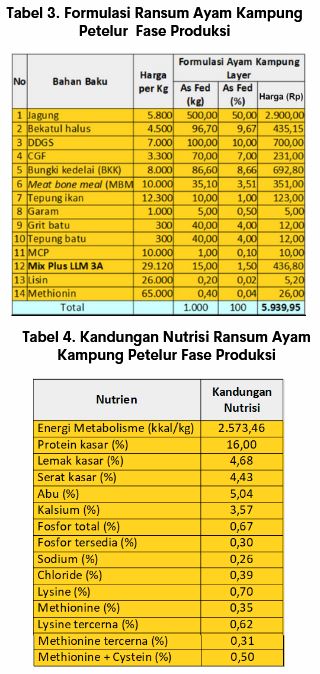
Calculation of feed formulations easier with the help software seperti progam Winfeed, Brill formulation, dll. This is a list of foods that contain the highest levels of protein in the diet (least cost formulation). The following are examples of chicken formulations listed in Table 3.
The productivity of free-range chickens will be optimal if we pay attention to the quality and quantity in the provision of rations. The selection and use of the right raw materials in the formulation is the main key in producing quality feed. Salam