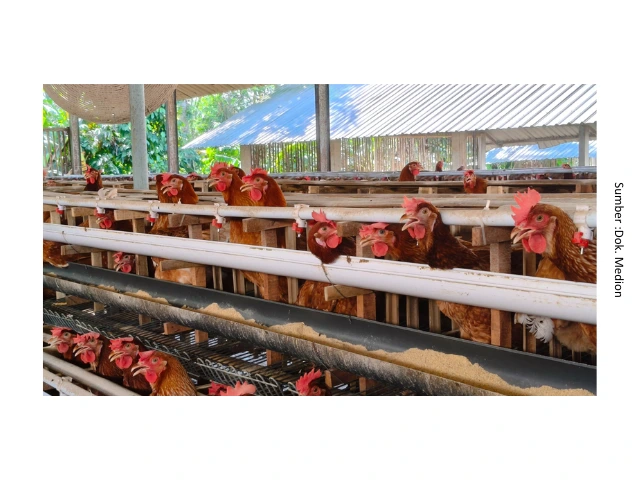
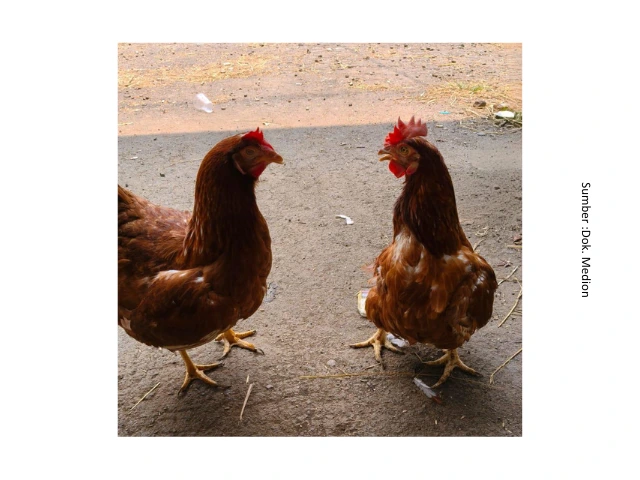
Poultry farming plays a vital role in providing livelihoods and income for communities worldwide, particularly in low- and middle-income countries where 70% of livestock kept by rural households are chickens (Mujyambere et al., 2022). The success of a livestock enterprise is determined by four key factors: genetics, nutrition, environment, and management. These four factors constitute an interconnected unit that supports overall rearing success.The success of layer chicken rearing is determined by intensive management starting from the pullet phase. This aims to achieve a peak production of 96–98% and maintain levels above 90% at 65–70 weeks of age. The key to success is ensuring high-quality stock (from starter to pullet) with body weights meeting standards and a body uniformity of >85%.However, in reality, many layer farmers still report difficulties in achieving performance standards according to the guideline of each strain. Various commonly encountered issues—such as production failing to reach its peak, a rapid decline in production, and egg weights falling below standard—lead to inflated feed conversion ratios (FCR) and, ultimately, financial losses for farmers. These problems can be triggered by several factors, including uncomfortable environmental conditions, disease challenges such as Newcastle Disease (ND) and Infectious Bronchitis (IB), or imprecise disease prevention programs, among others.
1. Environmental Conditions
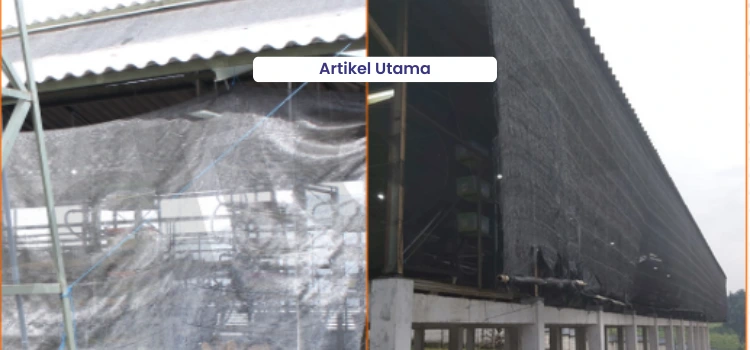
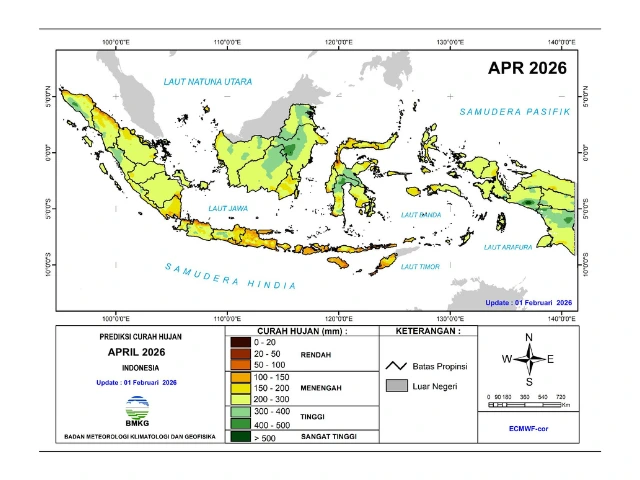
Indonesia is a tropical country characterized by two seasons: the dry season and the rainy season. According to data from the Meteorology, Climatology, and Geophysics Agency (BMKG), as of April 2026, several regions in Indonesia—particularly those outside of Java—still hold the potential for high rainfall. Meanwhile, Java is expected to experience low to moderate rainfall. Farmers in several areas have reported erratic environmental conditions, often described as 'hot during the day, followed by rain from night until morning.' This phenomenon can cause chickens to experience double stress. This stressful condition can cause immunosupressant so that chickens are prone to illness. On the other hand, these uncertain environmental conditions provide a favorable breeding ground for disease agents. Maintaining comfortable coop conditions is key to preventing stress in chickens. In addition, to prevent illness and keep chickens in good condition, it is essential to schedule regular multivitamin or supplement programs (Vita Stress/Fortevit/Kumavit) and immunostimulants (Imustim) within a health program.
2. Challenges of ND and IB diseases
Disease of Newcastle Disease remains a widespread threat that significantly impacts poultry populations, causing high mortality rates and production disruptions during severe outbreaks. This disease is a primary cause of poultry mortality globally, posing a very serious risk to chickens due to its sudden onset and high level of severity. The virus causing ND manifests in various pathotypes; for instance, velogenic strains—specifically the viscerotropic velogenic and neurotropic velogenic subtypes—pose a significant threat to chicken health. Chickens infected with these subtypes exhibit a range of symptoms, including respiratory and neurological disorders, decreased egg production, paralysis, and diarrhea (Etriwati et al., 2017; Zhang et al., 2023). Avian paramyxovirus serotipe Avian Paramyxovirus type 1 (APMV-1) is the causative agent of Newcastle Disease (ND) and is categorized into two classes: Class I and Class II. Velogenic strains from Class II cause high morbidity and mortality rates in various poultry species Galliformes (WOAH, 2024). Newcastle Disease (ND) remains a globally significant disease with profound socio-economic implications for the poultry industry. In Asian countries, ND is predominantly caused by the subgenotype VII.2 (GVII.2), which can then be further reclassified into subgenotypes VIIh (GVIIh) and VIIi (GVIIi). These two subgenotypes are the most frequent causes of ND cases in Indonesia (Medion Surveillance Analyst, 2026).
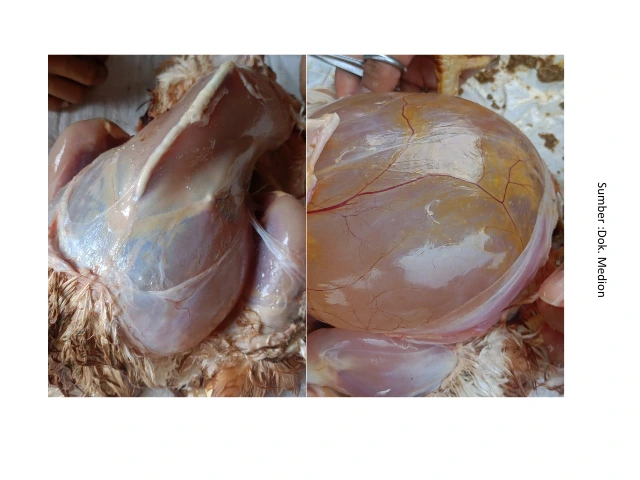
Meanwhile, Infectious Bronchitis (IB) is caused by Coronaviridae. It is a highly contagious and rapidly spreading respiratory disease that has become widespread and identified globally. The IB viruses circulating in Indonesia can be classified into classic IB and variant IB. IB cases in Indonesia are frequently caused by variant IB from the QX-like strain (Medion, 2026).Infectious Bronchitis (IB) has a major economic impact on the layer industry, as it also affects egg production. In addition to respiratory lesions, early exposure to the IB virus causes extensive damage to various epithelial surfaces of organs in layer chickens (Cavanagh, 2003). Chousalkar et al. (2007) reported that the IB virus can affect the Harderian gland, tracheal mucosa, kidneys, and parts of the oviduct such as the magnum and uterus. Furthermore, layer chickens infected with IB will exhibit symptoms of penguin syndrome due to the formation of large-volume cysts within the oviduct. Consequently, this leads to significant economic problems in the layer industry because IB affects not only the quantity of egg production but also the external and internal quality of the eggs.
3. Disease prevention programs
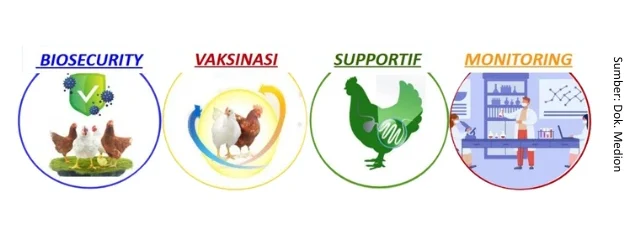
Disease prevention must be implemented comprehensively and consistently across all aspects. The combination of biosecurity, vaccination, supportive care, and monitoring serves as an integrated process to ensure healthy livestock and achieve optimal performance. In the world of poultry health, end-to-end disease prevention begins with the farm's biosecurity program. Biosecurity is the primary foundation for preventing the entry, exit, and spread of diseases.The next step is the vaccination program, which aims to provide protection against specific diseases according to the administered schedule. Several of the aforementioned production disruptions can be caused by diseases such as ND and IB. Vaccination programs for ND and IB in layer chickens should ideally be scheduled 4–5 times before the production period. Subsequently, revaccination for ND and IB during the production phase can be scheduled every 1–2 months when using live vaccines, such as Medivac ND-IB, or every 3–4 months when using inactivated vaccines, such as Medivac ND T-IB T Emulsion. Alternatively, the revaccination program can be adjusted based on the results of routine ND and IB titer monitoring.Finally, supportive care or supplementation programs are essential to enhance the birds' immune systems, alongside monitoring programs to oversee the entire end-to-end process as part of continuous improvement efforts. Below is an example of an ND and IB vaccination program as a general guide.
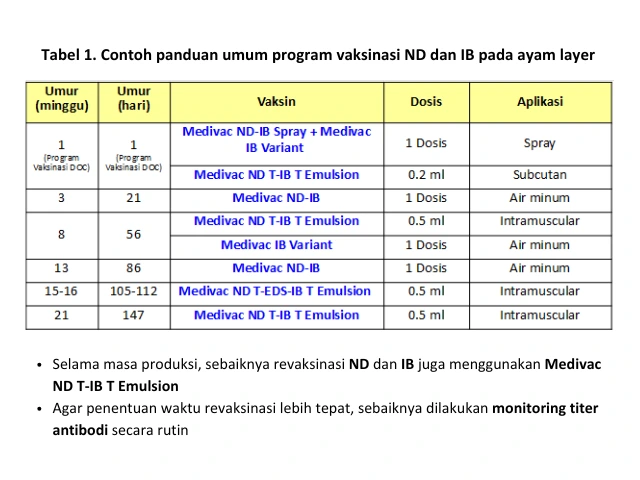
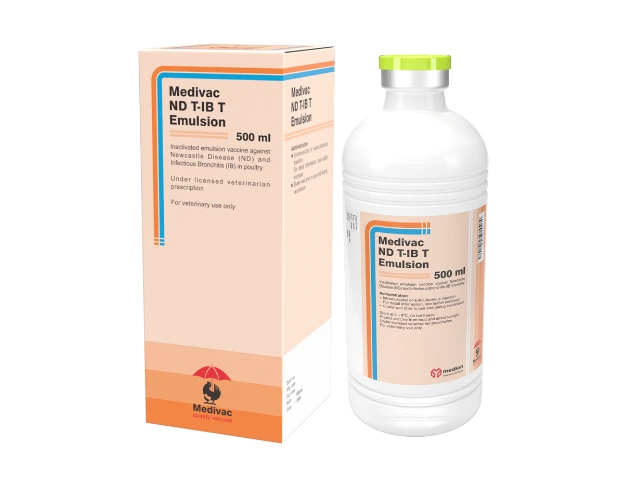
The challenges posed by ND and IB remain a dilemma for the poultry industry in Indonesia, particularly for layer chickens. Therefore, it is crucial to ensure that livestock remain healthy and protected from outbreaks of these two diseases. Disease prevention strategies include biosecurity, vaccination, supportive care, and regular monitoring. These strategies constitute an integrated series of processes that must be implemented to achieve optimal results.For specific protection against ND and IB challenges, vaccination must be conducted from the beginning of the rearing period. Use Medivac ND T-IB T Emulsion, which contains three ND virus strains (La Sota and two GVII strains) and three IB virus strains (one classic strain and two variant strains) that are homologous to the ND and IB challenges found in Indonesia. We hope this information is useful.