
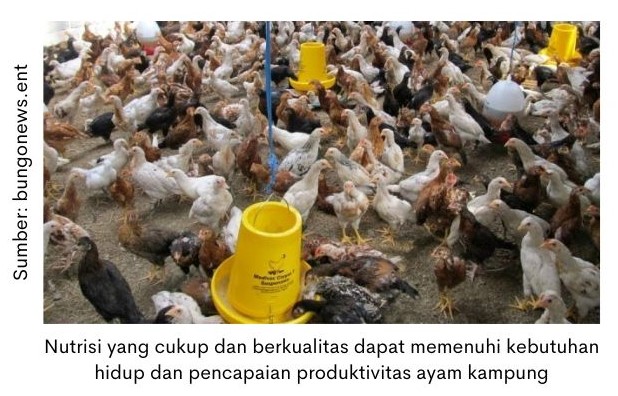
One effort to increase the productivity of free-range chickens is to meet the feed that contains balanced nutrients. Although feeding for free-range chickens is not as complex as for broilers and layers, it is different if we keep them intensively. Feed efficiency needs to be considered in terms of quality and quantity so that it can support the achievement of production targets.
Feed problems that may already be known today, is the high cost and lack of availability of raw materials. From here it is important to look for alternatives to other raw materials that are cheaper, but of good quality. The use of local raw materials can be an alternative as an effort to reduce production costs.
Selecting potential alternative raw materials
Local feed raw materials are any materials that are local Indonesian resources that can be utilized
as animal feed. The use of local feed is usually in accordance with the availability of stocks in the local region. However, it should be noted regarding the limiting factors in the use of alternative raw materials.
Limitations in the use of raw materials that must be considered, for example, such as antinutrient content, crude fiber content, essential amino acid content, crude fat content, balance between Ca and P, and the value of digestibility. It also seen the effect on productivity, palatability and price of these raw materials.
Examples of alternative raw materials that we can optimize include :
- Coffee leather
Coffee skin is one of the agricultural waste that is currently being developed for use as animal feed in order to reduce the rate of accumulation of agricultural waste in Indonesia. Coffee processing will produce 65% of the coffee beans and 35% of coffee skin waste where the waste can still be used as an alternative to animal feed. The nutritional content contained in the coffee skin is dry matter 91.77%, crude protein 9.7%, crude fiber 32.6 %, crude fat 1.97%, and BETN 50.8% (Murnia et al., 2008). To be used as animal feed, fermented coffee skin waste or urea ammoniation should be used first to increase the value of the benefits of the feed. Giving fermented coffee skin as much as 11% of the total free-range chicken feed increases egg production by about 35-45%. Recent research on the process of fattening chickens broiler where the results show a real effect on weight gain chicken broiler by powdery feeding of coffee bark waste at a concentration of 5%.
- Palm kernel cake
(BIS) (BIS) (BIS) (BIS) (BIS) (palm kernel meal) widely produced in Indonesia, especially on the islands of Sumatra and Kalimantan. Palm kernel meal is prospective as a partial replacement of yellow corn in poultry feed. The effect of palm kernel meal is very good to be used on performance (consumption, daily weight gain and feed conversion).
- Maggot
Maggot or known as maggot BSF (Black Soldier Fly) is the larva or maggot of a type of large black fly that looks like a wasp, commonly called the black soldier fly larva. Maggot has a high nutritional content of both protein, amino acids, fatty acids, and minerals, and this has the potential as an alternative to poultry feed. Considering that maggot larvae after harvesting will quickly rot if not immediately preserved, it is necessary to process maggot to become maggot flour, so that it can be stored if there is a lot of maggot production, and not immediately given to chickens. Based on the results of studies or research using proximate analysis, maggot Contains crude protein and fat is quite high. Maggot can be developed as a substitution for protein source feed ingredients that have been dependent on imported feed ingredients such as soybean meal and fish meal.
- Snail flour
Snails are one of the potential sources of protein for livestock. Snails have a protein content of about 60% and amino acids are quite complete. Besides that snail shells are also rich in calcium. Snail shells can be used to be processed into flour to meet the free-range chicken feed.
- Shrimp shell waste
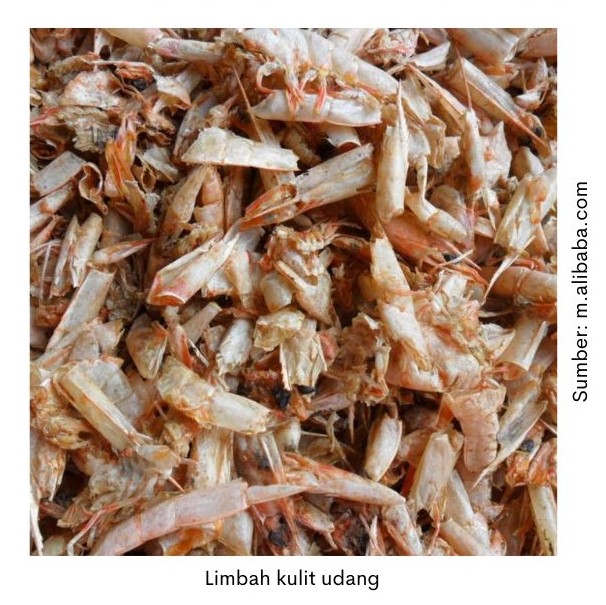
The use of fermented shrimp waste is expected to replace or reduce the use of fish meal in feed as a source of protein. High levels of crude protein in shrimp waste can support the growth of free-range chickens resulting in high carcass weight, high tissue growth rate so as to produce high carcass weight (Karouglu and Durdag, 2005). However, biological processing needs to be done first so that the protein and minerals that bind to chitin can be decomposed so that they can be digested by free-range chickens.
- Brown rice
The content in brown rice is able to improve chicken health and overcome some chicken health problems. Brown rice contains various nutrients in it such as vitamin B, vitamin E, phosphorus, selenium, thiamine, niacin, iron, magnesium, fiber and various other types of content.
Maintain The Quality Of Feed Raw Materials
In the process of processing alternative feed ingredients must also be considered in an effort to improve shelf life better. There are several steps that can be done, among others:
- Test the quality of raw materials when new feed comes. The use of raw materials must be ensured that their nutritional content complies with the standards. Farmers can test in advance the raw materials to be used in the formulation in the laboratory MediLab. The selection of raw materials also pays attention primarily to the balance between energy and protein content and the composition of microelements in the feed.
- Implement a storage system first in first out (FIFO: stored by date of arrival of feedstuffs) or first expired first out (FEFO: stored by expiration date). So, prioritize older-aged feeds to use first. But if there is less good quality raw materials and does not allow it to be stored longer, it can be used first even if it has just arrived.
- Make sure that the feedstock storage area must be in good condition. Feed ingredients are usually stored in storage warehouses. Condition the feed shed is sufficiently ventilated, not damp, and the floor position is higher than ground level. Also pay attention to the aspect of distributing feed ingredients.
- Use pallet under a pile of sacks of feed ingredients. Can be made also the distance between the piles to make it easier when taking and checking periodically. Try not to stick the sack to the wall and leave a distance of at least 50 cm from the warehouse wall.
- Prevent contamination of fleas, mice and insects because it will damage the feed so that nutrient levels decrease and potentially spread disease.
- Furthermore, feed ingredients that have been stored also need to be checked periodically. With regular checks, the physical and nutrition can be monitored. Checks are also carried out to prevent damage arising from unforeseen factors. Make a checking schedule of at least 1 month to be efficient.
Switching feeds can be stressful for chickens. Always monitor chickens during the feeding process. If it will replace with a new feed formulation, it must be done gradually to allow time for the digestive tract of free-range chickens to adjust. To suppress the stress of changing feed, you should before, during and after changing the type of feed, give multivitamins such as Vita Stress to prevent stress chickens. Additions feed supplement can also be done to optimize feed quality. Examples feed supplement which can be mixed in the feed include Top Mix (3-5 g / kg ration). And in the rainy season or feed damp and contaminated with mycotoxins, Freetox can be added to bind fungal toxins (mycotoxins) in feed.
With the information related to alternative sources of feed ingredients, feed formulas or feed formulations can be obtained in accordance with the potential in the region, so that livestock, especially free-range or free-range chickens, can get comparable nutrition from feed at low prices and quality. May be useful.