Ibu Santi
Serang-Banten
I just started raising chickens broiler. When the chickens were 16 days old, I did the ND-IB vaccination. A few days later my chickens looked a lot moody and runny. Are these symptoms still normal? Is there any medicine I can give my chickens to recover? Thank you.
Answer:
Dear. Ms. Santi, thank you for the question. Generally, when vaccinating with an active vaccine, a reaction will occur post vaccination. Reaction post this vaccination usually occurs on the second to third day after vaccination and will stop on its own at least a week after the vaccine is given.
When the active vaccine is in the body, the vaccine virus will multiply first on the target organ, then towards the lymphoid organs to bully the formation of immunity. In the ND or IB vaccination, this self-propagation process is what causes mild respiratory distress.
Reaction post emerging vaccinations can also be a marker that the body responds to the presence of a vaccine through the formation of antibody titers. If no reaction is found post vaccination can indicate the vaccine is not working or the body's response to form immunity is not optimal.
Reaction post vaccination is indeed a reasonable symptom found after vaccination. However, this symptom can become a “boomerang” if the vaccination is carried out on unhealthy chickens or the presence of stress factors and uncomfortable housing conditions (high ammonia levels). This condition will cause a reaction post vaccination that occurs will be more severe to increase mortality.
Here are the steps we can take to anticipate the reaction post excessive vaccination :
- Vaccination is carried out should be according to the recommended procedure and need to pay attention to the following points:
- Make sure the chickens to be vaccinated are healthy and not under stress
- The dose received by each chicken is uniform
- Comfortable environmental conditions this is primarily associated with good air circulation and low ammonia levels. To combat high ammonia levels in cages, use Ammotrol. Ammotrol contains herbal extracts that are able to reduce ammonia levels in the cage. In addition, adjust the curtain opening and closing management to the needs of chickens and monitor the state of affairs litter, avoid conditions litter the wet one.
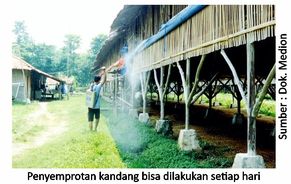
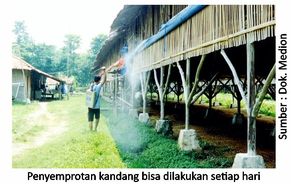
- Minimize the population of disease seeds in the farm area the presence of disease seeds, especially M. gallisepticum can trigger a reaction post vaccinations become more severe and even fail, especially Respiratory Vaccines. As a result reaction post the vaccination will become more and more severe and the antibody titer will not be optimally formed. Do spray the cage at least 2 times a week with Antisep, Neo Antisep, Medisep or Zaldes.
- Avoid stress immunosuppression factors, mycotoxins, Gumboro and Marek are some immunosuppressive factors (decreased immune system) that can inhibit the formation of antibody titers and cause reactions post over-vaccination. Therefore, it is important if to minimize or eliminate immunosuppressive factors when vaccinating. Imustim is the best choice to maintain and boost immune system in poultry.
- Support with vitamins, if necessary give antibiotics. Administration of vitamins, such as those contained in Fortevit as well as vitamins and electrolytes in Vita Stress or Kumavit will increase the stamina of the chicken body and be able to suppress stress due to vaccination. The hope is that the chicken's body is able to respond optimally to the formation of antibodies, so that a protective titer is formed, which is able to protect the chicken from infection. If at 5-7 days post vaccination symptoms of respiratory distress do not go away, give antibiotics, such as Neo Meditril, Doxytin or Erydoxcy. To reduce the symptoms of the reaction post vaccinations that have already arisen, can be given Respitoran which plays a role in relieving the respiratory tract. Mix 1 ml Respitoran at each 2 L of drinking water, give for 3-5 days.