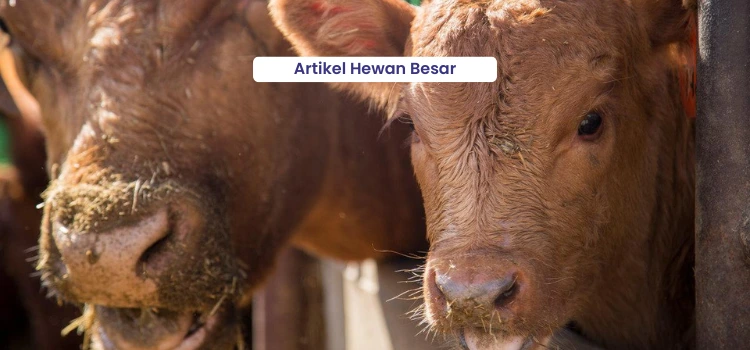
The occurrence of stress experienced by beef cattle or beef cattle is one of the crucial factors that often go unnoticed by farmers in maintenance. Although not seen directly, stress has a big impact on the performance of weight growth, health, to the quality of meat produced. Various conditions and treatment factors can trigger stress in cows such as changes in the cage environment, extreme weather, population density, post-long-distance transportation, to post-vaccination treatment. Some of these factors trigger physiological and behavioral responses that affect a cow's health, productivity, and well-being. Therefore, understanding the mechanism of stress, its effects and prevention strategies is important in an effort to maintain livestock welfare and increase the productivity of beef cattle sustainably.
Stress response in cows and its effects
Stress is a biological response of the body when cattle feel a change or pressure (stressor) that disrupts the physiological balance of the livestock body. Cattle that experience stress will occur hormonal changes in the body which is characterized by an increase in the hormone cortisol (stress hormone). This change in pressure triggers the hormone to stimulate several body responses such as increased heart rate frequency, breath frequency or body temperature and increased body energy levels more quickly. Stressed cattle can also be seen when there are changes in behavior such as becoming more aggressive, changes in diet or tends to move away from the herd. These responses can disrupt metabolic balance and reduce feed efficiency, resulting in a decrease in daily body weight and carcass quality.
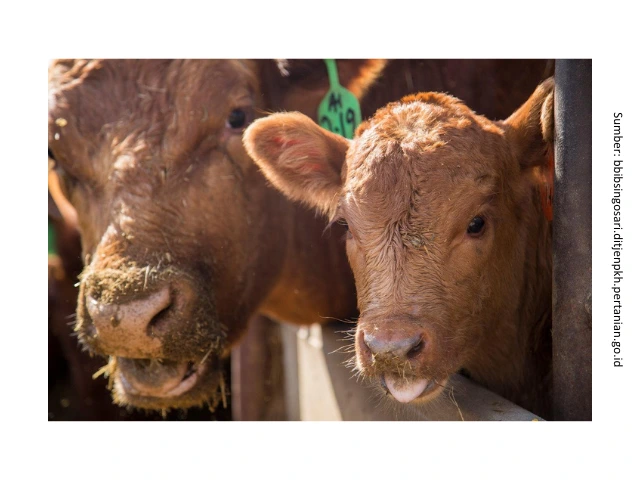
Some of the negative effects of stress that occurs in cattle are as follows :
- At the stage of cows experiencing long-lasting stress, high cortisol levels result in extra work on the energy metabolism of cattle. Side effects are decreased appetite and efficiency of feed use followed by decreased productivity with decreased body weight. In dairy cows there is a decrease in reproductive performance such as irregular estrus cycles, low pregnancy rates, and increased risk of abortion.
- The body's resistance decreases so that it is more susceptible to disease attacks. If stress persists and the body is unable to adapt, the cow will enter a phase of fatigue so that the energy reserves and defense mechanisms of the body are weakened. The immune system decreases dramatically and cows are susceptible to infectious diseases.
- Chronic stress also affects the quality of meat produced through increased glycogenolysis and decreased muscle glycogen reserves. Glycogen is an energy material for muscle activity in animals. In healthy animals, it generally has high levels of glycogen. After the animal is slaughtered, glycogen will be converted into lactic acid. It is this lactic acid that gives the meat a delicate and piquant taste. Animals that experience stress before slaughter, will have low glycogen levels because in a state of stress the body needs a lot of energy. So that lactic acid levels in meat after slaughter will be low. This causes the meat to Dark (dark), Firm (hard textured), Dry (dry) or commonly called DFD meat. This meat is less flavorful, has a color that consumers do not like, and has a shorter shelf life due to a higher pH (6.4 to 6.8). Meat with this condition can occur because before being cut, the cow experiences stress for a long time (chronic) or more than 8 hours. In addition, cows that are slaughtered in a state of acute stress (short term) will produce meat with a low pH and experience excess lactic acid buildup so that the meat becomes Pale (pale), Soft (mushy), Exudative (wet) or commonly called PSE meat.
Causes of stress in cows
In general, the factors that cause cow stress are four, among them:
1. Environmental change and extreme weather
Changes in environmental conditions are the most common cause of stress in cattle. Weather that is too hot or too cold can disrupt the balance of the cow's body adaptation. Environmental conditions in the cage such as too high a cage density and poor ventilation can also cause stress. Cages that are stuffy, humid, and lack air circulation plus high temperatures will increase the frequency of breathing and the risk of heat stress. Noises, vehicles or human activities that disturb the peace of the cow can trigger acute stress, especially in young cattle. In terms of cage management, the population density is too high to make limited space for cattle movement, competition for feed and drinking water, as well as the occurrence of minimal air circulation. This factor is often overlooked even though it has a major effect on the welfare and running of daily activities of livestock.
2. Nutritional factors
Cows experience stress when there is a sudden change in feed. Stress to these changes often occurs in cows that have recently arrived / moved to a fattening stall. The digestive system of cows requires a period of adaptation to the type and composition of the new feed formulation. Sometimes this sudden change in feed also results in digestive disorders such as bloating (bloat) to rumen acidosis. The mismatch of nutrients provided causes a deficiency of energy, protein, minerals or vitamins which of course makes cows easily weak and easily sick. Aside from Feed, poor water quality or an inadequate amount of what cows need can inhibit metabolic processes and exacerbate the effects of environmental stressors.
3. Transportation
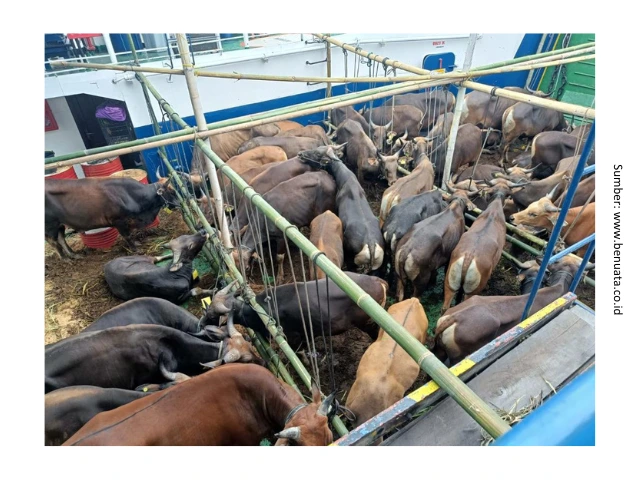
Transportation of livestock over long distances such as between islands or between cities is very often encountered. However, too long a distance and too long a journey will cause stress in livestock, which has an impact on weight loss and livestock performance. When transported by truck, cows stand for hours in crowded truck conditions. Sometimes the cows are rested for a while to eat and drink, but not infrequently the cows are immediately distributed without a break. Tarrant & Grandin (2000) reported that long-distance transportation for 6 hours could lead to a decrease in cattle weight of about 2-3% of the body weight of the body. One researcher reported that off-island transportation activities such as transporting, loading, distributing and unloading cows for 12 hours could result in an increase in the hormone cortisol 2.5 times and cows showed restless behavior and decreased feed consumption (Suryadi, et al., 2018).
4. Post-vaccination
Vaccination is basically the process of stimulating the immune system to recognize opponents of certain pathogenic infections. When vaccination is done, the cow's body will experience local and systematic immune reactions such as mild body temperature increase, lethargy and temporary decrease in appetite. But cows that are not fit and vaccinated will show a greater vaccination stress response. The impact of stress can also be aggravated by large vaccine volumes, or inappropriate injections (too deep or into the wrong muscle tissue) or it can also be because some vaccines contain adjuvants that enhance the immune response, but can also aggravate local reactions. Rough handling, loud noises, or excessive use of restraining devices can increase stress hormones. Cows that are undernourished, or previously stressed (along with strenuous activities such as moving cages or getting out of vehicles) will more easily aggravate the effects of stress.
Stress control strategies in cows
Because stress can affect many aspects of a cow's productivity, reducing the effects of stress is important. What can be done to minimize stress so that the cow's daily body weight and meat quality are not compromised?
* Cattle arrival management
Cows that travel more than 3 hours should be given the opportunity to take a break to eat and drink in the region halfway between the place of origin and destination. Before departure, cows should be given vitamins dissolved in their drinking water. Preliminary preparation before loading (riding a vehicle) it is necessary to ensure that the cow is in a healthy condition and can be fasted first for 6-12 hours. When process loading, cows are directed into vehicles without violence and their number does not exceed capacity. In addition, the cattle transport truck is a truck that is really capable of transporting livestock. During the journey, avoid excessive speed and shock so as not to injure the cow. Long travel time also needs to be considered so that it is not too long and air circulation during the trip must be good. Next, handling the cow in the truck is done well, especially the way the cow is roped, make sure the rope is not too short, because it can hurt or injure the cow, and also not too long, because it has the potential to widen the cow's movement space in the truck so that the cow is difficult to control.
When it arrived at the destination location, the process unloading it should be done quietly/not noisy and not rude. In addition, the process loading and unloading it needs to be done in a place that has been specially designed to make it easier for livestock to get on or off the vehicle. Cows that have arrived need to be placed in quarantine pens and checked for health status. Provide fresh food and drinking water and give Bioselvita and Transolite as an energy intake enhancer.
* Environmental Control
Provide a place to shelter/shaded enclosure so as to prevent direct sunlight from contacting the livestock. Ventilation of the cage also needs to be sufficient so that air circulation runs well. Create a cooler cage atmosphere with direct or indirect cooling. Direct cooling is carried out with the help of foggers, mist drop or sprinkler which sprays water into the environment or directly into the cow's body. Indirect cooling works by cooling the microclimate inside the cage. One way is to use a fan. The fan can help to distribute the wind in the cage more evenly and remove hot air from the cage.
* Vaccination treatment
Make sure the cow is healthy, has no fever, and is eating/drinking enough. Avoid vaccination at the same time as transportation, cutting horns, or moving cages. Use a sterile and sharp needle, and the condition of the vaccine is still sealed, undamaged and the appropriate temperature (2-8°C). Do it with handling soft and minimal loud sound. Use the recommended injection technique (subcutaneous or intramuscular). Observe the cow the first 24 hours to detect an overreaction. Give enough drinking water, feed with complete and quality nutrients, and vitamin C or E supplementation to help recovery.
* Nutrition
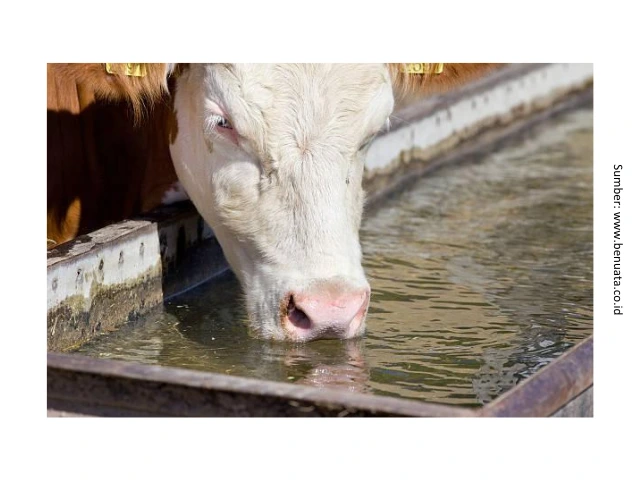
Provide feed by increasing its nutrient density. An increase in the nutrient density of animal feed is necessary to meet nutritional needs despite a decrease in appetite. Feed must match the needs of livestock that include energy, protein, vitamins and minerals. Clean and fresh drinking water should always be available. Reformulation of the ration can also be done by providing additional oil in the feed. Oil acts as an energy source when livestock needs extra energy in lieu of energy when there is a release of body heat. Recommended oil addition can be done a maximum of 3-5%. If there is a change of feed, it must be done gradually to prevent cows from being stressed and experiencing digestive disorders. Make sure the physical quality of cow feed, especially concentrate, is still good and fresh. If necessary, invert the concentrated feed as often as possible so that the cow is interested in eating. Add premix Mix Plus Cattle Pro into concentrates or cow feed to help increase consumption and provide micronutrient needs for cows.
* Supplementation
Apply a good health program starting from giving vitamins (Vita B Plex Bolus Extra Flavor/ADE Plex Inj) and anthelmintic (Wormzol-B/ Wormzol Suspension) regularly 3-4 months. It is necessary to maintain good resistance of the livestock body to the attack of disease agents. Some vitamins (vitamins A, C, E) can act as antioxidants so as to overcome oxidative stress that occurs when heat stress. While mineral supplements (sodium, potassium) play an important role in rebalancing electrolytes in the body so that physiological activities and metabolism run well. Amino acids (lysine, carnitine) can serve as a source of energy and increase productivity and endurance. Transolite as a supplement containing vitamins, minerals and amino acids can help meet the nutritional needs of livestock when experiencing stress. Transolite can be given to prevent or overcome stress in livestock and also keep livestock productivity maintained. In addition to heat stress, Transolite it can also be given when the risk of livestock being stressed is high enough such as post-vaccination or transportation processes. Awarding Transolite can be done by mixing it in feed or drinking water livestock. Transolite it can be added also to the drinking water of cattle during stressful conditions and increased drinking consumption of cows.
Stress in livestock is a complex condition that involves the interaction between environmental factors, nutrition, and handling livestock. In the end, cattle fattening business is not only about maintaining performance and nutritional balance, but also needs to pay attention to the welfare of livestock. Healthy and comfortable livestock will provide maximum production results. May be useful.