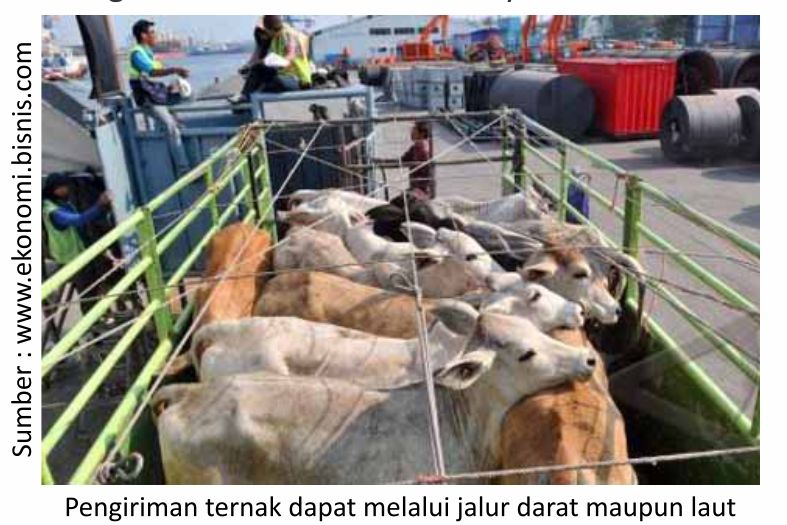
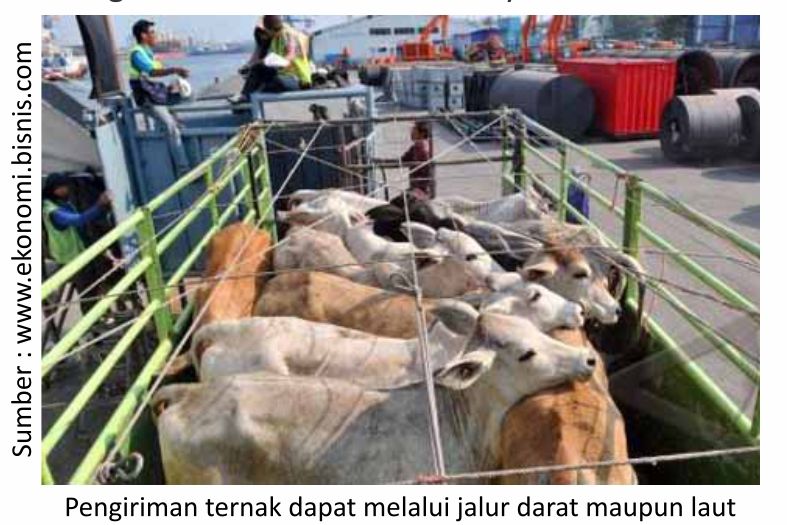
It is common for us to know that the transportation or transportation of beef cattle (going) between islands or cities can cause cows to stress until their body weight shrinks. Therefore, after transportation, the cow must be immediately handled properly and given special treatment to restore her body condition.
During the journey anything can happen including fatigue, discomfort or illness. We as farmers need to recognize these conditions. Before recognizing the condition of livestock that is not good, it would be nice to understand the condition of healthy livestock first. Healthy cattle will show the following signs:
- The cattle look active but remain alert. Healthy cattle can do what they want and will be cautious or wary of their surroundings. The eyes and ears will look sharp and curious about noisy sounds or other stimuli/ stimuli.
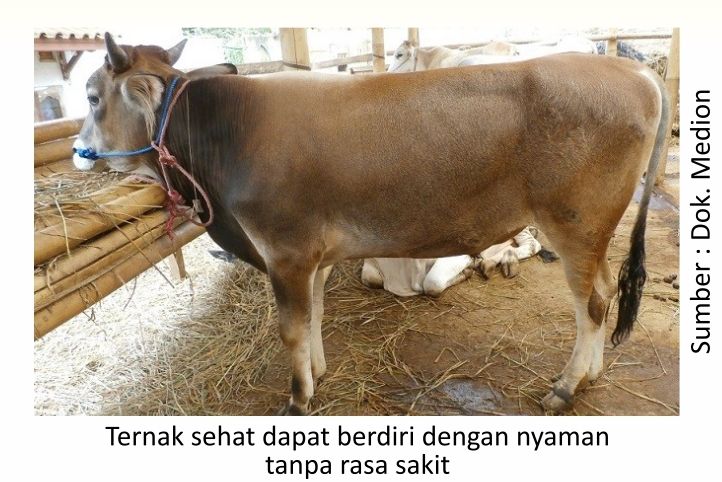
- Cows stand without showing symptoms of pain or lack of comfort. If the cow's back appears curved, this indicates the cow is in a state of pain.
- The appetite and drinking of cattle is good. Feed intake is evidence of rumen / stomach and stomach contains. If the intake of animal feed is not good for a long time, then the cow will lose weight. When the cow lacks drinking or lacks fluid intake, the eyes will be glazed and the skin will be stiff.
- Cattle have shiny, clean hair. In sick cattle, the hair will appear dull and the ends of the hair stand up.
- Cattle can show differences in their eyes. When cattle are sick, the eyes look glazed or less alert and the calf will appear drooping ears.
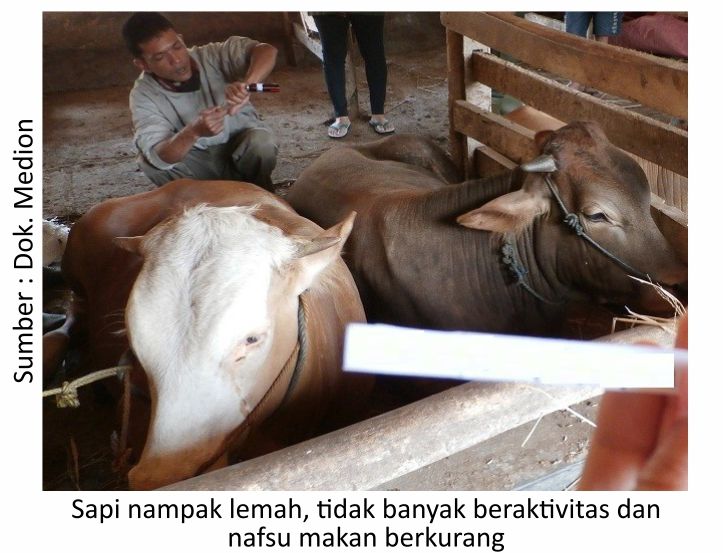
- Other signs that can be observed include cows appear weak, decreased appetite, aloof, separated from the group, dull hair, empty stomach, abnormal feces. We often fail to notice these changes. Such early signs are almost invisible, it takes ability and experience to recognize them. Checks need to be carried out especially during risky activities, for example when transporting livestock or livestock after a trip.
- High body temperature is one of the early indications of an abnormal condition. This indicates an immune response or the process of disease attack.
- Cattle feel pain. When sick cattle will try to reduce the pressure around the area of pain, breathing with short and fast and less alert to the surrounding environment. This results in pain so that the intake of food and drink less. The eyes glaze over and the skin tightens.
- Sick cows often break away from the herd. In the cowshed, it looks like it is lying down, if it is in the grazing area, it will lie down near the fence.
The arrival of livestock in the barn is an important time for inspection. The livestock is placed in a separate cage for several days. The goal is to determine the health status of the livestock, immediately handle if the condition is not good and avoid disease transmission to other livestock in the cage.
Cattle that have just arrived, generally show symptoms of fatigue such as cows do not move much or more often sit and stay still and are reluctant to eat. In these conditions, if not handled immediately, it will harm the farmer. Such as weight loss slowly and livestock will be susceptible to disease because the condition is weak. So to maintain these conditions, cattle need to be rested, avoid stress factors such as overcrowding that is too high, or uncomfortable cage conditions. The provision of drinking water is important to prevent dehydration and forage feed as an adaptation.
It is no less important to restore energy due to a fairly long journey. The return of energy will make cows immediately repair muscle disorders and repair muscle tissue so that they recover faster from fatigue after transportation. With these conditions will certainly make livestock comfortable in adapting. Giving Bioselvita can increase the endurance of livestock, so that livestock performance becomes more optimal.