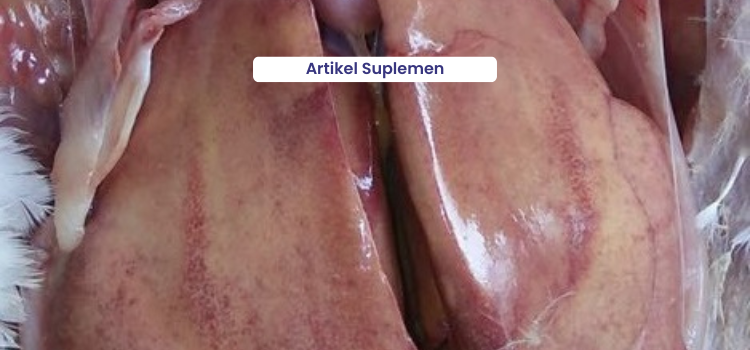
The liver is an important organ that is responsible for various functions. The liver takes part in the processes of carbohydrate, protein and fat metabolism, bile secretion, red blood cell formation, detoxification, and storage of vitamins and minerals. The liver can be damaged by an attack of a disease. If damage occurs, it will cause various disorders such as:
A. Accumulation of toxins
Toxins that the liver cannot destroy will accumulate in important organs such as the liver, brain, and nerve cells. Toxins that accumulate will damage normal cell membranes, disrupting the balance of body fluid expenditure.
B. Disorders of metabolic processes
Liver damage will disrupt metabolic processes resulting in stunted chicken growth and egg production.
C. Disorders of red blood cell formation
This disorder has an impact on the condition of chickens, such as chickens become pale, lethargic, decreased appetite and impaired growth.
D. Decreased immunity
Liver damage will cause immunosuppression or decreased immunity. This increases the risk of becoming infected with the disease, increases the severity of the disease, and increases the difficulty of treatment.This can certainly cause various losses, including:
- Decrease in ration consumption
- The growth of chickens is not up to standard
- Decreased egg production
- Susceptible to disease
- Damage to important organs
- Death
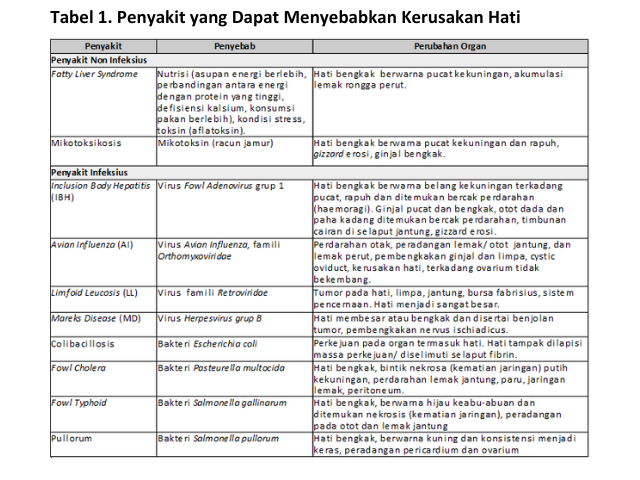
Damage to the liver organ is characterized by a change in its color, shape or size and consistency. Examples of color changes that can be observed are the liver becoming pale, striped, yellow, white spots, grayish green, darker colors (colangiohepatitis) or the presence of yellowish white membranes (perihepatitis).
Changes in the shape or size of the liver will appear enlarged and swollen, the presence of hard lumps or the death of circular tissue such as rings. While changes in consistency look like the liver becomes brittle or even becomes harder.
It is necessary to know the factors that can damage the liver so that prevention can be done appropriately. Some factors that can cause liver disorders are infectious and non-infectious diseases as shown in Table 1.
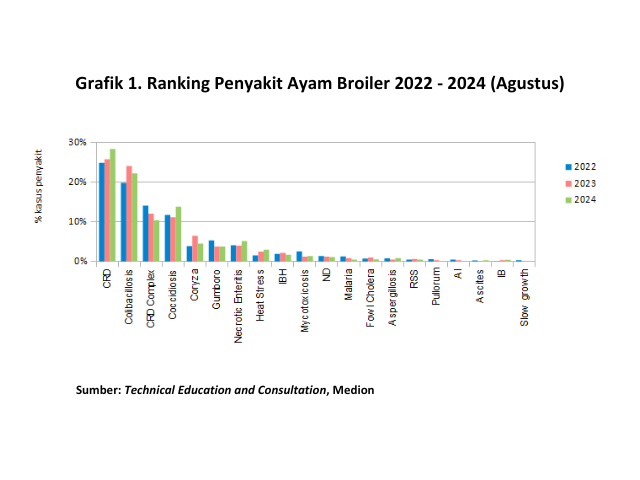
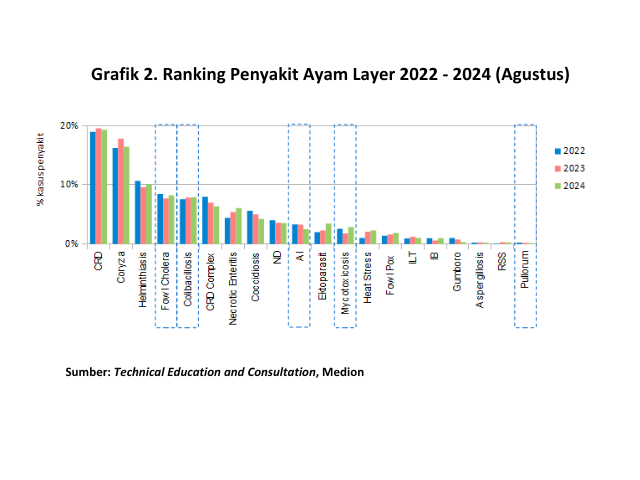
From the data collected by Medion, the incidence of some diseases is still very high both in broiler chickens or layer (Graph 1 and graph 2).
Likewise with diseases caused by viruses, namely inclusion body hepatitis (IBH) whose incidence rate is still quite high, especially in broiler chickens since the last 3 years.
Treatment of disorders and liver damage
Treatment measures for disorders and damage to chicken liver can be done as follows :
- Order of accurate diagnosis. With laboratory tests to identify the cause of liver disorders such as detection of disease agents by histopathology, PCR, sequencing, bacterial isolation and antibody detection.
- Improve biosecurity and good Cage management. Isolation of sick livestock to prevent transmission. Disinfect the cage daily with disinfectants that are effective against viruses, bacteria and fungi, such as Medisep, Antisep, Sporades or forms as well as drinking water with Desinsep. Also note the humidity of the litter or cage mat.
- Conducting treatment and supportive therapy :
- Berikan antibiotik pada kasus penyakit bakterial (Colibacillosis, Fowl Typhoid, Fowl Cholera, Pullorum) menggunakan Neo Meditril atau Tinolin.
- Add supportive herbal hepatoprotectors to help improve liver function using Heprofit.
- Administration of high doses of multivitamins (Fortevit)for endurance. Supplementation of vitamins, amino acids, as well as increasing the levels of protein and fat in the ration is also able to suppress losses due to mycotoxins.
- Administration of Freetox toxin binder to handle cases of mycotoxicosis as well as the provision of nutritious rations.
- Berikan antibiotik pada kasus penyakit bakterial (Colibacillosis, Fowl Typhoid, Fowl Cholera, Pullorum) menggunakan Neo Meditril atau Tinolin.
Prevention of disorders and liver damage
To prevent disruption and damage to the liver in chickens can be done as follows:
- Strict application of biosecurity such as the application of 3 zones, traffic restrictions both personal, goods or vehicles, vector control, sanitation of chicken drinking water using desinsep and cage spray routinely using disinfectants such as Neo Antisep on the contents of the cage and Sporades on empty cages.
- Get vaccinated to prevent diseases that can damage the liver :
- Medivac IBH Emulsion atau ✓ Medivac ND T-IBH Emulsion untuk mencegah penyakit IBH
- Medivac AI to prevent AI diseases
- Medivac Fowl Cholera untuk mencegah fowl cholera
- Providing supplements to maintain the health condition of livestock :
- Multivitamins such as Fortevit or immunostimulants such as Imustim to increase endurance
- Supplement heprofit regularly to protect liver function remains optimal.
- Implementation of good ration management :
- Nutrition and the amount of ration given according to the needs of chickens
- Use the base/pallet when storing rations and control temperature, humidity and air circulation in the feed warehouse. Terapkan prinsip first in first out (FIFO) atau first expired first out (FEFO) untuk pengeluaran pakan. Perform routine ration quality checks and administration of Freetox/Fungitox toxin binders to prevent mycotoxicosis.
- Proper use of the drug to maintain liver function. Administration of the drug according to the instructions and avoid excessive or unnecessary use.
- Choosing a DOC that is free from infectious diseases, especially diseases that can cause neoplasia (tumors) such as LL and Mareks.
Disruption or damage to the liver leads to enormous losses. So it is necessary to control efforts by combining biosecurity, vaccination, supplementation and good maintenance management. If the liver function is good, then the performance of the chicken will be optimal.