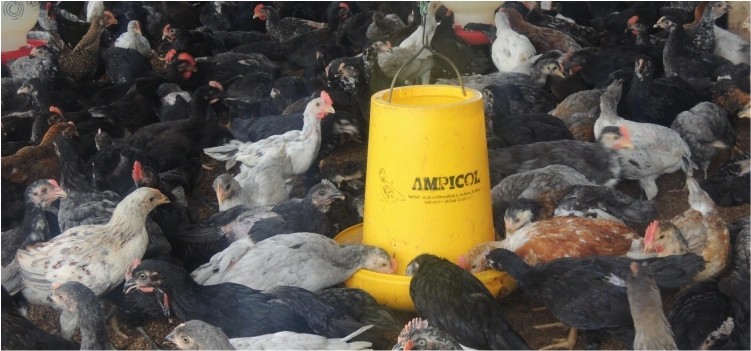
Domestic chickens are included in free-range chickens (not purebred). Called Chicken because this chicken has been cultivated in the village / countryside. Free-range chickens have their own characteristics, namely the nature of the genotype and phenotype are not uniform. So it has a varied coat color. Indonesian people still love chicken (meat and eggs) because of its nutritional value and distinctive taste. In addition, the price of free-range chicken products is higher than that of purebred chicken products. So that the cultivation of free-range chicken is still one of the prime movers of the community economy in the field of animal husbandry.
As reported from the data on the population development of free-range chickens or free-range chickens belonging to the Directorate General of Animal Husbandry and Animal Health, Ministry of Agriculture that in 2022 there has been an increase in the free-range chicken population in Indonesia by 2.5% from the previous year with a total population of 314 million heads (BPS Data 2020-2022).
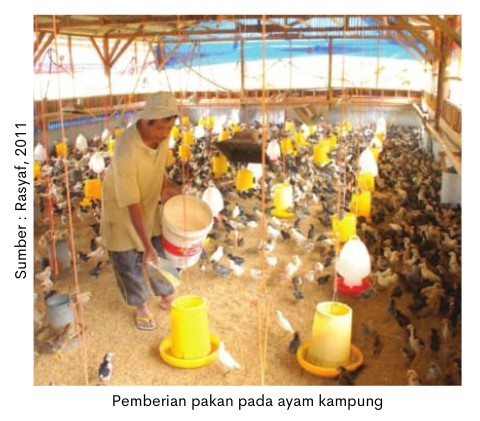
The demand for meat and eggs of free-range chickens is large enough to make the cultivation of free-range chickens a lucrative business opportunity. Intensive maintenance of free-range chickens with the implementation of good management, as well as nutrient-dense feeding will have a good impact on the growth of free-range chickens.
Currently, there are still many village chicken rearing that is done traditionally, which is still considered only as a source of side income. Suppose maintained with makeshift cages in the yard of the house and the feed provided comes from the rest of the household waste or chickens are usually left to feed themselves.
When viewed from an economic point of view, it will certainly be very different from the results of intensive maintenance if the goal is for commercial maintenance that prioritizes cost efficiency and optimal results in accordance with maintenance targets.
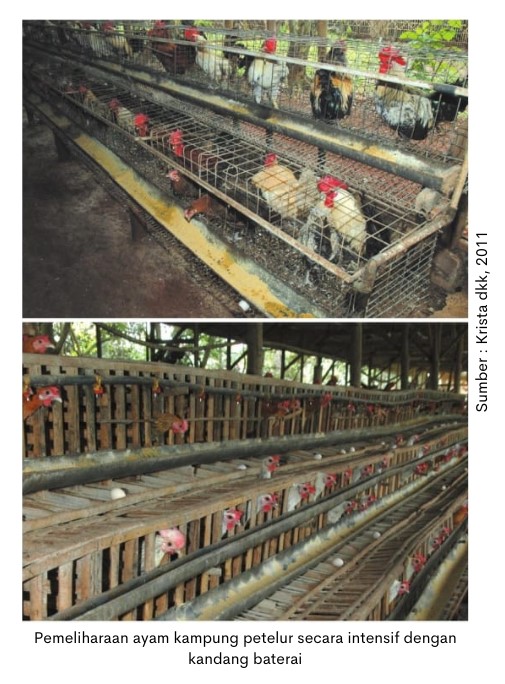
Intensive maintenance of free-range chickens, both broilers and layers, in addition to providing higher profits in terms of productivity, can also minimize the occurrence of adverse diseases on the farm. Because during the maintenance period, free-range chickens cannot escape the challenge of diseases that come from the environment.
Diseases that are often found attacking chickens one of them is respiratory disorders that can be caused by various agents such as non-infectious or infectious agents (viruses, bacteria, Mycoplasma, and fungi).
Weak Respiratory System Of Chickens
Similar to laying hens or broilers, free-range chickens also have weak points in their respiratory system. Its very important function in the supply of oxygen and carbon dioxide expenditure makes the respiratory organs will always be in direct contact with dirty outside air. This is certainly very possible to participate in the inhalation of dust or microbial contaminants in the air and enter the respiratory system.
Physiologically, the respiratory system of chickens has several physical defense mechanisms. For example, the presence of mucous membranes in the nose and sinuses to capture dust or microorganisms from contaminated air. In the nasal cavity, larynx and trachea of chickens there are also cilia or vibrating hairs that will trap and remove foreign substances that come with the air. Cilia function to filter air particles that enter the body. The existence of this defense mechanism allows only very small particles of less than 3-5 microns to escape and enter the lungs (Dezube, 2023).
Cilia or vibrating hairs in the airways of the chicken's respiratory system can be damaged by agents that can irritate the mucosa, such as high levels of ammonia in the cage. Ammonia (NH3) is irritating and can erode the cilia in the epithelial lining of the respiratory tract. The destruction of these cilia is certainly the entrance to disease agents because one of the physical defense systems in the respiratory organs is not optimal. If the cilia are damaged, the seeds of the disease will freely enter and cause respiratory distress.
Chickens in general have a respiratory system that is somewhat different from the respiratory system in mammals (lactating animals). The respiratory system of chickens has a simple lung structure and is equipped with air sacs (air sac). The ratio of the volume of the chicken's lungs to its body volume is generally much smaller than that of mammalian animals.
The air sac itself becomes one of the weak points of the respiratory system. The air sacs are composed of only a few layers of cells and few blood vessels. Therefore, in this section there will be very few body defense cells such as white blood cells and phagocytic cells. This will certainly make it easier for infectious agents to multiply (colonize) and damage epithelial cells. So no wonder if there is a change in the air sacs, such as inflammation (airsaculitis) or become cloudy, it can be an indication of an attack of respiratory disease.
Causes Of Breathing Disorders
The cause of respiratory system disorders generally consists of 2 factors, namely non-infectious and infectious.
a. Non-Infectious
- Obstructed air circulation system
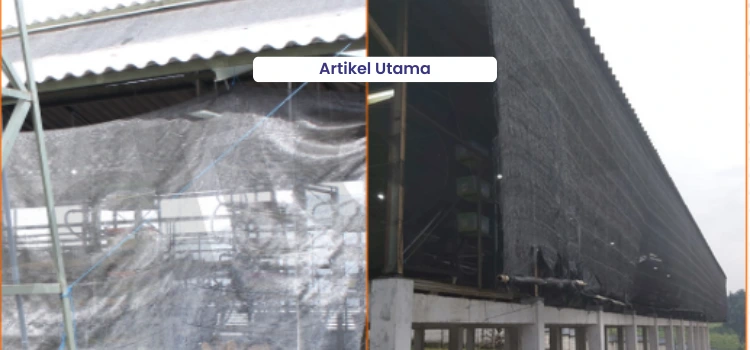
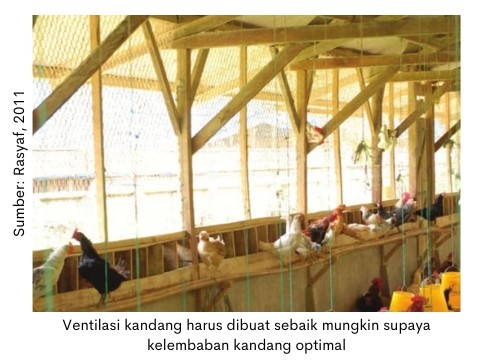
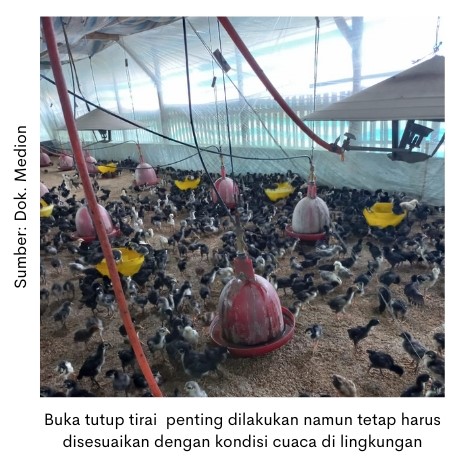
Disturbed air circulation due to open and close the cage curtain is not suitable, high chicken density, the distance between the cage is too close, the cage is too close to the cliff or too many trees, will result in the discharge of dirty air and toxic gases such as ammonia become obstructed. In addition, it can inhibit the drying of feces by wind flow. As a result, ammonia levels will increase faster and the edges will irritate the respiratory tract until disturbances arise.
- Feed quality
An unbalanced composition of the ration, especially the level of proteins and salts, can provoke the occurrence of respiratory diseases. Excess crude protein in the ration will be secreted along with feces so that uric acid levels in the feces increase. As a result, the uric acid will be broken down by ureolytic bacteria into ammonia. Likewise, if the salt content is high, it will trigger an increase in drinking water consumption so that the stool becomes thinner. Loose stools will accelerate the formation of ammonia gas.
- Quality litter
Litter the wet one can become a place for the accumulation of harmful gases for chickens, such as ammonia. The ammonia level in the cage should ideally be less than 10 ppm, and the limit that chickens can tolerate for exposure in a short time is 20 ppm (Gonçalves et al., 2023). Excess ammonia levels can damage the cilia, interfere with the movement of the cilia, and even cause irritation of the conjunctiva of the eye.
- Cage density
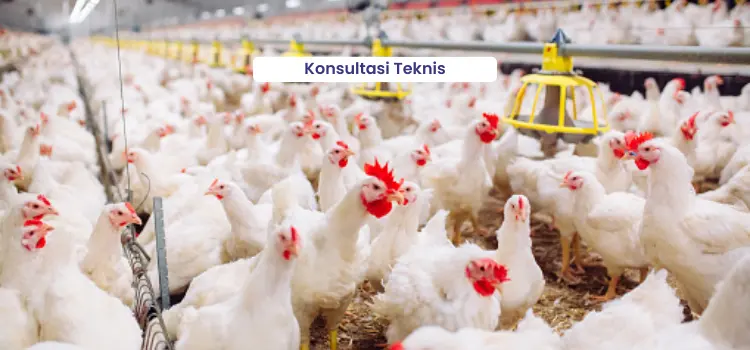
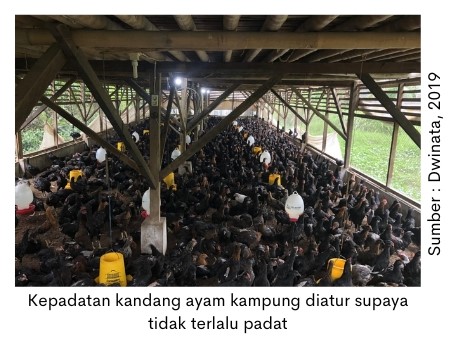
Free-range chickens also need space to grow and develop. Therefore, we must meet these needs and pay attention so that they are fulfilled or not too dense. Because if it is too dense, of course, it will have a lot of bad impact on the development of free-range chickens. Such as high competition for food and drink, heat stress due to the high temperature, and insufficient fresh air each individual chicken.
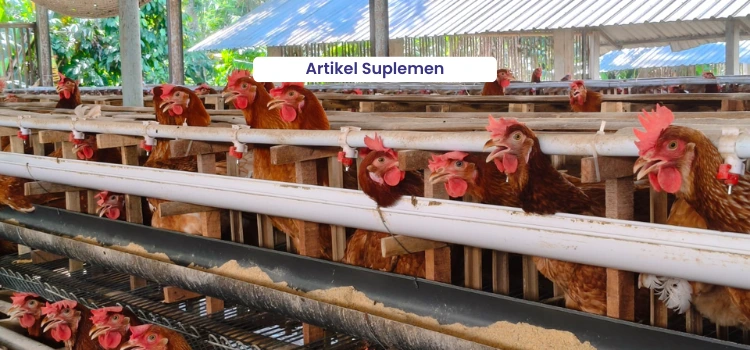
In the maintenance of broiler chickens in postal cages usually in-setting for the maintenance of 9-10 heads per m2. As for the needs of the area of the battery cage laying hens production phase approximately 400 cm2 per chicken.
b. Infectious
Infectious factors that cause respiratory disorders include the presence of virus attacks (ND, AI, and IB), bacteria (CRD, CRD complex and korisa) and fungi Aspergillus sp. (aspergillosis).
Clinical symptoms that initially appear are generally only in the form of snoring, sneezing/coughing and decreased appetite or drinking, followed by a decrease in production in laying hens. If only to see the clinical symptoms alone will be difficult to make a decision diagnosis of diseases that attack our chickens. In order to diagnose the disease more precisely farmers should consult a veterinarian or person in charge of animal health on the farm.
Here are some examples of diseases that often affect chickens. As additional information for farmers to be able to immediately take the right decision handling the disease in the cage to reduce the losses caused.
- Newcastle Disease (ND)
Newcastle Disease (ND) or tetelo is caused by a virus Avian Paramyxovirus-1 (APMV - 1) of the family paramyxoviridae. Naturally, the ND virus will enter the chicken's body by inhalation (inhaled/ through the respiratory tract) and ingestion (inedible/through the digestive tract). After infecting chickens, the ND virus will cause clinical symptoms after 2-15 days (on average 5-6 days).
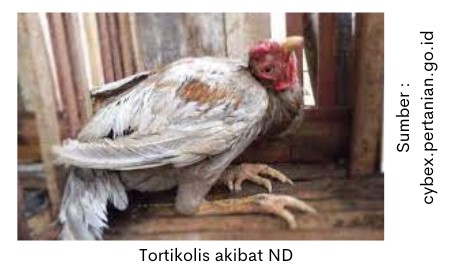
Clinical symptoms and changes in anatomical pathology due to ND attacks will be found in the respiratory organs, digestion, nervous system, urinary and reproductive. Chicken affected by ND on the nervous system will cause clinical symptoms such as twisted neck (torticollis).
- Avian Influenza (AI)
AI disease is still one of the important viral diseases in broiler and laying hens. This disease is caused by a virus Avian Influenza from family orthomyxoviridae.
AI attacks various organs, such as respiratory, digestive, nervous, urinary, and reproductive. Respiratory disorders that appear such as coughing, sneezing, snoring. Other symptoms that can appear such as a bluish comb and there is melting of the nose or mouth, anorexia (no appetite), depression, sudden death and a high mortality rate of up to 100%.
Anatomical pathological changes that appear especially in the respiratory tract, namely the occurrence of sinusitis, laryngitis and tracheitis. In addition, there is also bleeding in the heart fat and brain blood vessel dilatation which is a typical pathological change due to AI disease.
- Infectious Bronchitis (IB) virus of
Causes of disease infectious bronchitis (IB) is coronavirus from family coronaviridae. IB is a viral disease in the respiratory tract that is acute and very contagious.
The classic IB virus infection usually affects the respiratory tract of ayamwhich is characterized by symptoms of snoring, sneezing and cekrek (mild cough). Variant IB virus infection can cause damage to the reproductive organs resulting in decreased egg production and quality.
In the case of variant IB disease, anatomical pathology changes during carcass surgery in the form of an oviduct cyst (dilation of the oviduct filled with clear fluid). The decrease in egg production varies from 2 to 40%. The resulting eggs are often pale and thin, and the shape is asymmetrical.
- CRD and CRD complex
Chronic Respiratory Disease (CRD) is a bacterial disease caused by Mycoplasma gallisepticum. M. gallisepticum enter simultaneously with the flow of air that has previously been contaminated. When it enters the respiratory tract of chickens, the agent of this disease settles on the mucosa of the respiratory tract and damages its epithelial cells.
In addition, M. gallisepticum it is also known to produce ciliostatic compounds that can cause Cilia activity to weaken (Bradbury, 2006). As a result of which agents of other diseases become younger entering the respiratory system. Furthermore, these bacteria will trigger inflammation of the mucosal cells so that blood flow in the area increases. Bacteria then follow into the bloodstream and into the air sac, where the air sac is a suitable place for M. gallisepticum live and multiply. A decrease in ration consumption also occurred, followed by the development of body weight that is below the standard or impaired productivity of free-range chickens. CRD disease can also be complicated by other diseases. Complications with colibacillosis the most common in the field are so-called complex CRDS.
- Korisa / Snot
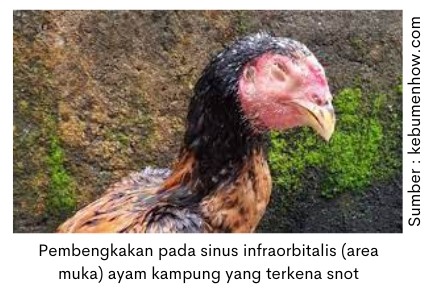
Korisa or also known as snot is a respiratory disease caused by bacterial agents Avibacterium paragallinarum. The most characteristic symptom of chorisa is acute inflammation of the upper respiratory tract, including the nasal cavity, which is accompanied by exudate that is initially watery yellow and then gradually turns into thick, purulent, and has a characteristic odor (foul/fishy odor). The presence of this exudate causes the chicken to sneeze, have difficulty breathing, and snore. The infraorbital Sinus swells, tears come out, appetite is lost, and sometimes diarrhea occurs. Eyelids develop conjunctivitis and eyes close. Growth is inhibited and egg production decreases.
- Aspergillosis
Aspergillosis in the field known as mycotic pneumonia, brooder pneumonia or fungal pneumonia. Called pneumonia because this disease mainly affects the respiratory system of chickens. Aspergillosis caused by fungi Aspergillus sp. The species that most often attack free-range chickens are Aspergillus flavus and Aspergillus fumigatus. A. fumigate often found in organic materials such as eggs, husks, feed, and equipment (hatching machines). While A. flavus more often found in feed raw materials. Aspergillus it will produce a lot of spores. The spores are so small and light that they easily spread in the air and contaminate feed, husks, straw, grain, cages, and so on.
The clinical symptoms of aspergillosis acute forms that attack village chicks include :
- Chickens do not want to eat or drink
- Sleepy
- Lazy move
- Breathing with difficulty
- Bluish head due to lack of oxygen (hypoxia)
Prevention and control
Respiratory diseases caused by viruses (ND, AI, and IB) can be seen from the spread of the disease and the mortality rate is higher than the disease caused by bacterial agents (CRD, CRD complex, korisa).
Nd disease, in addition to attacking the respiratory system also attacks the digestive, reproductive and nervous systems. The Virus that causes IB also attacks the respiratory system and reproductive organs (in laying hens, it can reduce the quality and quantity of egg production). AI diseaseAvian Influenza) is characterized by sudden death and the presence of bleeding in almost all organs.
When there is a case of a disease caused by a virus, there is no drug that can effectively cure the disease. Drugs containing antibiotics or the like can be used to treat bacterial secondary infections that follow so as to suppress the severity of the disease, but can not kill the virus that causes the disease. So that in the health program of laying hens or broilers to prevent disease, vaccination programs can be carried out against ND, AI, IB, and korisa using vaccines Medivac. Medivac it has been trusted by breeders for 30 years as a high-quality and high-quality vaccine. An example of a vaccination program can be seen in the following table.
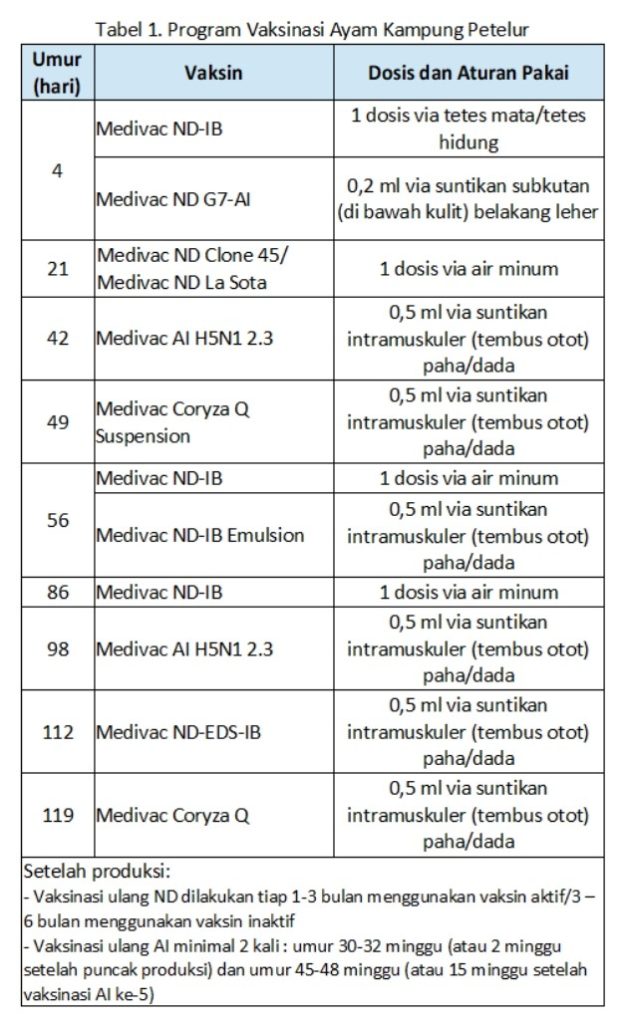
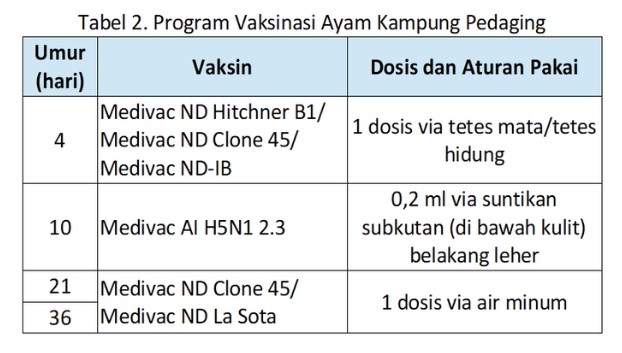
Whereas if the case of the disease that occurs is caused by bacteria, we can do treatment using antibiotics. There are many types of antibiotics that we can use. However, especially for complex CRD or CRD disease do not use antibiotics whose target is to damage the bacterial cell wall, because the bacteria that cause CRD (Mycoplasma gallisepticum) do not have cell walls, so treatment becomes ineffective. As treatment options for such cases can be treated using antibiotics Rofotyl. Rofotyl is a powder preparation containing enrofloxacin and tylosindrug, which effectively treats complex CRD and chorisa in poultry with the rules of use 0.1 g per kg of body weight or 1 g per 2 liters of drinking water administered for 3-5 consecutive days. The selection of medicinal preparations can be adjusted according to the severity of the disease. If the disease is severe enough and accompanied by decreased appetite or drinking can be selected treatment via injection (injection) with Tinolin Injection or Neo Meditrile-I.
As a preventive measure against a disease. In addition to vaccination also needs to be supported in terms of good management and biosecurity tight. Programs biosecurity which can be applied for example by routinely disinfecting and minimizing people or vehicles entering the cage, avoid contact with waterfowl and wild animals, spray the cage regularly using disinfectants such as Neo Antisep or Antisep, and also disinfection of enclosure equipment by using Medisep, Zaldes, Formades, or Sporades.
To reduce ammonia levels in the cage can use products Ammotrol. Awarding Ammotrol also relatively easy, just spray onto the dirt/litter or dissolved in drinking water, and can be given together/mixed with vitamins or antibiotics.
Disinfection of drinking water also needs to be done especially for cases collibacillosis, by using Desinsep (must be precipitated for 6-8 hours before use as a solvent for drugs and vitamins) or Medisep (can to dissolve drugs except sulfonamide group, without precipitated first).
With a combination of the right vaccination program, the implementation of good management, and biosecurity strict expectations provide optimal protection to chickens that we keep from respiratory diseases. Finally, the productivity of free-range chickens can be better so as to provide higher profits for farmers.