Rice plantOryza sativa) is one of the important crop commodities for humanity. Rice is the main carbohydrate source in Asian countries, especially Indonesia. According to BPS (2020), the total consumption of rice in Indonesia is 28.69 million tons. Rice demand is predicted to increase along with population growth in Indonesia.
Rice production in Indonesia in 2021 amounted to 54.42 million tons of GKG (ground dry grain) while in 2020 it was 54.65 million tons (BPS, 2022). Production and rice harvest area decreased compared to the previous year.
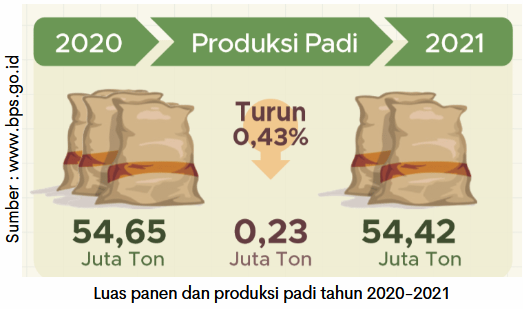
The decline in rice production can be influenced by various factors. Both from uncertain climatic conditions, expensive fertilizer prices, agricultural land conversion and also from pests and diseases. Pests are one of the factors that can affect rice production. Pests that attack rice crops can cause losses if not controlled. It is therefore important to provide plant protection from pest attacks. The goal is to avoid crop loss caused by pests.
Rice stem borer (PBP) is one of the main pests in rice plants. PBP attacks can cause damage to crops and lower yields even to crop failure. Rice stem borer attacks will increase during the dry season.
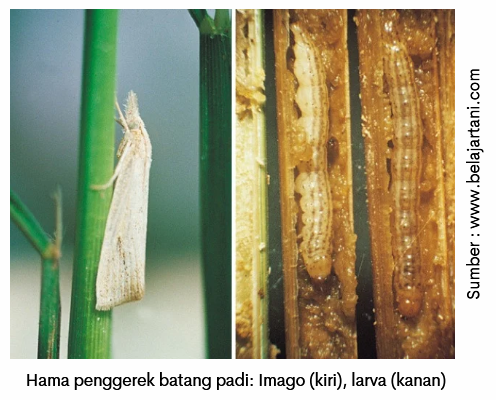
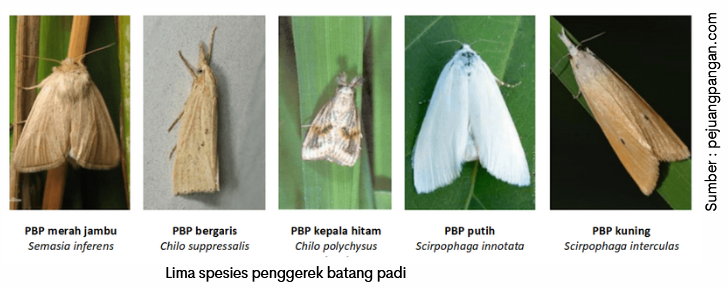
In the world there are 21 species of rice stem borer. Each species of rice stem borer has different properties or characteristics in distribution and bioecology, but almost the same in how to attack rice plants and the damage they cause. In Indonesia there are several types of rice stem borer that has been found, namely:
- Yellow rice stem borerScirpophaga incertulas)
- White rice stem borerScirpophaga innotata)
- The Red-Tailed Bat (Chilo suppressalis)
- The Black Eyed Peas (Chilo polychrysus)
- The pink rice stem borerSesamia inferens)
Yellow rice stem borerScirpophaga incertulas) is the most dominant species found in Indonesia. Yellow rice stem borer belongs to the order Lepidoptera and the family Pyrilidae.
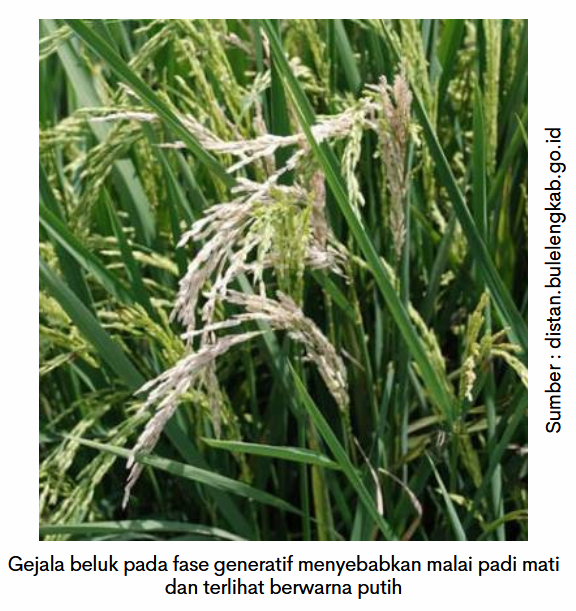
Rice stem borer pests can attack all phases of rice plant growth, from vegetative to generative phases. Symptoms of damage to rice plants by Rice stem borer causes sundep and outs symptoms. Sundep and outs symptoms are caused by the death of the base of the plant that is broached or eaten by the driving larvae of rice stalks.
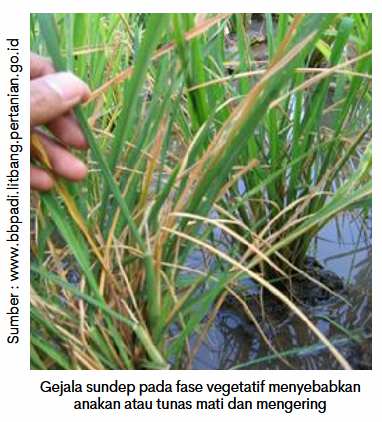
Sundep
An attack in the vegetative phase leads to the death of saplings or young plants. Loss of yield due to an attack in the vegetative phase can be compensated for by the formation of new saplings.
Outs
The attack on the generative phase causes the rice panicles to become white and hollow. Attacks in the generative phase cause crop loss due to empty rice grains.
Life Cycle
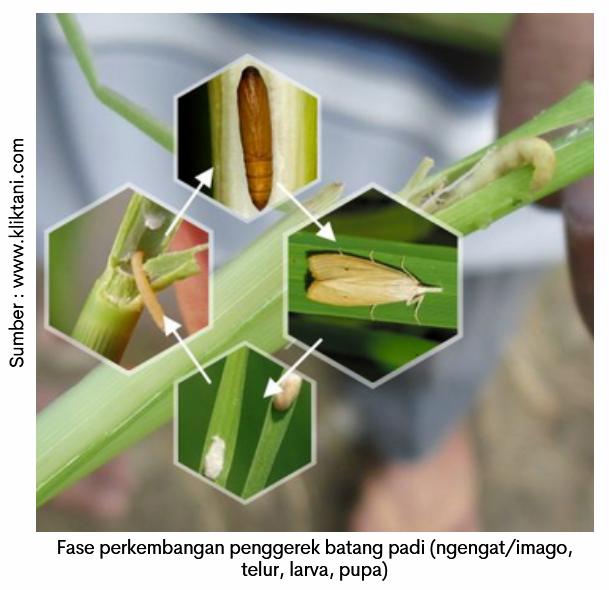
Rice stem borer has a life cycle of 40-70 days depending on the type and environment. The life cycle of PBP consists of four phases, namely moth/imago, egg, larva, pupa. This is a list of the life cycle disorders (Scirpophaga interculasthe dominant species is found in Indonesia:
1. Moth or Imago
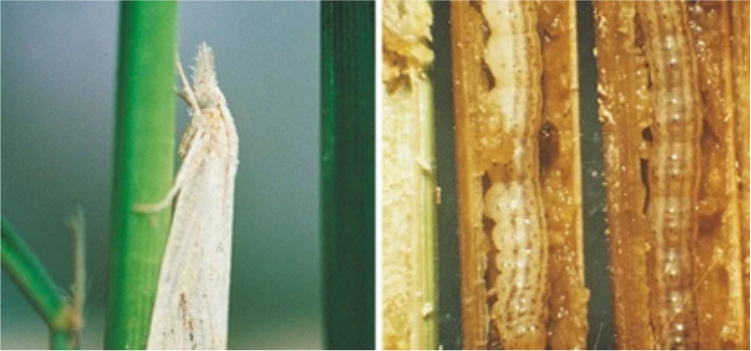
The yellow rice stem borer mothScirpophaga interculas) are yellow with black dots on the wings. Moth length 14-17 mm, and can live between 5-10 days.
2. Eggs
Eggs are laid in groups on the tips of the leaves. Each egg group contains 50-150 eggs. There are fine yellowish-brown hairs covering the egg clusters. The eggs will hatch after 6-7 days. One moth can lay 100-600 eggs.
3. Larva
The larvae are yellowish white to green, with a maximum length of 25 mm. Larvae can live for 28-35 days. The larvae of rice stem borer damage rice shoots by broaching part of the stem.
4. Pupa
The Pupa is yellowish or slightly White. pupa in the form of a white thread membrane. Length 12-15 mm and pupal stage 6-23 days. The Pupa is inside the base of the stem
Control Way
Rice stem borer pest control is carried out in various ways to suppress the development of pests but still safe for the environment and maintain ecosystem balance. Control is carried out by technical, mechanical, biological, and chemical culture.
1. Technical culture
Conducting plant cultivation with certain techniques so that the planting conditions are not or less suitable for the place of life or the development of pests.
- Clean the environment around the land from plant residues and weeds. Borers can live on plants other than rice as an alternative, such as grasses.
- Simultaneous planting to limit food sources the availability of food sources for rice stem borer.
- Crop rotation (crop rotation) with non-rice crops (crops or vegetables) so as to break the life cycle of pests.
- Mechanical and physical
Control is done by turning off directly, collecting pests, and using physical factors that can affect pests.
- Collecting groups of rice stem borer eggs from seeding until after planting.
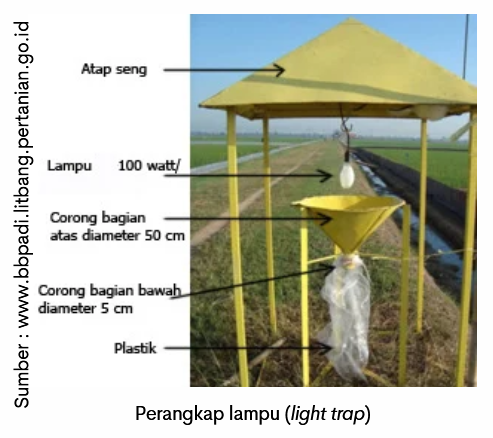
- Using light devices or light trap to catch moths.
- The plantings are as low as possible at harvest time. Next, waterlogging is carried out so that the straw quickly rots so that the larvae and pupae die.
2. Hayati
Pest control uses its natural enemies by protecting and encouraging the life of its natural enemies. Maintaining the balance of the ecosystem of natural enemies of pests is important to suppress pest populations in the field.
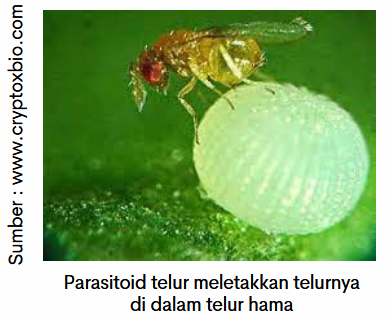
Trichogramma japonicum is one of the parasitoid eggs that become natural enemies of rice stem borer. Trichogramma japonicum laying eggs and hatching into larvae in the eggs of rice stem borer. PBP eggs will be damaged by larvae Trichogramma japonicum so that it does not become dead and does not hatch.
3. Chemical
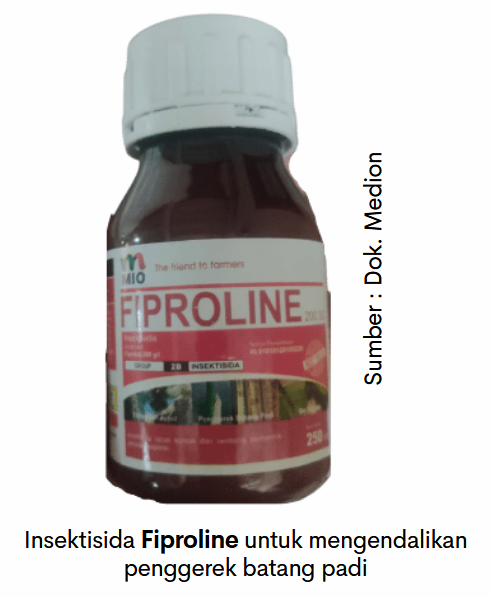
Pest control uses toxic chemicals or other ingredients (pesticides) that can protect plants from pests. The selected pesticides must be effective and have obtained licensing or registration. Fiproline 200 SC is one of the effective insecticides to control rice stem borer pests. Apply insecticide on rice plants if it has been found 1 moth on light trap or on the ground.
Fiproline 200 SC insecticide having as active ingredient fipronil 200 g / L. Fiproline has a contact and gastric mode of action. In addition to fipronil, the active ingredients dimehipo (Sword 400 SC) and emamectin benzoate (Howwla 5.7 SG) can also be used to control rice stem borers.
Insecticides are chemicals, so their use should be done carefully. In the use of insecticides need to pay attention to 6T, namely right on target, right type, right quality, right time, right dose, and right way of application. This needs to be done so that the use of pesticides is more effective, efficient and does not damage the environment. May be useful.