E-mail : nandarismanaldo1210@gmail.com
Which material is better to use as a base for the cage? Is it rice husk or sawdust?
Answer:
Thank you for the submitted question. As already known that the benefits of using litter among them are limiting the direct contact of the Chick's legs with the floor of the cage, maintaining the temperature brooder stay warm and help absorb water from feces and spilled drinking water so that the cage floor does not become damp. Optimal control and management will help maintain litter in good condition.
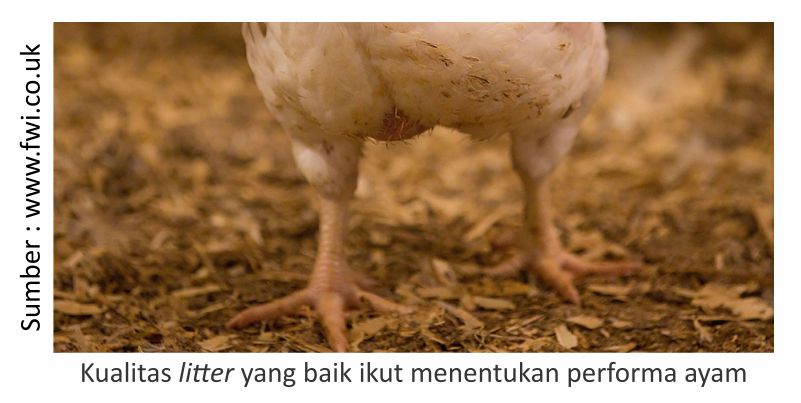
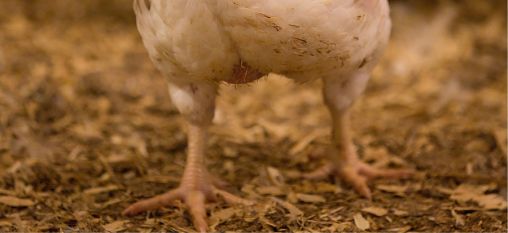
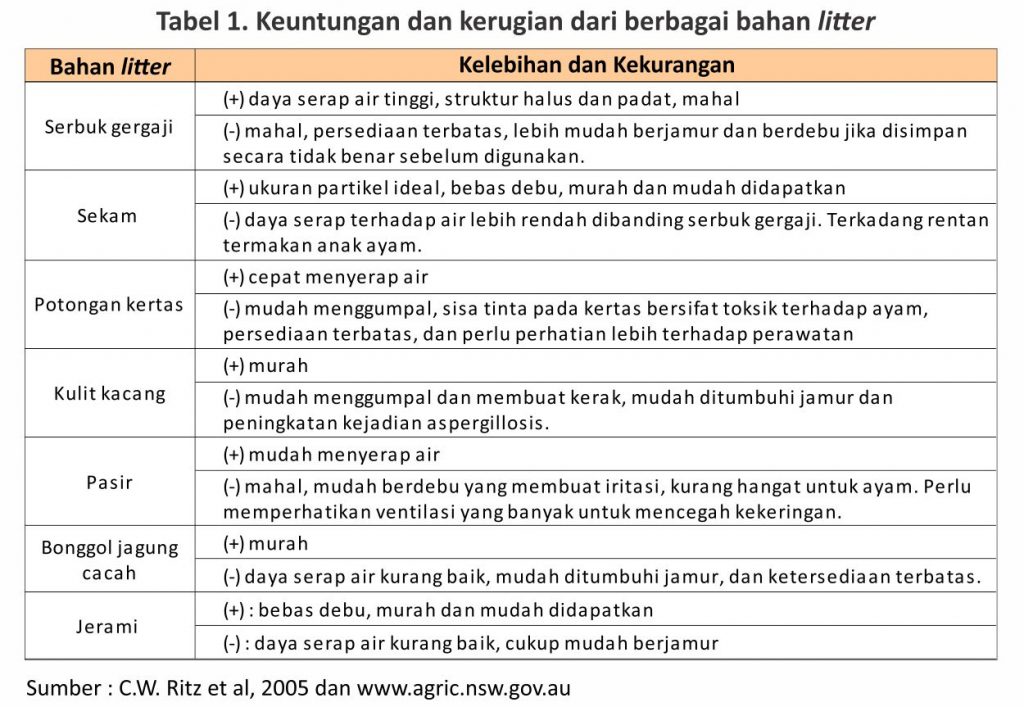
We must be observant in choosing the material that will be used as material litter, because when litter not functioning optimally will affect the performance of the chicken. Writer In Indonesia, litter commonly interpreted as chaff, because most farmers use rice husk as material litter. Both husk and sawdust cage mats have their own advantages and disadvantages. The advantages of using rice husk are that it does not cause odors because the particle size is medium and heavier, the price is the cheapest, easy to obtain, and the husk waste that has been used as a cage base can be resold for compost. However, the weakness of rice husk is water absorption is not good, if the husk in wet conditions can cause snoring disease in chickens, as well as wasteful in use. For the base of the cage sawdust has the advantages of good water absorption, fine and dense structure but the disadvantage is its availability which is sometimes rarely found, dusty, easy to damp and moldy. Because each material has its own advantages and disadvantages, the father/mother in determining the cage base to be used can consider both in terms of availability, economic value, water absorption, and other impacts of the cage base on chickens.
To date, the use of husks is still recommended. But if there is no supply of husks, you can use other ingredients that are abundant in the surrounding area farm (for example, sawdust, straw, nutshells, and so on). Summary of the advantages and disadvantages of some examples of materials litter can be seen in Table 1.
Another important thing to remember in the use of cage mats is to keep the cage mat always dry regardless of the material. Some things we need to pay attention to litter dry and function optimally among them :
- Perform flip-flops litter regularly every 3-4 days, from the age of 4 days to the age of 17 days. This is to avoid litter lumpy from the start. If there is litter a small lump, then it can be sorted and removed from the cage. However, if the number litter that clumps or wet already a lot, better stack with litter the new to the lumpy does not appear.
- If litter already very damp, when it is about to be added litter It is best to sprinkle lime on it first so that it dries quickly, then stack it with litter the new one.
- The leaking roof of the cage should be repaired as soon as possible, and avoid hasty work, especially in the change of drinking water, do not spill into litter.
- Install the drinking place installation correctly so that water leakage does not occur.
- Ventilation must be good and smooth so that air circulation is good enough, so that dirty air does not accumulate in the cage and the durability/durability of litter it'll be better.
- Control the temperature, humidity and density (density) of chickens in the cage.
- Give Ammotrol as an herb that can make stools drier, it helps control ammonia.