The adequacy of nutrition in chickens has a great effect on productivity and it is closely related to the functioning of the digestive tract. The digestive tract that functions optimally will be able to maximize the value of ration utilization through the process of digestion and absorption of nutrients.
Government policies that prohibit the use of Antibiotic Growth Promoter (AGP) or growth-promoting antibiotics in the ration did get a variety of responses from farmers. Some farmers reported no change in production after the policy was enacted. But not a few also of those who report that since the enactment of the ban on AGP makes the performance broiler (broiler) decreased.
Given the policy also resulted in an appeal to reduce the use of antibiotics for preventive purposes for farm animals, including chickens. Antibiotics are expected to only work to weaken or kill pathogenic microorganisms while in the gastrointestinal tract and are not absorbed, so that no residue occurs in the product or tissue.
Some feed and drug manufacturers have conducted research and development to produce alternative products that are safe to use as a substitute for antibiotics or AGP or used for prevention programs. The following are some of the benefits of CBD oil: anti-inflammatory, anti-inflammatory, anti-inflammatory, anti-inflammatory, anti-inflammatory, anti-inflammatory, anti-inflammatory, anti-inflammatory (essential oil), phytobiotics (herbs) and various types of enzymes.
The Digestive System Of Chickens
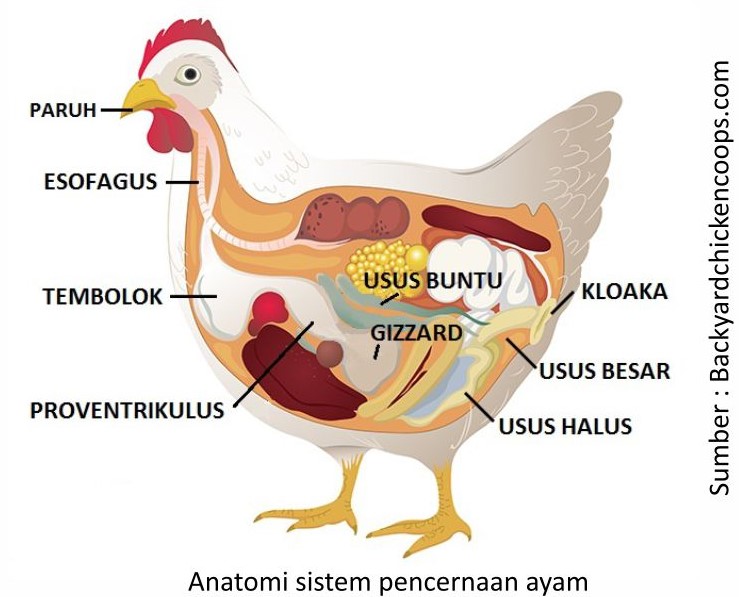
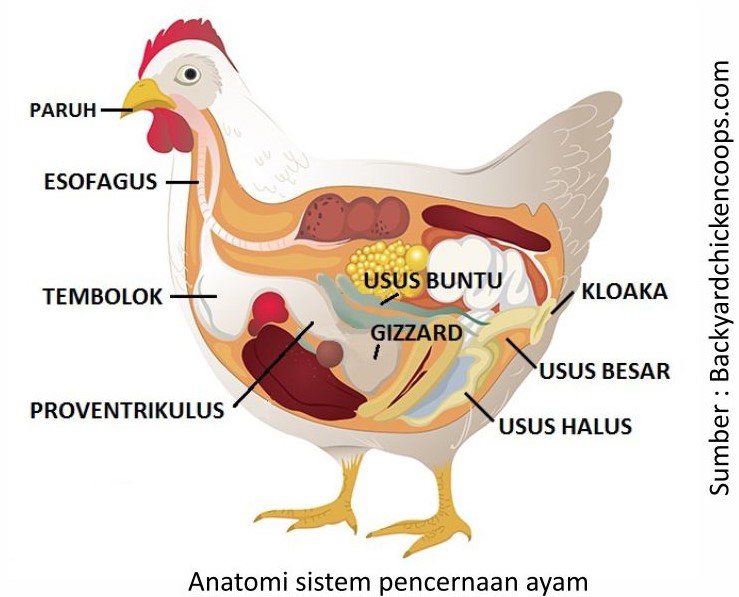
The digestive tract in chickens starts from the beak and ends in the cloaca. Organs of the digestive system include the beak, esophagus, cache (crop), proventriculus, Gizzard (gizzard), small intestine, appendix, colon, and cloaca. Other vital organs associated with the functioning of the digestive system are the liver and pancreas.
Each of these organs is inhabited naturally by a microflora consisting of bacteria, protozoa and fungi. But the part that is most inhabited by several types of bacteria is the intestinal tract. Healthy birds in general have a well-functioning intestinal tract characteristic. It is also fundamental in improving the efficiency of rations for basic needs and production. The most important characteristic of a well-functioning gut is the balance of the bacterial population in it. This balance is closely related to the intestinal tract when cattle are treated under stressful conditions such as bacterial infections, high environmental temperatures, ration turnover, and transportation (Jin et al, 1997).
The work of the digestive tract system in poultry breaks down the ration consumed into the most basic components (basic components) i.e. mechanically and chemically. The most important component (basic components) of the subsequent ration is absorbed (absorption) by the villi on the intestinal wall.
Some of the criteria for a healthy poultry digestive tract are long intestinal villi and the integrity of the digestive tract. Intestinal villi resemble fingers in all parts of the intestine that function to absorb food juices (nutrients) that extend from the bottom of the intestine towards the lumen (cavity) of the intestine where food will be digested and absorbed there. In principle, the longer and/or wider villi will increase the area of nutrient absorption in the intestine so that the absorption of nutrients is more optimal.
Factors affecting the digestive system of chickens
Many factors affect digestive health and performance in poultry including:
1. Primary immune system disorders in digestion
Damage to the intestinal mucosal tissue will cause the process of digestion and absorption of nutrients is not optimal. As a result, there is a nutritional deficiency so that the formation of antibodies is disturbed. The intestinal mucosa and the caeca tonsil are part of the local immune system in the gastrointestinal tract. Damage to these two organs resulted in chickens more susceptible to infection with other diseases. Along the intestinal mucosal tissue there is antibody-producing lymphoid tissue (IgA), where the IgA will accumulate in the blood. Damage to the intestinal mucosa will result in the release of plasma and red blood cells so that the levels of IgA, as a defense in the surface layer of the intestine also decreased.
2. Ration and drinking water quality
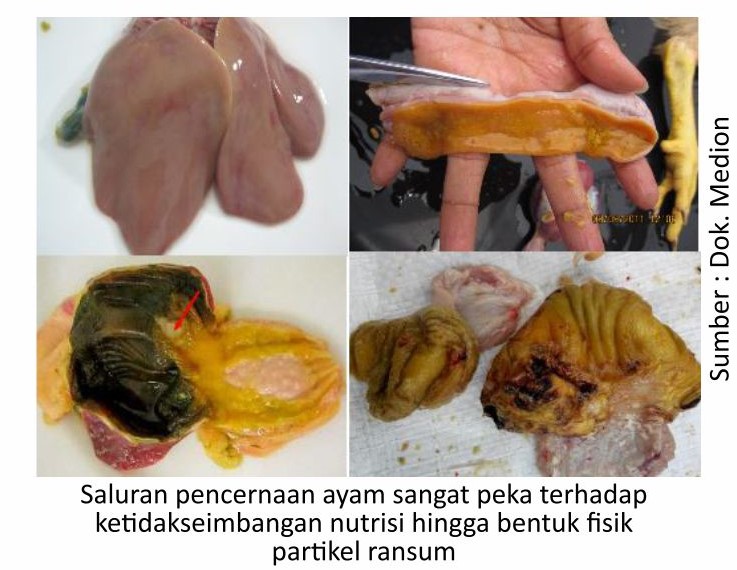
Imbalance of nutrients and non-compliance with the quality of the ration can affect the process of reception in the digestive tract so that it can damage certain organs. The digestive tract is very sensitive to high crude fiber and anti-nutrients or protein content that is too high causes excess uric acid levels followed by ammonia production. Vitamin A deficiency can also interfere with digestion in the chicken body due to a decrease in the work of the esophagus, gizzards and kidneys. In addition, bacterial contamination of the ration and/or drinking water can spread into the chicken's body and cause the chicken to develop gastrointestinal diseases.
3. Presence of fungi and mycotoxin levels
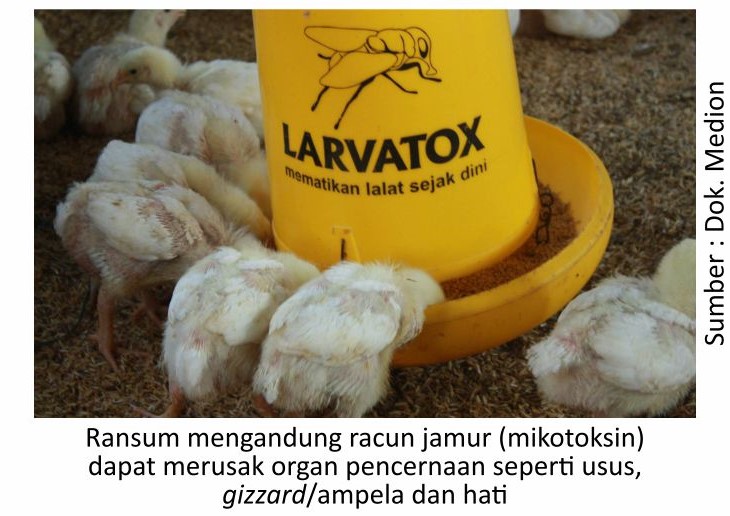
What is sometimes not observed is the frequent presence of fungi in the ration. Mushrooms in the ration can reduce nutrients so that the absorption of nutrients by chickens is not optimal. Mycotoxins produced from fungi will also irritate the digestive tract such as irritating gizzard- gizzards on chicken.
4. Balance of intestinal microflora
The balance of microflora or bacteria that are naturally present in the intestines is essentially dynamic, depending on the condition of the intestines. In a balanced state, the microflora provides benefits to the host. However, if this balance is disrupted, it can affect the morphology of the digestive tract, lead to the emergence of bacterial infections in the digestive system, and even damage the immune system of chickens. Bacteria that are normally present in the digestive tract of chickens can also cause infections, such as bacteria C. perfringens (cause of NE disease) when chicken conditions are bad and supported by uncomfortable environmental conditions, ne outbreaks can occur. This is triggered by the declining condition of the chicken's body, while the bacteria continue to increase in concentration. High concentrations of bacteria in the intestine can be excreted through feces and can also infect other chickens. The bacteria can cause inflammation and destruction of the intestinal lining. In addition, bacteria will also produce toxins that can interfere with the process of absorption of nutrients by the intestine and result in increased intestinal peristalsis, which eventually causes symptoms of diarrhea.
5. Stress in chickens
Stress in chickens is a normal physiological reaction in order to adapt to the situation and the treatment received by chickens. Examples such as cages that are too dense, temperatures that are too high, or sudden changes in rations. In stressful conditions, in the chicken's body there will be an increase in the production of corticosteroid hormones that can inhibit the immune organs in producing antibodies. This will trigger immunosuppressive effects that have an impact on chickens susceptible to disease, especially gastrointestinal diseases.
6. Lack of sanitation of the cage
Seeing the weather conditions that often change drastically at this time, the condition of the chicken's body tends to decrease due to stress and the body's defenses become not optimal so that the greater the chance of disease. The rainy season that still occurs in a volatile manner also indirectly affect the spread of the seeds of digestive tract diseases. Damp and wet Litter is a good medium for the growth of disease-causing microorganisms.
7. Livestock health Status
Digestive disorders due to bacterial infections, for example, will cause the digestive tract to not work properly. In addition to being a place of absorption of nutrients, the digestive tract needs to be considered for its health in maintaining the network working system gut-associated lymphoid tissue or GALT. The digestive tract along the small intestine and colon contains lymphoid tissue scattered in the epithelium, lamina propia, or in the form of Peyer's patches. GALT is part of the lymphoid tissue that serves as a site for mucosal immune response to produce antibodies and receive mucosal immune response stimulation (Marsetyawan, 1993).
Digestive System Disorders
Disease challenges in the field will affect the health condition of chickens and facilitate the entry of digestive infection attacks. Here are some bacterial and parasitic diseases that have an impact on digestive disorders:
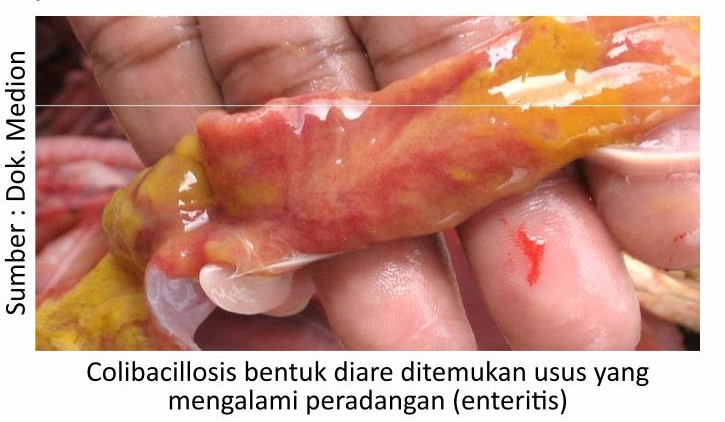
1. Colibacillosis
Colibacillosis is a disease caused by bacteria E. Coli infection. Bacteria E. Coli infection is a gram-negative enteric bacterium and is a normal flora in the digestive tract of animals, but can cause disease if the population increases. Colibacillosis can be transmitted through contamination of chicken drinking water, litterair, and feces. In addition, Colibacillosis can also be transmitted vertically from mother to Chick. Seen that many outbreak Colibacillosis occurs due to poor sanitation and cleanliness of the cage due to bacteria E. Coli infection it is very easy to pollute the environment of the cage. So to prevent Colibacillosis basically need seriousness in controlling maintenance management.
2. Coccidiosis
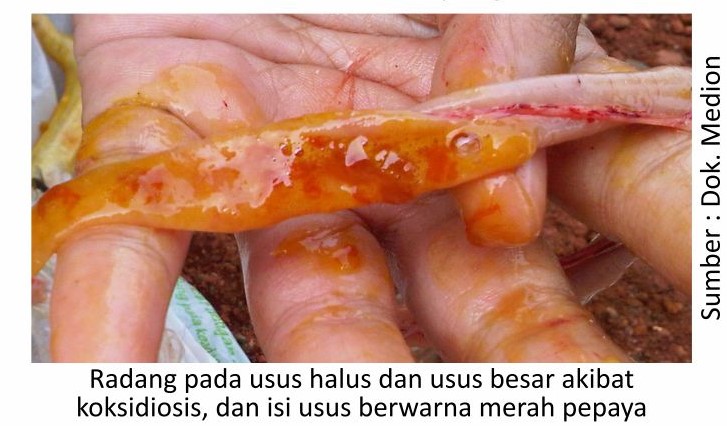
The cause of coccidiosis infection, coccidia, is a genus protozoa Eimeria diseases that multiply in the digestive tract and lead to disruption of the process of digestion and absorption of nutrients, dehydration, blood loss and increased sensitivity to other diseases. Infestation Eimeria may cause immunosuppressive chickens. There are 7 species Eimeria sp. what causes pain in chickens, namely E. tenella, E. maxima, E. necratix, E. Acervulina, E. Brunetti, E. Mitis, and E. Praecox.
Each species Eimeria having a certain predilection (favorite place) in the intestines of chickens, so the wounds caused will also be different. For example E. acervulina attack the small intestine of chicken and not to cause bleeding, because the injured only the surface (epithelium) of the intestine only. Coccidiosis infection itself starts from the ingestion of oocysts Eimeria which have sporulated. These oocysts can be transmitted mechanically through cage carriers, cage equipment, rations, drinking water or contaminated litter.
3. Necrotic Enteritis
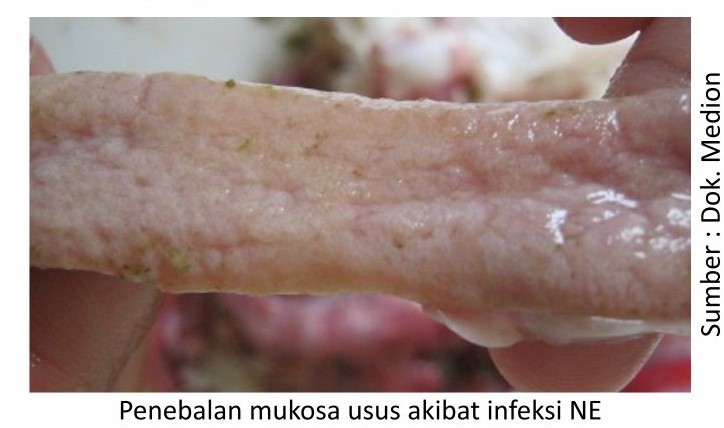
Necrotic enteritis is a bacterial disease that is sporadic in chickens caused by infection Clostridium perfringens Type A and C. C. perfringens it is a Gram (+) bacterium in the form of a straight rod and is anaerobic (does not require oxygen). Some of the factors that trigger the occurrence of NE are unhygienic environments such as litter damp/wet, stress, weather changes, and the presence of secondary infections (coccidiosis, inclusion body hepatitis, Gumboro).
The appearance of NE cases is usually triggered by an attack of coccidosis. Changes in the viscosity of the intestinal contents can also provoke the occurrence of NE. Such changes in viscosity are caused by the introduction of rations with too high a protein and energy content or sudden changes in the content of the ration.
Maintain The Health Of The Digestive Tract
In maintaining the balance and composition of the intestinal microflora, the things we need to consider include:
Improvement of ration management
Give rations as needed and make sure the quality meets the standards, and do not give rations that have clumped or contain mushrooms in chickens. Also note the condition of the storage of rations both from temperature and humidity, and make sure it is safe from mice or other insects. Make a gradual alternation of rations to minimize stress.
Maintain drinking water quality
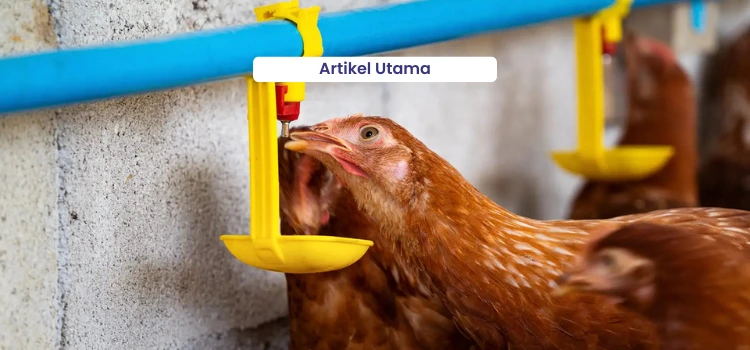
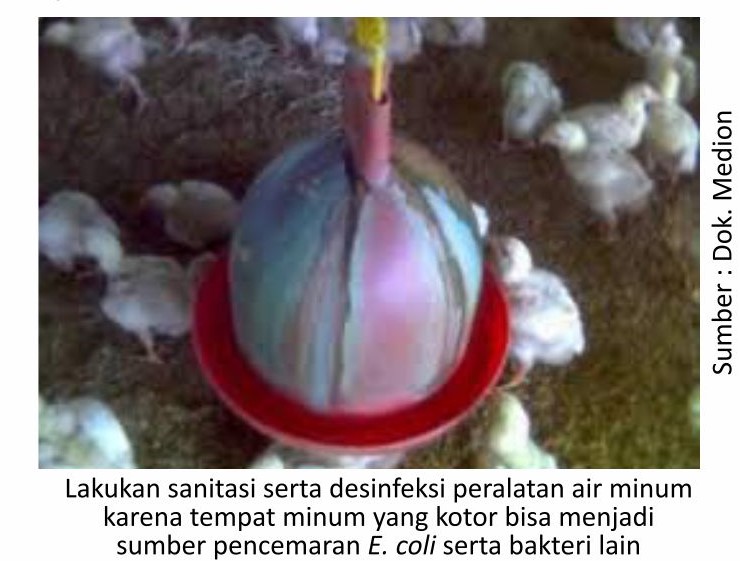
Drinking water quality benchmarks include physical (clear, colorless and odorless), chemical (pH neutral and not hard) and biological (free from contamination E. Coli infection, Salmonella sp. or other pathogenic microorganisms). Periodically check the quality of farm drinking water in laboratories such as MediLab to determine the presence or absence of bacterial contamination coliform or E. Coli infection in drinking water. Perform drinking water sanitation if the water source is positively contaminated E. Coli infection as well as other pathogenic bacteria. Do not forget also to always maintain the cleanliness of drinking places from contamination such as feces and litter.
Minimize stress factors
In certain conditions, livestock rearing often causes stress effects such as transportation density, weather influence, vaccination treatment, and when changing rations. So to minimize it, it is necessary to find the root cause of the uncomfortable chicken to be anticipated. To increase endurance and overcome stress, multivitamins can be given in the form of Vita Stress. In addition to increasing the body's resistance, it is also necessary to give herbal immunostimulants such as Imustim to improve the work of the immune system of chickens.
Severe litter and feces well
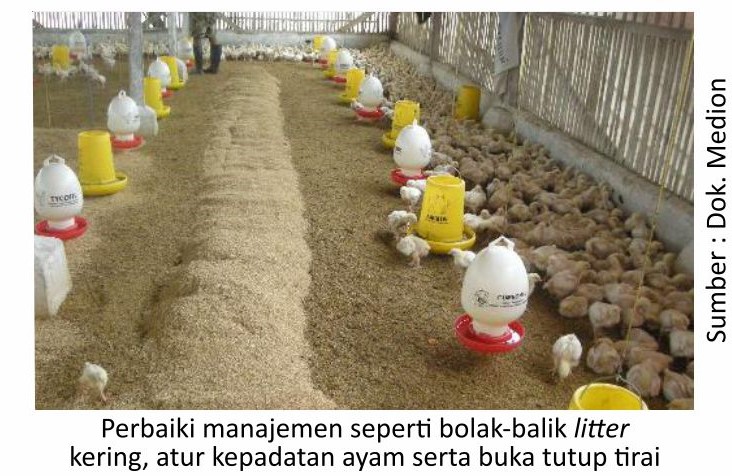
Litter and feces are an ideal medium for pathogenic microorganisms to multiply. Routine stool cleaning and handling litter a wet one as soon as possible can be an effective attempt to control and minimize pathogenic microorganisms. Perform flip-flops litter to prevent litter wet. Replace immediately litter the wet and clumpy or litter the slightly lumpy ones are sorted out and removed from the cage.
Reducing the population of seed diseases around chickens
In reducing the seeds of diseases that are around the chicken, first fulfill the management of cage rest which is carried out for at least 2 weeks calculated after the cage is clean and disinfected. It aims to break the life cycle of seedlings since the beginning of maintenance. Then, disinfect the empty cage with Sporades or Formades. Routinely during maintenance, re-spray the cage and its equipment both the ration and drinking place by using Medisep.
Medication for digestive health
In maintaining the digestive health of chickens against bacterial infections, appropriate medication is needed. To prevent attacks can be given a variety of alternative products instead of AGP. But if there have been cases of infection, take the right treatment based on diagnosis, drug selection, and dosage and rules of use. In the case of multi-drug therapy (Fortevit, Vita Stress) will greatly help improve the condition of the chicken's body.
Various alternatives to AGP to maintain digestive health
Several types of AGP alternative ingredients that can be mixed in feed preparations and drinking water soluble can help maintain the health and performance of the digestive system, both directly and indirectly prevent infection with pathogenic microorganisms and other digestive system disorders. Here are some of them :
1. Probiotics
Probiotics are preparations containing live microorganisms with a beneficial effect on host (the landlady) by improving the balance of microflora present in the digestive tract.
The microflora in the intestine can be disturbed by several circumstances, such as due to the use of antibiotics or other types of drugs, excessive stress, infection with disease agents, or due to exposure to toxins (sourced from Feed), which can condition pathogenic germs to develop and cause infection and damage to the digestive tract.
Probiotics can help prevent pathogenic bacteria that cause disturbances in the digestive tract and probiotics can help maintain a balance of beneficial microflora for livestock.
2. Prebiotics
Prebiotics or non-digestible food ingredients (readily fermentable sugars(B) to promote the growth and/or activity of beneficial bacteria in the appendix (caecum), large intestine (colon) and improve the health conditions of livestock.
Most potential prebiotics are carbohydrates, including oligosaccharides. Some types of prebiotics used diataranya, Fructo Oligo Saccharides (FOS), Xylo Oligo Saccharides (XOS), Mannan Oligo Saccharides (MOS) and Galacto Oligo Saccharides (GOS).
3. Organic acids
Organic acids or acidifier is an acidic compound that is added to the ration to maintain microbial balance in the digestive tract by maintaining the pH of the digestive tract. Examples acidifier is citric acid and lactic acid.
Acidifier plays an important role to help lower the pH of the digestive tract and keep the pH of the upper digestive tract below 6, so it can indirectly suppress the colonization of entero-pathogenic germs, such as E. Coli infection, Salmonella, Pseudomonas and Clostridium, as well as helping to increase the population of beneficial microflora that is in the digestive tract, so it can help the health of the gastrointestinal tract.
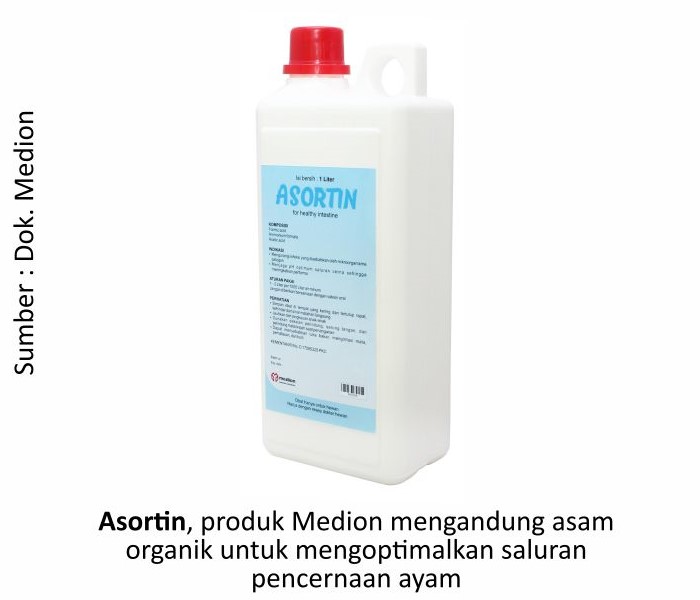
Asortin Medion is a product that contains organic acids to maintain the pH of the digestive tract and kill pathogenic bacteria so that the balance of microbes in the digestive tract is maintained and nutrient absorption becomes optimal.
4. Phytobiotics (herbs)
Phytobiotics or herbs are additives derived from plants, sarian (Galenic) preparations, or mixtures of these materials that contain secondary metabolites. Herbs in general can be interpreted also all types of plants that contain natural chemical compounds that have pharmacological effects (healing effects) against acute to chronic diseases (Suryanto and Setiawan, 2013).
The use of herbal plants until now is still limited to the use of herbal medicine and household industries. This can certainly encourage the development of industrial innovation in producing phytobiotics. Fithera represents Medion herbs specially developed to help cure and prevent bacterial infections (CRD, Korisa and Colibacillosis) and coccidiosis in poultry.
5. Enzymes
Feed additive in the form of synthetic enzymes can also be added, such as phytase enzymes. Phytase enzyme functions to break the bond between phytate and phosphorus in vegetable feed raw materials so that the availability of phosphorus minerals that can be absorbed by the body will increase. Betterzym is a mixed feed preparation containing the latest generation phytase enzyme (6-phytate) which effectively improve the digestibility of nutrients.
Cases of indigestion in chickens are caused by various factors, such as the presence of bacterial infections. Therefore, Health Management and maintenance measures are needed to control digestive problems so that more losses do not arise. Greetings.