The optimization of the function of each respiratory organ has a huge influence on chicken productivity, and even becomes the determinant of chicken life. We need to remember again, the supply of quality oxygen in sufficient quantities is the main prerequisite for the ongoing functioning of the chicken's body.
Respiratory System Of Chickens
The upper respiratory tract of chickens consists of the nasal cavity, larynx, trachea (throat), bronchi and broncheoles. The nasal cavity is directly connected to several sinuses such as the infraorbital sinus and the supraorbital sinus. Because it is directly related, it is very easy for foreign objects contained in the air, including disease seeds, to enter the sinuses directly. The larynx and trachea are composed of muscles and cartilage.
On the inner surface (epithelium) there are Cilia, as a means of defense against foreign bodies. Cilia (vibrating feathers) act to filter particles mixed with the air inhaled by chickens, such as dust and seeds of disease (viruses and bacteria). Whereas in the trachea, bronchi and bronchioles are equipped with epithelial cells that also have vibrating bristles and ciliated cells that will produce mucus containing proteolytic enzymes and surfactants. The presence of such enzymes and surfactants (surface tension reducers) is capable of destroying some pathogenic microorganisms.
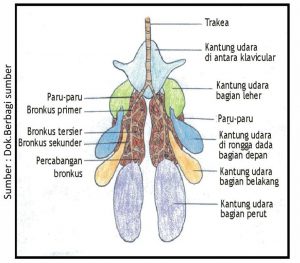
The main function of the respiratory tract of chickens is to provide oxygen, removing carbon dioxide (CO2), help primary immune processes and facilitate the mechanism of regulation of body temperature. The main condition for the proper functioning of the respiratory system is the availability of clean air and healthy respiratory tract. In the lungs there is an exchange of clean and dirty air. Clean Air (rich in oxygen) will be circulated throughout the body.
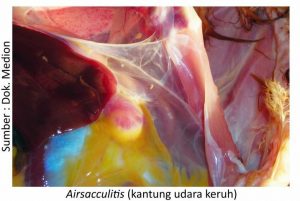
Chickens themselves have a respiratory system that is somewhat different from the respiratory system in lactating animals (mammals, red), because it is equipped with air sacs that have a unique structure and function, as well as relatively simple lungs. The air sac is a thin membrane shaped like a balloon that serves to aid breathing. The air sacs have a small number of phagocytic cells, while the process of air exchange also takes place in them. In fact, every air that enters contains various seeds of disease. In addition, the air sacs are composed of thin cells and few blood vessels. In this section there are very few phagocytic cells, while the infectious agents in the environment are numerous. This will make it easier for infectious agents to colonize and damage epithelial cells. So do not be surprised if there are changes in the air sacs, such as inflammation or become cloudy, it can be one indication of an attack of respiratory disease.
In addition, in chickens, respiratory gas/air exchange occurs along the air capillaries of the lungs that are shaped like a mesh, not in the alveoli (air cavities in the lungs). That is why chickens or poultry in general are very easy to experience poisoning through the respiratory system.
Cases Of Respiratory Diseases
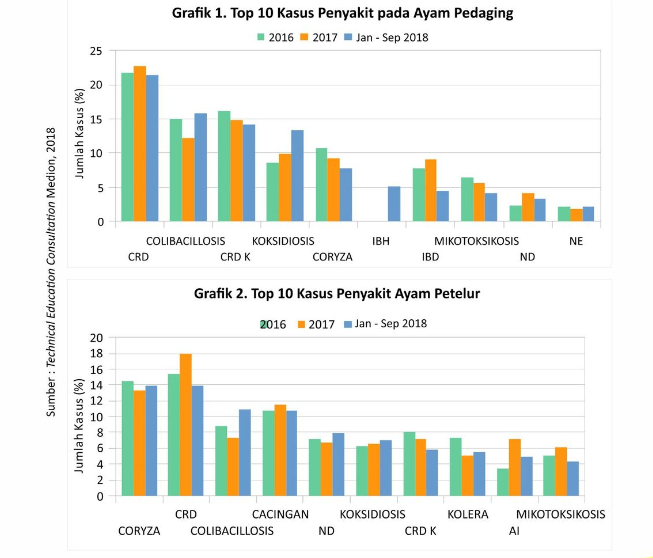
The general condition of respiratory diseases affecting broilers and laying hens in Indonesia in the last three years has been summarized by the team Technical Education & Consultation (TEC) Medion on graphs 1 and 2. From both graphs it can be seen that respiratory disease attacks still dominate in the top 10 cases of the disease. Bacterial diseases are still dominated by CRD, Korisa, and complex CRD. While ND and AI are still the prima donna of viral diseases. Especially AI disease in chickens layer quite rife.
Review Of Respiratory Diseases
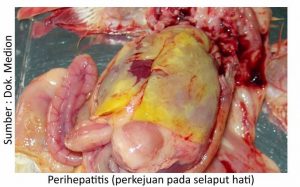
- CRD and CRD K. Damage to the respiratory tract by Mycoplasma gallisepticum (the cause of CRD) will suppress the local immune system at that location so that other disease agents can easily enter the chicken's body. Or in other words, CRD acts as an opening for the gate of the primary defense system and ultimately triggers an attack of secondary disease infection. Complications with colibacillosis are most common in the field of so-called complex CRDS.
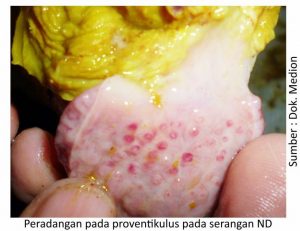
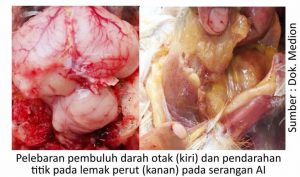
- ND and AI. In addition to the rainy season, during the transition, some respiratory viral diseases such as ND and AI must be watched out. Changes in extreme weather can have a stressful impact on chickens. As a result, the chicken's immune system decreases so that disease seeds can easily attack, including AI, ND viruses and so on. Tracheal inflammation and bleeding are the most common symptoms of surgical alteration of the carcass of chickens infected with ND or AI.
- IB
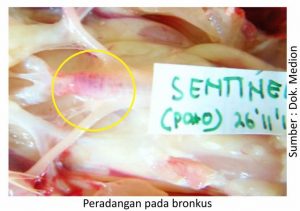
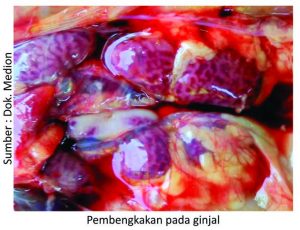
- Classic IB virus infection usually attacks the respiratory tract of chickens characterized by symptoms of snoring, sneezing and cekrek (mild cough). Reproductive organs are also damaged so that the quality and quantity of eggs drops. Cases of variant IB are indicated by changes in anatomical pathology in the form of dilation of the oviduct filled with clear liquid or oviduct cystic.
- ILT
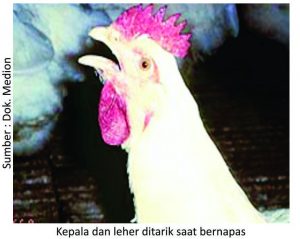
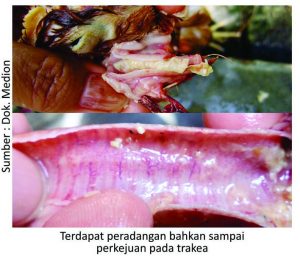
ILT Virus has a very high concentration on the surface of the trachea of infected chickens (good, 2000). The natural entrance of the ILT virus is through the upper respiratory tract and eyes (ocular).
Coryza (cold, nasal discharge, swollen face)
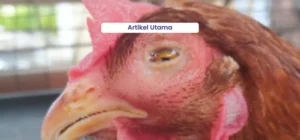
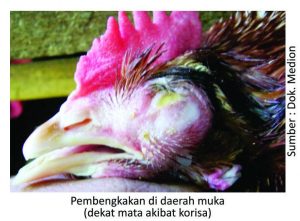
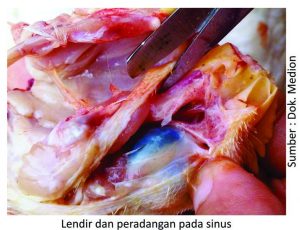
- Chickens affected by korisa will experience swelling of the face, especially around the infraorbital sinus. In addition, not infrequently also found watery eyes like crying. When a carcass surgery is performed, it will be found around the infraorbital sinus, the presence of mucus or discharge from the nose that is initially thin and continues until it is thick with a foul odor.
Handling when a case occurs
In this case, the farmer needs to improve the condition of the cage and properly handle feces, husks and insects so that they do not affect the condition of the chickens.
- Identify the cause. Incorrect identification of the disease results in improper treatment. Immediately look for the cause of respiratory disease cases such as due to non-infectious factors or disease. In the case of infectious or disease, diagnosis must be made quickly and precisely related to the selection of antibiotics in accordance with the treatment of the disease.Insulation and selection
- Administration of antibiotics. To deal with diseases caused by bacteria (CRD, complex CRD, korisa) it is necessary to provide treatment with antibiotics. CRD disease cannot be cured with penicillin antibiotics with targeted action on the cell wall because Mycoplasma sp it has no cell walls. As an alternative to the anti-inflammatory drugs (Proxan-S, Neo Meditril or Doctril). However, if the attack is rather severe and difficulty drinking, chickens need to be treated also with antibiotics given by injection / injection such as Vet Strep, Gentamin, or Medoxy-LA.
- Administration of multivitamins. In this case we need to speed up the restoration of Health and increase immunity chickens. Multivitamins (Fortevit or Vita Stress)
- Strict improvement of maintenance and biosecurity management. It needs to be re-evaluated regarding landscape management and maintenance procedures that we apply.
Efforts To Maintain Respiratory Health
Avoiding or minimizing the factors that cause respiratory tract disorders is one of the solutions that we need to put forward. Basically control in maintaining respiratory health including:
- Creating comfortable cage conditions
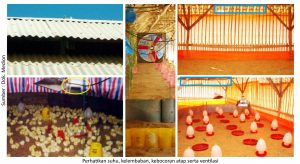
Repair the leaking cage to avoid rainwater from entering the cage. Moist and wet husks should be replaced immediately or supplemented with new husks. But before adding a new husk, the wet husk should be sprinkled with quicklime first to kill the microbes in it. Ammonia levels in the cage can be reduced by optimal absorption of nutrients in the chicken's body and reducing ammonia formation. For example, by giving Ammotrol. Fight flies, mosquitoes and other insects with insecticides. To get rid of flies, you can use products Larvatox, Flytox and Delatrin.
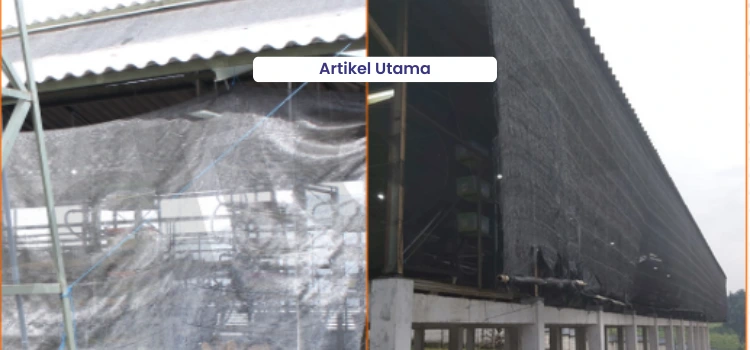
Oxygen supply must be met in quality and quantity. The chicken breathing system serves to supply air or oxygen to the chicken's body. If the air is of poor quality, it will certainly lead to disruption of the respiratory system of chickens. Some things that need to be considered related to a good oxygen supply is the arrangement of cage ventilation, management of curtain opening and closing, the addition of exhaust fan and setting the density and distance of the cage. Set the cage curtain opening and closing system well to help smooth air circulation from outside to inside the cage so that ammonia levels can be controlled.
- Biosecurity to minimize the challenges of disease seeds. Spraying the cage every day, washing and sanitizing the feed and drinking place every 3-4 days, and disinfecting drinking water to prevent bacterial transmission through drinking water. The use of a water softener can be done with the use of a water softener (Desinsep/ Antisep/ Neo Antisep/ Medisep) or chlorine (12-20 grams per 1,000 liters of water). This water sanitation should be done after filtration / precipitation so that antiseptics work more effectively because the compounds in antiseptics are easily affected by organic particles.
- Health programs. Doing the program cleaning program (application of antibiotics as a preventive measure). Would be more effective if farmers also have disease incidence data so that cleaning program it can be done before the disease occurs. For diseases caused by viruses if they have been attacked, Of course, they cannot be treated. If the chicken is already attacked by the disease. Carry out the vaccination program on schedule. Pay attention to diseases that increase especially during the rainy season such as ND, AI, korisa and IB. It would be better if the vaccination program is adjusted to the time of disease attack, the type of vaccine used (active or inactivated, single or combined) and the age of the chicken. Vaccines that can be used include Medivac ND Hitchner B1, Medivac ND La Sota, Medivac ND Clone 45, Medivac IB H-120, Medivac ND-IB, Medivac ND Emulsion, Medivac AI, Medivac ND G7-AI Emulsion and Medivac ND G7-EDS-IB Emulson.
- Provision of supportive therapy. To help increase endurance and maintain health, especially in the respiratory organs, alternative ways that can be done is to provide herbal vitamin supplements, such as Kumavit, Imustim and Respitoran. Inside Kumavit contained herbal extracts Curcuma extract, multivitamins, amino acids, and electrolytes that can help improve the process of nutrient metabolism in the body of chickens when sick, as well as increase appetite and endurance. To reduce respiratory distress, administration of mucolytic and anti-inflammatory drugs such as Respitoran using natural products (herbs) is one of the right treatment options to overcome respiratory disorders. When a bacterial infection occurs, inflammation will arise in the respiratory tract which then causes excess mucus or mucus production. Excess mucus will cause narrower respiratory tract and difficulty breathing chicken. Respitoran contains herbs that act as anti-inflammatory, decrease mucous secretion, and thin phlegm. While Imustim is a liquid herbal supplement that works to increase the immunity of poultry. Awarding Imustim before and after vaccination works as an immunostimulant by accelerating the increase in antibody titers resulting from vaccination. Imustim also able to accelerate the increase in antibody titers resulting from vaccination.
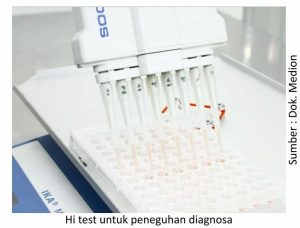
- Monitoring titer antibodi. The difficulty of determining the analysis of diseases such as AI, ND or IB, is one of the obstacles faced by many farmers in the field. Use of serological tests (e.g. HI test and ELISA), molecular biology test (PCR and sequencing) can be performed as a means of confirming the diagnosis of the disease. Serological tests are also useful for monitor antibody titers such as AI. Medion presents MediLab (Medion Laboratory) in several major cities in Indonesia, so farmers are expected to be helped by the services of this laboratory test.
Similarly, chicken maintenance tips during the challenge of respiratory disease. Prevention is always the right strategy for us farmers who want to still maintain the performance of commercial chickens in various conditions and field situations. Greetings.