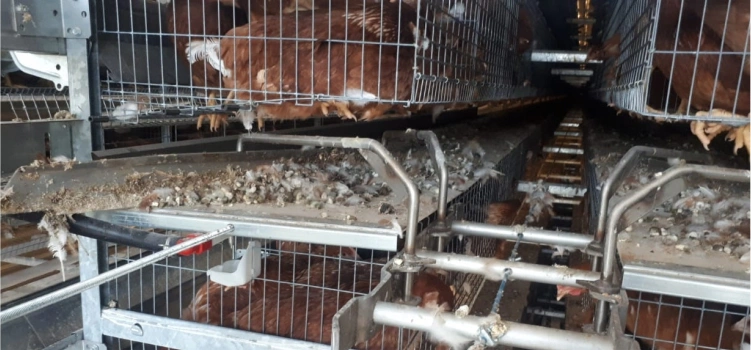
One of the problems that exist from chicken farming is air pollution from the smell of chicken feces. Even if the chicken farm is close to residential areas, this is also often complained about by the surrounding community. In addition, this problem is often followed by the arrival of flies that will certainly interfere and become a health threat.
On the cage closed house this problem will be quite helped by the ventilation system and good air circulation so as to minimize air pollution to the outside environment. While in the cage open house, this problem requires proper treatment. However, both types of cages still require fecal waste management so that it can be a solution to deal with existing problems. Impact of fecal waste and fly pests
Fecal waste in chicken farms can be termed like a double-edged knife. This means that this fecal waste can have a negative impact if not handled properly. However, fecal waste can also have a positive impact when processed so that it has a higher selling price.
Faecal waste that is not handled properly will have a negative impact such as being a source of disease, environmental pollution (air pollution) and disturbing the surrounding community. Impact on the health of chickens, feces can be a medium of transmission of several diseases such as coccidiosis, intestinal worms and infectious bursal disease (IBD). Chickens can become infected with the disease when accidentally eating faecal contaminated feed containing the disease agent.
Chicken feces that accumulate can cause odorous gases such as ammonia, nitrate, nitrite and sulfide gas from the decomposition process by microorganisms. In addition to causing odor, high levels of ammonia gas in the cage can also result in ciliostasis (cessation of movement of cilia or vibrating feathers) and desiliosis (Cilia damage) of the respiratory tract of chickens. This causes damage to the respiratory tract mucosa, which is the first defense gate against disease agents, as a result of which chickens will be susceptible to disease. In humans, ammonia gas can also cause eye irritation as well as respiratory distress.
The smell of gases produced from feces can also trigger the arrival of flies. Actually, one of the phases of the fly's life, namely during the larval phase, can play a role in helping the process of decay and decomposition of feces. But on the other hand, the negative impact will appear when in large numbers the larvae develop into adult flies.
The presence of flies in the farm environment can interfere with comfort and health. Indirectly the presence of flies can increase cases of disease because it acts as a mechanical and biological vector. Some diseases that can be caused because the fly vector is AI, salmonellosis, koksidiosis, cacing pita, dan ND. Presence pulvilli (hairy toenails), labella (suction device) and a number of fine hairs on all parts of the body allows the fly to act as a spreader of disease seeds.
In addition to the negative impact of fecal waste on chicken farms, it turns out that fecal waste can also have a positive impact if processed properly. Fecal waste can be used into various products such as sieve waste, fertilizer and biogas. With the correct utilization of waste, environmental pollution can be minimized and can provide additional income for farmers.
Faecal waste management in chicken farms
Handling of chicken feces waste in cages closed house or open house it needs to be done with proper management. One of the things that is quite important to note is to condition the stool to stay dry. The condition of feces is better if it is dry because when it is wet it will increase gas formation and become a breeding ground for flies.
Some things that can be done in fecal waste management include:
- Generally most chicken farmers broiler with postal cage shape litter or the stage chooses to let the chicken feces for up to one period. On stage cages need to consider making construction under a higher cage. Under a high Cage will make the stool dry faster than under a cage with a short construction. This is because the air circulation is better and the reach of sunlight to the bottom of the cage is also good.
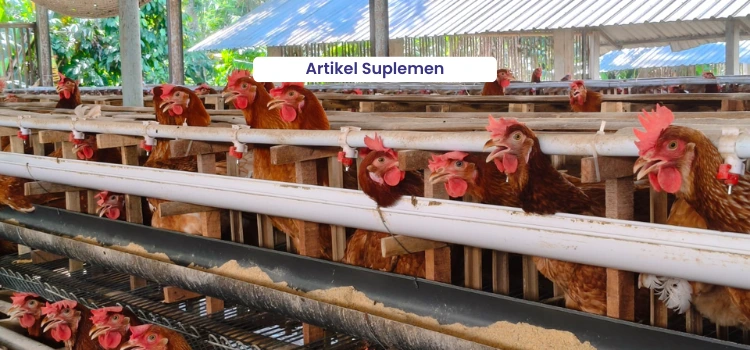
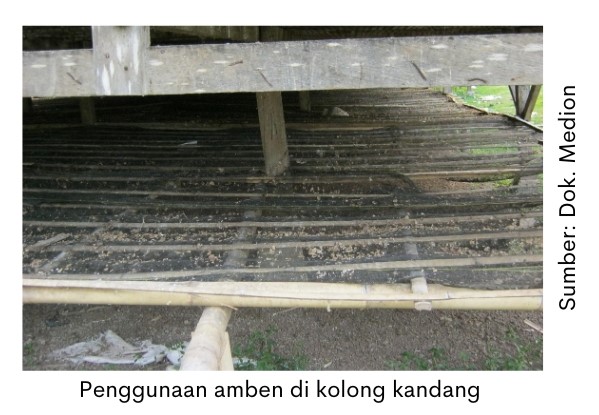
- On the maintenance of chickens layer in a battery or stage Cage, the breeder should periodically clean the feces, for example, once a week. Chicken farmer layer can also install bed (para-para) to help drying chicken feces that fall into the bottom of the cage. Amben is a place of bamboo slats that are netted and installed 90-100 cm above the basement. Although amben does not 100% eliminate the presence of larvae from chicken feces, amben really helps dry chicken feces.
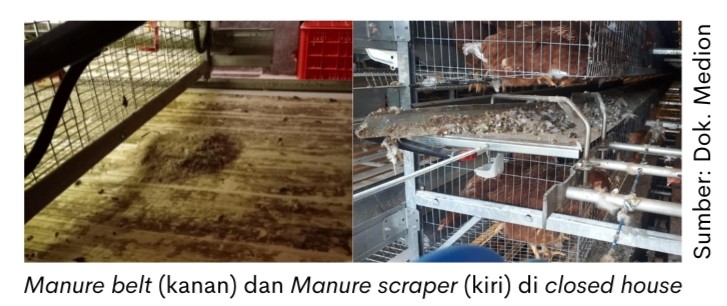
- On the cage closed house layer, stool removal can be done using automated systems such as manure belt or manure scraper. With the belt, the feces will not fall into the battery cage that is underneath because there is a belt that holds the feces. Every day or every 2 days, the belt will collect feces to the back of the cage for subsequent removal from the cage. Thus ammonia in the cage will be more controlled. While the manure scraper model will clean and collect feces by sweeping or pushing with a scraper.
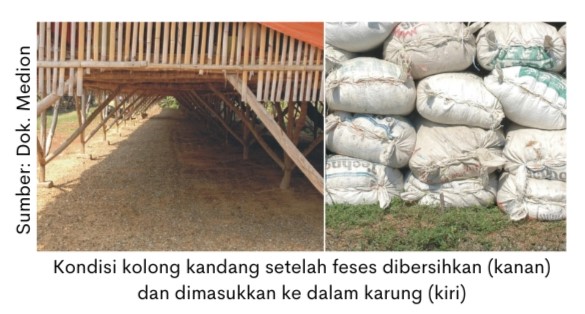
- Chicken feces that have been taken from the cage and then put in a sack. Sacks containing feces are collected and stored in a dry place. Avoid storing feces in sacks for too long next to the cage and feces should be removed from the cage environment when the cage rest period begins. If you want to use chicken feces as compost, protect the feces from getting wet and provide a decomposer so that the composting process runs quickly.
- Immediately remove feces from the farm area. Furthermore, feces can be sold or processed to be used as fertilizer or other products (biogas).
Fly Pest Control
Flies that come to the chicken farm environment one of them is triggered by the smell of gas coming from the decomposition process of chicken feces. Therefore, the first step to controlling flies is to keep feces dry and minimize the smell of gases such as ammonia in the cage. Use ammonia binders such as Ammotrol to reduce the concentration of ammonia gas in the cage. Awarding Ammotrol can be done by spraying into feces or dissolved in drinking water, and can be given together/mixed with vitamins or antibiotics.
Furthermore, some efforts that can be done to control flies on chicken farms are :
- Physical control is done by cleaning the stool at least once a week. Next, pay attention to the humidity in the cage by preventing spills of drinking water and repairing leaking tiles or drains. If necessary, add lime to help the water absorption process in the litter.
- Biological control by utilizing natural enemies / parasitic flies such as beetles, ticks and bees. Fly parasites usually kill flies during the larval and pupal phases. One example is Spalangia nigroaenea, which is a type of WASP (Stinging Bee) that parasitizes or “opponents” for the fly pupa.
- Chemical control by using chemicals such as insecticides/drugs flies. Giving fly medicine is not the core of fly control techniques, but rather a refinement of other fly control techniques. Therefore, we cannot hang the eradication of flies only from the administration of fly medicine and the technique of administering fly medicine must also be done appropriately. This fly exterminator drug can be classified into 2 groups, namely fly drugs that work to kill fly larvae and eradicate adult flies. Examples of drugs that can eradicate fly larvae are Larvatox and Bamaktin, while to eradicate adult flies are Flytox and Delatrin.
The existence of problems derived from chicken feces and fly pests in the cage is inevitable. However, this can still be overcome with the right strategy and management of fecal waste handling. So that the negative impact of fecal waste and fly pests in the cage can be minimized.