
Which breeders are not familiar with diseases Avian Influenza (AI). For poultry farmers, the transition of the change of season until the arrival of the rainy season requires poultry farmers to be aware of the attack of various poultry diseases, including AI disease or known as bird Flu. AI viruses can attack several types of animals such as birds and mammals, and have the potential to threaten human safety (zoonotic). From year to year all efforts are made by both the government and private poultry companies. Although not as exciting as when it first appeared in 2003, the current bird flu disease is still threatening chicken farms. Realizing this, Medion also incessantly tries to urge poultry farmers to keep increasing their awareness of this bird flu epidemic, especially during the weather transition and entering the rainy season.
How is AI in the field today?
Avian Influenza (AI) is a viral disease that affects the respiratory, digestive, reproductive and nervous systems in various species of poultry. AI viruses vary greatly in their ability to spread disease to other chickens as well as in the surrounding environment.
The presence of AI disease is certainly avoided by farmers because it is reflected in the eyes of the losses that must be borne by farmers, ranging from the death of chickens, decreased egg production, to the emergence of secondary infections.
Virus influenza it is an RNA virus that is segmented and has an envelope (enveloped virus), as well as belonging to the family Orthomyxoviridae. AI Virus is divided into several subtypes based on the antigenic ability of two surface proteins, namely Hemagglutinin (HA) and Neuraminidase (NA). To date, 16 subtypes of HA (H1-H16) and 9 subtypes of NA (N1-N9) have been identified.
In addition, the AI virus also consists of several clade. Clade is the standard term of World Health Organization (WHO) to describe a hereditary, genetic, strain, or group of viruses influenza. Number of clade AI virus in the world including circulating in Indonesia, there are 9 kinds and some clade split again into several subclade and sub sub clade.
Seen from the level of malignancy, AI virus can be divided into 2 namely High Pathogenic Avian Influenza (HPAI) and Low Pathogenic Avian Influenza (LPAI). The degree of malignancy of the AI virus is the main factor that affects the clinical symptom picture that appears. Contoh virus HPAI yaitu H5N1, H7N2, sedangkan virus LPAI merupakan kombinasi dari 7 HA (H1, H3, H4, H6, H9, H10, dan H11) dan 5 NA (N1, N2, N5, N6 dan N8) sebagai contoh H3N1, H3N2, H6N1, H6N2, H6N8, dan H9N2. AI Virus circulating in Indonesia isolated from cases High Pathogenic Avian Influenza (HPAI) with H5N1 subtype that there are 2 clade specifically optimal clade 2.1.3 and 2.3.2. AI disease in poultry caused by AI H5N1 virus clade 2.1.3 has been going on in Indonesia for more than 10 years. After it appeared clade new 2.3.2. At the beginning of 2017, it became known that there were new findings of cases Low Pathogenicity Avian Influenza (LPAI) subtype H9N2 in Indonesia. Until now, this disease has been spread and identified positive for H9N2 in many areas in Indonesia such as on the island of Java, Sumatra, Kalimantan, Sulawesi and Bali. The Virus that has been discussed quite a lot does not immediately indicate high mortality. This Virus actually makes productivity plummet drastically, which is very difficult to return to normal production figures. H9N2 infection can actually cause high mortality if there is a combined infection with other viruses such as IB, ND or bacteria E. Coli infection, Haemophillus paragallinarum, or Stap. Auerus.
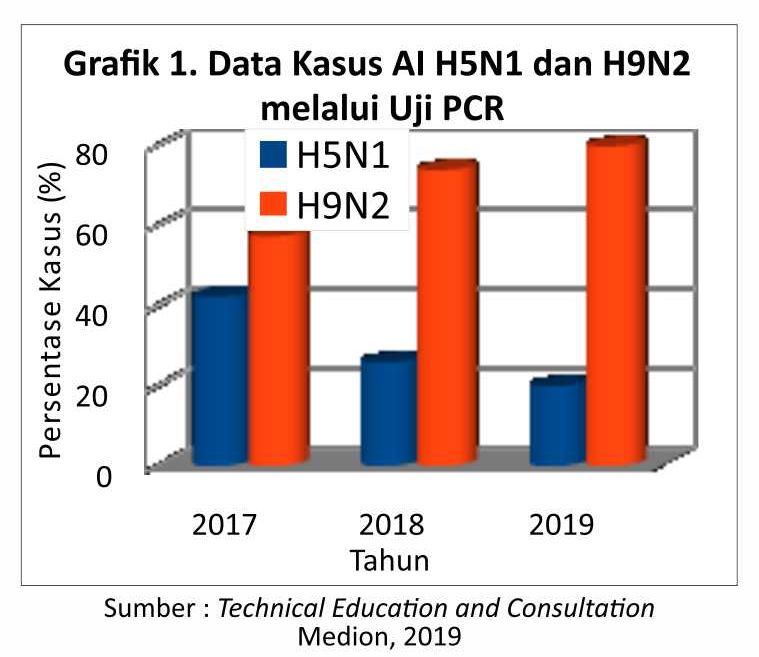
From the results of team monitoring Technical Sales Representative Medion which is spread throughout Indonesia, the sample data collected shows that until 2019 the incidence of LPAI cases was higher than HPAI (Graph 1). Based on the data, it shows that the dominant AI case in Quarter 1 of 2019 was the LPAI case.
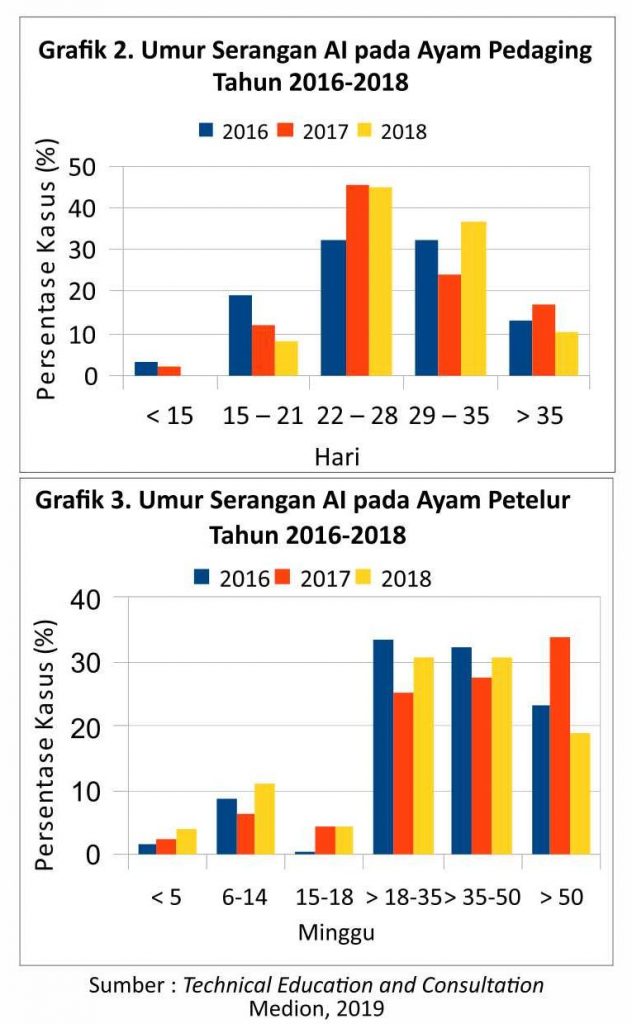
The age of the attack also varies. In broilers, the predominance of AI attacks occurs at the age of over 2 weeks to harvest (graph 2). While the age of the attack on laying hens, from 2016 to 2019 the dominance of AI attacks occurred in chickens that have produced above 18 weeks (graph 3). However, vigilance against AI infection in the age before production also needs to be increased, because at the age of about 6-14 weeks is also the age prone to AI attacks.
The number of deaths caused by the disease is high, the number of deaths caused by the disease is high, the number of deaths caused by the disease is high, and the number of deaths caused by the disease is low, and the number of deaths caused by the disease is high (stamping out) and increased costs for sanitation and disinfection of enclosure areas, water and farm equipment.
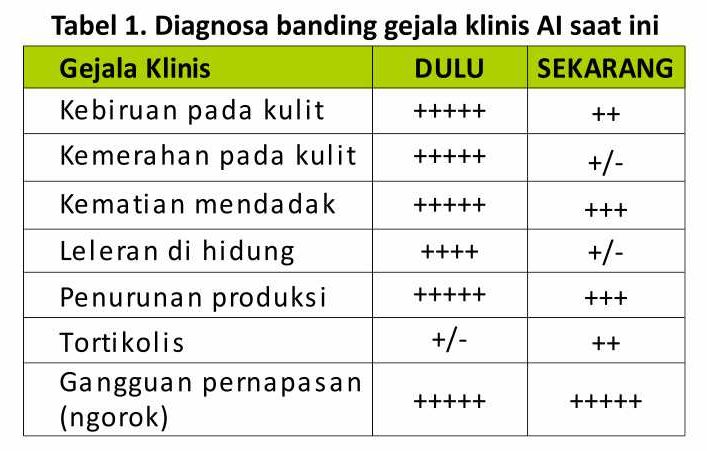
So what are the clinical symptoms and pathological changes in chickens when attacked by AI at this time? Clinical symptoms and changes in anatomical pathology are grouped by malignancy, namely High Pathogenic Avian Influenza (HPAI) and Low Pathogenic Avian Influenza (LPAI) as follows:
- Low Pathogenic Avian Influenza (LPAI) generally results in a decrease in egg production with mortality (mortality rate) is low, but morbidity (morbidity) is still relatively high. Clinical symptoms that appear in chickens attacked by LPAI are in the form of respiratory disorders (such as difficulty breathing and snoring), conjunctivitis, decreased feed intake and a very drastic decrease in egg production. In addition, chickens will appear depressed, but the mortality rate tends to be low and even can still be said to be normal/reasonable. Also seen chickens depressed and experiencing swelling of the head. If surgery is performed, organ changes such as inflammation of the nasal sinuses, larynx and trachea will appear. Accumulations of mucus in the respiratory tract can also be found. Changes in the digestive organs include inflammation of the proventriculus, reddish pancreas, ovaries shrink and bleeding occurs in the yolk candidate, swollen kidneys, swollen spleen and often found dilation in the blood vessels of the brain and reproductive organs. In other organs such as the heart and fatty body are often found bleeding in the form of dots (petechiae).
- High Pathogenic Avian Influenza (HPAI)
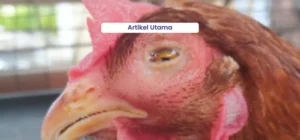
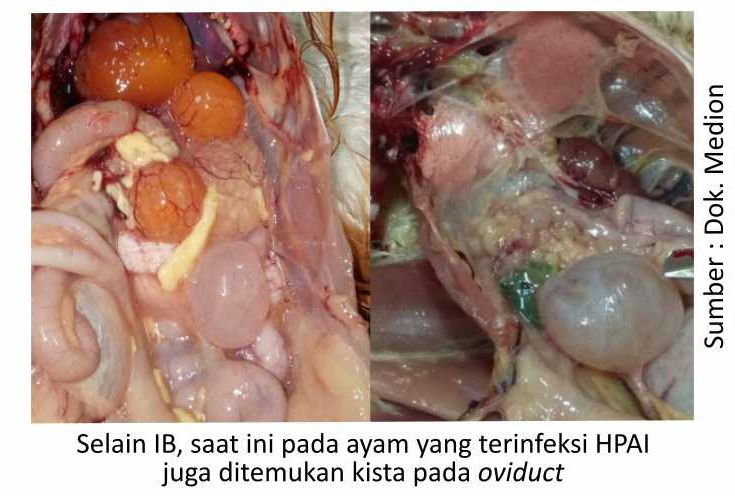
Clinical symptoms and changes in organ anatomical pathology in HPAI today are different from the previous AI and are not specific. Typical symptoms are still often present when chickens are attacked by HPAI include high mortality, a decrease in egg production or a decrease in production, depression, Combs, bluish Wattles and feet (cyanosis), conjunctivitis, accumulation of mucus in the oral cavity, respiratory disorders such as coughing, sneezing and snoring and sometimes nerve disorders (torticollis) but not so significant is clearly visible.
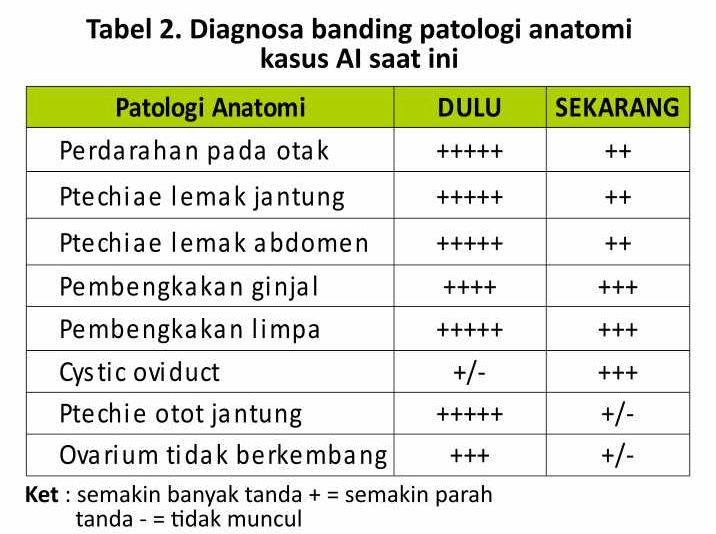
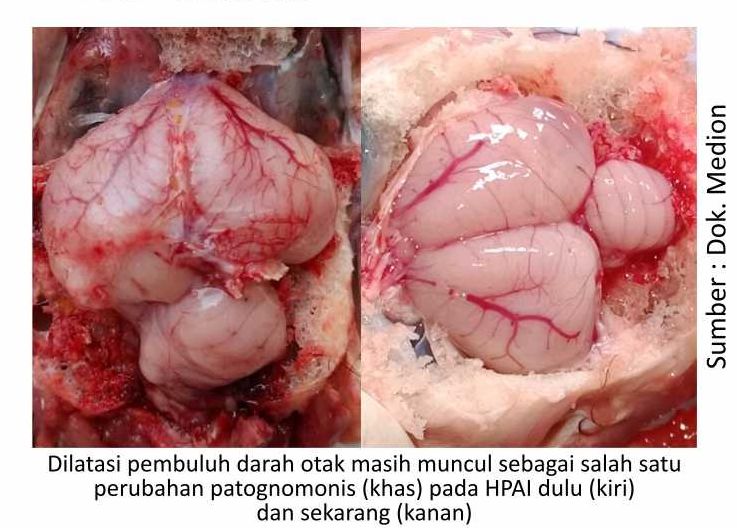
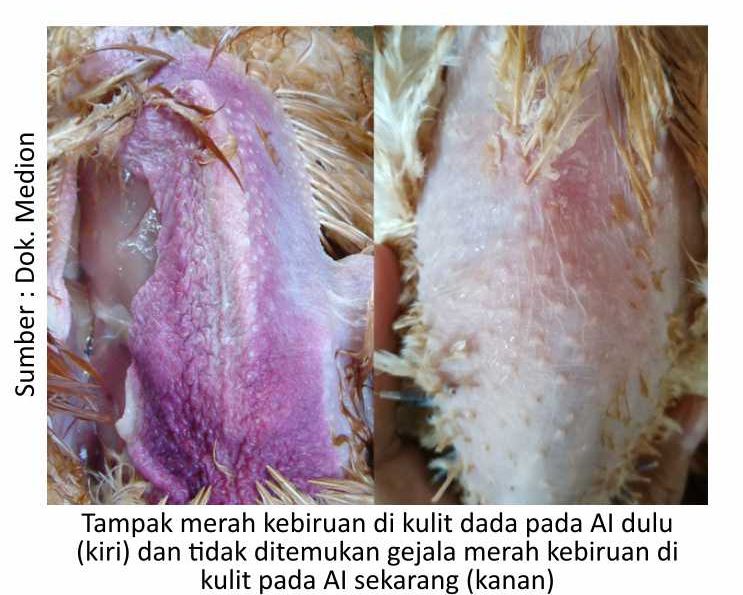
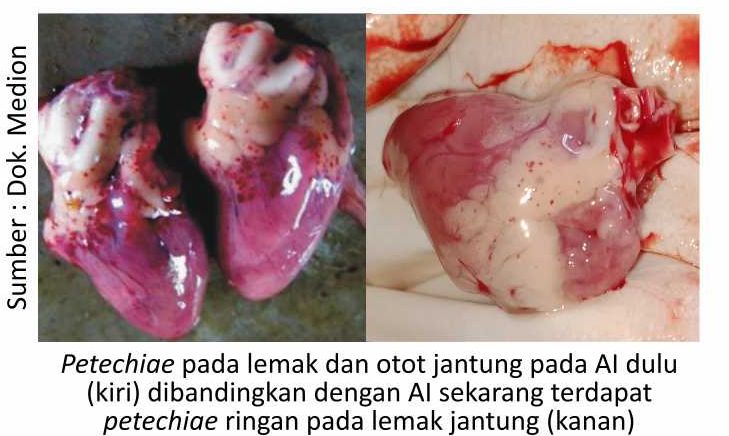
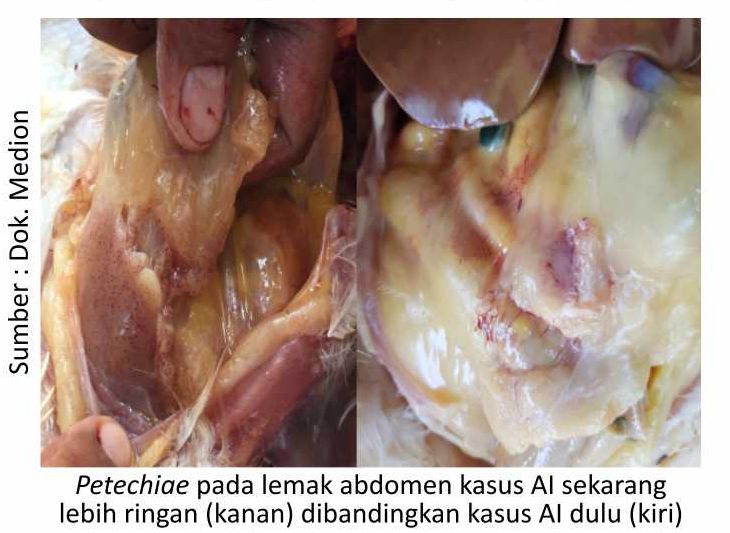
Changes in organs that appear after surgery have also begun to change and are not specific, including inflammation in the upper respiratory tract including nasal sinuses, larynx and trachea, blackish lungs and cloudy air sacs. Changes found in the digestive tract include inflammation in the proventriculus, intestines, wipe tonsils and pancreas.
Other organs that still appear but not specific changes such as the heart and body fat bleeding in the form of dots (petechiae). In the nervous system, dilatation of the blood vessels of the brain is found. In addition to these changes, bleeding is often found in the muscles of the chest and chest.
Confirmation Of Laboratory Test Diagnosis
In some cases AI in the field is sometimes still difficult to distinguish from other disease diagnoses such as ND because the symptoms or changes that sometimes look similar. It is at times like this that serological tests need to be done to help in confirming the diagnosis.
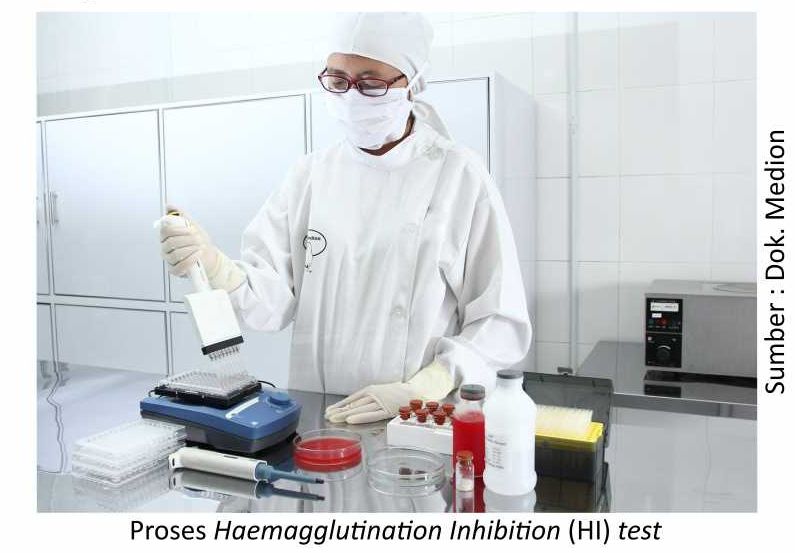
If the test results show that the AI antibody titer value is much higher than the standard and the titer picture is not uniform, it can be indicated that the chicken is infected with the AI virus from the field. There were also cases of low AI antibody titer and indicated the presence of Ai infection that is chronic.
To find out exactly the virus that causes the pain, can be tested Polymerase Chain Reaction (PCR) and sequencing. This PCR test serves to detect the presence or absence of the virus in the chicken's body and test sequencing for more specific gentic analysis. PCR test using a sample of chicken organs that undergo changes in anatomical pathology, swab (talk, red) trachea or cloaca. The sample to be tested should not be washed using disinfectants as the virus will die. The results of this PCR test can be used as a guideline in improving the management and health of chickens in subsequent rearing.
The success of vaccination in controlling AI disease
Chickens that are immunosuppressed or have low antibody titers against the AI virus usually have a high risk of developing AI. Vaccination is one of the spearheads of AI control. One of the factors that determine the success of vaccination is the preparation of the program, in addition to the quality of the vaccine, vaccination application, chicken conditions, Environment and competence/skill from the vaccinator.
- The right vaccine Choosing the right type of vaccine is very influential on the success of vaccination. A good vaccine is a vaccine whose virus content is homologous to the field virus. Currently circulating vaccines still only contain H5N1 subtypes so they do not provide maximum protection. But the government is currently working on an H9N2 subtype vaccine (Dirkeswan, 2018).
- Proper application in addition to having the right vaccine, the AI vaccination application must also be done appropriately. This includes the preparation of equipment (syringes), thawing (the rise of vaccines) , handling (holding and removing) chicken, how to inject, dose of vaccine, and handling of vaccine bottles. When distribution and temporary storage, the temperature of AI vaccine should always be conditioned at 2-8°C. Before giving it to chickens, thawing or raising the temperature of the vaccine first until the vaccine does not feel cold anymore. Make sure the time frame for administering the AI vaccine is right, where for the inactivated AI vaccine it must be used up within 24 hours. Make sure the dose of AI vaccine given is correct. Chickens must be in good health and not immunosuppressed (e.g. stress or CRD disease, gumboro, mycotoxins, etc.).) which can reduce the optimization of antibody titer formation. The skills of the vaccinator must be good for the vaccination application to be done correctly.
- Right awarding program
The success or effectiveness of vaccination apart from the quality of the vaccine and the accuracy of vaccination management can also be influenced by the determination of the vaccination schedule. This is related to the vaccination program. AI vaccination programs should be arranged based on high or low challenge AI viruses in the field and baseline titer in each farm.
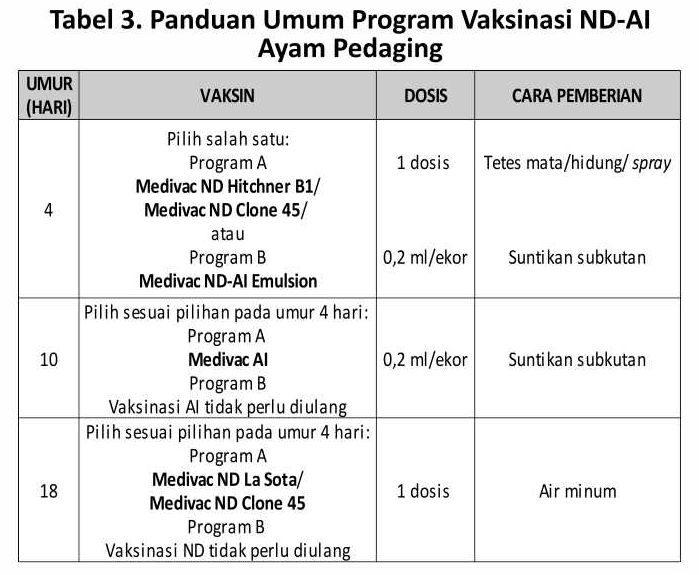
The AI vaccination Program for broilers must be carried out, especially when prone to disease, such as the rainy season or the change of season. At the age of 3 weeks maternal antibody titer AI is no longer protective so that age is the most vulnerable time for chickens attacked by AI. In addition, data from the field indicate that AI infects broilers at the age of > 3 weeks. So, the vaccination program is enough to do 1 time which is done at the age of 4 or 10 days. The vaccine will also reduce shedding virus so that AI virus contamination in the field can also be suppressed.
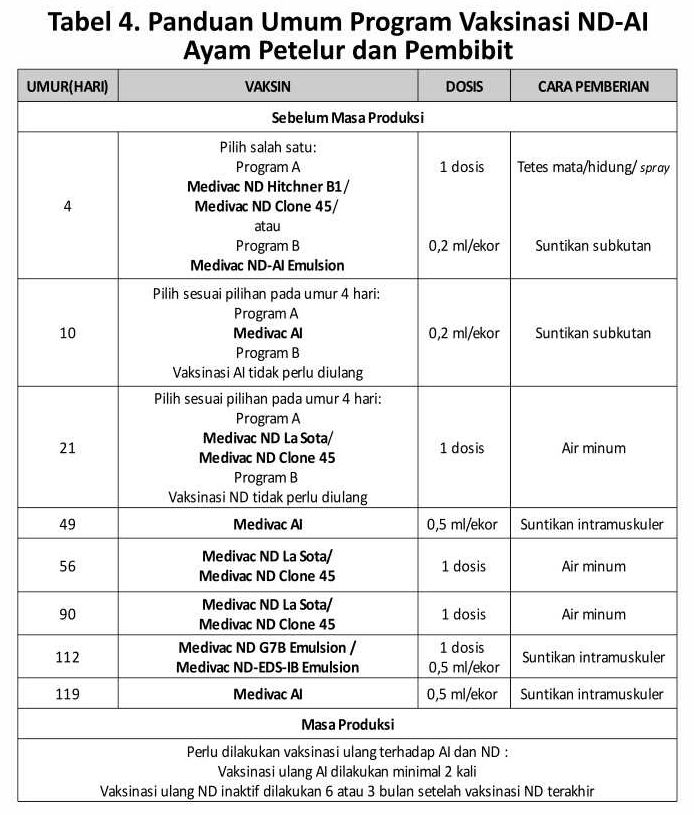
While laying hens are recommended to vaccinate AI 3 times before entering the production period and 2 times after the peak of production with a homologous AI vaccine. The first vaccination can be done at around 2 weeks of age, repeated at 8-9 weeks of age, and then carried out 2 weeks before entering the production period. If for areas that are particularly prone to AI, a second AI vaccination before production can be carried out 4-5 weeks after the first vaccination.
Safe from the spread of AI Virus by supplementation and Biosecurity
The use of anti-inflammatory and anti-inflammatory agents (feed supplement) will increase the endurance of chickens. Vitamin is a preparation that is needed by the poultry body but is not produced by the body itself except vitamin C. Multivitamins such as Vita Stress, Strong n Fit, Fortevit plays a role to increase the stamina and endurance of the chicken.
With vitamin supplementation, for example vitamin A and C, will improve the condition of the mucous membrane of poultry so that the AI virus that will enter the mucous membrane through the air can be optimally driven away. In addition to vitamins, in the ration can also be added such premixes as Top Mix and Mineral Feed Supplement A in order to complete the nutritional needs of the ration so that the metabolic process of poultry body defense can run optimally.
Well-programmed vaccination and complete supplementation will also not provide optimal prevention results if not supported by the implementation of biosecurity. Therefore, improve biosecurity, especially on people/equipment / vehicles that move around such as vaccinator teams, chicken traders reject cars, egg boxes etc.
The membrane structure of the amplified AI virus makes it easy for the virus to be killed by all types of disinfectants. Choose and use disinfectants whose working power is less influenced by organic materials such as Formades or Sporades to spray the vehicle or the outside of the cage. Also spray disinfectant when the cage contains chickens. Of course, by using a type of disinfectant that is safe for chickens such as Antisep or Neo Antisep regularly once a week.
What if already attacked Outbreak AI?
No medicine has yet been found that can cure AI. If a farm has been infected with AI, then the things that need to be done include:
- Perform handling on other cages that have not been attacked by AI such as:
- To suppress disease transmission, immediately revaccinate laying hens or breeders whose conditions are still healthy using Medivac AI. The results of revaccination depend on the degree of malignancy of the invading virus, morbidity and mortality.
- Do a cage spray to reduce the number of viruses present in the field.
- Disinfection of drinking water to prevent disease transmission through drinking water.
- Handling on cages that have been attacked by AI
- Immediately remove dead birds in the cage. Destroy by the method of burial or burning in a location far from the cage.
- Spray the cage that still contains chickens with a disinfectant such as Antisep or Neo Antisep, and on an empty cage can use Sporades or Formades.
- Assign immunostimulants such as Imustim to increase the stamina of the chicken. Imustim will help increase the body's resistance optimally so that the healing process will be faster.
- Do enough cage rest, which is at least 14 days counting from the cage has been cleaned. Then repeat the disinfection of the cage before starting chick in come back.
By implementing the steps above, it is hoped that farmers will be enlightened on how to avoid the threat of AI, so that AI cases in Indonesian farms can decrease or even not repeat themselves. Greetings.