Pertanyaan dari Bapak Zul Azmi – by email
What is the schedule for giving antibiotics during the maintenance of chickens that are appropriate and appropriate doses?
Answer
Antibiotics are not recommended when given to healthy livestock and are deliberately scheduled during rearing periods for Disease Prevention. Antibiotics are more appropriate to be given as treatment or treatment of sick cattle according to the indication. In addition, the administration must be in accordance with the rules of use both the dose and the length of time of administration.
This is in line with Permentan No. 14 of 2017 which prohibits the use of antibiotics as feed additives. Antibiotics can be mixed in feed for therapeutic purposes at therapeutic doses and as directed and under the supervision of a veterinarian.
What is the impact if the administration of antibiotics is not done properly and wisely? One of the real impacts is the increased risk of antibiotic resistance. Antibiotic resistance is a condition when bacteria are already immune or no longer sensitive to certain antibiotics. Infection by bacteria that are already resistant to certain antibiotics will cause the disease to be more difficult to handle, treatment to fail and lead to loss.
Of course, this condition is not only a problem in the field of livestock health, but also a global health threat to animals and humans.
Antibiotic resistance can occur when bacteria are able to adapt to the way certain antibiotics work. The condition can occur more quickly when antibiotics are misused or used unwisely. Furthermore, bacteria that have adapted will be able to survive and multiply. Bacteria that are able to survive have resistant properties in their DNA so that when breeding can reduce these resistant properties. As a result, resistant bacteria will be more and more.
The magnitude of the threat of antibiotic resistance to global health increasingly emphasizes that antibiotics must be used appropriately and wisely. Here are some things related to using antibiotics wisely :
Exact indications
Indication refers to the usefulness of a drug to address or treat a particular disease. Therefore, in order for the drug to be used in accordance with its indications and the results to be effective, it is necessary to diagnose the disease correctly first. After obtaining a diagnosis of the disease that is taking place, it is further necessary to determine the drug according to the indications.
For example, to treat livestock diagnosed with illness chronic respiratory disease (CRD) need to be selected antibiotics for bacteria also Mycoplasma they don't have cell walls. The selected antibiotic must have a mechanism of action that targets not the cell wall, for example, the class of fluoroquinolones (Neo Meditril) or tetracycline (Doxytin).
Exact dosage and duration of administration
The dose and duration of antibiotic administration needs to be given according to its purpose, namely for therapy or treatment of the disease. If the dose and duration of antibiotics used is lower/shorter, the disease agent is not completely eradicated, while if the dose and duration are more/longer, it can cause side effects or toxic. The greater impact of administration that is not in accordance with the rules of use will increase the likelihood of antibiotic resistance. This is the reason why the dosage and duration of antibiotic administration must match the rules of Use indicated in the product.
Proper application
Antibiotic application in chicken farms can be done through several routes such as orally (mixed feed or drinking water), topically, and parenterally/injection. The selection of this route of application needs to adapt to the conditions of the livestock and it is important to ensure that the drug can reach the desired organ or site of action. If the patient is seriously ill, they may need to be treated with antibiotics (onset) which is fast.
In addition, in the condition of sick chickens that are severe and decreased appetite/drinking it can also be given antibiotics injection. Whereas, when the chicken is mildly ill and still able to eat/drink well then antibiotics with mixed feed/drink route can be given.
When antibiotics are given through drinking water, it is necessary to pay attention to several factors so as not to reduce the effectiveness of antibiotics. These factors include the quality of drinking water, the level of drinking water consumption, distribution and drinking water system and the stability of drug solubility.
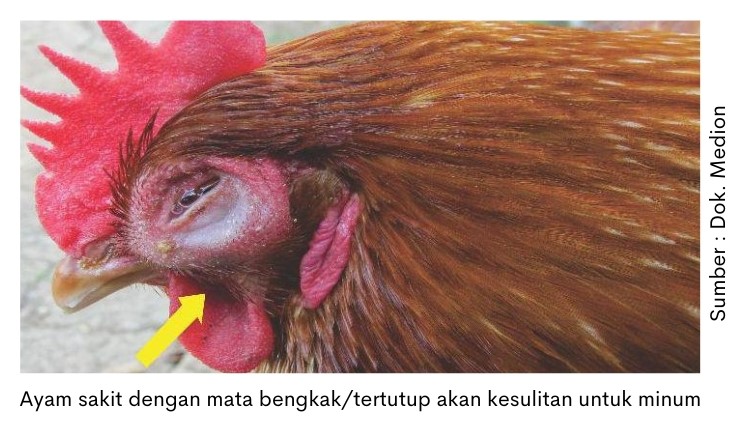
Antibiotics should be used wisely and not used when not needed. Even the use of antibiotics can be reduced if the health of livestock is always maintained which can be achieved by doing good management and maintenance programs.
Some things that can be done in the maintenance program is to carry out vaccinations in accordance with the level of vulnerability and history of the disease and supported by the provision of supplements such as herbs or multivitamins.
The use of antibiotics can be reduced as well as alternatives to antibiotics such as organic acids (Asortin), probiotics, prebiotics, synbiotics, phytobiotics (Optigrin), enzyme (Betterzym, Prozymeanti-bacterial (Entrozyme), and herbs (Fithera). In addition, biosecurity program is also important to minimize the seeds of disease in the farm environment.
Thus, livestock can be healthy with optimal productivity, antibiotic use can be reduced and antibiotic resistance can be prevented.