Challenges in the field of cattle breeding can come from anywhere that can ultimately affect livestock productivity. One of the current challenges is the dynamic and extreme environmental factors. Rising global temperatures are becoming a very serious climate crisis. This year alone, global temperature rise has reached 1.45 °C above the average of the pre-industrial period of 1850-1900 (BMKG, 2024). The climate crisis is happening globally, including in Indonesia. Some of the impacts that can be felt are increased temperatures, changes in rainfall patterns, and rising sea water. Moreover, some time ago there was an el nino phenomenon that resulted in drought and weather changes. Although the el nino phenomenon is over, the impact can still be felt.
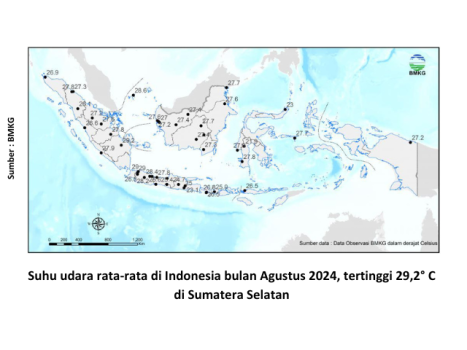
The impact of environmental climate on the condition of livestock
Environmental climate can affect the metabolism and productivity of cattle. Cows need a comfortable environmental climate or commonly known thermoneutral zone. Thermoneutral zone is the temperature range of the surrounding environment that can maintain the core body temperature of livestock so that the body's metabolism runs normally. Thermoneutral zone it varies depending on the species and physiological status of the livestock. When the environment changes or is outside thermoneutral zone, be it too cold or too hot then it negatively affects the livestock. For example, when cattle are exposed to the heat of high environmental temperatures, it can cause livestock to experience heat stress.
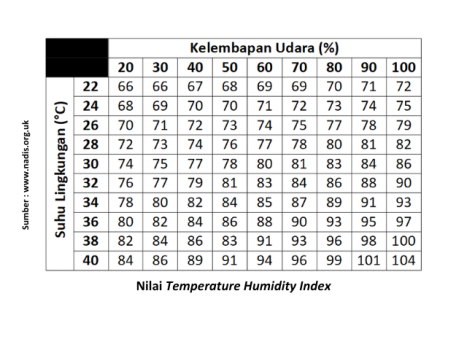
Heat stress it can occur when there is an imbalance between the heat produced and the heat released by the body. This condition can be influenced by several factors such as environmental factors (solar radiation, ambient temperature), internal factors of the animal (metabolic rate, fluid loss) and factors of thermoregulatory mechanisms (convection, radiation, conduction). In addition to these factors, moisture can also be an important factor that can affect the severity heat stress. There is an index commonly used to evaluate the level of stress due to climatic conditions, namely Temperature Humidity Index (THI) which combines ambient temperature and humidity. The ideal THI value for dairy cows so that they can feel comfortable is less than 72 while for Beef Cows it is less than 75. If the environmental THI value is above the ideal THI value, the livestock will begin to experience stress and the higher the THI value, the more severe the stress experienced by livestock can even lead to death.
Cows that experience heat stress will respond through their body's behavior and physiology. Here are the signs that can be known when a cow is experiencing heat stress :
Increased consumption of drinking water
- Decreased appetite and rumination process
- Stand up more often and lie down less often
- Decreased activity and looks restless
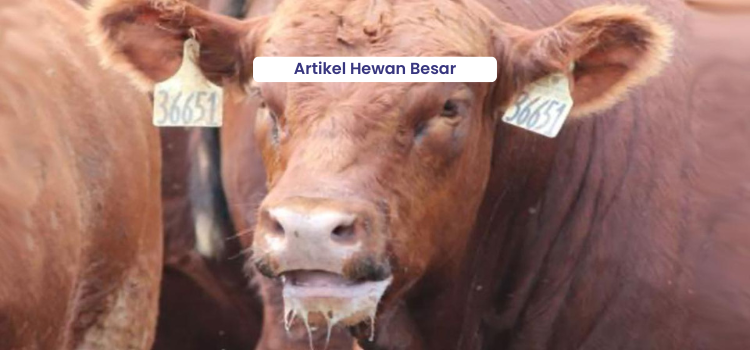
- Excessive sweating and salivation (hypersalivation)
- Increased body temperature (normal: 38.5-39.5 °C)
- Increased breathing frequency (normal : 26-50 times / min)
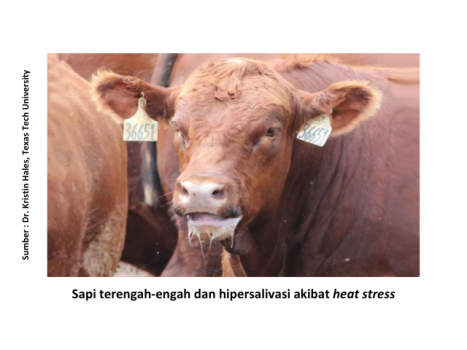
Heat stress in cows that are not addressed immediately can cause various negative impacts, such as :
- Endurance decreases in both calves and adult cows. In calves experiencing heat stress can cause a decrease in the efficiency of absorption of Ig G in colostrum in the digestive tract so that it is more susceptible to diseases such as pneumonia and diarrhea.
- Reproductive performance decreases due to disruption of hormonal mechanisms. This leads to irregular estrus cycles, inhibited egg maturation, low pregnancy rates, embryo death, impaired fetal development and increased risk of abortion.
- Decreased productivity, low appetite and followed by decreased body weight. In dairy cows the amount of production and quality of milk will decrease. Milk production can decrease by 0.2 liters / day with every increase in THI value above THI 72.
- The quality of the meat decreases as it becomes dark (dark), firm (hard textured), dry (dry) or commonly called DFD meat. Meat with this condition can occur because before it is cut, the cow experiences stress for a long time (chronic). In addition, a cow slaughtered in a state of acute stress will produce meat with the condition pale (pale), soft (mushy), exudative (wet) or commonly called PSE meat.
- Heat stress can cause oxidative stress that is an imbalance between the production of reactive oxygen species (ROS) or free radicals and antioxidants. This condition occurs due to the increase in free radicals (ROS) which can cause all components of damage to protein, lipid and DNA cells. The impact of oxidative stress can cause damage to cells and body tissues and disrupt the immune system of livestock.
- Level heat stress high and occurs in a prolonged manner can cause death in livestock.
Strategies To Overcome Negative Impacts Heat Stress
Challenges heat stress on cattle farms need to be answered with the right strategy to overcome it, so that the negative impacts that may occur can be avoided. There are several efforts that can be done such as :
- Provide a place to shelter/cage so as to prevent direct sunlight contact with livestock. Make sure the roofing material used does not absorb heat and avoid using zinc and asbestos materials. Ventilation of the cage also needs to be sufficient so that air circulation runs well.
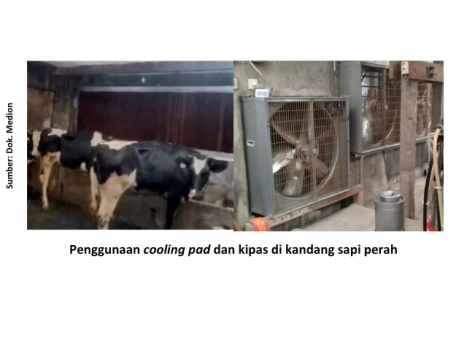
- Create a cooler cage atmosphere with direct or indirect cooling. Direct cooling is carried out with the help of foggers, mist drop or sprinkler which sprays water into the environment or directly into the cow's body. Foggers it has a working principle by spreading very fine water droplets, evaporating quickly and can immediately cool the surrounding air. Mist drop has the same working principle as foggers but it has larger grains of water. While sprinkler the water droplets are larger and instantly wet the skin and hair of the cattle. Usage sprinkler which combined with the fan gives an effective result to lower the livestock's body temperature and increase its appetite. Indirect cooling works by cooling the microclimate inside the cage. One way is to use cooling pad and the fan. Cooling pad will help provide cool and comfortable air for cows by cooling the cage. While the fan can help to distribute the wind in the cage more evenly and remove hot air from the cage.
- Provide feed by increasing its nutrient density. An increase in the nutrient density of animal feed is necessary to meet nutritional needs despite a decrease in appetite. Reformulation of the ration can also be done by providing additional oil in the feed. Oil acts as an energy source when livestock needs extra energy in lieu of energy when there is a release of body heat. Recommended oil addition can be done a maximum of 3-5%.
- Give supplements such as vitamins, minerals and amino acids. Some vitamins (vitamin A, C, E) can act as antioxidants so as to overcome oxidative stress that occurs when heat stress. While mineral supplements (sodium, potassium) play an important role in rebalancing electrolytes in the body so that physiological activities and metabolism run well. Amino acids (lysine, carnitine) can serve as a source of energy and increase productivity and endurance. Transolite as a supplement containing vitamins, minerals and amino acids can help meet the nutritional needs of livestock when experiencing stress. Transolite can be given to prevent or overcome stress in livestock and also keep livestock productivity maintained. In addition to current conditions heat stress, Transolite it can also be given when the risk of livestock being stressed is high enough such as post-vaccination or transportation processes. Awarding Transolite can be done by mixing it in feed or drinking water livestock.
- Meet the needs of livestock drinking water by providing fresh water and always available. Transolite can be added also to livestock drinking water during conditions heat stress.
Global climate change that is getting hotter and more risky can also cause heat stress in cattle. This is a challenge that needs to be answered appropriately so as not to cause major losses. Strategies by creating a comfortable environment for livestock (cages) and providing nutritional supplements can be an effective solution to overcome heat stress in cattle.