Raising ducks has become a culture in the country, especially in rural communities by keeping traditionally and as a side business. West Java (9,557,464 head) became the province in the country with the highest duck population in 2017, followed by South Sulawesi (5,792,172 head) and East Java (5,638,059 head). In 2017, the duck population in Indonesia reached 49,709,403 (Agriculture and livestock Statistics 2017). The increasing demand for duck meat and eggs is what makes people interested in developing this waterfowl commodity farming business.
Impaired productivity in Ducks
Ducks have advantages over other poultry is a high adaptability to the new environment so that it can be cultivated as a producer of eggs and meat. Another advantage is that it has a large body shape with a heavier body weight, so that after diafkir it can still be sold as a cut duck. Of these advantages, it is appropriate that we still pay attention to maintenance management to health programs and biosecurity optimal. Because the performance can not be achieved if the duck is sick or decreased productivity. The cause of health problems and decreased productivity can be seen from 2 factors, namely non-infectious and infectious factors.
- Non-Infectious Factors
Duck productivity can decrease due to poor duck management. Such as lack of sanitation, lack of cage air circulation, noisy cage conditions and feed changes can make Ducks stressed so that it affects the physiological processes of the duck's body. Lack of nutrients, especially vitamins and minerals (deficiency) such as vitamin A and D can cause impaired growth and decreased endurance Ducks. In addition, vitamin D deficiency can cause paralysis in Ducks. Ducks that consume stale feed and mold that grows on the floor of the cage can develop Mycosis or poisoning. Ducks that are attacked will experience decreased appetite, weight plummeted to death within a few days.
- Infectious Factors
Ducks are birds that are relatively resistant to disease. But if the environment is not maintained properly, it makes it easier for ducks to get sick. Infectious disease factors in Ducks can be caused by viruses, bacteria, parasites, fungi or mycotoxins, and some of these below are examples of diseases that often attack Ducks:
- Infectious Coryza (Snot)
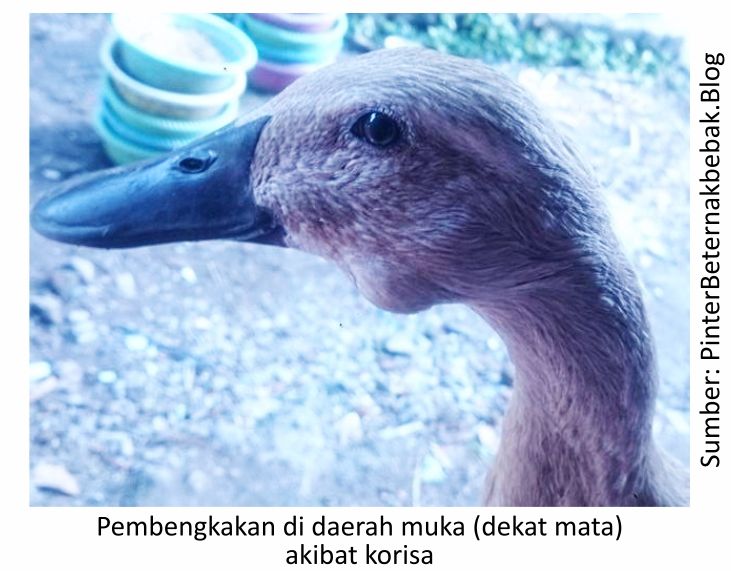
Disease of Infectious Coryza or Chorisa in Ducks is often called an infectious cold disease. The cause is bacteria Haemophillus gallinarum. The trigger is a change in weather from the dry season to the rainy season or vice versa. The clinical symptoms shown are swollen duck face and eyes, thick mucus from the nose and decreased appetite.
2. Avian Influenza
Ducks are one of the birds that are likely to be infected with the virus Avian Influenza (AI). At the time of Phase starter and grower, AI can cause sudden death. As for laying ducks in the production period, they also attack with symptoms of decreased egg production. In Ducks, AI attacks are more pronounced in the nervous system, namely twisted necks (torticollis), paralysis, grayish eyes, and greenish-white feces. From surgical carcasses found blackish lungs, brain inflammation and there green spot (dots are green).
3. Duck Cholera (Cholera)
The cause of the disease is bacteria Pasteurela avicida. Symptoms can be seen from reduced appetite, slimy whitish green stools, breathing disorders, as well as swollen face and Wattle areas filled with cheese. The liver is enlarged, striped, and there are white spots (necroses), bleeding spots and spreads in the lungs, intestines and heart.
4. Coccidiosis
Diseases caused by protozoa Coccidia sp. this causes Ducks to have watery diarrhea mixed with blood, decreased appetite and weakness. Ducks affected by coccidiosis mostly have changes in the organs of the gastrointestinal tract of the small intestine and cecum.
5. Avian paratyphoid (Salmonellosis)
The cause of the disease is bacteria Salmonella typhimurium and Salmonella enteritidis. Symptoms Ducks have white diarrhea like paste, and ducks can not stand. When dissected, the cecum thickens and contains perspiration, the presence of tissue death in the liver and visible white dots.
6. Aflatoxicosis
The appearance of this disease is the result of aflatoxins produced by Aspergillus flavus. Symptoms of ducks experiencing aflatoxin poisoning condition is very weak, stagger, feathers look dull, paralysis occurs and eventually die. When dissected, bleeding and fluid in the abdominal cavity are found. The enlarged liver can be up to five times its normal size with a yellowish-white color and hardening.
7. Botulism
The disease is caused by bacteria Clostridum botulinum which are abundant in carrion, such as rat carcasses or rotten snail carcasses eaten by Ducks. The affected duck will become lethargic, wings and legs limp, greenish-white diarrhea, duck neck lunggy until a few hours later to die.
How to keep Ducks healthy and Optimal productivity?
The things we need to pay attention to so that ducks do not get sick and produce optimally include:
- Create comfortable conditions for ducks
The existence of ventilation is absolutely necessary to get optimal air circulation so as to prevent disease seeds from mixing with clean air that enters the cage. Adequate nutrition and drinking water must also be considered to support optimal growth and egg production. Adequate nutrition can also prevent ducks from experiencing deficiencies that cause growth disorders and decreased duck endurance.
Another thing to note is also in meeting the nutritional needs of ducks, including when changing rations to the next period, it must be done gradually so that the livestock can adapt to the quality of the new ration. Giving rations should not be late because it will affect egg production.
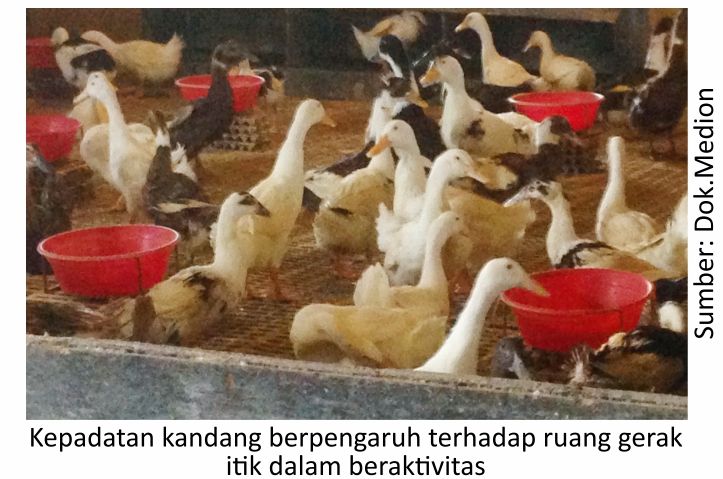
Adjust the density of the cage. If the area of the cage is given more freely, it can ensure that all Ducks get the same opportunity to get rations, drinking water, movement space and oxygen so that the growth and production of ducks are uniform and prevent disease.
- Minimize disease seeds
Efforts to minimize it by sanitizing and disinfecting cages and equipment. Feed and drinking places should be washed and disinfected regularly. In general, textured duck feed is wetter than chicken feed so it needs to be dredged regularly to prevent the growth of fungi from damp feed. Give toxin (mushroom poison binder) such as Freetox to reduce the concentration of aflatoxins and other mycotoxins in the feed.
Do it anyway flushing to clean moss or biofilm which is attached to the water pipe. Job descriptions: responsible to ensure the quality of the product and the quality of the product. responsible to ensure the quality of the product. responsible to ensure the quality of the product. responsible to ensure the quality of the product. responsible to ensure the quality of the product Medisep/Antisep/Neo Antisep and drinking water sanitation with Desinsep.
Control wild animals and disease vectors such as rats that roam the cage and can spread disease seeds. Lying mouse carcasses can be eaten by ducks and cause poisoning. Prevention by using insecticides. Carry out regular and programmed control of the rodentia.
- Vaccination
It has been discussed previously that ducks are one of the birds that have a fairly high body resistance to disease, but vaccination must still be done which aims to bully the immune system in the body in order to produce more optimal body resistance. Vaccinations that are generally given to ducks are nd, AI, IB, cholera, and Korisa vaccinations. Some things that need to be considered in duck vaccination are vaccination programs adapted to local conditions, the right time and technique for administering vaccines, uniform vaccine doses, and given to healthy Ducks. Make sure the syringe is sterile and the needle is sharp if the vaccine application is by injection (injection).
- Cleaning program
Cleaning program aims to kill the seeds of diseases that are in the incubation period (the period between the entry of the seeds of the disease to cause clinical symptoms). Provide safe herbal remedies for ducks such as Fithera which can prevent bacterial and protozoal infections such as Corisa, Colibacillosis and coccidiosis.
- Supplementation
Supplementation for ducks aims to reduce stress, increase stamina and body power Ducks, and maintain optimal productivity. Its type of supplement consists of vitamins, minerals, amino acids and immunostimulants. Some products that can be given include Vita Stress and Imustim.
- Isolation of sick Ducks
Sick Ducks should be separated immediately so that transmission can be minimized, especially infectious diseases. While the dead ducklings immediately remove from the cage and destroyed by burial or burning.
- Conduct periodic duck health observations
Observation of duck health should be done periodically, namely when giving rations and drinking water, cleaning feces, giving vaccines, or other routine activities. The goal is to monitor the early signs of the disease, such as lack of appetite or other symptoms so that preventive measures can be taken more quickly.
Greetings.