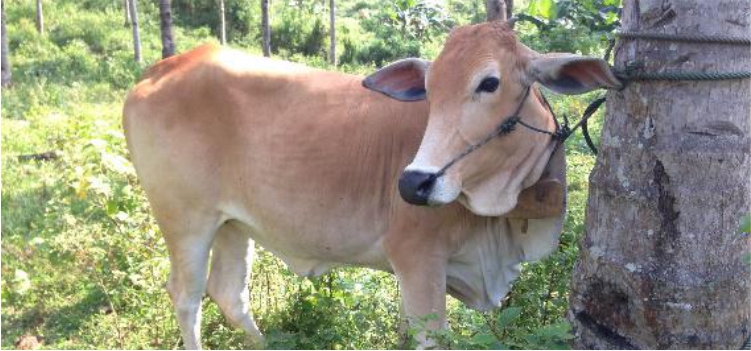
Cattle are ruminants that have a complex digestive system with four parts of the stomach, namely the rumen, reticulum, omasum, and abomasum. In the digestive system, fermentation processes occur, which are assisted by rumen microbes. The final fermentation process will produce the main source of energy for cows, namely volatile fatty acid (VFA) consisting of acetic, propionic and butyric acids. These three components are energy sources that play a role in growth, livestock activity, body condition to milk production. Therefore, the health of the digestive system is very important for the life of cows.
Digestive disorders in cows
The health of the cow's digestive system and the disturbed microbial balance of the rumen can affect the productivity of the livestock. The disorder can occur due to non-infectious factors (mismanagement) and infectious factors (disease). Here are some common digestive disorders in cows :
- Inflatable
Bloating or bloat is a digestive disorder that often occurs in cows due to the accumulation of gas in the stomach. Naturally the gas will be formed due to the fermentation process and released by livestock with the process of eructation/saltpeter. However, if the gas is trapped in the rumen, bloating will occur.
Bloating can be divided into two, namely primary and secondary bloating. Primary bloating occurs as a result of excessive fermentation of feed and gases mix with the contents of the rumen so that foam forms. While secondary bloating occurs as a result of a blockage in the outlet of gases from the stomach and gases that are formed separate from the contents of the rumen.
Symptoms that can be seen when a cow has bloating is an enlarged left abdomen and if patted will sound like a loud drum. In addition, the cow's appetite will decrease, look restless, and the frequency of breathing increases or difficulty breathing.
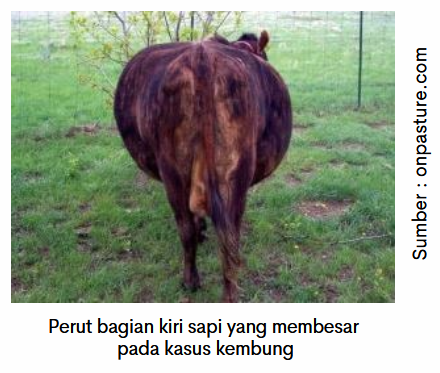
Cows that experience bloating if not treated immediately can cause death. Of course, this will be detrimental to farmers. Therefore, if there are cows that show symptoms of bloating, they need to be treated immediately. Handling bloating in cattle can be done by administering bloating drugs such as Bloatex which serves to remove excess gas. The drug will work by lowering the surface tension so that the gas bubbles will break down into small bubbles so that they can be removed from the digestive tract.
- Diarrhea
iare is a symptom that indicates the presence of digestive disorders or diseases. Diarrhea can be caused by non-infectious factors or infectious diseases. Examples of non-infectious causes are metabolic disorders due to feed quality, feed turnover, cold environmental conditions and post-transport conditions. The cause of diarrhea due to infectious diseases are bacterial infections (colibacillosis, salmonellosis), viral infections (Bovine Viral Diarrhea–Mucosal Disease) or often called malignant diarrhea in cattle as well as parasitic infections such as worms and coccidiosis.
Livestock with diarrhea will show symptoms such as loose stools, increased stool frequency, abnormal stool color, livestock appear lethargic, and even dehydrated. The occurrence of diarrhea can occur in both adult and young cattle and even newborns.
Handling diarrhea that can be done needs to adjust to the cause. If it is caused by poor feed quality or feed turnover, it is necessary to improve feed management. Whereas if it is caused by an infectious disease, the treatment is adjusted to the agent of the disease.
Diarrhea caused by a bacterial infection can be treated with antibiotics such as Trimezyn Bolus. If the cause is worms, you can be given anthelmintic drugs such as Wormzol-B and if diarrhea due to coccidiosis can be assigned such anticoxidants Toltradex.
- Simple Indigesti
Simple indigestion is a disorder of the digestive tract of cattle in the rumen or reticulum. Factors causing simple indigestion is a sudden change in the quality and quantity of feed or feed with high fiber, carbohydrate and protein content. Symptoms that can be seen are decreased appetite and decreased milk production in lactating cows.
Sometimes other symptoms can be found, namely a decrease or loss of rumen motion accompanied by constipation, but no visible symptoms of systemic disease. Temperature and pulse and breath frequency are within normal range.
In large populations, the incidence of simple indigestion is easily diagnosed by a marked decrease in appetite in most cattle after a change in feeding. The low tension and movement of the rumen can also be used as a sign of the occurrence of simple indigestion.
Treatment of cases of simple indigestion in cattle is carried out with the aim of restoring the environmental conditions of the rumen back to normal. The condition of the rumen that has returned to normal is characterized by the presence of rumen motility and a sufficient number of rumen microbes. Some handling that can be done is to provide good quality feed with high palatability and stop feeding silage or high fiber.
Supplementation can also be given to improve and overcome digestive disorders. Supplements that can be given for example are Digesfit. Digesfit it is an herbal supplement that can increase appetite, overcome digestive disorders in the rumen of cattle and improve livestock performance without producing chemical residues.
- Worm Infestation
Worms are diseases caused by the infestation of worms in the body either in the digestive tract, respiratory tract, liver or other parts of the body. Although worms do not directly cause death, this disease can reduce the quality of life of livestock and can cause economic losses. Some of the impacts caused by worms are weight loss, stunted growth in young cattle, decreased meat quality, decreased milk production and the danger of transmission to humans (Zoonoses).
Examples of worms that often attack cattle are Toxocala vitulorum. These gilig worms are mostly found in calves that are transmitted vertically from the mother through colostrum or placenta. Other types of worms are the liver flukes (Fasciola gigantica) and tapeworm (Taenia saginata). Worm eggs T. saginata what is eaten with the grass will develop into the larval phase of the cow's body. The worm larvae are in the cow's intestine then along with the blood flow to the muscles called Cysticercus bovis.
Cows that have worms have symptoms of a thin body, dull fur, diarrhea, constipation, decreased appetite and sometimes anemia. Even in some severe cases it can lead to death. Deworming is the main step in the treatment and control of cases of worms in both calves and adult cattle. Examples of deworming drugs that can be given are Wormzol-B and Wormectin Plus-B.
Maintain The Health Of The Digestive System
The presence of digestive disorders will certainly reduce livestock productivity. This can be a disadvantage, so it is necessary to make efforts to maintain the cow's digestive system to avoid disorders or diseases. Here are some efforts to maintain the health of the digestive system in cows:
- Provide quality feed according to livestock needs by considering a balanced formulation between carbohydrates, protein and forage as a source of fiber.
- When there is a change in feed, do it gradually. Avoid feeding high in easily digestible carbohydrates (carbohydrates) in large quantities and short periods of time.
- Avoid giving fresh or wet forage. The forage can be foraged first before being given to livestock. In addition, avoid giving excessive amounts of leguminous forage (100% without mixing with other forages).
- Cattle should not be grazed too early because at that time the worm larvae are usually dominant on the surface of the grass is still wet.
- Give deworming periodically every 2-3 months. Wormzol-B it can be administered to eradicate gilig worms, tapeworms and leafworms.
- Regularly clean the environment of the cage from accumulated feces and intermediate hosts (mites, slugs) that can cause worms. In addition, plants and weeds around the cage cleaned and disinfected the cage regularly using Antisep, Neo Antisep or Formades for an empty cage.
- Provide mineral supplementation with Mineral Feed Supplement S to prevent mineral deficiency, increase growth in beef cattle and increase milk production in dairy cows.
The health of the digestive system that is maintained can prevent cows from other diseases and also maintain optimal productivity. This can be achieved by implementing good and correct maintenance and feeding management.