The problem of fly population in the farm area is still often complained by farmers. Especially during the rainy season lately. High rainfall, increased cage humidity and scattered feed conditions will increase the fly population on the farm. It can even increase up to 50%.
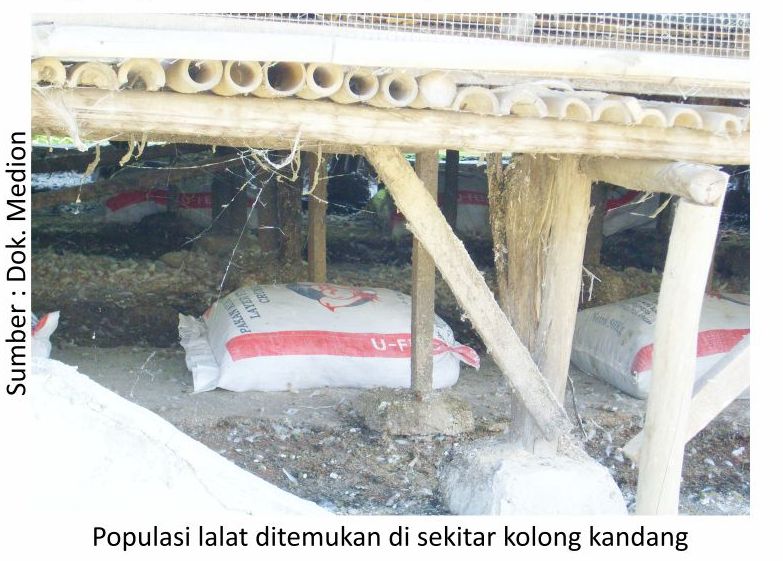
Some of the most common types of houseplants found in the United States are houseplants (Musca domestica), fruit flies (Lucilia sp.), garbage flies (Ophyra aenescens), fighter flies (soldier flies) and black flies (Simulium sp.). These flies are often found around feeders, litter, areas around feces, under cages, water ditches, and chicken carcasses. The large population of flies will certainly have a bad impact on the environment of the cage and the surrounding community.
The impact of flies on livestock
- As a vector of diseasethe tool can act as a vector of diseases such as viruses, bacteria, protozoa and worm eggs. Vectors are living organisms that act as carriers and spreaders of disease seeds from one place to another or from one livestock to another. Flies can act as mechanical vectors as well as biological vectors. As mechanical vectors, flies only carry the seeds of the disease from one place to another. Meanwhile, as a biological vector, the seeds of the disease enter the fly's body when the fly bites or perches on the chicken. The seeds of the disease then develop in the fly's body and transmit to other chickens.
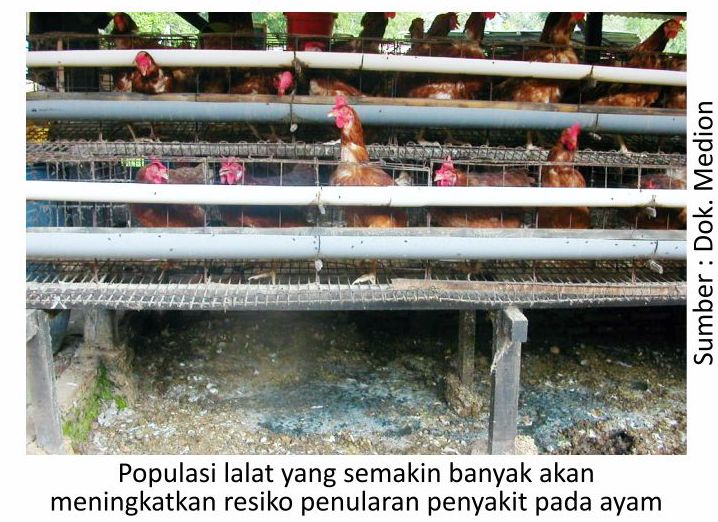
Lalat dapat berperan sebagai vektor penyakit AI, ND, Gumboro, histomoniasis, leucocytozoonosis dan necrotic enteritis (NE). Larvae and adult flies are also intermediate hosts for tapeworm infections (Raillietina tetragona and R. cesticillus) in chickens. Larvae and adult flies are often eaten by chickens so that chickens can be attacked by the tapeworm. In addition, flies also act as mechanical vectors for earthworms (Ascaridia galli) and bacteria. Moreover, we know and not infrequently find flies are perched on chicken rations. No wonder the average chicken disease cases increased by 10% compared to the dry season, one of which is due to the role of a humid environment so that the seeds of the disease increase and the role of flies as disease vectors.
Stress triggers in chickens
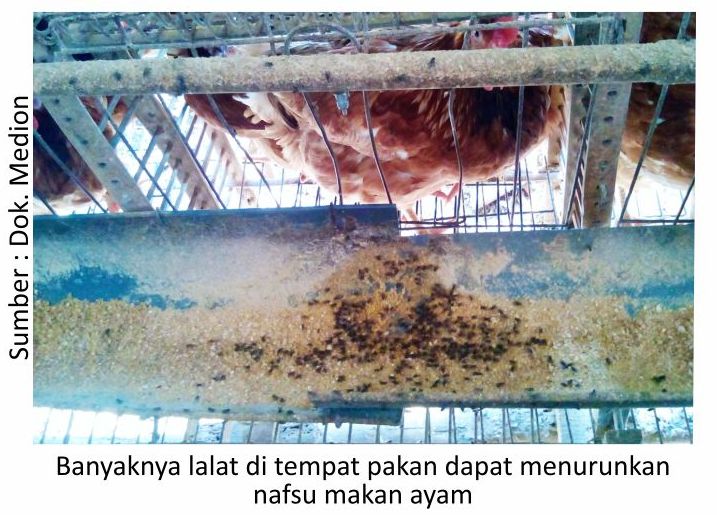
- The presence of flies in the cage will indirectly interfere with the activity of chickens so that chickens are easily stressed. This will result in decreased appetite and reduced nutrient intake. So much feed left and FCR (Feed conversion Ratio) increased. These conditions will affect the daily weight gain of chickens is hampered.
- Disturbing workers and communities around kandangLalat epidemic can interfere with the activities and comfort of residents. The spread of seeds of various diseases is almost the same, which is carried by flies that come from garbage, human or animal feces, especially through the hairs of the body, legs and other body parts of the fly and perch on human food.
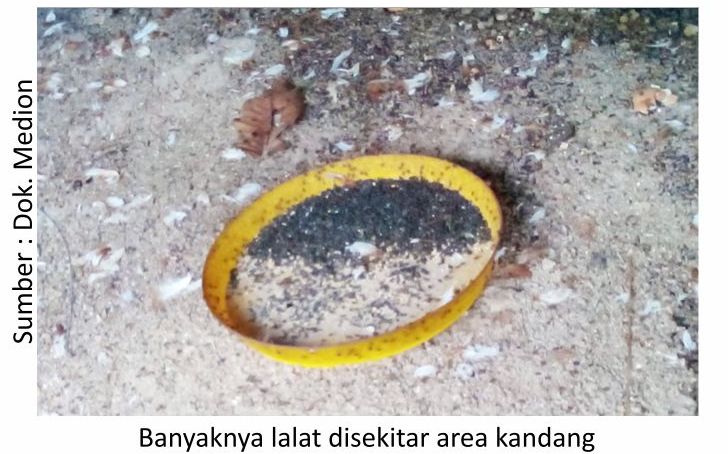
Fly Control
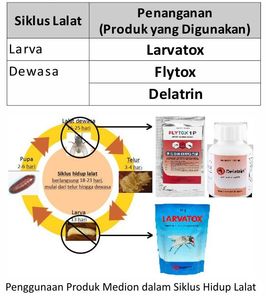
Before controlling flies, it is necessary to understand the life cycle of flies first to make it easier for us to control them. Within 3-4 days a female fly is able to produce as many as 500 eggs so that the population of larvae and adult flies will quickly become numerous or very high which can threaten the farm.
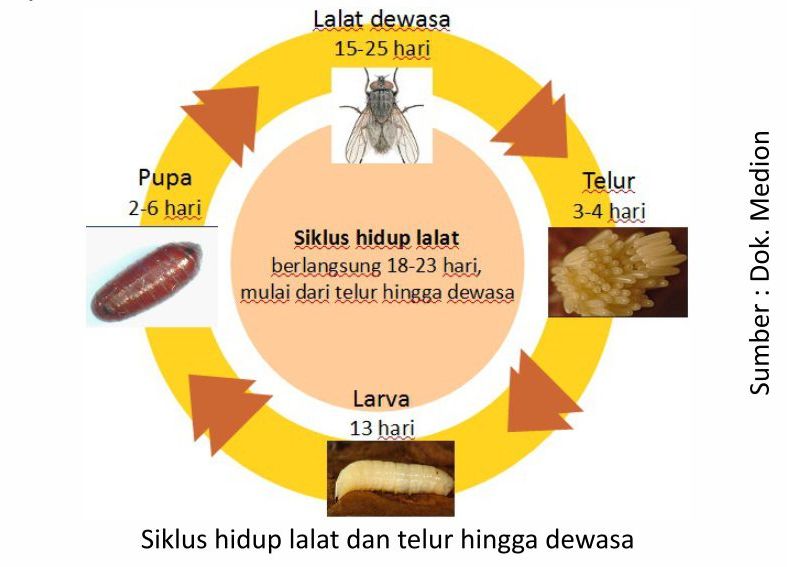
Fly control requires comprehensive fly control measures through improved maintenance management and the use of larvicides and insecticides.
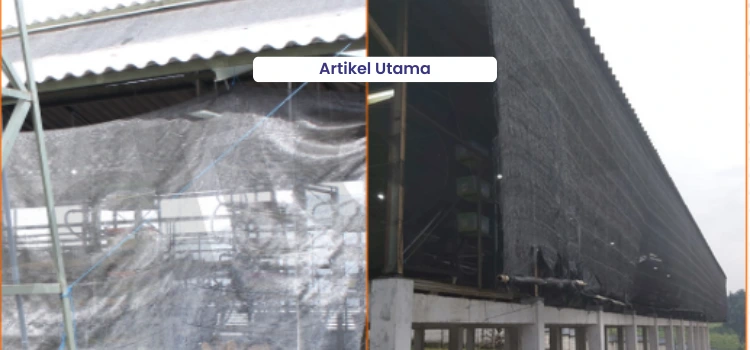
- Management control. Management control is very important to control flies, such as cleaning feces on the farm at least once a week, keeping the condition of the cage/husk base dry, being careful when replacing or filling the drinking place, not spilling drinking water, repairing leaking roofs, ensuring air circulation (ventilation) runs smoothly so that feces dry quickly and the water drain is working properly, do not allow water to stagnate.
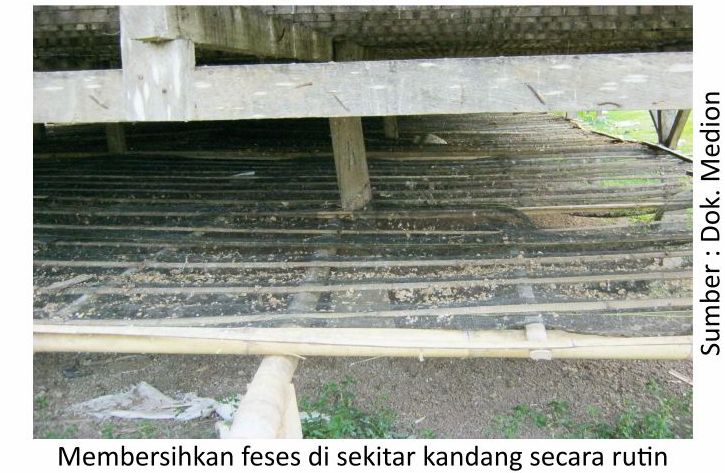
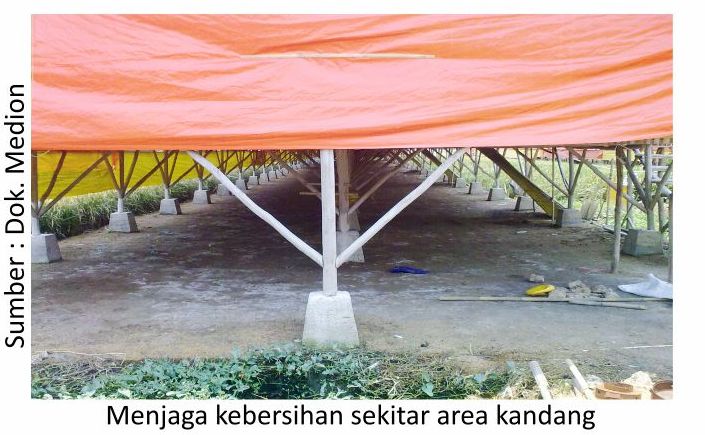
Keeping the cage sanitized is also an attempt to control the fly population. For example, immediately clean up spilled rations especially if the conditions are wet, immediately dispose of broken eggs or dead chicken carcasses and clean the cage and equipment regularly then spray with disinfectant, for example Zaldes.
- Mechanical control. This fly control technique is relatively widely applied and is referred to as a fly trap. The trap works electrically (the flow of electric current) and is equipped with a material that can attract flies to approach. Fly traps are often placed in the middle of the cage.
- Biological control. Indeed, this technique is relatively rarely applied breeders. However, this technique proved to be quite effective in controlling the fly population. In addition, the use of this technique will maintain the balance of the cage ecosystem. Fly parasites usually kill flies during the larval and pupal phases. Spalangia nigroaenea is a type of WASP (Stinging Bee) that parasitizes the fly pupa. Selain tawon, tungau (Macrochelis muscaedomesticae dan Fuscuropoda vegetans) dan kumbang (Carnicops pumilio, Gnathoncus nanus) juga merupakan “lawan” lalat.
- Chemical control. Done by giving a fly repellent. The administration of fly medicine is not the core of fly control techniques, but rather a refinement of management control. Therefore, we cannot hang the eradication of flies only from the administration of fly medicine, but the technique of administering fly medicine must also be done appropriately.Fly eradication or the use of a fly repellent product can be administered based on the life cycle of the fly. Fly drugs that work to kill the larval phase and the adult phase.Fly control is important to do even though flies are not the cause of the disease, but flies in excessive numbers will be a disease patient. In addition, it will trigger problems between chicken farmers and the surrounding environment. Chicken farming is blamed as the culprit for the emergence of many flies. Adult flies that fly in cages are fewer in number when compared to eggs, larvae and pupae are actually much more. Therefore, controlling flies early, namely when the larval stage becomes a good step in eradicating the presence of flies.