Ibu Anitasari – by email
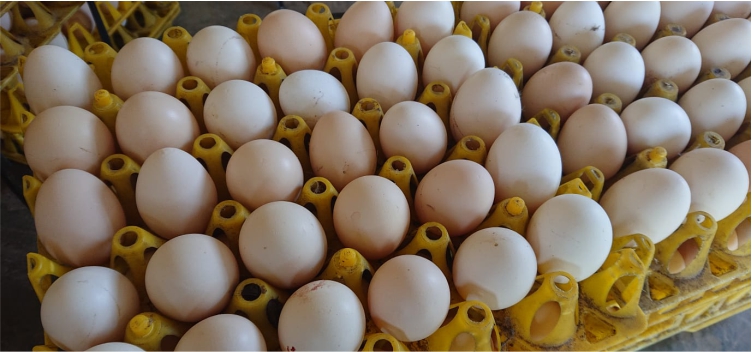
I am a chicken farmer, currently the population is 5000 head. I want to ask, my village chicken eggs are small as marbles, what is the cause ?
Answer:
Thank you for the submitted question. Body weight of Free-Range Chickens an average of 324.75 grams and 651 grams at the age of 4 and 8 weeks, while in adult free-range chickens have a body weight of 1,404 kg (Rahayu et al., 2010). When a chicken first lays eggs, it will usually produce small eggs. But in general, there are 4 factors that affect the size of the egg, namely :
- Genetics
Free-range chicken with its genetic will produce eggs that are relatively smaller than the size of a chicken egg race. However, there have been many studies on the genetic potential of domestic chickens that have been crossed and the performance results are quite good.
- Age and body weight
Achieving the target weight of the chicken is important, especially when entering the production phase. Chickens with a large body weight will certainly produce eggs with a larger size as well, and vice versa. The achievement of this body weight will affect the development of internal organs including reproductive organs. If feed intake achieved, then the reproductive organs will develop optimally. To produce eggs of a normal size in accordance with the standards, it is necessary to take into account the achievement of this body weight. It is hoped that we can achieve chicken body weight in accordance with the age of chicken maintenance. In addition to body weight, egg size is also influenced by the age of the chicken. Chickens that lay eggs for the first time will produce eggs with a relatively small size.
- Nutrition
The nutritional needs of chickens are different at each age stage. Feed in the production phase has a different nutrient content than the feed of the growth phase, because the purpose is different. If in the growth phase of feed nutrition will be focused on weight gain, organ growth, and skeletal growth then in the production phase of feed nutrients will be used as raw material for egg production. Therefore, feed nutrition in the production phase will greatly affect the size and quality of the eggs in the production phase will greatly affect the size and quality of the eggs produced. The content of energy, fat, and amino acids such as methionine and cysteine can directly impact the size of an egg. It should be noted also related to the size of feed particles, time and method of feeding and drinking water consumption because it can determine the achievement feed intake daily chicken.
- Chicken health conditions
Egg productivity largely depends on the state of health of chickens. It is common to see decreased egg production in chickens with the disease. Examples of diseases that can cause the size of eggs to be small are diseases Newcastle Disease (ND). To prevent ND disease, it can be vaccinated using Medivac ND La Sota/Medivac ND T Emulsion and application of management and biosecurity the good such as isolation, traffic control, sanitation and disinfection or spray enclosure using disinfectants such as Medisep/Neo Antisep.
- Environmental conditions
Environmental conditions such as temperature and humidity will be a challenge when raising chickens. This temperature and humidity will correlate with each other which has an impact on the environmental conditions felt by chickens such as heat stress in chickens that can affect the productivity and quality of eggs produced. Smaller egg sizes and thinner shellfish conditions are examples of impacts heat stress on the chicken. In some cases, the size of the egg is also very small and when viewed from the inside, no yolk is found. This can occur due to the presence of cells or blood that is shed from the ovary and then captured by the infundibulum. These cells or blood are read by the infundibulum as an ovum that has matured and ovulated. After being captured by the infundibulum will then continue to be processed in the oviduct as the process of egg formation in general. To cope with stressful conditions in chickens can be given multivitamins such as Vita Stress/Fortevit. In addition to helping in improving the quality and production of eggs can be given Aminovit/ Strong Egg/Egg Stimulant.