How to deal with a decrease in chicken egg production?
Ibu Dian Istokharoh – by email
My laying hens have decreased production. Usually production reaches 85%, but these 2 weeks it drops to 75%. I regularly give vitamins every day but there is no change. Then also given supplements through feed but production has not gone up again. Please advise. Thank you
Answer:
Thank you for the submitted question. The decrease in production can be influenced by infectious and non-infectious factors. Infectious factors are caused by diseases. Diagnosis of a disease requires Anamnesis, examination of clinical symptoms, examination of anatomical changes through necropsy, and laboratory testing when needed. These diseases include the following:
Infectious Bronchitis (IB) virus of
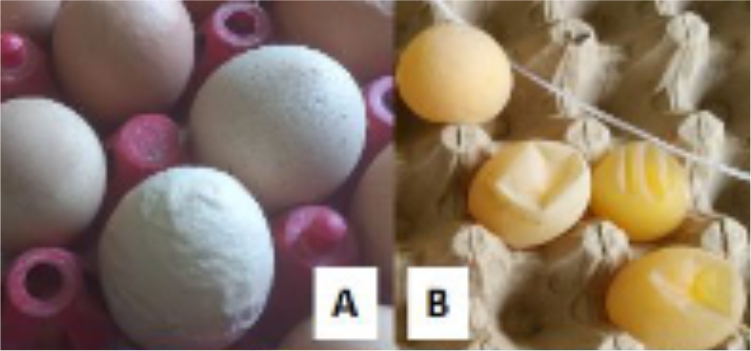
Decrease in egg production can reach 70% with changes in eggshell asymmetrical, rough, thin, pale, watery egg white, and there blood spot on the yolk. Anatomical changes characterize the presence of inflammation in bifurcatio trakhealis-bronchus, swollen ovaries, oviduct cysts, and swollen kidneys.
Egg Drop Syndrome (EDS)
The decrease in egg production can reach 10-40% with the characteristic of soft eggs/without shells.
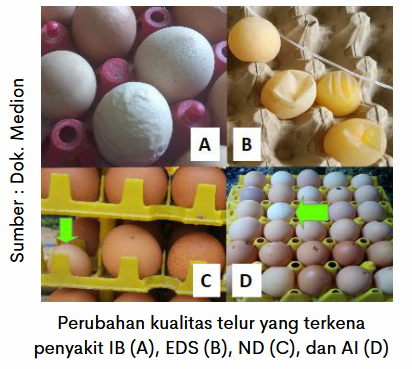
Newcastle Disease (ND)
The decrease in egg production can reach 9-60% with pale and small eggs or what is often known as pigeon egg. Symptoms that characterize the chicken torticollis with anatomical changes in the presence of inflammation in the proventriculus, found payer patches in the intestines, and ovaries fertilize.
Avian Influenza (AI)
High Pathogenic Avian Influenza (HPAI) led to a decrease in production of up to 40%, while Low Pathogenic Avian Influenza (LPAI) led to a decrease in production of 40-50%. High mortality can be found in single HPAI cases, while in single LPAI deaths are rarely found. Symptoms that appear are bluish Combs and legs. Anatomical changes that characterize the dilatation of blood vessels of the brain, bleeding in the heart, muscles, and proventriculus, ovarian swelling/bleeding, and kidney swelling.
Whereas if from non-infectious factors, the cause of egg decline is:
Quality pullet
Quality pullet a good one is characterized by weight according to standards, uniformity of body weight, skeleton (sternum and shank, and sexual maturity (comb and os pubis) meet the standard >85%. In addition to a well-built posture and a large cache. If these qualifications are not met, the chicken may be late to lay eggs, production does not reach the peak, or the persistence of high egg production is only short-lived.
Ration nutrition and drinking water
Egg production is greatly influenced by the nutrients contained in the ration such as protein, amino acids, energy, fats, crude fiber, as well as vitamins and minerals. Non-fulfillment of the needs of any of these nutrients can lead to disruption of egg production. Drinking water consumption can also affect low production. At a temperature range of 21°C, chickens will drink 1.8-2 times more than they eat. Low consumption of drinking water affects the low consumption of rations to the impact of decreased egg production.
Maintenance management
Management factors that affect the quantity and quality of eggs, among others:
- Lack of lighting or insufficient light intensity. Lighting serves to stimulate the secretion of important hormones of the reproductive system that play a role in the process of egg formation. Chicken layer which has entered the production period requires 16 hours of lighting, consisting of 12 hours of natural light (sunlight) and 4 hours of artificial light (lights) at night.
- Stress, causing decreased egg production. Common stressors include stress due to weather/temperature changes, moving cages, parasite infestation and rough treatment, etc.
- Air circulation management. Poor air circulation, for example high ammonia, causes respiratory distress and increased stress so that chickens get sick easily, the temperature and humidity of the cage are not suitable, until production drops.
Handling and Prevention of cases of decreased egg production, namely:
- Evaluation of the factors causing the decline in production. It is necessary to examine the condition of the chicken, clinical symptoms, perform chicken necropsy, check for anatomical changes, check the antibody titer. It is also worth checking the nutrition of the ration, as well as the evaluation of maintenance management.
- In case of infectious factors, re-evaluate the vaccination program and its implementation, tighten biosecurity to minimize disease agents in the environment, provide multivitamins such as Fortevit/Vita Stress or immunomodulators such as Imustim to increase the body's resistance, minimize immunosuppressive factors, and perform monitor antibody titers against IB, ND, and AI routinely at least once a month. If the condition of the reproductive tract has improved, it can be given Egg Stimulant or Aminovit to increase production.
- If from non-infectious factors, make improvements to the factors that affect the decline in egg production.