Bapak Octaviano – by email
If there are cases of IBH disease attacks in several periods, what is the right treatment for cases like this?
Answer:
Thank you Mr. Octaviano for the question. IBH diseaseInclusion Body Hepatitis) is one of the viral diseases that currently need to be watched out for. Generally IBH infection can be transmitted both vertically and horizontally. The vertical infection occurs trans-ovarially in the hatching egg (hatching egg). Meanwhile, horizontal transmission occurs directly or indirectly. Direct transmission can be transmitted through infected chicken feces to sensitized chickens. One infected chicken can spread the virus through feces for less than a few weeks and the infection will spread slowly from one flock to another.
Indirect transmission can occur through cages, leftover rations and drinking water, cage equipment, egg tray, delivery cars or employees of cages contaminated with the virus. IBH transmission will occur more quickly in cages with high density and management litter which is bad.
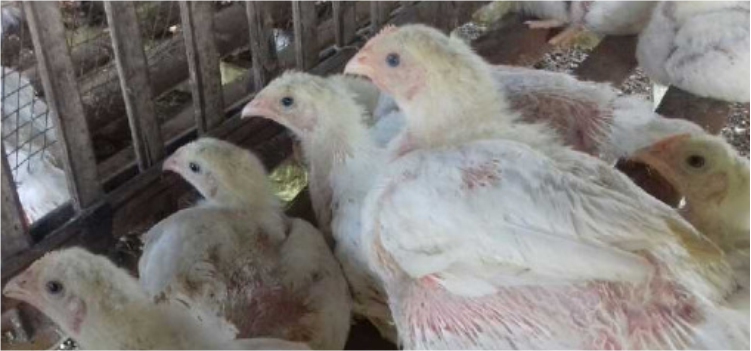
Diagnosis of IBH disease should be based on Anamnesis, clinical symptoms, and anatomical pathological changes encountered during chicken surgery. Clinical symptoms of IBH in chickens are characterized by symptoms of high mortality, weakness, decreased appetite, pale and depressed appearance, sometimes watery white feces, and dull and disheveled feathers.
The mortality rate or sudden death that occurs due to this disease can reach a range of 2-40%, while the morbidity rate is still low. When the chicken is dissected can be seen anatomical pathological changes such as liver swelling yellowish stripes sometimes pale, brittle and sometimes found patches of bleeding (hemorrhoids).
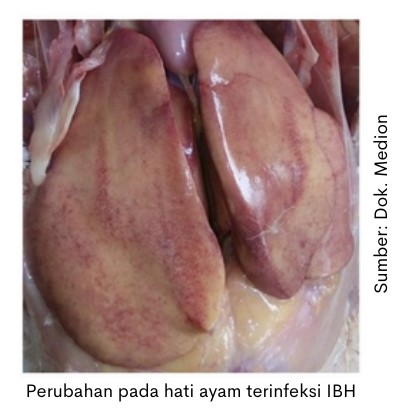
The kidneys appear pale and swollen. In the chest and thigh muscles, bleeding is also sometimes found ptechiae (point). It was also found that atrophic changes (reduction) experienced by the Bursa Fabrisius, spleen and thymus, which are important organs in the immune system, cause chickens to be more susceptible to disease. In the case of a heart attack, there is a risk of fluid retention in the pericardial sac (hydropericardium) and found that gizzard erosion.
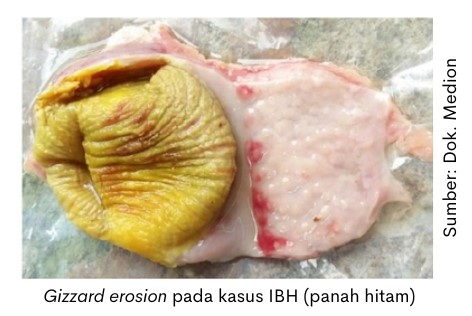
Currently, there is no cure Inclusion Body Hepatitis. If the epidemic has attacked then what we can do is reduce mortality by treating existing symptoms, including:
- Assign hepatoprotectors such as Heprofit to deal with liver damage. Heprofit made from herbal extracts that are safe for long-term use and can be mixed with drugs or vitamins.
- Provide vitamins and immunostimulants to restore health and increase the resistance of the chicken body by using Vita Stress and Imustim.
- To reduce the swelling of the kidneys can provide Gumbonal.
- If there are complications with bacterial diseases give antibiotics according to the diagnosis of the disease. Meanwhile, if IBH is complicated by coccidiosis, antiprotozoal drugs such as Toltradex. Supportive herbs Fithera it can also be given to treat bacterial and protozoal infections that are complicated by IBH.
- In case of complications with cases of mycotoxicosis, assign toxin (Freetox/Freetox-G) to bind fungal toxins in feed.
- Pressing the challenge of disease seeds in the cage by spraying the cage using disinfectants regularly 1 time a week. Spraying the area around the cage can be done using disinfectants Antisep and Formades.
Then for prevention in the later period, vaccination can be carried out. IBH vaccination in chickens broiler if it comes from a parent who has not been vaccinated against IBH, it can be done aged 1-4 days while in chickens layer time pullet performed at the age of 21-28 days. If necessary, it can be repeated again about 2 weeks before the production period or the age of 98-112 days. To breeder farm (breeder) can be given at the age of 56 days, then at 2 weeks before the production period or age 98-112 days, until repeated age 126-140 days.