Email: yantmar32@gmail.com
How to treat intestinal worms in cows? If given Wormectin it has to be injected, and we can't inject cows. Is there an alternative product?
Answer:
Thank you for the submitted question. Worms are diseases caused by the infestation of worms in the animal's body either in the digestive tract, respiratory tract, liver or other body parts. Although worms do not directly cause death, this disease can reduce the quality of life of livestock and can cause economic losses. Some of the effects of worms are weight loss, stunted growth in young cattle, decreased meat quality, decreased milk production and the danger of transmission to humans (Zoonoses).
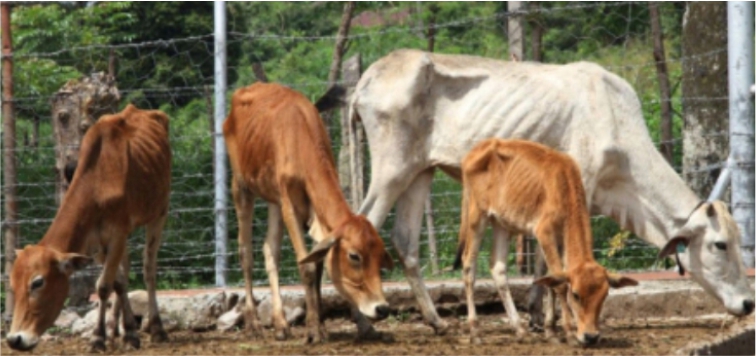
Cows that have worms have symptoms of a thin body, dull fur, diarrhea, constipation, decreased appetite and sometimes anemia. Even in some severe cases it can lead to death.

Handling and control of cases of worms in cattle can be done by breaking the life cycle of the worm. This method is quite cheap and effective to eradicate cases of worms in cattle, the occurrence of which is always repeated. Some things that can be done related to handling and controlling cases of worms in cattle are :
- Deworming (anthelmintic)
Deworming is the main step in the treatment and control of cases of worms in both calves and adult cattle. Worm medicine is not only intended for cattle that are positive for worms, but can be given as prevention in healthy cows. The deworming Program can be given from the age of 1 month and repeated periodically every 3-4 months. Anthelmintic drugs need to be given regularly to completely eradicate worms and break the life cycle of these worms.
There are several dosage forms of Medion worming products that can be used for cattle. The dosage form consists of sterile liquid whose use is injected, bolus preparations whose use is fed, and powder preparations whose use is mixed in feed. Examples of worming drugs whose dosage form is bolus and can be directly given by farmers are Wormzol-B and Wormectin Plus-B.
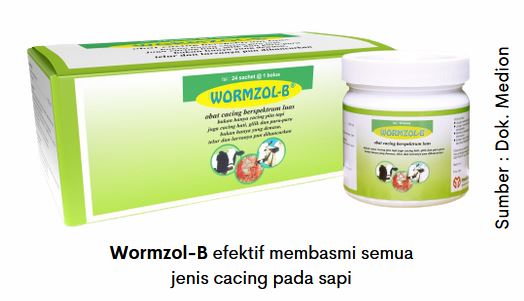
Products Wormzol-B in addition to being effective for all stages of gilig worms, it can also be used to eradicate tapeworms and adult liverworms in cattle. Rules of use of Wormzol-B is 1 bolus / 200 kg of body weight by feeding so that it can be directly given by farmers. In addition, there are other remedies for worms, namely Vermizyn SBK, Wormectin Injection and Wormectin Plus. Drugs given by injection / injection need to be done by a veterinarian or paramedic.
- Cage and environmental sanitation
Cases of worms in cows can be suppressed by maintaining the cleanliness of the cage and the surrounding environment. Without the support of good sanitation, cases of worms will continue to recur. Efforts that can be done is to routinely clean the dirt, clean the drain in the cage and prevent the presence of puddles of water so that the cage conditions are not damp and muddy.
- Grazing and grass feeding system
Cows grazed on pastures are especially susceptible to worms. Avoid grazing time that is too early because at that time the larvae or worm eggs are usually dominant in the grass tops that are still wet. In addition, grazing needs to be done in shifts and not continuously in the same place. As for intensively reared cows, it is not recommended to give fresh grass. The grass should be grazed first before being given to livestock. In addition to preventing worms, it can also prevent cases of bloating.
- Elimination of host populations between
An intermediate host is an organism that harbors a parasite only for a short or transitional period before it reaches its definitive host. Liver flukes require an intermediate host—freshwater snails—for their life cycle to continue. Therefore, freshwater snails play a key role in the occurrence of liver fluke infections in cattle. One effective way to control the snail population is by raising ducks, which act as natural predators of these intermediate hosts.
- Monitoring eggs and larvae of worms
As we know that the transmission of cases of worms is very easy to occur and is influenced by several predisposing factors. Therefore, it is necessary to make efforts monitor routinely (once every 2-3 months) against eggs and larvae of worms through stool tests. To support this, Medion currently has a laboratory that can serve the test, namely MediLab which has spread in several regions in Indonesia.
There needs to be a high commitment and awareness from all farmers in efforts to handle and control worms in a sustainable manner in order to avoid the impact of drastic losses.