Father Frans
North Sumatra
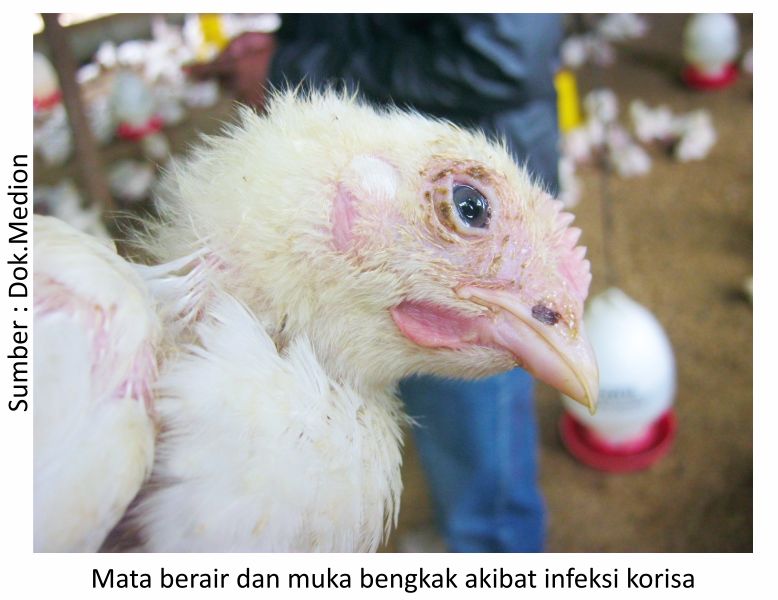
I keep broilers of 1000 heads. Currently my chicken is 14 days old, lately my chicken looks sick with cold symptoms accompanied by snoring. My question is, how to distinguish Korisa and CRD disease? How to deal with the disease in my chickens?
Answer:
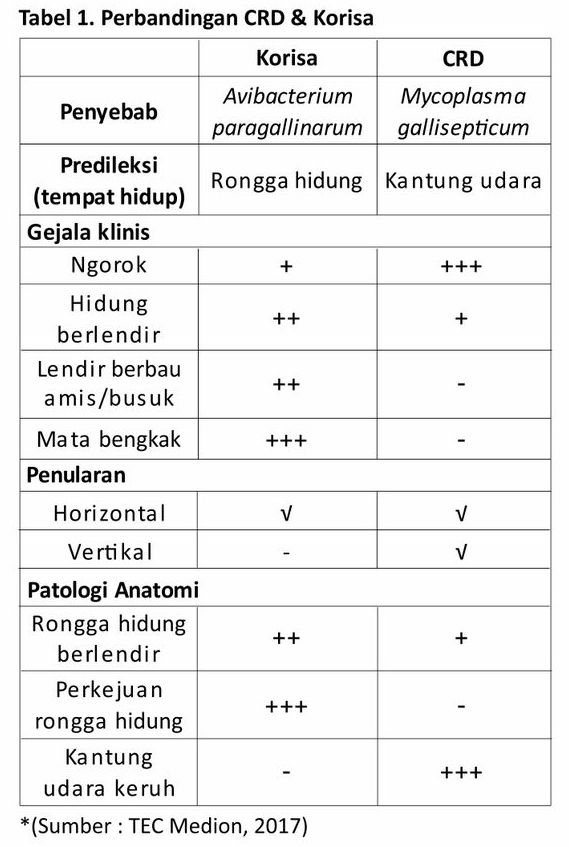
In most cases, the symptoms are mild to moderate, and the symptoms are mild to moderate (Chronic Respiratory Diseases). Both diseases affect the respiratory system of birds, so they sometimes cause almost the same clinical symptoms.
To provide appropriate treatment measures, the type of disease that attacks and the causative agent of the onset of the disease must be known in advance. Here is a brief explanation of the comparison between Korisa disease and CRD.
Handling of respiratory disorders with symptoms of colds/snoring, treatment can be done as below:
- Give antibiotics other than penicillin to treat CRD disease, such as Neo Meditril, Therapy, Proxan-S through drinking water (choose one). Or with herbal remedies such as Fithera.
- For chickens with severe conditions (swollen face) and do not want to drink, give antibiotics by injection. Examples of products Vet Strep or Kanamin.
- Administration of high doses of multivitamins, for example Fortevit to increase the stamina of the chicken. Awarding Imustim it is also recommended to stimulate the immune system and help restore the health of chickens.
- Perform cage spraying with disinfectants Antisep or Neo Antisep to eradicate the causative bacteria.
Meanwhile, ways of control that can be done to prevent the occurrence of the same symptoms, among others:
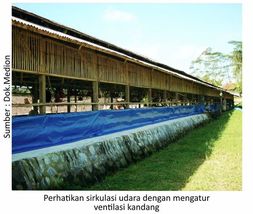
- Controlling the triggering factors of the disease (predisposition), including maintenance systems with too hot or cold temperatures, temperatures that are too hot will cause chickens to drink a lot so that feed consumption decreases, temperatures that are too cold will cause chickens to get cold and swarm so that chickens are lazy to eat and drink, high humidity is a trigger factor for various, high ammonia levels will cause irritation to the respiratory tract of chickens so that chickens are susceptible to other respiratory diseases and the density of the cage is too high which will cause poor air circulation and chickens are easily stressed.
- Sanitize the cage, spray the cage every 1-2 weeks. Sanitize drinking water regularly. Sanitation and disinfection of cage equipment, cages and their surroundings on a regular basis by using Neo Antisep or Medisep.
- Carry out Korisa vaccination of broilers at the age of 1-2 weeks.