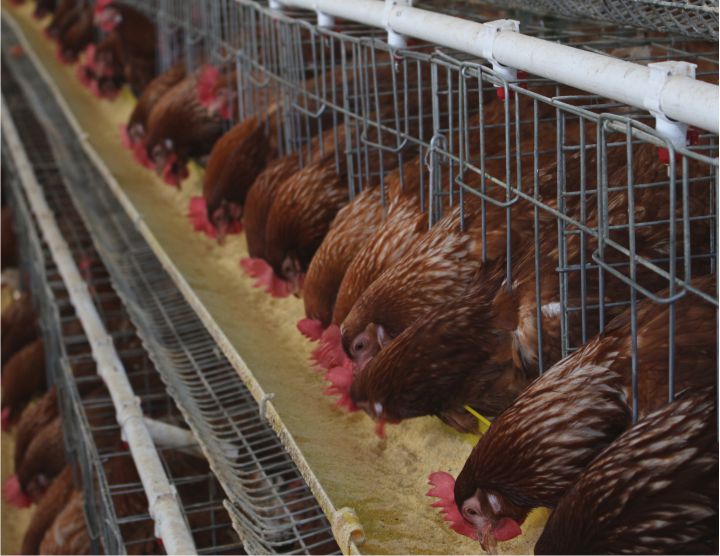
The poultry industry allocates most of its production costs to meet the nutritional needs of its livestock. Accounting for 70-85% of the total expenditure is the cost of feed and will certainly be a bigger problem when the price of feed ingredients continues to increase.
A large part of the cost of feed is to meet protein needs. By reducing the level of crude protein in the feed, it is possible to achieve significant cost savings. In addition to reducing feed costs, reducing crude protein in feed can also reduce nitrogen excretion (Namroud et al., 2008), increased ability to cope with heat stress, and allow the use of a greater variety of feedstuffs (Kidd et al., 1996), making it more flexible in the selection of available feed ingredients.
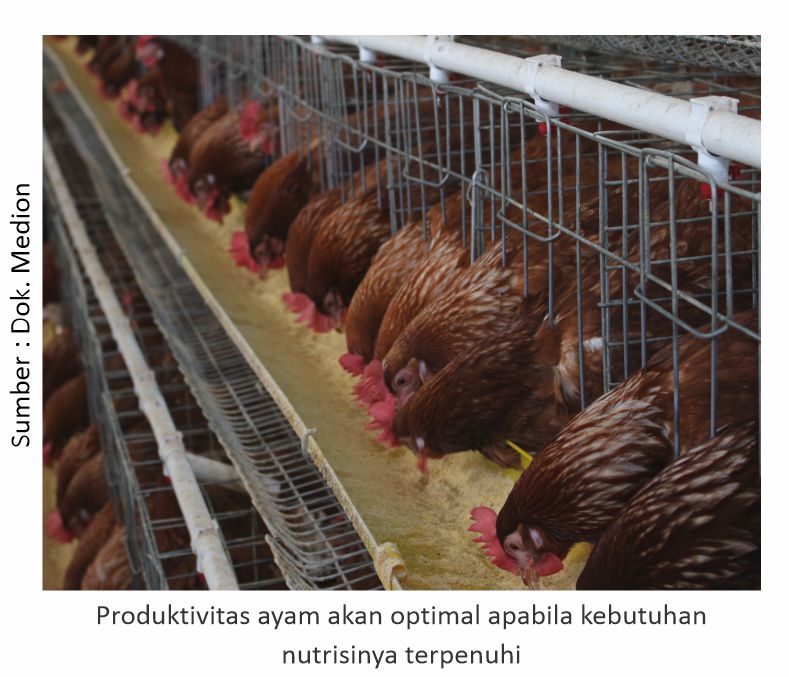
What needs to be considered is not just feeding to achieve certain growth standards, but how to achieve optimal growth with the most efficient cost. Or in other words find the lowest cost per unit of body weight or per kg of eggs produced. This can be achieved through the application of the ideal protein concept, the formulation with the lowest cost (least cost formulation), formulations taking into account the value of digestible amino acids.
Proteins and Amino acids
Quality feed has a complete and balanced nutritional content in accordance with the needs of livestock. Protein is an important component of poultry feed, as are other nutrients such as carbohydrates, fats, vitamins, minerals, and water.
Proteins are polymers made up of ③ - amino acids in a covalent relationship with peptide bonds, and the structure of each ③ -amino acid includes an amino group and a carboxyl group linked to the ③ - carbon, as well as a different side chain for each amino acid (Perry et al., 2003).
Whole proteins are broken down through hydrolysis during the digestive process to produce amino acids then used in the body. Proteins (amino acids) function as structural components of skin, fur, and muscle, and play a role in important metabolisms such as blood plasma proteins, enzymes, hormones, and antibodies that are all individually involved in specific functions in the body (Pond et al., 1995).
The Ideal Protein Concept
The application of adding amino acids directly is a program towards the formulation of feed based on ideal protein. Mitchell and Scott developed the concept of the ideal protein where the main goal is to provide a combination of amino acids that precisely meet the needs of livestock. Improper formulation of essential amino acids either excess or deficiency will result in an imbalance of amino acids and also become toxic to tenak. Ultimately resulting in disruption of livestock growth and productivity.
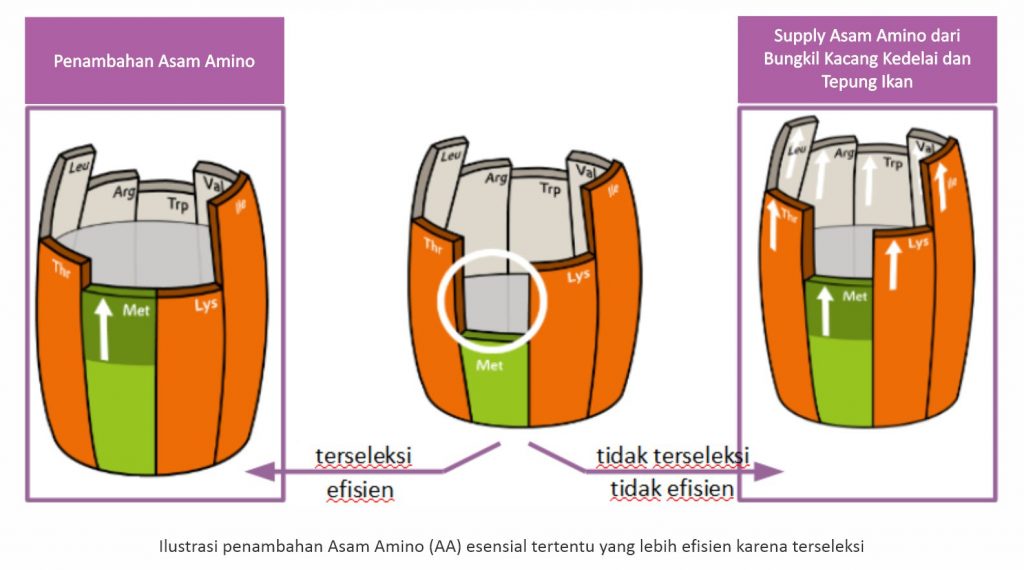
This type of pattern will allow all amino acids to become mutually limiting which will help reduce the level of excess amino acids. Mitchell and Block first developed a chemical method for evaluating protein quality by comparing it against a reference protein.
In this case the whole egg protein, carcass composition data, amino acid profile of chicken meat as a model for feed that will meet the needs of chickens. Then the researchers used the ratio for feed formulation and measured the effect on performance.
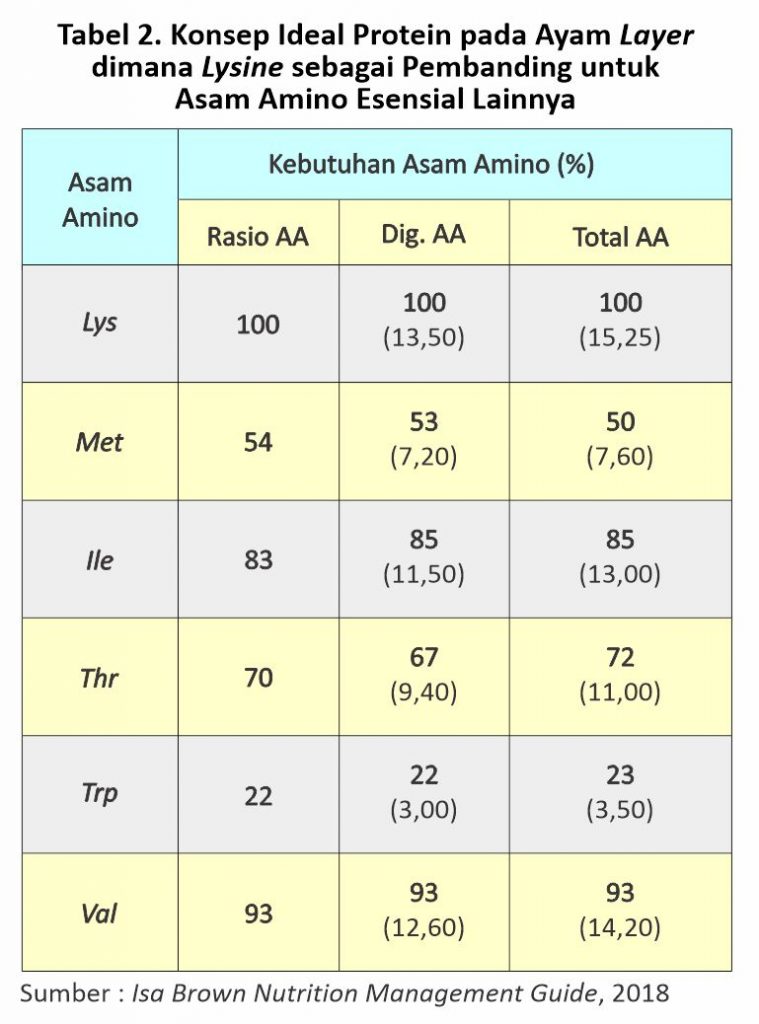
To use the concept of ideal protein in feed formulations, all the necessary amino acids are expressed as an ideal ratio. This method is applied using lysine compared to other essential amino acids.
Reasons lysine used as a reference because more literature on the content lysine in feed ingredients and their needs for livestock of different ages than other amino acids. In addition, lysine also fully functional in protein synthesis.
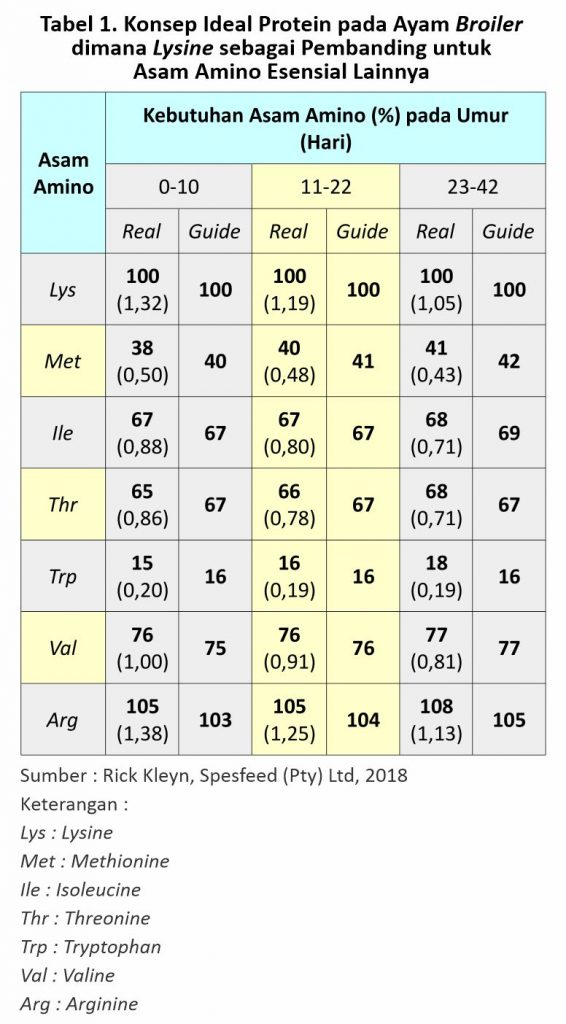
The use of the ideal protein concept helps prevent over-formulation which will minimize nitrogen excretion in the faeces. Considerations that must be considered when using the concept of ideal protein for feed formulation are the needs lysine must be very accurate. Since, it is the basis for the needs of all other indispensable amino acids, so any errors in the requirements lysine will be a mistake for all other amino acids.
Low Protein Diets
Low protein foods (low protein diets) have been used by researchers for a variety of purposes. Some of them are to maximize the use of amino acids, decrease environmental pollution, decrease requirements for limiting amino acids and reduce feed costs. Degrading crude protein without amino acid supplementation can impair broiler performance, but crude protein can be successfully reduced to a point with synthetic amino acid supplementation and produce performance similar to standard.
Nevertheless, there are a few things to consider when applying low protein diets, namely :
- There will be a change in the electrolyte balance of the feed (K + NaCl) or the level of potassium in the feed. Low protein diets will reduce the use of soybean meal and replaced with synthetic amino acids. This will lead to a reduction in K and an increase in Cl levels supplied by additional amino acids and a decrease in electrolyte balance that can lead to a decrease in performance (Aftab et al., 2006).
- Non-specific nitrogen deficiency for the synthesis of non-essential amino acids. The reduction of crude protein in the feed resulted in a decrease in carcass quality, an increase in abdominal fat, and a decrease in breast meat yield.
- Broilers tend to decline feed intake when consuming low protein diets. This is due to an increase in blood ammonia as a result of high levels of crystalline amino acids (Namroud et al., 2008), changes in electrolyte balance so that water intake increases and changes in energy ratios (Aftab et al., 2006).
- Glycine deficiency. Improved performance has been observed in chickens consuming low protein diets when glycine levels increase, it suggests that glycine may have a more specific role. Formulation low protein diets cause a decrease in whole protein sources such as soybean meal containing glycine levels are relatively high compared with other ingredients. So it may be important to consider glycine levels specifically, rather than just total non essential amino acid levels, when formulating low protein diets.
Thus at a glance information related to protein and amino acids in animal nutrition, the concept of ideal protein and low protein diets. Hopefully it can add insight to all of us.