Mr. Hanggono
Product Categories: Vacuum Cleaner > Vacuum Cleaner > Vacuum Cleaner
I keep chickens broiler, already harvested but the chicken weight is uneven (there is a large and there is a small one). How to make the growth of chickens evenly (uniform weight)?
Answer:
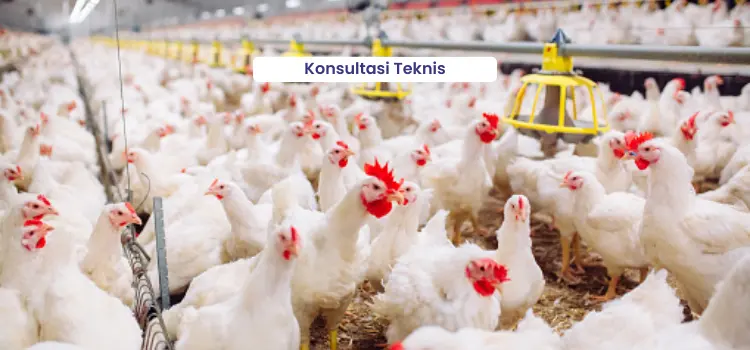
Thank you for the submitted question. Weight achievement is one of the expected performance, especially in the maintenance of chickens broiler. The achievement of body weight reflects the condition of the organs in the chicken's body, be it the digestive, respiratory and immune organs. Weight growth should be controlled from the moment of DOC to harvest. The difference in body weight when DOC largely determines the speed of growth. Body weight in a population is said to be uniform if the difference in body weight + 10%. If uniform weight is expected chicken ability to eat and drink can also be uniform. The condition of chickens with non-uniform body weight causes large weight differences (exceeding the standard) will dominate while chickens with large body weight (exceeding the standard) will dominate while chickens with small body weight will be increasingly excluded and left behind. The degree of uniformity of chicken body weight broiler it is said to be normal when it reaches 80%. This means that more than 80% of the chickens in one cage have almost the same weight with a tolerance of ± 10% of the standard.
Uneven or non-uniform body weight of chickens during harvesting can be caused by several factors, namely:
a. Quality DOC
The quality of DOC can affect the growth of chickens. For example, if from the beginning we maintain DOC with sub-standard weight, then with ordinary maintenance management it will be difficult to produce high and uniform harvest weight.
b. Feed management and quality
Lack of food intake (feed intake) because the density of the chicken is too high or insufficient number of feeders can trigger some chickens to experience dwarfism so that the weight of the harvest is uneven. Similarly, the content of feed nutrients such as energy, protein, and other micro nutrients that are not in accordance with the needs of chickens, or the presence of fungal contamination and mycotoxicosis in the feed.
c. Maintenance management
Maintenance management that largely determines the weight of the chicken harvest is the current management brooding period,. If on time brooding period,, the growth and uniformity of the chicks is not optimized, so the chicks will be difficult to catch up with the weight of the harvest according to the standard and the uniformity of the harvest will be low. To determine whether management brooding period, what we run has been successful or not, one way is by weighing the weight of the chicken at the age of 7 days and calculating its uniformity. Management is said to be successful if the weight of the chicken is at least increased by at least 4 times the weight when DOC and the uniformity reaches ③ 80%. If both targets are not achieved, it needs to be evaluated.
d. Disease attack
Infectious diseases such as RSS (runting and stunting syndrom) which is caused by Reovirus pose enteritis (inflammation of the intestine) so that the absorption of nutrients in the intestine decreases. In the feces of sick chickens will be found undigested feed. In addition, a small intestine or so-called “nipple intestine”is found. Other specific signs found are abnormal feather growth on the primary wing feathers (which border the feather follicles), causing the feathers to appear to stand like propellers and create the impression of a helicopter. That's why the attack Reo-virus often referred to as helicopter disease.
Preventive measures that can be taken for the next period are :
- Choosing a quality DOC
The characteristics of a quality DOC are body weight in accordance with strain standards (37-42 grams), DOC looks active, responsive and agile, clean eyes open and shining, bright fur is not dull and full, clean navel, dry, well closed, clean cloaca no dirt, no physical defects, legs bright yellow and not dry, not weak and quickly adapt to the environment
2. Optimal maintenance management
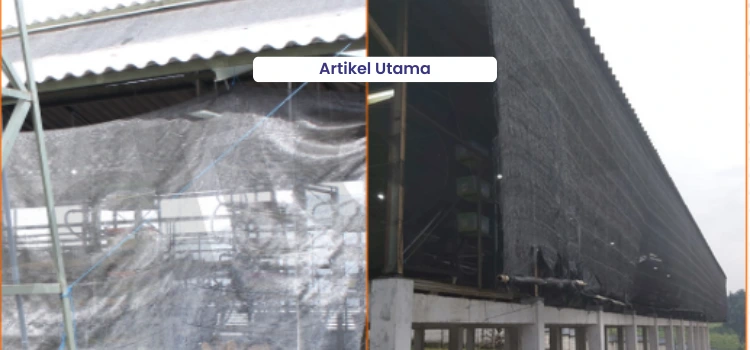
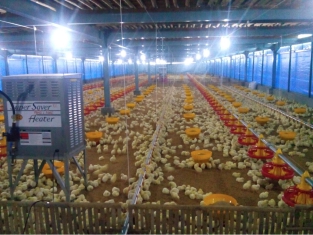
- Set the cage curtain open and close to facilitate air circulation and adjust the density of the cage
- Routine cage temperature control begins 1-3 hours after chick in and every 2-3 hours at the same time with feeding
- Managing the number and distribution of feed and drinking places for chickens, and feeding on the same schedule every day
- Feeding quality with good nutrient content and not moldy
- Ensure sufficient lighting at night so that chickens can still eat
- Weighing chickens regularly once a week from the age of 7 days
- Jika ditemukan keseragaman rendah (<80%) pisahkan ayam sesuai kelompok dan lakukan treatment sesuai kondisi dan penambahan premix contohnya Top Mix
- Conduct a thorough examination of the chicken and note If there is a possibility of disease infection