Bapak Agung – by email
The chicken farm I am 30 weeks old egg production is not yet uniform. For weight per grain range 60-65 g. The weight of a standard egg at 30 weeks is 65 g (1 kg of 18-19 content) with a daily feed per head of 115 g. How can egg production be uniform?
Answer:
The key to success that affects the uniformity of production is quality pullet- his. The thing that affects the most is the uniformity of body weight, skeleton, and adult gender pullet. Good uniformity at least 85%. Pullet a good one has uniformity and achievement of weight according to its age standards. Uniformity pullet can be affected by DOC quality, cage density, number of feed and drinking places, feeding management, cage comfort, beak trim, uniform lighting and proper maintenance program.
The size and weight of eggs are largely influenced by genetic factors. However, management factors are also involved in determining the size of eggs produced by chickens. If there is a case of abnormal egg weight (too large or too small from the standard), then pay attention to the following points:
- Chicken body weight
The body weight of chickens is positively correlated with the size and weight of eggs. When entering the production period (age 18 weeks), chicken body weight should have reached 1.35-1.65 kg (from 1.5 kg standard). If the body weight is still below the standard, then the chicken will produce eggs of smaller size and weight. This state tends to last continuously as long as the chicken is producing. ISA Brown (2022) states that a difference of 80 grams of body weight at the start of production will increase the weight of the egg by 1 gram.

- Level of sexual maturity
This factor is indirectly related to body weight. Pullet those who experience sexual maturity (genital maturity) too early, usually their body weight is still low (below 1.5 kg) but have laid eggs. Thus early genital maturity can also cause chickens to produce eggs with smaller size and weight. Conversely, when sexual maturity is late, the chicken will produce eggs with a size larger than the standard (abnormal).
- Feed intake diet and nutrition
The weight of eggs is greatly influenced by the consumption and content of feed nutrients, such as protein, amino acids (methionine and lysine), energy, and fat. If the chicken's appetite is down or the quality of the feed is not good, then the nutritional needs of the chicken will not be met. The impact of egg weight will be reduced and the size becomes smaller.
- Lighting
Chickens are very sensitive to light. Changes in the length and intensity of lighting can affect the size and weight of the eggs produced. Therefore, the lighting program should be applied according to the age of the chickens. Add gradual lighting as soon as there are chickens that start laying eggs, so that the start of production can be achieved in good time. However, the addition of gradual lighting should be done after the chicken reaches the target standard body weight (between 1.3-1.4 kg) or egg production has reached 5%. The addition of light too early in low body weight chickens will accelerate genital maturity, so that the eggs produced are smaller and vice versa.
- Infectious factors (diseases)
Disease factors are also one of the causes of small eggs, for example, disease Newcastle Disease (ND). Cases of ND can lead to a decrease in egg production, the color of the shellfish becomes pale and sometimes the eggs are small. This is due to the presence of dysfunction (impaired function) in the reproductive organs.
- Water consumption
Water consumption can have an effect on low production. The ideal temperature of drinking water in the range of 18°C-24°C. At a temperature range of 21°C, chickens will drink 1.8-2 times more than they eat. Low consumption of drinking water affects the low consumption of rations to the impact of decreased egg production.
Further, in order to return the weight of the egg to the standard size, we must first analyze what caused it. Temporary measures that can be taken include :
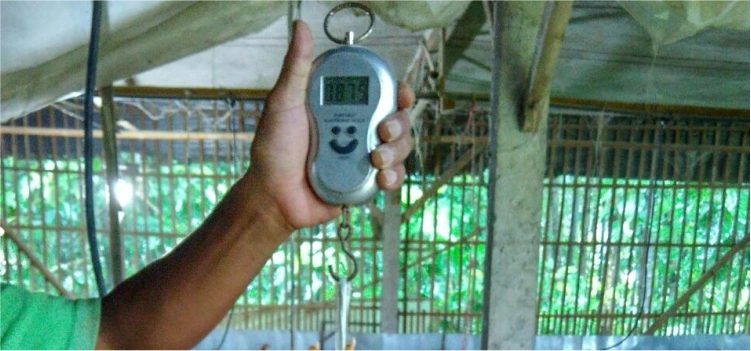
- Make observations to find out which chickens have abnormal egg weight, then separate and weigh the weight of the chicken. The size of the chicken breast (grading) in order to avoid competition and make it easier to give treatment to each group. If the body weight is less than the standard, then it can be given a special treatment, that is, given more food or the frequency of feeding is increased to catch up with the body weight. If the body weight is more than the standard, then the chicken in the following week there is no addition to the feed ration (still based on the previous week's feed ration) so that the body weight does not rise.
- If possible, test the quality of feed in the laboratory (MediLab) to ensure that feed nutrients have met the needs of chickens or not
- Measure daily feed consumption. If the weight of the eggs has decreased due to the decreased appetite of the chickens, then evaluate what are the causes. It could be because the chicken is sick or experiencing stress.
- Provide multivitamin supplementation and premixes that will help improve egg production and quality such as Top Mix, Mix Plus, Egg Stimulant or Strong Egg.